What Is Mold Awareness Month and Who Started It?
Mold Awareness Month is observed every September in the United States to educate homeowners about indoor mold health risks, prevention strategies, and the importance of moisture control.
If you’ve seen mold awareness month messaging pop up in your social media feed or inbox each September, you might wonder whether it’s a real public health initiative or a marketing ploy. The answer is more nuanced than either extreme.
The origins: advocacy efforts and the EPA connection
The campaign traces back to multiple overlapping efforts. Mold-safety advocate Jason Earle, founder of GOT MOLD?, pushed to have September recognized as Mold Awareness Month and partnered with the U.S. Environmental Protection Agency around 2010. [Source: Avon Health Center] Separately, the National Indoor Mold Society established National Indoor Toxic Mold Awareness Month in September 2008 to raise awareness of indoor mold and mycotoxins. [Source: American Air & Water] The Responsible Solutions to Mold Coalition (RSMC) also designated July as a mold awareness period in 2006, focused on moisture control in the construction industry. In practice, when people reference “Mold Awareness Month,” they almost always mean September.
Who participates in Mold Awareness Month
Participation spans a wide range. The EPA recognizes September as National Mold Awareness Month to raise awareness of health effects associated with mold exposure. [Source: Avon Health Center] Beyond federal agencies, state legislatures (Nevada, for example), certified industrial hygienists, remediation companies, school districts, and public health nonprofits all contribute educational content during September.
How it differs from other health awareness campaigns
Unlike campaigns for diseases with established medical foundations (think Breast Cancer Awareness Month backed by the American Cancer Society), Mold Awareness Month grew from grassroots advocacy and industry collaboration. It doesn’t have a single governing body or centralized funding source. That decentralized structure is partly why the campaign can feel inconsistent, with some content being genuinely educational and other content leaning promotional.
Why Does Mold Need an Awareness Month?
Indoor mold exposure is linked to respiratory symptoms in a significant portion of building occupants, yet most homeowners don’t recognize early warning signs or understand basic prevention.
The scope of mold-related health issues in the U.S.
The numbers paint a clear picture. At least 45 million U.S. buildings are estimated to have unhealthy levels of mold. [Source: PR Newswire] In a large multicity asthma study sponsored by the National Institutes of Health, 50% of 937 children tested showed sensitivity to mold, highlighting it as a major asthma trigger. [Source: American Air & Water] A Mayo Clinic study of 210 patients with chronic sinusitis found that 96% had fungus in their mucus samples, with 40 different types of fungi identified. [Source: Avon Health Center]
Common misconceptions that awareness campaigns address
Many homeowners believe mold is purely a cosmetic problem or that it only affects old, poorly maintained homes. Awareness campaigns emphasize that mold exposure can cause allergy-like symptoms, asthma attacks, respiratory infections, headaches, fatigue, and chronic sinusitis. [Source: Avon Health Center] These aren’t fringe claims. The World Health Organization’s indoor air quality guidelines state that mold growth in dwellings is common (approximately 10-50% globally) and that prevention and remediation “should be a priority” due to health risks. [Source: NIH/PMC]
The gap between mold prevalence and homeowner knowledge
An EPA-cited estimate states that approximately 50% of U.S. schools have problems linked to poor indoor air quality, including mold and dampness. [Source: American Air & Water] If schools, which are subject to building codes and inspections, have this level of exposure, residential homes with less oversight are likely in similar or worse condition. The 2019 American Housing Survey reported that 9.4% of U.S. homes had exterior water leakage and 7.6% had interior water leakage. [Source: NIH/PMC] These are the conditions that breed mold, and many homeowners don’t connect the dots.
Is Mold Awareness Month Just Industry Marketing?
While remediation companies do participate, the campaign is grounded in public health data showing mold affects a substantial percentage of U.S. homes and causes measurable respiratory harm.
The legitimate public health case for mold awareness
Skepticism is healthy. Awareness months can absolutely serve as marketing vehicles. But the underlying data here is real. According to a 2023 review published through NIH, the population-weighted average prevalence of dampness or mold in homes across multiple studies is approximately 47%. [Source: NIH/PMC] A separate HUD survey of homes in 75 locations found that 24% had moisture or mold problems documented during inspection. [Source: NIH/PMC] These aren’t industry-generated figures.
How to distinguish educational content from sales pitches
Here’s a practical filter for September mold awareness content:
-
Educational content cites specific studies, references EPA or CDC guidance, explains the science of moisture control, and gives you actionable steps you can take independently.
-
Sales content uses fear-based language, avoids citing sources, pushes proprietary testing or products, and frames professional remediation as the only solution.
If a piece of content tells you what to do before it tells you what to buy, it’s probably worth your time.
What independent health organizations say about mold risks
The EPA, CDC, and WHO all recognize indoor mold as a health concern. The National Indoor Mold Society developed its awareness initiative specifically “to inform, educate, and bring awareness about how exposure to indoor molds and mycotoxins can affect your health.” [Source: Avon Health Center] These organizations exist independently of the remediation industry, and their conclusions align: mold is a population-level indoor air quality issue.
What Are Homeowners Supposed to Do During Mold Awareness Month?
Homeowners should conduct a visual mold inspection, test humidity levels in moisture-prone areas, review ventilation in bathrooms and kitchens, and address any water leaks within 24-48 hours.
The September mold inspection checklist
Here’s what the research and agency guidance actually recommend. For a deeper walkthrough of inspection techniques, see our mold inspection guide.
| Action | Where to Check | Key Threshold |
|---|---|---|
| Measure indoor humidity | Bathrooms, basements, kitchens, laundry rooms | Below 50% (ideally 30-50%) |
| Inspect for water leaks | Under sinks, around windows/doors, attic, basement walls | Repair within 24-48 hours |
| Check ventilation | Bathroom exhaust fans, kitchen range hoods, dryer vents | Run bath fans 30+ minutes after showers |
| Look for visible mold | Grout lines, window sills, behind furniture on exterior walls | Areas under 10 sq ft may be DIY-manageable |
| Assess drainage | Gutters, downspouts, foundation grading | Soil should slope away from foundation |
| Review HVAC system | Filters, drip pans, ductwork | Replace filters per manufacturer schedule |
Why September timing matters for mold prevention
September marks the transition from summer humidity to fall conditions. Many homes have accumulated moisture over the summer months, and schools reopen after periods when HVAC systems may have been turned off to save costs. Jason Earle, the campaign’s creator, has noted that many schools open in September only to close shortly after because of mold problems triggered by cost-cutting measures like turning off summer A/C. [Source: PR Newswire] The same principle applies to homes: summer moisture buildup makes September an ideal time to assess conditions before closing up for winter.
Free resources available during the campaign
The EPA offers free guidance documents on mold cleanup and prevention through its website. Many certified industrial hygienists and local health departments host free webinars or publish educational materials during September. Look for resources from your state’s department of health or local extension services rather than relying solely on content from companies selling remediation services.
What Does the Research Actually Say About Mold in Homes?
Studies show that 10-50% of dwellings worldwide have dampness or mold, and indoor mold exposure is linked to respiratory symptoms across multiple peer-reviewed investigations.
Prevalence data from EPA and CDC studies
The numbers vary depending on the study and methodology, but the trend is consistent. According to a 2023 review published through the National Institutes of Health, the population-weighted average prevalence of dampness or mold in homes across multiple studies is approximately 47%. [Source: NIH/PMC] The 2019 American Housing Survey found that 9.4% of U.S. homes had exterior water leakage and 7.6% had interior water leakage. [Source: NIH/PMC] A HUD survey of homes in 75 locations documented moisture or mold problems in 24% of inspected dwellings. [Source: NIH/PMC]
Health impact research from peer-reviewed sources
The WHO indoor air quality guidelines confirm that indoor dampness and mold are causally linked to asthma exacerbations, new asthma cases, respiratory symptoms, and allergies. [Source: NIH/PMC] People are routinely exposed to more than 200 species of fungi indoors and outdoors, and 60 species produce around 180 trichothecene mycotoxins. [Source: American Air & Water] Anyone experiencing unexplained respiratory symptoms in a home with known moisture issues should consult a physician for proper evaluation.
The economic cost of mold damage and remediation
Industry practitioners typically report that professional mold remediation costs range from $1,500 to $9,000 for moderate jobs, with severe cases exceeding $30,000. Insurance coverage varies widely. The indirect costs, including health care expenses, lost productivity, and property value depreciation, are harder to quantify but consistently cited by housing economists as significant. Prevention is almost always cheaper than remediation.
How Do You Know If Your Home Needs Attention During Mold Awareness Month?
Homes with visible mold, musty odors, past water damage, humidity above 50%, poor ventilation, or occupants with unexplained respiratory symptoms should be inspected during September.
Visual signs that warrant immediate inspection
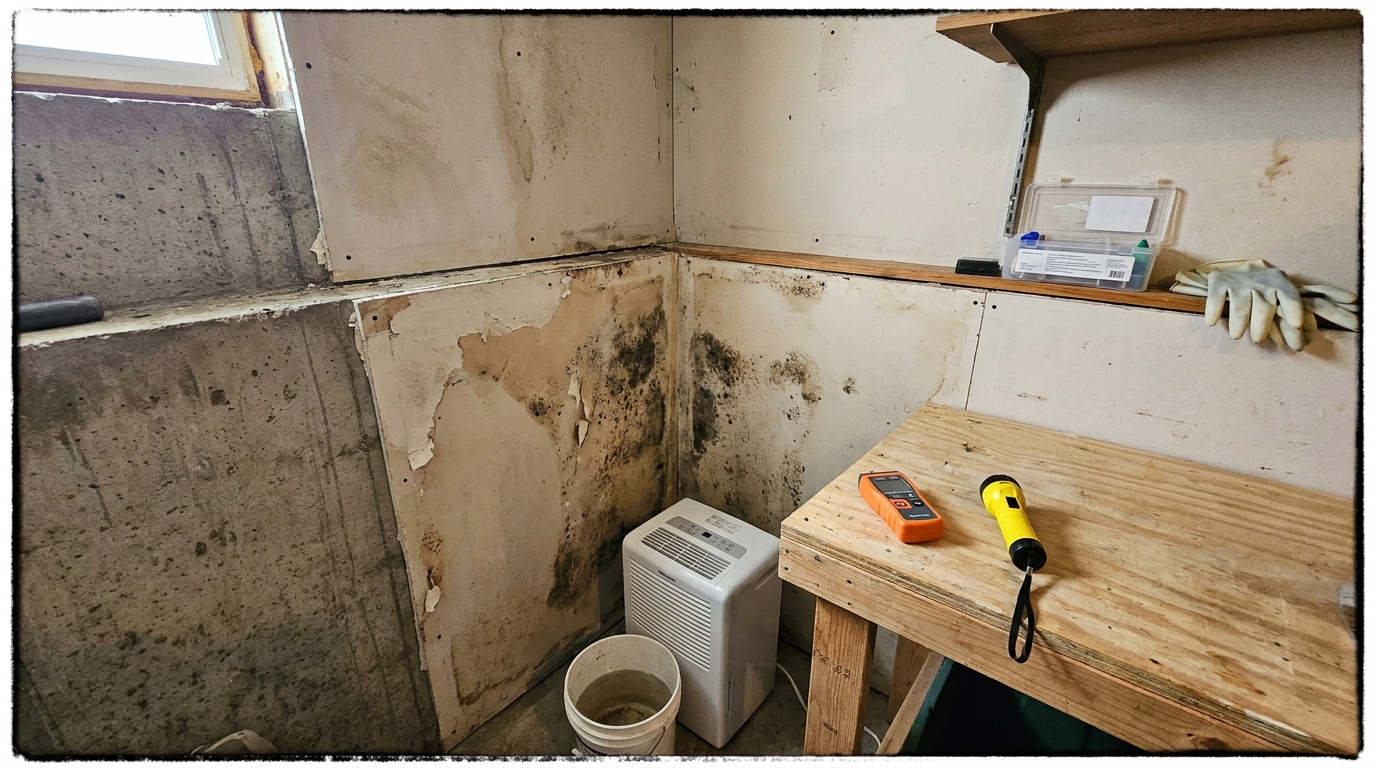
Look for discoloration on walls, ceilings, or floors. Mold can appear as black, green, white, or even orange spots. Peeling paint or wallpaper, warped surfaces, and water stains all indicate moisture problems that may be feeding mold growth. Don’t overlook musty or earthy odors, which often signal hidden mold behind walls or under flooring. Our guide to signs of mold in your house covers these indicators in detail.
Humidity and moisture indicators to measure
A digital hygrometer (available for under $15 at most hardware stores) can tell you whether your indoor humidity exceeds the recommended threshold. The CDC-cited guidance recommends keeping indoor humidity below 50%, with an ideal range of 30-50%. [Source: Avon Health Center] Place hygrometers in bathrooms, basements, and kitchens, the areas most prone to moisture accumulation.
When to call a professional versus DIY assessment
Visible mold covering less than about 10 square feet on hard, non-porous surfaces can often be handled by homeowners using detergent and water, followed by thorough drying. [Source: Avon Health Center] Larger areas, mold on porous materials like drywall or carpet, mold inside HVAC systems, or situations where occupants have health symptoms warrant a certified industrial hygienist or professional remediation company. A certified professional can assess the scope of the problem and recommend appropriate action.
What Are the Most Common Mold Awareness Myths?
Common myths include that bleach permanently kills mold, that only black mold is dangerous, that mold only grows in old homes, and that visible mold is the only concern.
The bleach myth and why it persists
Household bleach can kill surface mold on non-porous materials, but it doesn’t penetrate porous surfaces like wood or drywall. The water content in bleach can actually add moisture to porous materials, potentially encouraging regrowth. Industry practitioners typically recommend detergent and water for hard surfaces, with professional remediation for porous materials.
Why all mold types can cause health issues
The fixation on “black mold” (typically Stachybotrys chartarum) overshadows the reality that many mold species produce allergens and irritants. The NIH-sponsored multicity asthma study found children sensitized to multiple mold types, not just one species. [Source: American Air & Water] Mold color alone doesn’t determine toxicity. Any persistent mold growth indoors warrants attention.
Hidden mold risks that awareness campaigns highlight
Mold frequently grows in places homeowners can’t see: inside wall cavities, beneath flooring, above ceiling tiles, and within HVAC ductwork. The absence of visible mold doesn’t mean a home is mold-free. Musty odors, persistent condensation on windows, and unexplained allergy symptoms can all point to hidden mold problems.
How Can Homeowners Participate in Mold Awareness Month Beyond Reading Articles?
Homeowners can schedule professional inspections, attend free webinars, test their homes with hygrometers and lab-grade kits, and create a mold prevention maintenance schedule.
Free educational events and webinars in September
Many state health departments, university extension services, and professional organizations like the American Industrial Hygiene Association offer free or low-cost educational events during September. Check your local health department’s website and community bulletin boards for listings. These events typically cover moisture control basics, health risk assessment, and when to seek professional help.
Discounts and promotions from legitimate testing services
Some accredited testing laboratories and certified inspection firms offer discounted services during September. When evaluating these offers, verify that the company holds relevant certifications (such as IICRC or ACAC credentials) and that testing is performed by an independent lab, not the same company that would perform remediation. Separation between testing and remediation reduces conflicts of interest.
Creating a long-term mold prevention plan
The most valuable thing homeowners can do during September is establish routines that last year-round. This means setting calendar reminders for quarterly humidity checks, documenting any water intrusion events, maintaining a log of HVAC filter changes, and scheduling annual inspections for high-risk areas like basements and crawl spaces.
What Happens After Mold Awareness Month Ends?
Effective mold prevention requires year-round maintenance including quarterly humidity checks, immediate leak repairs, seasonal HVAC inspections, and annual professional assessments in high-risk homes.
Building a quarterly mold prevention routine
September is a starting point, not a finish line. Set quarterly reminders to check humidity levels in moisture-prone areas, inspect caulking and grout in bathrooms, verify that exhaust fans are functioning properly, and examine the exterior of your home for drainage issues. Water-damaged materials should always be cleaned and dried within 24-48 hours regardless of the season. [Source: Avon Health Center]
Seasonal risk factors to monitor throughout the year
-
Fall: Leaf buildup in gutters, reduced ventilation as windows close
-
Winter: Condensation on cold surfaces, ice dams causing roof leaks
-
Spring: Snowmelt and rain increasing basement moisture, spring flooding
-
Summer: High humidity, A/C condensation, summer storms
When to schedule follow-up professional inspections
Homes that have experienced flooding, significant water damage, or persistent moisture problems should have professional inspections at least annually. Homes with occupants who have asthma, allergies, or compromised immune systems may benefit from more frequent assessments. A certified industrial hygienist can provide objective testing and recommendations independent of any remediation company.
Use this September to establish a mold prevention routine that lasts all year. Start with our free inspection checklist and humidity monitoring guide to take the first concrete steps toward a healthier home.
Frequently Asked Questions
Here are answers to the most common questions homeowners ask about Mold Awareness Month, its origins, and what actions to take.
Is Mold Awareness Month an official government designation?
The EPA recognizes September as National Mold Awareness Month and supports educational efforts during this period. [Source: Avon Health Center] However, it’s not a federally legislated observance like some other awareness months. Some states, such as Nevada, have passed their own legislation designating September for toxic mold awareness.
How common is mold in U.S. homes?
According to a 2023 NIH review, the population-weighted average prevalence of dampness or mold in homes across multiple studies is approximately 47%. [Source: NIH/PMC] A HUD survey found 24% of inspected homes in 75 locations had documented moisture or mold problems.
What humidity level promotes mold growth?
Indoor humidity consistently above 50% creates conditions favorable for mold growth. CDC-cited guidance recommends maintaining indoor humidity between 30% and 50%. [Source: Avon Health Center] A digital hygrometer is an inexpensive tool for monitoring these levels.
Can I clean mold myself or do I need a professional?
Mold on hard, non-porous surfaces covering less than about 10 square feet can generally be cleaned by homeowners using detergent and water. Larger areas, mold on porous materials, or mold inside HVAC systems should be handled by a certified professional. Anyone with respiratory conditions should avoid direct mold exposure during cleanup.
Does bleach kill mold permanently?
Bleach can kill surface mold on non-porous materials like tile and glass, but it doesn’t penetrate porous surfaces like wood or drywall. The water in bleach can actually add moisture to these materials, potentially encouraging regrowth. Detergent and water are generally recommended for hard surface cleanup.
Is black mold the only dangerous type?
No. Many mold species produce allergens and irritants that can cause respiratory symptoms. An NIH-sponsored study found children sensitized to multiple mold types. [Source: American Air & Water] Mold color alone does not determine whether it’s harmful. Any persistent indoor mold growth warrants attention.
How quickly should water damage be addressed to prevent mold?
Water-damaged materials should be cleaned and dried within 24-48 hours to minimize mold growth risk. [Source: Avon Health Center] The faster moisture is removed, the less opportunity mold has to establish itself.
Where can I find free mold prevention resources during September?
The EPA website offers free guidance documents on mold cleanup and prevention. State health departments, university extension services, and organizations like the American Industrial Hygiene Association often host free webinars and publish educational materials during Mold Awareness Month.