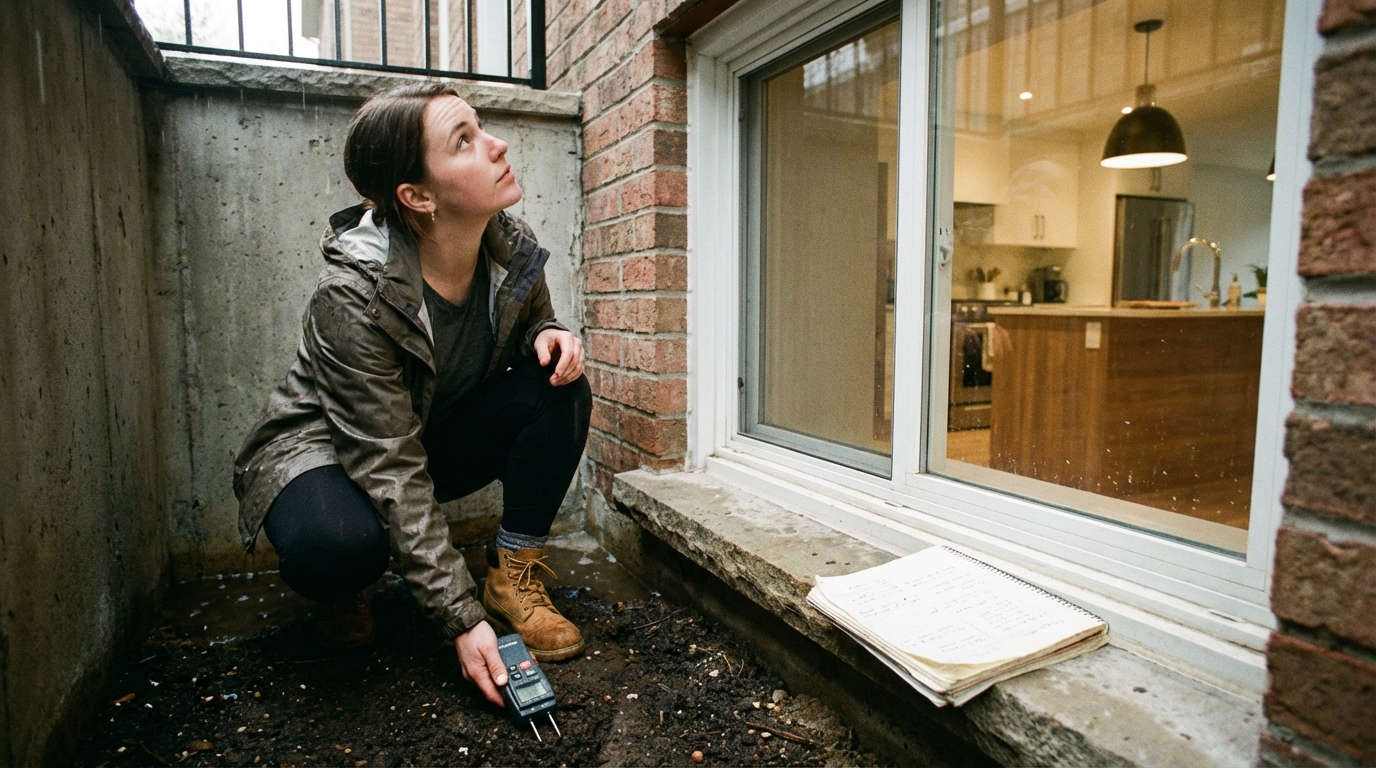
Mold does not grow randomly. It only establishes itself when three conditions are met simultaneously: a source of moisture, a nutrient supply, and a temperature within its growth range. All three are required. Remove any one of them and mold cannot take hold, no matter how many spores are present in the air.
This matters practically because it tells you where prevention effort pays off — and why moisture control is the only lever most homeowners can realistically pull.
Why Mold Is Everywhere (But Doesn’t Always Grow)
Mold spores are present in virtually every indoor and outdoor environment on Earth. They travel through air, settle on surfaces, and wait. A home that has never had a mold problem still has mold spores in it — they are simply dormant because one or more of the three growth conditions is not being met.
This is an important frame for understanding mold prevention: the goal is not to eliminate spores (impossible) but to deny them the conditions they need to activate.
Moisture: The Factor You Can Control
Of the three requirements, moisture is the most important — and the one you have the most control over. Without adequate moisture, mold spores remain dormant indefinitely even when nutrients and temperature are ideal.
Why Moisture Is the Critical Variable
Temperature inside a home is almost always within the range mold tolerates. Nutrients exist in most building materials. But moisture varies dramatically based on your home’s conditions, your habits, and what leaks or failures have occurred. Moisture is the lever that tips a dormant environment into an active one.
Sources of Indoor Moisture
Moisture problems in homes come from several categories:
Everyday activities. Normal household tasks add significant moisture to indoor air. Showering, cooking, running a dishwasher, and doing laundry all release water vapor. In a well-ventilated home this dissipates quickly. In a poorly ventilated one, it accumulates — particularly in bathrooms, kitchens, and laundry areas.
Leaks and water intrusion. Plumbing leaks inside walls, roof leaks into attic spaces, and groundwater seeping through foundations or crawl space floors are the most serious moisture sources because they often go undetected for extended periods. A slow drip inside a wall cavity can sustain mold growth for months before any surface sign appears.
Flooding and water damage events. Floods, appliance failures, and burst pipes saturate building materials rapidly. The 48-hour window after a water event is critical — materials that stay wet beyond this point begin to support mold colonization. Stachybotrys chartarum (black mold) specifically requires material that has been wet for 7 or more consecutive days, making it a reliable marker of chronic, unaddressed water damage.
Condensation. Warm, humid air contacting cold surfaces deposits liquid water — most visibly on windows and cold exterior walls in winter. Less visibly, condensation occurs inside wall cavities where warm interior air meets cold exterior surfaces. Chronic condensation in these hidden locations creates sustained moisture without any obvious leak.
Wicking. Porous materials absorb moisture by direct contact with wet adjacent surfaces. Drywall touching a wet concrete foundation, carpet padding over a damp slab, or wood framing in contact with wet soil can all wick moisture continuously even without a discrete leak.
Condensate from HVAC systems. Air conditioning and refrigeration equipment removes moisture from the air, which must drain properly. Clogged condensate lines, failed drain pans, or improper system installation can deposit that water onto nearby building materials — ceiling tiles, insulation, ductwork interiors.
Inadequate ventilation of moisture-producing fixtures. Dryers, range hoods, bathroom fans, and whole-house ventilation systems should exhaust humid air to the exterior. When they recirculate it or vent into attic or crawl space, that moisture has nowhere to go.
Furnishings and materials. Upholstered furniture, carpet, and stored soft goods retain moisture from the surrounding air. Placing furniture tight against exterior walls reduces air circulation and can create localized pockets of elevated humidity — enough to sustain mold growth on the wall surface behind the piece.
The Humidity Threshold
The EPA recommends keeping indoor relative humidity between 30% and 50%. Most mold species can begin growing at relative humidity above 70% on sensitive surfaces, and the risk increases substantially above 80%. Keeping your home below 60% is a practical target that significantly reduces mold risk across all species.
A basic hygrometer — available for under $20 at any hardware store — lets you monitor at-risk spaces like basements, bathrooms, and crawl spaces. Dehumidifiers in chronically damp spaces are one of the most cost-effective mold prevention investments available.
Nutrients: What Mold Eats
Mold is a decomposer — it breaks down organic matter for energy. Nearly every building material and household item contains some form of organic compound that can serve as a mold nutrient. This is why mold can grow on such a wide variety of surfaces.
Primary Nutrient Sources in Homes
House dust. Ordinary house dust is a nutrient-rich mixture of shed human skin cells, pet dander, pollen, fabric fibers, and other biological particles. A thin layer of dust on virtually any surface provides enough organic material to support mold growth when moisture is present. This is why even seemingly “clean” materials can develop mold if they stay damp.
Surface and construction materials. The most common building materials in residential construction are highly suitable mold food sources:
- Drywall — The paper facing on standard gypsum drywall is cellulose, an ideal mold substrate. Once the paper has been wet for any significant period, the back face (inside the wall cavity) is often the first location to colonize.
- Wood framing and subfloor — Structural lumber contains the cellulose and lignin that many mold species, including Stachybotrys, use as a primary food source.
- Ceiling tiles — Acoustic and fiber ceiling tiles are highly porous and cellulose-rich, making them among the most vulnerable materials in a building.
- Wallpaper — Wallpaper paste and the paper itself provide nutrients, and the gap between wallpaper and drywall can trap moisture and support growth invisible from either side.
Carpet and upholstery. Carpet fibers, carpet padding, and upholstered furniture fabrics all retain moisture and provide organic material. Carpet over a concrete slab is particularly vulnerable because concrete wicks ground moisture and the carpet traps it.
Stored materials. Books, cardboard boxes, clothing, and other stored soft goods are nutrient-rich and moisture-retaining. Basements and closets where these items are stored are common mold problem areas.
Plants and food. Overwatered houseplants, compost, and any food left out or improperly stored contribute to indoor mold. Potting soil itself can harbor mold species that spread to nearby surfaces.
Porous vs. Non-Porous Surfaces
The porosity of a material matters because it determines how deeply mold can penetrate and how completely nutrients are accessible.
Porous and fibrous materials — drywall, wood, carpet, ceiling tiles, insulation — provide nutrients throughout their structure, not just on the surface. Mold can reach deep past the surface level to cause damage that cannot be addressed by surface cleaning alone. Once mold has colonized drywall or wood at depth, the only effective remedy is removal.
Non-porous materials — ceramic tile, glass, marble, metal — do not provide nutrients themselves. Mold can only grow on their surfaces when a nutrient layer (dust, soap scum, biological debris) is present. Because the colonization is surface-only, non-porous materials are far easier to clean and do not typically require removal. This is why material choices in bathrooms and kitchens matter: tile and stone are inherently more mold-resistant than drywall or wood in high-moisture areas.
Even on non-porous surfaces, grout lines and caulk joints are porous organic materials that do feed mold — which is why bathroom tile can develop persistent mold at the grout even when the tile itself stays clean.
Temperature: The Background Condition
Temperature is the third requirement for mold growth, but in practice it is rarely the limiting factor inside a home.
The Growth Range
Most common household mold species grow between 40°F and 100°F (4°C to 38°C). The optimal range for most species is between 60°F and 80°F — which overlaps almost exactly with comfortable living temperatures. A few cold-tolerant species can grow at temperatures as low as 32°F, and some thermophilic species can grow above 130°F, but these are uncommon in residential settings.
The practical implication: normal indoor temperatures in occupied homes rarely step outside the mold-tolerant range. Unlike moisture (which varies significantly) or nutrients (which can be reduced by material choices), temperature is not a variable most homeowners can or should manipulate for mold control purposes.
Where Temperature Interacts with Moisture
Temperature matters most in how it affects moisture behavior:
- Cold surfaces attract condensation. Exterior walls, windows, and cold water pipes in warm humid air will condense moisture, creating localized wet zones even when ambient humidity is not elevated.
- Warm, stagnant air holds more moisture. High indoor temperatures combined with poor ventilation create conditions where humidity accumulates in enclosed spaces like attics, crawl spaces, and inside wall cavities.
- Seasonal temperature swings create condensation cycles inside wall assemblies, particularly in older homes without vapor barriers.
Controlling condensation — through insulation, vapor barriers, and ventilation — is where temperature management intersects with mold prevention.
How the Three Factors Interact
The three conditions for mold growth do not operate independently. They amplify each other when they coincide.
A damp basement with bare concrete walls (moisture present, minimal nutrients) is far less risky than a damp basement with carpet and drywall (moisture + high nutrient substrate). A bathroom with poor ventilation and tile walls (moisture + low-nutrient surface) develops mold primarily at the grout and caulk lines. A leaking wall with drywall and wood framing (sustained moisture + high-nutrient porous materials) creates the conditions for the most damaging and difficult-to-remediate mold infestations.
The most dangerous combination is sustained moisture + porous organic materials. This is why a slow plumbing leak inside a drywall-and-wood wall cavity is categorically more serious than visible mold on a tile surface — the nutrients are deep, the moisture is hidden, and the mold can grow for months before detection.
What This Means for Prevention
Understanding the three growth factors clarifies prevention priorities:
Moisture control is the highest-leverage action. Since nutrients exist in most building materials and indoor temperatures are always in range, moisture is the one variable you can actively reduce. Keep indoor humidity below 60%. Fix leaks within 48 hours. Ventilate moisture-producing areas properly. Inspect concealed moisture-prone locations periodically.
Material choices reduce nutrient availability. In renovation and new construction, choosing non-porous or mold-resistant materials in wet areas — cement board instead of drywall in shower surrounds, mold-resistant drywall in basements, sealed concrete over bare earth in crawl spaces — reduces the nutrient substrate available. This does not eliminate mold risk but significantly raises the bar for what conditions are needed to sustain growth.
When conditions converge, act fast. If you have a water event — flood, leak, appliance failure — the 48-hour drying window is not a guideline, it is a threshold. Materials dried within 48 hours are unlikely to develop significant mold. Materials that stay wet beyond that, particularly porous materials, should be assessed for mold risk even if no growth is visible yet.
Not sure if your situation needs a professional?
Answer a few quick questions about what you're seeing — we'll tell you whether it's a DIY fix or time to call a remediation contractor.
Related Guides
- How to Check for Mold in Your Home — testing methods, DIY kits, and when to call an inspector
- Black Mold: Identification, Health Risks, and What to Do — deep dive on Stachybotrys chartarum
- How to Remove Mold from Drywall — step-by-step removal and when to replace