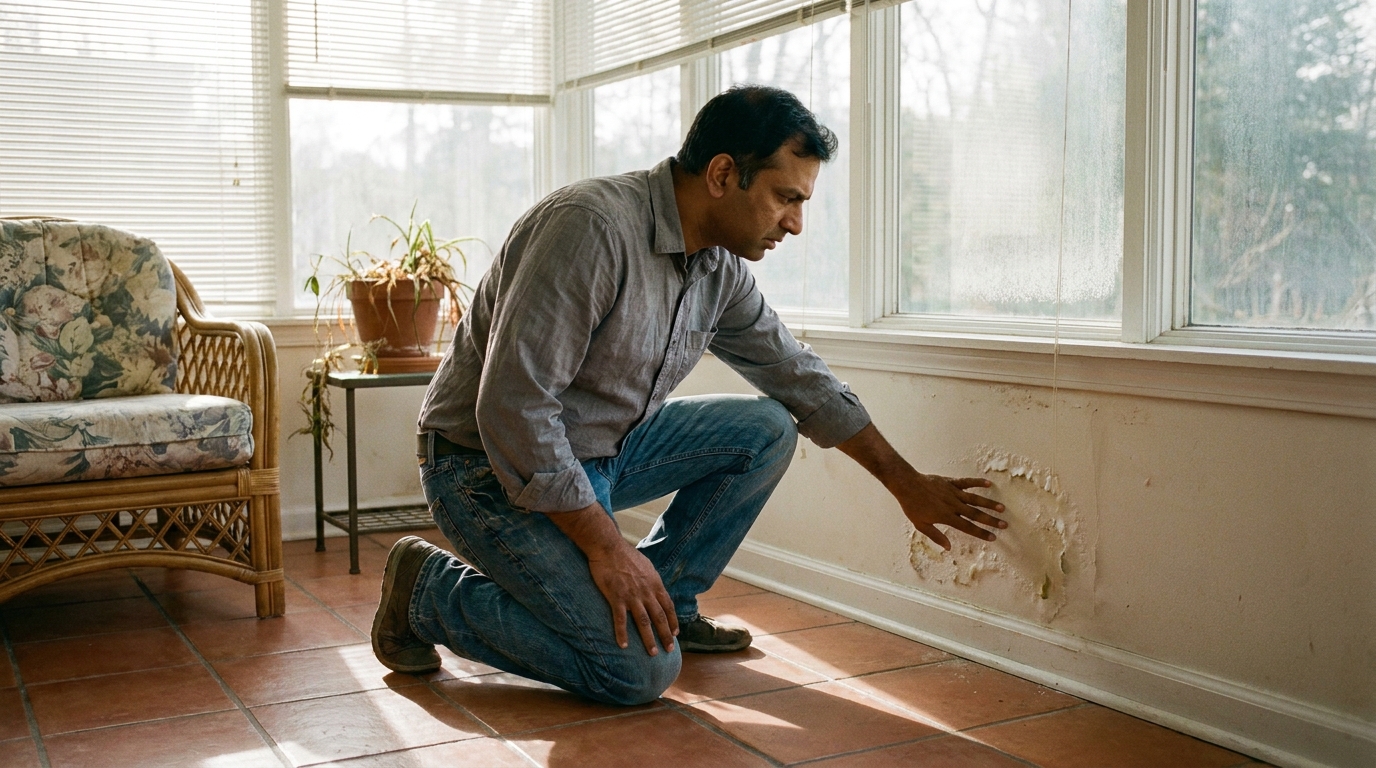
Aspergillus mold on wood is one of the most common fungal problems homeowners face after water damage, persistent leaks, or prolonged high humidity. With over 250 documented species in the genus, according to Family Handyman, Aspergillus colonizes wood faster than many other molds because of wood’s porous, cellulose-rich structure. Unlike tile or metal, wood absorbs and retains moisture deep within its fibers, giving Aspergillus both the water and the food source it needs to thrive.
This article explains why wood is uniquely vulnerable, how to tell Aspergillus apart from other molds, what health risks it poses, and when a homeowner should step back and call a professional.
Disclaimer: This article is for informational purposes only. It does not replace advice from a licensed mold remediation professional or a qualified physician. If you suspect mold-related health symptoms, consult a doctor. For mold assessment, contact a certified industrial hygienist or mold inspector.
What Is Aspergillus Mold on Wood?
Aspergillus is a large genus of fungi found virtually everywhere, both indoors and outdoors, with spores present in soil, air, and decaying organic matter. When those spores land on damp wood, they germinate and form colonies that feed on the cellulose and starches within the wood grain.
According to Mold Badger, the genus includes more than 200 species, though only a handful cause problems in homes. The most frequently encountered indoor species are Aspergillus fumigatus, Aspergillus niger, Aspergillus flavus, and Aspergillus versicolor. Each behaves slightly differently on wood. A. niger tends to produce dark, sooty patches, while A. flavus leans yellow-green. A. versicolor often shows up as a subtle greenish-white dusting on framing lumber or subflooring.
What makes wood a particularly inviting substrate is its combination of organic nutrients and moisture-holding capacity. Green (freshly cut) lumber sapwood can exceed 100% initial moisture content on an oven-dry basis, according to Oregon State University research. Even kiln-dried lumber, once exposed to a leak or flood, absorbs water rapidly through its porous grain. That absorbed moisture creates the liquid medium Aspergillus enzymes need to break down wood sugars.
What Causes Aspergillus to Grow on Wood?
Aspergillus needs four things to colonize wood: moisture, warmth, oxygen, and an organic food source. Wood provides the food and oxygen readily, so moisture and temperature are the controlling factors.
According to Oregon State University research, wood must contain free liquid water above its fiber saturation point of approximately 28% moisture content for mold fungi to grow. Below that threshold, mold spores remain dormant on the surface. They do not die; they simply wait.
Temperature plays a supporting role. According to Pacific Flood Restoration, Aspergillus grows on wood in temperatures ranging from 68°F to over 100°F. That range covers the interior of nearly every home in every season.
Here are the most common moisture sources that trigger Aspergillus growth on wood:
- Plumbing leaks behind walls or under sinks that keep framing lumber wet for days
- Roof leaks that saturate attic sheathing and rafters
- Flooding that submerges floor joists and subflooring
- Condensation on cold wood surfaces when relative humidity exceeds 60%
- Poor ventilation in crawl spaces, closets, and bathrooms
Understanding what mold needs to grow helps homeowners target the right prevention strategies. The single most effective intervention is keeping wood dry.
How Do You Identify Aspergillus Mold on Wood?
Aspergillus colonies on wood typically appear as flat, powdery, or velvety patches in a range of colors including green, yellow, white, brown, and black. However, color alone cannot confirm the species.
According to HomeCleanse, Aspergillus releases volatile organic compounds (VOCs) that produce a musty, earthy, or cigar-like smell. That odor can signal hidden growth on wood behind walls or under flooring, even when no mold is visible. If a room smells persistently musty, learning how to detect mold you cannot see becomes essential.
Visual clues to look for on wood surfaces:
- Powdery texture that smears when touched (unlike paint stains or dirt)
- Circular colony patterns that radiate outward from a central point
- Color gradients where the colony center differs from the edges
- Surface discoloration on framing lumber, plywood, or hardwood trim
According to Family Handyman, visual and odor cues are unreliable for definitive identification. Aspergillus looks similar to Penicillium and several other genera under normal viewing conditions. A mold test kit can provide a starting point, but lab analysis of a surface swab or tape-lift sample is the only way to confirm the genus and species.
One important distinction: Aspergillus on wood behaves differently than on drywall or tile. Wood’s porous grain allows hyphae (root-like fungal threads) to penetrate below the surface, making removal harder than wiping mold off a glazed tile. On drywall, Aspergillus colonizes the paper facing and can be cut away. On structural wood like joists and studs, the mold may need to be sanded or planed after surface cleaning.
What Are the Health Risks of Aspergillus on Wood?
Most healthy adults inhale Aspergillus spores daily without any ill effects, but large indoor colonies on wood can release concentrated spore loads that overwhelm normal defenses.
According to the CDC, mold exposure, including Aspergillus, can cause stuffy nose, sore throat, coughing, wheezing, burning eyes, and skin rash in sensitive individuals. The 2004 Institute of Medicine report found sufficient evidence linking indoor mold exposure to upper respiratory symptoms, cough, and wheeze in otherwise healthy people, as well as asthma exacerbation in asthmatics.
According to Mold Badger, 70% of inhaled Aspergillus spores penetrate the trachea and bronchi, with about 1% reaching the alveoli deep in the lungs. For immunocompromised individuals, organ transplant recipients, people on long-term corticosteroid therapy, or those with chronic lung diseases like cystic fibrosis, this penetration can lead to invasive aspergillosis, a serious and potentially life-threatening infection.
According to the American Lung Association, an estimated 3 to 10% of people report a mold allergy, with Aspergillus fumigatus as one of the most frequent triggers.
Certain Aspergillus species also produce mycotoxins. A. flavus generates aflatoxin, a known carcinogen, while A. fumigatus produces gliotoxin. These compounds can accumulate in indoor dust when colonies on wood release spores over weeks or months.
Anyone experiencing persistent respiratory symptoms, unexplained allergic reactions, or worsening asthma in a home with visible mold on wood should consult a physician.
Is Aspergillus on Wood Dangerous Compared to Other Molds?
Aspergillus ranks among the most common indoor molds and poses distinct risks compared to other genera, though danger depends heavily on species and individual health.
According to Bust Mold, the Penicillium/Aspergillus group appears in 38% of all tested indoor air samples, making it the most frequently detected toxic mold type in homes. In basements, where wood framing and subflooring are common, this group was present in 71% of air tests.
The table below compares Aspergillus to other molds commonly found on wood:
| Mold Type | Indoor Air Prevalence | Common Colors on Wood | Primary Health Concern | Mycotoxin Production |
|---|---|---|---|---|
| Aspergillus | 38% of samples | Green, yellow, white, brown, black | Respiratory infection, allergic reactions | Yes (aflatoxin, gliotoxin) |
| Stachybotrys (black mold) | 16% of samples | Dark green to black | Respiratory inflammation, neurological effects | Yes (satratoxins) |
| Cladosporium | 27% of samples | Olive green to brown | Asthma exacerbation, allergic rhinitis | Rarely |
| Penicillium | 38% of samples (grouped with Aspergillus) | Blue-green, white | Allergic reactions, respiratory irritation | Yes (some species) |
Prevalence data from Bust Mold.
According to ActivePure, Aspergillus fumigatus spores contain melanin in their cell walls, which helps them resist the human immune response. This makes A. fumigatus the most common cause of dangerous fungal infections among all Aspergillus species.
A key difference between Aspergillus and Stachybotrys on wood: Aspergillus colonizes quickly, often appearing within days of water exposure, while Stachybotrys requires prolonged saturation (typically weeks) and prefers cellulose-heavy materials like drywall paper. On wood specifically, Aspergillus is far more likely to be the first colonizer.
How to Prevent Aspergillus Mold from Growing on Wood
Keeping wood dry is the single most effective way to prevent Aspergillus colonization, and every other prevention strategy supports that goal.
Control indoor humidity. According to Mold Science, indoor humidity should stay between 30% and 50%. A hygrometer (available for under $15 at most hardware stores) can monitor levels. Run a dehumidifier in basements, crawl spaces, and any room where humidity regularly exceeds 50%.
Ventilate high-moisture areas. According to the American Lung Association, running exhaust fans for at least 20 minutes after bathing or cooking reduces condensation on wood surfaces. Moving furniture 2 to 3 inches from walls prevents dead-air pockets where moisture collects, according to Buk Restoration.
Fix leaks immediately. Mold can begin growing on damp wood within 24 to 48 hours of water exposure. A slow drip behind a wall can saturate framing lumber for weeks before anyone notices. Regular inspections of plumbing, roofing, and window seals catch problems early. For guidance, see our article on how to check for mold.
Apply protective coatings to exposed wood. According to Buk Restoration, water-repellent finishes with fungicide additives (refreshed every 3 to 5 years on exterior decks) and clear polyurethane on furniture create moisture barriers. One caveat: according to Perma-Chink Systems, borate wood preservatives prevent wood decay fungi but do not reliably prevent surface mold growth. Some mold types actually thrive on borate-treated wood.
Dry water-damaged wood within 48 hours. If a pipe bursts or a roof leaks, extract standing water, set up fans and dehumidifiers, and monitor wood moisture with a pin-type moisture meter. Wood moisture content should drop below 15% to prevent colonization.
When Should You Call a Professional?
Homeowners should call a certified mold remediation professional when the affected area exceeds 10 square feet, when mold returns after cleaning, or when structural wood is involved.
The EPA recommends that homeowners handle mold cleanup themselves only when the affected area is smaller than roughly 10 square feet (about a 3-by-3-foot patch). According to Family Handyman, Aspergillus growth larger than a few feet across warrants professional removal.
Here is a decision framework for DIY versus professional remediation on wood:
DIY may be appropriate when:
- The mold covers less than 10 square feet
- The wood is non-structural (trim, shelving, furniture)
- The moisture source has been identified and fixed
- No household members are immunocompromised or have chronic respiratory conditions
Call a professional when:
- The mold covers more than 10 square feet
- Structural wood (joists, studs, rafters, subflooring) is affected
- Mold returns after a previous cleaning attempt
- The growth followed a flood or major water event
- A musty smell persists but no visible mold is found
- Anyone in the home has asthma, allergies, or a weakened immune system
According to Bust Mold, even dead mold remnants on wood pose health risks because hyphae structures and potential mycotoxins remain. Professional remediation includes containment to prevent spore spread, HEPA-filtered air scrubbing, physical removal or sanding of affected wood, and post-remediation verification testing.
For an overview of what professional remediation typically costs, see our guide on mold remediation cost. Homeowners should also check whether their policy provides coverage by reviewing whether homeowners insurance covers mold.
Professional remediation for Aspergillus on structural wood follows a specific sequence, according to Pacific Flood Restoration:
- Air sampling to identify the mold species
- Containment of the affected area with plastic sheeting and negative air pressure
- Physical removal of all visible growth, including sanding or planing wood surfaces
- Sanitation with EPA-approved biocides
- Follow-up air samples to verify that spore counts have returned to normal levels
Choosing a qualified professional matters. Look for certifications from the IICRC (Institute of Inspection, Cleaning and Restoration Certification) or ACAC (American Council for Accredited Certification). A certified industrial hygienist can provide an independent assessment if there is any dispute about the scope of contamination.
If you need help finding a qualified mold remediation contractor in your area, visit our local contractor directory to connect with vetted professionals near you.