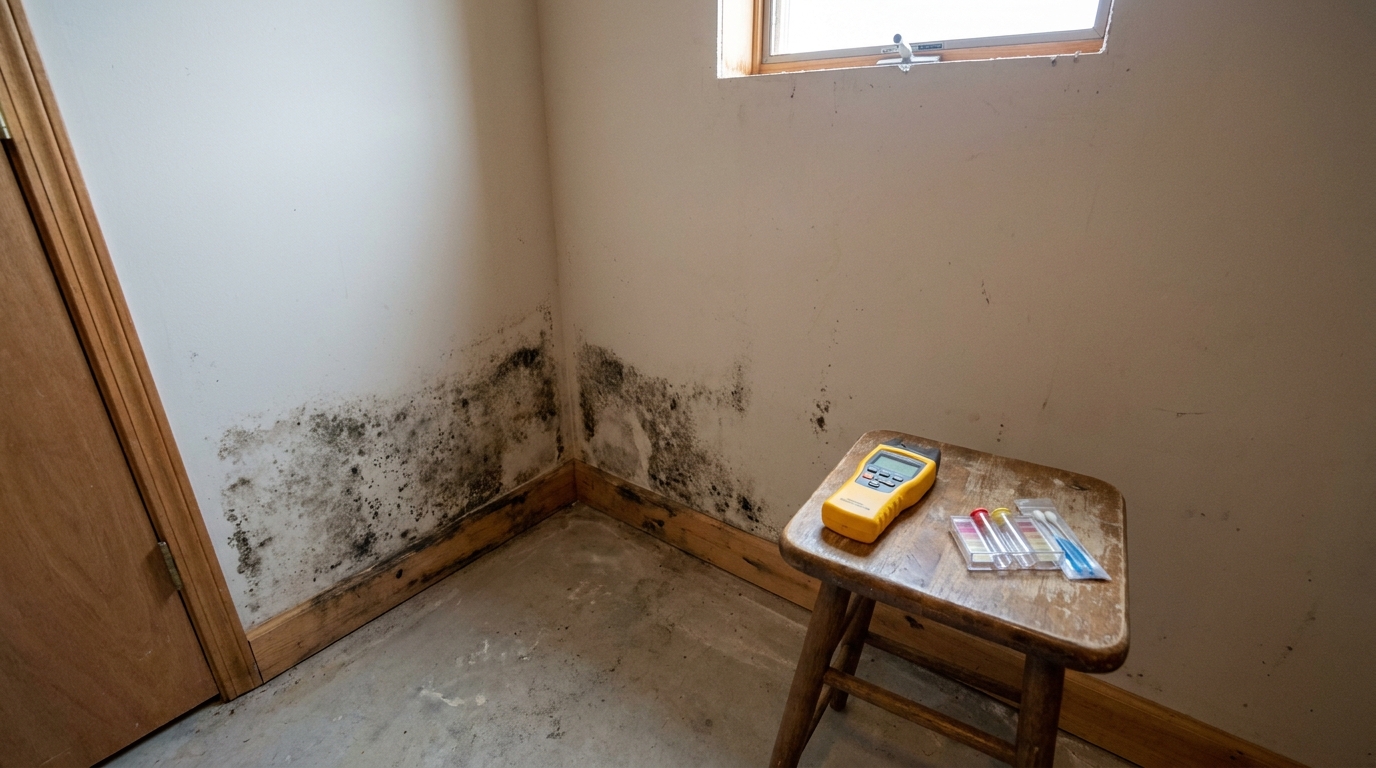
What Is Black Fungus Mold?
Black fungus mold is a colloquial term for any dark-colored mold growth found indoors. All molds are fungi, so “black fungus” and “black mold” describe the same organisms.
When homeowners discover dark, splotchy growth on walls, ceilings, or bathroom grout, they often search for “black fungus mold” hoping to figure out what they’re dealing with. The term gets tossed around in media reports and online forums, but it conflates several distinct organisms. In home and building contexts, it usually refers to dark mold species like Stachybotrys chartarum, Aspergillus niger, Cladosporium, or Alternaria. In medical news, “black fungus” sometimes refers to mucormycosis, a serious invasive fungal infection that is an entirely different health concern. According to the CDC, mucormycosis and aspergillosis are the two most common invasive mold infections, but these affect primarily immunocompromised individuals, not typical homeowners dealing with bathroom mold.
The fungus-mold relationship: why they’re the same thing
Mold is a subset of fungi. Every mold is a fungus, though not every fungus is a mold (yeasts and mushrooms are also fungi). When someone says “black fungus” versus “black mold,” they’re using two labels for the same category of organisms. The distinction between fungus vs mold is taxonomic, not practical. For homeowners, the terminology doesn’t change what’s growing on the wall or how to address it.
Common species that appear black
Several mold species produce dark pigmentation due to melanin in their cell walls. Here are the most frequently encountered black-appearing molds in homes:
| Species | Appearance | Common Locations | Relative Health Concern |
|---|---|---|---|
| Stachybotrys chartarum | Wet and tarry black; slimy when active | Water-damaged drywall, wallpaper, ceiling tiles | High (produces mycotoxins) |
| Aspergillus niger | Black powdery colonies | Damp walls, HVAC systems, soil | Moderate (allergenic; invasive in immunocompromised) |
| Cladosporium | Olive-black, velvety or suede-like | Bathrooms, window sills, fabrics | Low (allergenic; not known to produce toxins) |
| Alternaria | Dark brown to black, fuzzy | Showers, sinks, window frames | Low-Moderate (strong allergen; not mycotoxin-producing) |
Cladosporium is described as one of the most common black indoor molds, present in almost every home in some concentration. According to Your Mold Solutions, it has no known toxic side effects. Stachybotrys chartarum, by contrast, is less common but produces mycotoxins, which is why it draws the most concern.
Why color alone doesn’t determine toxicity
Melanin pigmentation makes many mold species appear dark, regardless of whether they produce harmful compounds. A green mold can be more hazardous than a black one depending on species and concentration. Visual color alone cannot reliably identify Stachybotrys or any other species. Professional sampling or lab analysis is required for species-level identification.
Is Black Fungus Mold the Same as Toxic Black Mold?
Not necessarily. While Stachybotrys chartarum is black, many harmless molds also appear black. Species identification requires laboratory testing.
Stachybotrys chartarum has been described as one of the world’s 10 most hazardous fungi in a scientific review. According to a 2022 review published in the National Institutes of Health, it ranked first among mycotoxin-producing molds harmful to human health on an American Industrial Hygiene Association list. But “black mold” as a visual category includes species like Cladosporium and Nigrospora, which pose no known toxic risk to humans.
What makes Stachybotrys chartarum different
S. chartarum produces trichothecene mycotoxins, specifically satratoxins, that can induce necrotic changes in experimental settings. According to the same NIH review, satratoxin H can be the main toxin produced when the mold grows on wallpaper, and it is generated in much greater amounts than other trichothecenes. This toxin production is what separates Stachybotrys from cosmetically similar species. However, the fungus’s direct clinical significance in typical home exposures is still debated among researchers.
Other black molds that aren’t considered toxic
Nigrospora is cited as a non-toxic black-pigmented mold with no known risk to humans. Cladosporium, despite being one of the most common black indoor molds, is not known to be a human pathogen. Alternaria can cause severe allergy symptoms but is not a mycotoxin-producing “toxic mold.” These species may look alarming but don’t carry the same risk profile as Stachybotrys.
Why visual identification is unreliable
Colonies of S. chartarum on building materials can start gray-white and later become gray-black, according to the NIH review. That same progression can mimic other species at various growth stages. Without microscopic examination or DNA analysis, even trained professionals cannot confirm species by sight. This is why we always recommend mold testing before making remediation decisions.
What Does Black Fungus Mold Look Like?
Black fungus mold typically appears as dark spots, patches, or fuzzy growth ranging from dark green to black, with texture varying from slimy to powdery depending on moisture.
Texture variations across different species
According to Cleveland Clinic, black mold commonly grows on cellulose-rich materials and can present differently depending on the species. Stachybotrys colonies on buildings are described as “wet and tarry black” in active growth. Cladosporium tends toward a velvety or suede-like texture. Alternaria often appears fuzzy with a dark brown-to-black coloration. Dried colonies of any species may look powdery or sooty.
How moisture affects appearance
Active, well-fed mold colonies look different from dormant ones. When moisture is abundant, Stachybotrys appears slimy and shiny. As conditions dry out, the same colony becomes powdery and may release more spores into the air. This is why disturbing dry mold without proper protection can be more hazardous than encountering wet colonies.
Distinguishing mold from dirt, soot, or staining
Dark stains on walls aren’t always mold. A few distinguishing features help: mold growth tends to appear in irregular patches or clusters rather than uniform discoloration. It often accompanies a musty, earthy smell that’s noticeable before visible growth appears. Dirt wipes off cleanly, while mold may leave staining beneath. Soot from candles or fireplaces distributes more evenly. When in doubt, a simple surface tape-lift sample sent to a lab can confirm whether the dark material is biological.
Where Does Black Fungus Mold Typically Grow?
Black fungus mold grows in moisture-rich environments with organic material: behind walls after leaks, in bathrooms with poor ventilation, and on water-damaged drywall.
High-risk locations in homes
Bathrooms, basements, laundry rooms, and showers are the most common sites because moisture is persistent in these areas. Around plumbing leaks, roof leaks, HVAC units, and air ducts, condensation and water intrusion create ideal conditions. According to Cleveland Clinic, black mold needs moisture, oxygen, temperatures between 40 and 100°F, and a cellulose-containing food source such as drywall or paper.
Materials most susceptible to black mold growth
Stachybotrys chartarum grows preferentially on high-cellulose, low-nitrogen, chronically damp materials. Drywall (gypsum board), wallpaper, ceiling tiles, wood framing, and carpet backing are prime targets. The NIH review notes that the fungus is most often found in damp gypsum boards and wallpapers in homes with humidity problems.
Hidden growth areas homeowners often miss
Behind walls, under carpets, inside ceilings, and around windows where leaks or condensation stay hidden are frequent problem zones. Flood-damaged or poorly dried building materials are especially vulnerable. Because S. chartarum can take 10 to 12 days of constant moisture before it begins producing spores, according to the NIH review, slow leaks inside wall cavities can foster significant colonies before any visible signs appear on the surface.
What Causes Black Fungus Mold to Grow?
Black fungus mold requires three conditions: moisture above 60% relative humidity, organic material like wood or drywall, and temperatures between 40 and 100°F.
The moisture threshold for mold growth
According to the CDC, Stachybotrys chartarum growth occurs when there is moisture from water damage, leaks, condensation, or flooding, and constant moisture is required. A review in Clinical Microbiology Reviews reports that the lowest relative humidity supporting general mold growth is approximately 75%, while Stachybotrys specifically requires about 93% RH at 25°C. That’s why this species tends to colonize only chronically wet materials, not just damp ones.
Common water sources that trigger growth
Plumbing leaks, roof leaks, flooding, condensation on cold surfaces, and even high ambient humidity in poorly ventilated spaces all provide the moisture mold needs. According to the EPA, if wet or damp materials are dried within 24 to 48 hours after a leak or spill, in most cases mold will not grow. That narrow window makes rapid response to water events critical.
Why ventilation matters
Stagnant, humid air allows moisture to accumulate on surfaces. The EPA notes that if bathroom mold keeps reappearing, increasing ventilation and cleaning more frequently usually prevents recurrence. Running exhaust fans during and after showers, venting clothes dryers to the outside, and ensuring air circulation around exterior walls all reduce the moisture conditions mold needs to establish colonies.
What Health Risks Does Black Fungus Mold Pose?
Black fungus mold can trigger respiratory symptoms, allergic reactions, and asthma exacerbation. Severe health effects are rare but possible with prolonged exposure to mycotoxin-producing species.
Documented health effects in research
According to Cleveland Clinic, black mold may trigger sneezing, coughing, congestion, and eye irritation, and it can worsen asthma. For most people, “black mold won’t make you very sick or kill you.” Cleveland Clinic also states that black mold is not more dangerous than other indoor molds for the general population.
The more concerning data involves mycotoxin exposure. The NIH review reports that 91% of 52 documented infant pulmonary hemorrhage cases were associated with the presence of S. chartarum in affected homes. In one Cleveland cluster from 1993 to 1998, 37 cases of pulmonary hemorrhage occurred, and 12 were fatal, a mortality rate of approximately 32%. However, a causal relationship between infant pulmonary hemorrhage and black mold has never been definitively proven, according to a clinical review in Clinical Reviews in Allergy & Immunology.
Who is most vulnerable
Infants, elderly individuals, people with asthma or mold allergies, and anyone with a weakened immune system face the greatest risk. The CDC identifies immunocompromised individuals as particularly susceptible to invasive mold infections, which can carry mortality rates of 30% to 80% or more. Healthy adults with no pre-existing respiratory conditions typically experience only mild symptoms, if any.
When to consult a physician
Anyone experiencing persistent respiratory symptoms, unexplained allergic reactions, or worsening asthma in a home with visible mold should consult a physician. A doctor can evaluate whether symptoms correlate with mold exposure and refer patients for allergy testing. We recommend erring on the side of caution, especially for households with young children or immunocompromised family members.
How Can You Tell If Black Fungus Mold Is Dangerous?
You cannot determine danger by appearance alone. Professional testing identifies species and concentration levels, and a certified industrial hygienist can assess health risk based on results.
Testing methods and their accuracy
Three primary testing methods exist: air sampling (captures airborne spore concentrations), surface tape-lift sampling (collects spores from a specific area), and bulk sampling (sends a piece of contaminated material to the lab). Air sampling provides the broadest picture of indoor air quality, while surface sampling confirms what’s growing in a specific location. Both require laboratory analysis by a mycologist for species-level identification.
What lab results actually tell you
Lab reports identify the genus and often the species of mold present, along with spore concentration levels. Results comparing indoor versus outdoor spore counts help determine whether indoor mold levels are elevated. A report showing Stachybotrys at any concentration warrants attention because this species doesn’t typically appear in outdoor air samples at significant levels. Results showing only Cladosporium at levels comparable to outdoor air are generally considered normal.
Cost and timeline for professional testing
Professional mold inspections with lab analysis typically cost $300 to $700 for a standard residential assessment, though prices vary by region and number of samples taken. Results usually take 3 to 7 business days. Homeowners who want a preliminary answer before committing to a full inspection can start with a home mold test kit that sends samples to an accredited lab.
Can You Remove Black Fungus Mold Yourself?
Small areas under 10 square feet on non-porous surfaces can often be cleaned safely. Larger areas, porous materials, or growth inside walls require professional remediation.
The 10-square-foot rule explained
The EPA’s guidance uses roughly 10 square feet (about a 3-by-3-foot patch) as the threshold for DIY mold cleanup. Below that size, on hard surfaces like tile or glass, homeowners can typically handle removal themselves. Above that threshold, or when mold has penetrated porous materials like drywall or carpet, professional remediation is recommended to prevent cross-contamination and ensure complete removal.
Safe DIY cleaning protocols
The NIH review on S. chartarum notes that a 2.4% sodium hypochlorite (bleach) solution kills mold and makes spores uncultivable, and importantly reduces levels of allergens produced by spores. Other effective agents include hydrogen peroxide (17% concentration), isopropyl alcohol (70%), and quaternary ammonium compounds. When cleaning, wear an N95 respirator, gloves, and eye protection. Seal the work area with plastic sheeting to prevent spore dispersal to other rooms.
When professional remediation is necessary
Professional help is warranted when mold covers more than 10 square feet, when it’s growing inside wall cavities or HVAC systems, when the affected person has health conditions that increase vulnerability, or when the water source hasn’t been identified and resolved. Cleveland Clinic recommends discarding porous materials like carpets, rugs, drywall, or ceiling tiles that got wet and didn’t properly dry.
What’s the Difference Between Cleaning and Remediation?
Cleaning removes visible surface mold. Remediation involves containment, material removal, HEPA filtration, moisture repair, and post-treatment verification to ensure the problem won’t return.
Why surface cleaning often fails
Wiping mold off a wall addresses the symptom, not the cause. If moisture continues, regrowth begins within days. The NIH review notes that eradication of S. chartarum involves removing contaminated building material and then applying a fungicide to all surfaces that had contact with mold. Simply spraying bleach on visible growth without removing affected materials and fixing the moisture source leads to recurring problems.
What professional remediation includes
A proper remediation protocol includes: containment of the affected area with negative air pressure, removal and disposal of contaminated porous materials, HEPA vacuuming of all surfaces, application of EPA-registered fungicides, repair of the moisture source, and post-remediation air testing to verify spore levels have returned to normal. Do not paint over mold. Expert guidance recommends that paints, including antimicrobial paints, be applied only to surfaces that have been properly cleaned and dried.
Expected costs for professional services
Professional mold remediation costs vary significantly based on the extent of contamination, materials affected, and geographic location. Industry practitioners typically quote $1,500 to $3,500 for a contained area like a single bathroom or small basement section. Extensive remediation involving multiple rooms, HVAC cleaning, or structural repairs can range from $5,000 to $15,000 or more. Costs tend to run higher in coastal and high-humidity regions where demand for remediation services is greater.
How Do You Prevent Black Fungus Mold from Returning?
Prevention requires controlling indoor humidity below 50%, fixing water leaks within 24 to 48 hours, and ensuring proper ventilation. Without moisture control, mold returns regardless of cleaning.
Humidity control strategies
The EPA recommends keeping indoor humidity below 60%, ideally between 30% and 50% relative humidity. Cleveland Clinic echoes this range. Practical steps include running dehumidifiers in basements and crawlspaces, using air conditioners in warm climates, and monitoring levels with an inexpensive hygrometer. Ensure AC drip pans stay clean and drain lines remain unobstructed.
Ventilation improvements that work
Run bathroom exhaust fans during and for at least 30 minutes after showers. Use kitchen exhaust fans when cooking or running the dishwasher. Vent moisture-producing appliances like clothes dryers to the outside, never into an attic or enclosed space. The EPA specifically notes that improving ventilation in bathrooms where mold keeps reappearing usually prevents recurrence.
Early warning signs to monitor
Condensation on windows, musty odors in specific rooms, peeling paint or wallpaper, and water stains on ceilings are all early indicators of moisture problems that precede mold growth. The EPA advises acting quickly when condensation forms: dry the wet surface and reduce the moisture source. Insulating cold water pipes and improving air circulation around exterior walls helps prevent condensation from becoming a recurring issue.
If you’ve identified black fungus mold in your home and aren’t sure whether it requires professional attention, start with our tested mold test kits to determine species and concentration levels before making remediation decisions.
Frequently Asked Questions
Here are answers to the most common questions homeowners ask about black fungus mold, its risks, and how to handle it.
Is black fungus the same thing as black mold?
Yes. All molds are fungi, so “black fungus” and “black mold” refer to the same organisms. The terms are interchangeable in a household context. In medical news, “black fungus” sometimes refers to mucormycosis, a different condition that primarily affects immunocompromised individuals.
Can I identify toxic black mold by looking at it?
No. Many mold species appear black, including non-toxic ones like Cladosporium and Nigrospora. According to the NIH, colonies of Stachybotrys chartarum can start gray-white before turning black, making visual identification unreliable. Laboratory analysis of a sample is the only way to confirm species.
How dangerous is black mold to healthy adults?
For most healthy adults, black mold causes mild symptoms like sneezing, coughing, and eye irritation if it causes any symptoms at all. According to Cleveland Clinic, “for most people, black mold won’t make you very sick or kill you.” People with asthma, mold allergies, or compromised immune systems face greater risk.
How fast does black mold grow after water damage?
Mold spores can begin colonizing damp cellulose materials within 24 to 48 hours. However, Stachybotrys chartarum specifically requires about 10 to 12 days of constant moisture before it begins producing spores, according to a review published by the NIH. The EPA states that drying materials within 24 to 48 hours prevents mold growth in most cases.
What humidity level causes black mold to grow?
Stachybotrys chartarum requires relative humidity of approximately 93% at 25°C (77°F) to grow, according to the NIH review. General mold growth can begin at around 75% RH. The EPA recommends keeping indoor humidity between 30% and 50% to prevent any mold growth.
Should I get a mold test before hiring a remediation company?
Testing before remediation helps identify the species present and establish baseline spore counts. This information determines whether professional remediation is necessary or whether DIY cleaning is appropriate. It also provides a benchmark for post-remediation verification. An independent test prevents potential conflicts of interest when a remediation company performs its own assessment.
Does bleach kill black mold?
A 2.4% sodium hypochlorite (bleach) solution kills mold on non-porous surfaces and reduces allergen levels from spores, according to the NIH review. However, bleach does not penetrate porous materials like drywall or wood, where mold roots can survive. For porous materials, removal and replacement is typically necessary rather than surface treatment alone.
Can black mold come back after professional remediation?
Mold can return if the underlying moisture problem isn’t resolved. Professional remediation addresses existing contamination, but prevention depends on ongoing humidity control, leak repair, and proper ventilation. Without fixing the water source, new mold growth can begin within weeks of remediation.