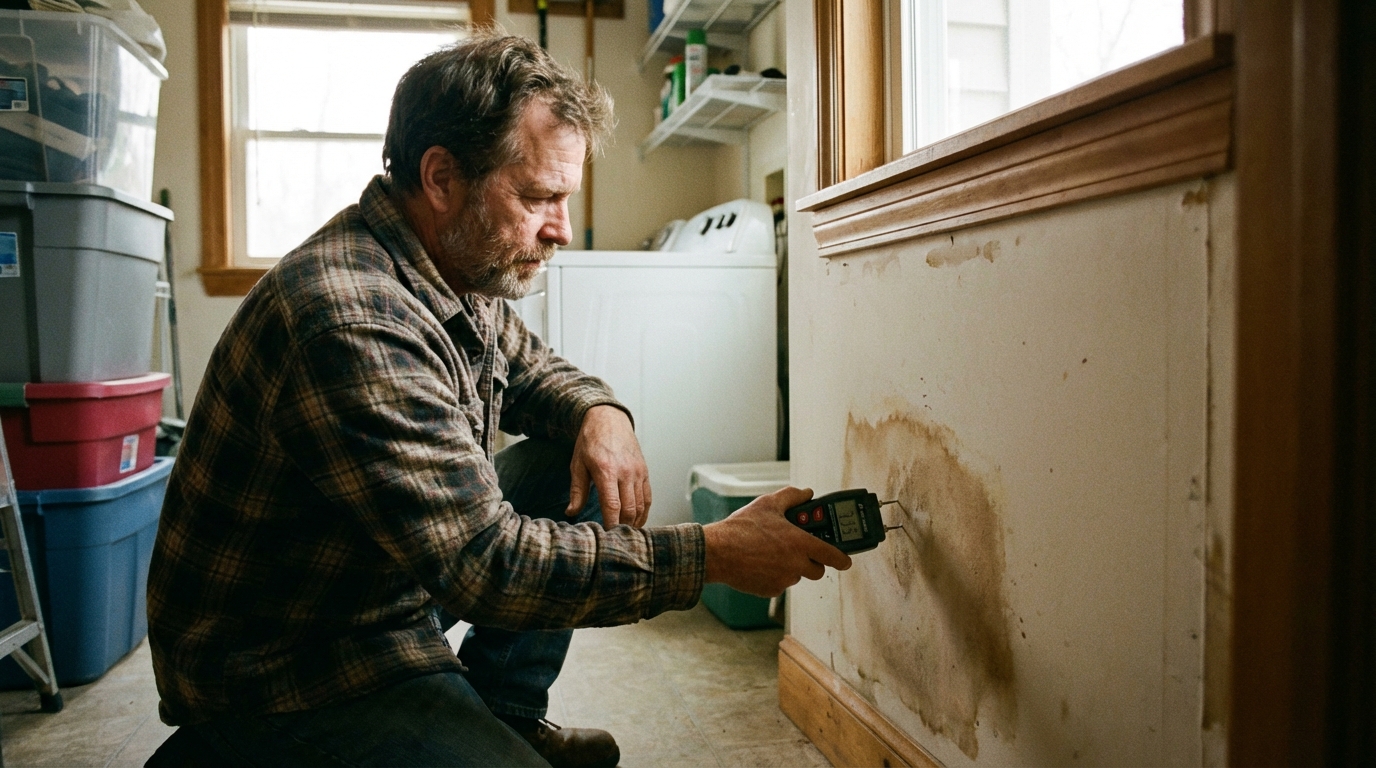
Black mold inside walls is one of the most unsettling problems a homeowner can face. The mold grows silently behind drywall, feeding on moisture and organic building materials, often for weeks or months before anyone notices. According to Realtime Labs, at least 45 million U.S. buildings contain unhealthy mold levels, and much of that growth hides in places occupants cannot see. This guide covers how wall-cavity mold develops, the warning signs to watch for, the real health risks, and a clear framework for deciding when professional help is necessary.
What Is Black Mold Inside a Wall?
Black mold inside a wall refers to fungal colonies growing on the hidden surfaces of drywall, wood framing, insulation, or vapor barriers within wall cavities. The term “black mold” most commonly points to Stachybotrys chartarum, a greenish-black species that thrives on wet cellulose materials and can produce mycotoxins. However, many dark-colored mold species grow in walls, and color alone is not a reliable identifier.
A common misconception is that black mold is the most prevalent indoor mold. According to Bust Mold, analysis of 1,300 indoor air quality samples from homes and offices found that Penicillium and Aspergillus species appeared in 38% of samples, Chaetomium in 17%, and Stachybotrys in 16%. So while Stachybotrys is a legitimate concern, other mold species are actually more common in indoor environments.
What makes wall-cavity mold particularly problematic is its hidden nature. Surface mold on a bathroom ceiling is visible and can be addressed quickly. Mold growing on the backside of drywall, around leaking pipes, or on wet framing lumber may go undetected for months. During that time, it releases spores, microbial volatile organic compounds (MVOCs), and potentially mycotoxins into the living space through gaps around outlets, seams, and HVAC penetrations.
What Causes Mold to Grow Inside Walls?
Moisture is the single most important factor, and it must be present for mold to colonize any surface. Wall cavities provide the other conditions mold needs to grow: darkness, warmth, oxygen, and organic food sources like paper-faced drywall, wood studs, and cellulose insulation.
According to the EPA, mold growth can begin in as little as 24 to 48 hours after walls become wet. That narrow window makes the source and speed of moisture intrusion critical.
The most common moisture sources for wall-cavity mold include:
- Plumbing leaks. According to Mold AQP, leaking pipes are the most common cause of mold in homes, particularly hidden leaks inside walls or above ceilings. These slow drips can saturate drywall and framing for weeks before any visible sign appears on the wall surface.
- Roof and flashing failures. Water entering through damaged roofing or improperly sealed flashing travels down wall cavities, sometimes far from the original entry point.
- Foundation and exterior wall leaks. Cracks in foundations, failed caulking, and improperly graded soil allow water to wick into wall assemblies from the outside.
- Condensation. When warm, humid indoor air contacts cooler wall surfaces or when cold pipes run through wall cavities, condensation forms. Bathrooms, kitchens, and exterior walls in humid climates are especially vulnerable.
- Flooding. Any flood event that saturates walls creates ideal conditions. If materials are not dried within 24 to 48 hours, mold colonization is likely.
One persistent misconception is that sealing or painting over a damp wall solves the problem. According to Safeguard Europe, applying sealers to damp walls may address internal dampness temporarily, but the underlying moisture source will reappear without repairing the root cause.
How Do You Know If You Have Mold Inside Your Walls?
Wall-cavity mold reveals itself through indirect clues rather than obvious visual growth. Homeowners should look for a combination of signs rather than relying on any single indicator.
According to the EPA, hidden mold should be suspected if a musty smell persists without a visible source, especially after known water damage or when occupants report health complaints. Here are the most reliable warning signs:
Musty or earthy odors. MVOCs produced by mold create a distinctive smell. Try sniffing near electrical outlets and light switch plates, which provide direct openings into wall cavities. If the odor is stronger at these points, mold may be growing inside.
Wall surface changes. Bubbling, peeling, or cracking paint; wallpaper pulling away from the surface; and discolored patches or “tide lines” from past moisture events all suggest water damage behind the wall. According to Full Circle Home Inspectors, mold persists behind surfaces and shows through as these visible changes.
Warped or soft drywall. Press gently on suspect areas. Drywall that feels soft, spongy, or bows inward has absorbed significant moisture and likely supports mold growth.
Persistent allergy symptoms. If occupants experience sneezing, congestion, or respiratory irritation that improves when they leave the building, indoor mold exposure is a possible cause. A physician can help determine whether symptoms align with mold sensitivity.
Elevated moisture readings. A moisture meter can detect mold conditions by measuring dampness levels in wall materials. According to Full Circle Home Inspectors, indoor humidity above 50% promotes mold growth inside walls, especially in poorly ventilated areas.
| Warning Sign | What It Suggests | Next Step |
|---|---|---|
| Musty smell near outlets | MVOCs from mold in wall cavity | Professional air quality test |
| Peeling or bubbling paint | Moisture behind wall surface | Moisture meter reading |
| Soft or warped drywall | Saturated wall material | Open wall for visual inspection |
| Recurring allergy symptoms indoors | Possible airborne spore exposure | Consult physician; schedule mold inspection |
| Visible water stains or tide lines | Past or ongoing moisture intrusion | Identify and repair water source |
| High moisture meter readings | Active moisture in wall assembly | Investigate source; consider mold testing |
What Are the Health Risks of Mold Behind Walls?
Mold behind walls can affect indoor air quality and occupant health even though the growth is not visible. The primary concern is not the mold itself but what it releases into the air.
According to Air Inspector, mold inside walls produces MVOCs, mycotoxins (such as trichothecenes from Stachybotrys), and bacterial endotoxins. These compounds migrate into living spaces through wall openings and can be inhaled or absorbed through dust, causing symptoms like headaches, dizziness, and flu-like illness.
The EPA states that molds produce allergens, irritants, and potentially toxic mycotoxins. Inhalation or skin contact can cause hay fever-like symptoms including sneezing, runny nose, red eyes, and dermatitis in sensitive individuals.
Some populations face greater risk. According to Harvard Health, a study of over 40,000 U.S. children found that 11% of those exposed to household mold developed asthma, compared to 7% in mold-free homes. The same source reports that a review of 19 studies linked chronic indoor mold exposure to increased stress, depression, and anxiety in both adults and children.
At a population level, the numbers are striking. According to Realtime Labs, of 21.8 million U.S. asthma cases, approximately 4.6 million (21%) are attributable to home dampness and mold exposure.
A critical misconception is that mold sealed inside a wall cavity cannot harm occupants because spores stay contained. The reality is different. MVOCs are gases, not particles. They pass through drywall, around electrical boxes, and through HVAC connections. Occupants can experience symptoms without ever seeing a single spore.
That said, most healthy adults breathe mold spores daily without developing symptoms. According to Healthline, reactions mainly affect individuals with allergies, asthma, compromised immune systems, or chronic lung conditions. Anyone experiencing persistent unexplained respiratory symptoms should consult a physician rather than self-diagnosing mold illness.
Can You Test for Mold Inside a Wall Without Opening It?
Several non-invasive and minimally invasive methods can indicate mold presence without tearing open drywall. No single method provides a definitive answer on its own, but combining techniques gives a reliable picture.
According to Palmetto Environmental Solutions, professionals typically layer multiple detection methods:
Moisture meters measure water content in wall materials without significant damage. Pinless meters scan large areas non-invasively, while pin-type meters create only tiny pinpricks but provide more precise readings. Elevated moisture strongly correlates with mold risk, though it does not confirm active growth.
Thermal imaging cameras detect temperature differences that indicate moisture pockets. Cool spots (shown as dark blue patches on thermal images) suggest areas where water has accumulated. This method identifies where to look, not whether mold is present.
Air quality testing captures airborne spores and compares indoor concentrations to outdoor control samples. If indoor spore counts are significantly elevated or contain species not typically found outdoors, hidden mold growth is likely. Professional air sampling and lab analysis typically costs $500 to $1,000, according to estimates referenced by Full Circle Home Inspectors.
Borescope inspection is minimally invasive. A technician drills a small hole (often less than half an inch) and inserts a fiber optic camera to visually inspect the wall cavity. According to the EPA’s mold course materials, investigating hidden mold “can be difficult and may require a professional with experience investigating water- and mold-damaged buildings.”
For homeowners who want a starting point before calling a professional, a mold test kit can screen for elevated spore levels in a room. These kits have limitations and lack the precision of professional lab analysis, but they can help determine whether further investigation is warranted. For a thorough assessment, checking for mold with professional-grade tools remains the most reliable approach.
| Testing Method | Invasiveness | What It Detects | Limitations |
|---|---|---|---|
| Moisture meter | None to minimal (pin pricks) | Elevated moisture in wall materials | Does not confirm mold, only moisture |
| Thermal imaging | None | Temperature anomalies suggesting moisture | Cannot identify mold species |
| Air quality sampling | None | Elevated airborne spore counts | May miss localized wall-cavity growth |
| Borescope camera | Minimal (small drill hole) | Visual mold growth in cavity | Limited field of view |
| Home mold test kit | None | General spore presence in room air | Lower accuracy than professional lab testing |
How to Prevent Mold from Growing Inside Your Walls
Preventing wall-cavity mold comes down to controlling moisture, since every other condition for growth already exists inside a typical wall assembly.
Dry water intrusion within 24 to 48 hours. The EPA emphasizes this timeline repeatedly. Whether the source is a burst pipe, a roof leak, or a flood, rapid drying is the single most effective prevention measure. Use fans, dehumidifiers, and open wall cavities if needed to ensure materials dry completely.
Keep indoor humidity below 50%. The CDC recommends maintaining home humidity no higher than 50% to inhibit mold. Use a hygrometer to monitor levels, and run dehumidifiers in basements, crawl spaces, and other damp areas.
Ventilate high-moisture rooms. Run bathroom exhaust fans for at least 30 minutes after showers. Use range hoods when cooking. Ensure fans vent to the exterior, not into attic spaces or wall cavities.
Inspect plumbing regularly. Check under sinks, around water heaters, behind washing machines, and near ice maker lines. Even small drips can saturate wall materials over time.
Maintain the building envelope. Clean gutters, repair flashing, seal cracks in foundations, and slope grading away from the structure. According to the University of Minnesota Extension, these exterior maintenance tasks are essential for keeping water out of wall assemblies.
Ensure proper construction practices. For new construction or renovations, framing lumber should have a moisture content of 18% or less before walls are closed up with insulation and drywall. Trapping wet lumber inside a finished wall creates a near-certain mold problem.
When Should You Call a Professional?
Homeowners should call a certified mold remediation professional when the problem exceeds what safe, effective DIY methods can handle. The threshold is lower than many people expect.
The EPA recommends hiring a contractor experienced in mold remediation if the affected area exceeds 10 square feet. For mold inside walls, this guideline is especially relevant because visible surface indicators often represent only a fraction of the total growth. According to Modernistic, surface mold can be just 10 to 20% of the total colony, with the rest hidden inside the wall cavity.
Call a professional if any of the following apply:
- The affected or suspected area exceeds 10 square feet
- Mold returns after DIY cleaning attempts
- The mold is inside wall cavities, behind cabinetry, or in other enclosed spaces
- Water damage occurred and materials were not dried within 48 hours
- Occupants are experiencing persistent respiratory symptoms, allergies, or other health complaints
- Anyone in the household has asthma, a compromised immune system, or chronic lung disease
- You are buying or selling a home and need documented testing results
Professional remediators use containment barriers, HEPA-filtered air scrubbers, and negative air pressure to prevent spore dispersal during mold removal from drywall. They also address the moisture source, which is essential for preventing regrowth.
For remediation cost estimates, wall-cavity mold tends to be more expensive than surface mold because it requires opening walls, removing contaminated materials, and rebuilding. According to Resto Pros, hidden wall mold can raise remediation costs 50% or more compared to surface mold removal.
Regarding homeowners insurance coverage for mold, policies typically cover mold caused by sudden, accidental events (like a burst pipe) but exclude mold from long-term maintenance issues or chronic humidity. Review your policy carefully and document all water damage events with photos and dates.
Disclaimer: This article provides general information about mold identification and remediation. It is not a substitute for professional mold assessment or medical advice. If you suspect mold in your home, consult a certified mold remediation professional. If you are experiencing health symptoms, consult a physician. MoldGuide does not perform mold remediation services.
Looking for a qualified mold remediation professional in your area? Visit our find a contractor page to connect with experienced local specialists who can assess and address mold inside your walls.