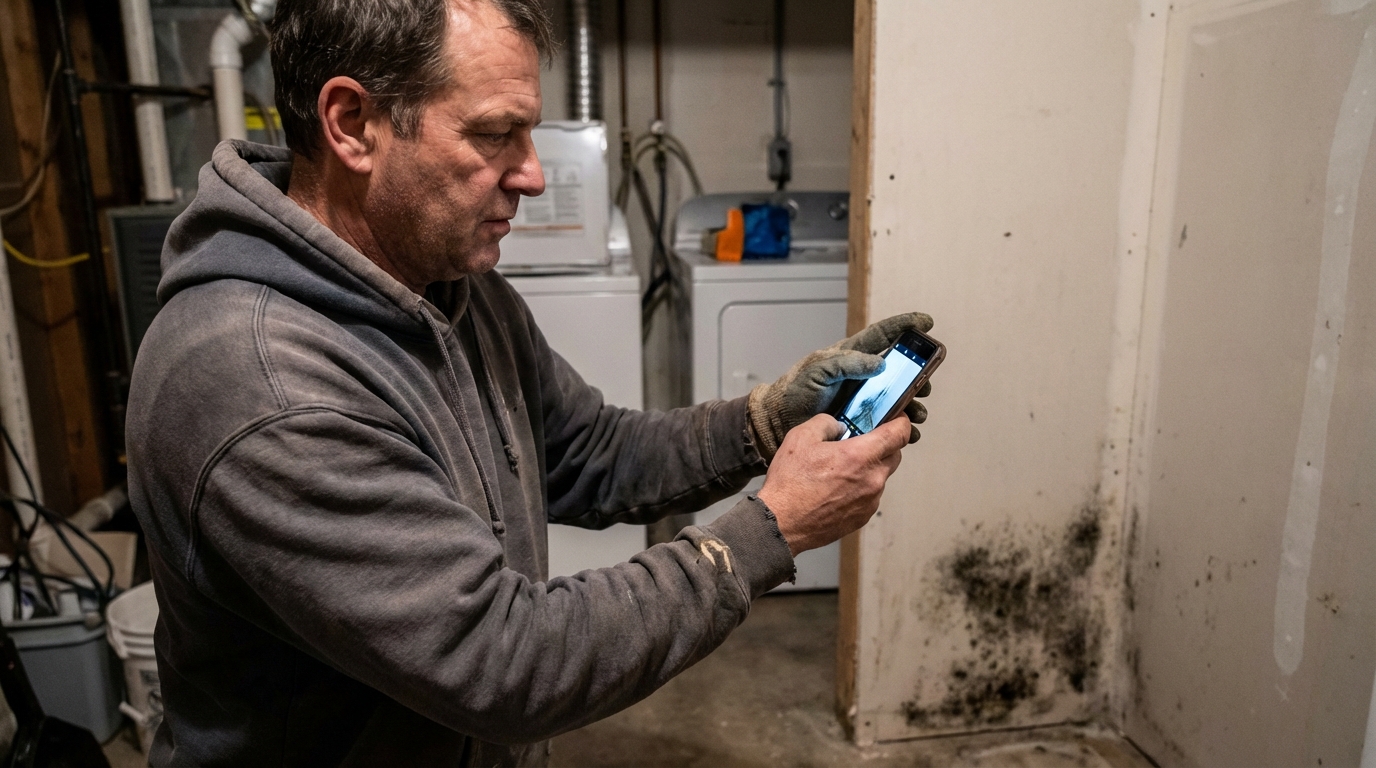
Spotting dark, fuzzy growth on a wall or ceiling can trigger immediate alarm. The phrase “black hairy mold” gets searched thousands of times each month by homeowners trying to figure out whether they are dealing with something dangerous. Here is the problem: multiple mold species look black and hairy, and lumping them all together leads to either unnecessary panic or false reassurance. This guide breaks down the specific species that match this description, explains what mold needs to grow, and helps homeowners respond proportionally based on what they are actually seeing.
Disclaimer: This article is for informational purposes only. It does not replace advice from a physician regarding health symptoms or from a certified mold remediation professional regarding removal. If you suspect significant mold growth or experience respiratory symptoms, consult the appropriate professional.
What Is Black Hairy Mold?
Black hairy mold is a descriptive term for any dark-colored fungal growth that displays a fuzzy, filamentous, or hair-like texture on household surfaces. It is not a recognized scientific species name.
Several common indoor mold species fit this visual profile. The three most frequently encountered are Cladosporium, Aspergillus niger, and Stachybotrys chartarum. Each behaves differently, grows in different conditions, and carries different implications for your home and health. According to Rainbow Restores, the CDC identifies Stachybotrys chartarum as one of the most common indoor molds, alongside Cladosporium and Penicillium, yet all three can appear dark or black.
The confusion starts because people often equate any black mold with the infamous “toxic black mold” label attached to Stachybotrys chartarum. According to Cleveland Clinic, black mold rarely causes serious illness or death, and color alone does not indicate toxicity. A dark, fuzzy patch on your bathroom ceiling is far more likely to be Cladosporium (a widespread, less concerning species) than Stachybotrys, which requires very specific moisture conditions.
The table below highlights key differences between the three species most often described as “black hairy mold.”
| Feature | Cladosporium | Aspergillus niger | Stachybotrys chartarum |
|---|---|---|---|
| Color | Olive-green to black | Black with white or yellow edges | Dark greenish-black |
| Texture | Velvety or suede-like | Powdery, granular | Slimy when wet, fuzzy when dry |
| Preferred surface | Fabrics, wood, HVAC ducts | Decaying vegetation, damp walls | Cellulose-rich: drywall, paper, wood |
| Moisture requirement | Moderate humidity | Moderate to high humidity | Prolonged saturation (very wet) |
| Mycotoxin production | Rare | Possible (ochratoxin A) | Possible (satratoxins) |
| Health concern level | Low to moderate (allergen) | Moderate (allergen, opportunistic) | Moderate to high in sensitive individuals |
Without laboratory analysis, visual identification alone cannot confirm which species is present. According to ATI Restoration, texture varies between fuzzy, slimy, and bumpy depending on moisture levels, and many dark molds mimic each other visually.
What Causes Black Hairy Mold to Grow?
Persistent moisture on organic materials is the single most important factor driving black hairy mold growth in homes.
All mold species need four things: moisture, an organic food source, oxygen, and a suitable temperature range. According to WebMD, Stachybotrys chartarum thrives at humidity levels of 70% or higher and temperatures between 40°F and 100°F. Peak growth occurs around 70°F, which happens to be a comfortable room temperature for most households.
The timeline is surprisingly fast. According to Bust Mold, mold germination begins within 24 to 48 hours of moisture exposure on damp surfaces. Under optimal conditions of 70 to 80°F and humidity above 60%, colonies can expand at roughly one square inch per day. That means a small water stain could become a 10- to 15-square-foot colony within two weeks if left unaddressed.
Common household triggers include:
- Slow plumbing leaks behind walls or under sinks that go unnoticed for weeks
- Condensation on cold surfaces like single-pane windows or uninsulated exterior walls
- Poor bathroom ventilation that traps shower moisture in ceiling cavities
- Flooding or water intrusion from storms, roof leaks, or foundation cracks
- HVAC system issues such as clogged condensate drains or ductwork sweating
A critical misconception is that black mold only appears after major flooding. According to Mold Inspect, it develops from minor issues like clogged AC drains, window condensation, or slow-drying leaks, even in well-maintained homes. The key variable is duration of wetness, not the volume of water.
How Do You Identify Black Hairy Mold in Your Home?
Identification requires examining color, texture, location, and smell, though laboratory testing is the only way to confirm species.
Start with a visual inspection. According to RetroFoam, black mold often manifests as small black specks or spots that spread over time into uneven patches with irregular edges. The texture can range from fuzzy and hair-like to slimy, depending on moisture levels. Stachybotrys tends to look wet and slimy in actively damp conditions but becomes dry and powdery as moisture decreases.
Smell provides another important clue. A potent musty, earthy odor, often compared to rotting leaves or damp soil, indicates active mold growth. According to Harvard Health, this smell is often detectable before visible signs appear because mold frequently starts growing inside wall cavities or other hidden areas. If a room smells musty but looks clean, there may be hidden mold behind surfaces.
A simple at-home test can help distinguish mold from dirt or staining. Place a drop of household bleach on the dark spot. If it lightens within a few minutes, it is likely mold or mildew. If it stays dark, it may be dirt or another substance. This test does not identify species, however.
For definitive identification, a home mold test kit can collect samples for laboratory analysis. Professional testing by a certified industrial hygienist provides the most reliable results, especially when health symptoms are involved.
According to the EPA, homeowners should inspect for moisture sources and can clean small mold areas under 10 square feet with detergent and water. Larger growth or mold hidden behind walls warrants professional assessment.
Is Black Hairy Mold Dangerous to Your Health?
Black hairy mold primarily causes allergic reactions and respiratory irritation, with severity depending on the species, exposure duration, and individual sensitivity.
The health effects of indoor mold exposure are real but frequently exaggerated in popular media. According to the EPA, molds produce allergens, irritants, and sometimes mycotoxins. Exposure can cause hay fever-like symptoms including sneezing, runny nose, red eyes, and skin rash. In people with asthma, mold exposure can trigger attacks.
The numbers tell a more nuanced story. According to Harvard Health, a study of over 40,000 U.S. children found that 11% of those in mold-exposed homes developed asthma compared to 7% in non-exposed homes. The same source reports that a review of 19 studies linked prolonged mold exposure to increased stress, depression, and anxiety in both adults and children.
Occupational data adds further context. According to WebMD, a Finnish hospital study tracking 14 mold-exposed workers over several years found that 4 developed asthma, 1 had persistent breathing issues, and many reported frequent runny noses, coughs, sinus problems, fevers, and muscle aches.
Who faces the greatest risk? Individuals with:
- Pre-existing asthma or chronic respiratory conditions
- Mold allergies (affecting roughly 4 to 5% of the U.S. population, per Cleveland Clinic)
- Compromised immune systems
- Chronic lung diseases like COPD
According to Cleveland Clinic, no clear evidence links Stachybotrys chartarum to infant pulmonary hemorrhage, memory loss, nosebleeds, or mood disorders, despite widespread claims online. The CDC notes a historical association between Stachybotrys and infant pulmonary hemosiderosis in publicized cases, but no definitive causation has been established.
The bottom line: all indoor mold deserves attention and removal, regardless of color. Anyone experiencing persistent respiratory symptoms in a home with visible mold should consult a physician for evaluation.
Where Does Black Hairy Mold Typically Appear?
Black hairy mold appears most often in areas with chronic moisture, poor air circulation, and organic building materials.
Bathrooms rank as the most common location. Daily shower steam, splashing water, and frequently damp grout lines create ideal conditions. According to Mold Inspect, mold commonly forms on ceilings, grout, behind toilets, and under sinks due to trapped humidity and poor ventilation. Homeowners dealing with shower mold should address ventilation as the first priority.
Other high-risk locations include:
- Basements and crawl spaces: Ground moisture, poor airflow, and cool temperatures create persistent dampness on concrete, joists, and stored items.
- Kitchens: Under-sink leaks, dishwasher connections, and cooking steam contribute to moisture buildup, especially in cabinets without ventilation.
- Attics: Roof leaks, inadequate insulation, and bathroom exhaust fans vented into the attic (rather than outside) trap moisture against sheathing and rafters.
- HVAC systems: Condensation inside ductwork and on evaporator coils provides both moisture and dust as a food source.
- Behind walls: Slow pipe leaks or exterior water intrusion can saturate drywall for weeks before any visible sign appears on the room side.
According to Your Mold Solutions, mold also grows on less obvious surfaces like the back side of furniture pushed against cold exterior walls, inside closets on exterior walls, and on window sills where condensation collects.
Stachybotrys chartarum specifically requires prolonged saturation, so it tends to appear near active leaks or in areas with standing water rather than in spots with only intermittent humidity. Cladosporium, by contrast, tolerates moderate humidity and shows up in a wider range of locations, including painted walls and fabric surfaces.
How Can You Prevent Black Hairy Mold?
Controlling indoor moisture is the single most effective prevention strategy, and it works against every mold species.
According to the EPA’s Mold Course Chapter 2, the agency recommends fixing leaks in roofs, basements, and pipes immediately, using HVAC systems and dehumidifiers for humidity control, ventilating with fans and windows, and avoiding carpeting in wet areas like bathrooms and basements.
Here are specific, actionable prevention steps:
Manage humidity aggressively. Keep indoor relative humidity below 60%, and ideally between 30% and 50%. According to the Florida Department of Health, indoor humidity above 60% enables mold to thrive, especially in warm, humid climates. A simple hygrometer (available for under $15) can monitor levels in problem areas.
Ventilate wet rooms properly. According to Bust Mold, bathroom exhaust fans should run for at least 30 minutes after showers and must vent to the outside, not into the attic. Kitchen range hoods and dryer vents also need proper exterior termination.
Respond to water events fast. Dry any wet materials within 24 to 48 hours. This window matters because mold germination begins in that same timeframe, according to the same source. After a leak or spill, use fans, dehumidifiers, and open windows to accelerate drying.
Inspect regularly. Check under sinks, around water heaters, behind washing machines, and in basement corners at least seasonally. Look for discoloration, peeling paint, or musty odors. Our guide on how to check for mold covers a thorough room-by-room inspection process.
The payoff of prevention is measurable. According to the National Institute of Environmental Health Sciences, the NIEHS-supported HEAL study conducted after Hurricane Katrina found that mold interventions reducing moisture cut asthma symptom days from 6.5 to 3.6 over a two-week period.
When Should You Call a Professional?
Homeowners should call a professional when mold covers more than 10 square feet, keeps returning after cleaning, hides in wall cavities or HVAC systems, or coincides with health symptoms.
The EPA sets the 10-square-foot threshold as a general guideline. Below that size, a healthy homeowner wearing an N-95 respirator, gloves, and eye protection can often handle cleanup with detergent and water. Above that size, or when the mold involves contaminated HVAC systems or structural materials, professional remediation is the safer path.
According to Angi, mold growth exceeding 10 square feet (roughly the size of a small bath mat) requires professional remediation because deep-rooted colonies in porous materials like drywall or carpet are difficult to fully eradicate without specialized containment and filtration equipment.
Other situations that warrant a professional call:
- Mold returns after cleaning. Recurring growth signals an unresolved moisture source that needs diagnosis.
- Musty odors without visible mold. Hidden colonies behind walls, under flooring, or in ductwork require professional detection equipment.
- Health symptoms correlate with time spent indoors. If occupants experience worsening allergies, coughing, or respiratory distress at home that improves when away, a certified industrial hygienist can assess indoor air quality.
- Water damage history. Homes that experienced flooding, prolonged leaks, or sewage backup should be professionally evaluated even if no mold is visible.
- Suspected Stachybotrys. Dark, slimy growth on chronically wet drywall or wood should be handled by professionals due to the potential for mycotoxin exposure during disturbance.
According to CertainTeed via HouseLogic, professional mold remediation typically costs between $2,000 and $6,000 for areas like air ducts, crawl spaces, walls, or attics. Our detailed breakdown of mold remediation costs covers pricing by project type and size. Homeowners wondering whether their policy will help should review our guide on whether homeowners insurance covers mold.
The cost of professional remediation may feel steep, but it pales against the expense of structural repairs from unchecked mold damage or the health costs of prolonged exposure.
Whether the dark fuzzy patch on your wall turns out to be common Cladosporium or something more concerning like Stachybotrys, the response starts the same way: find the moisture source, stop it, and clean up the growth. For small patches on hard surfaces, that may be a weekend project. For anything larger, recurring, or hidden, a qualified mold remediation professional can assess the situation safely and thoroughly.
Need help finding a certified mold professional in your area? Visit our contractor directory to connect with local remediation specialists.