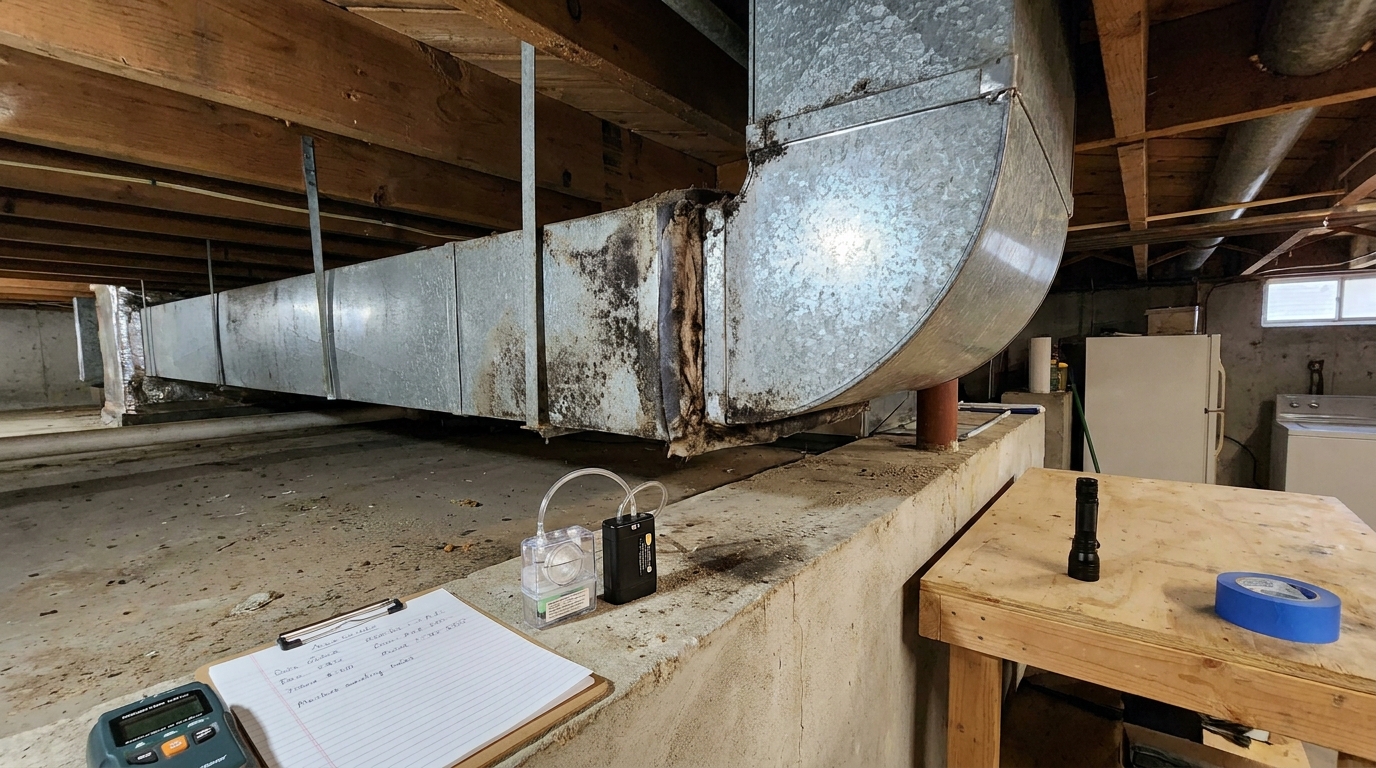
Can Mold Actually Grow Inside Air Conditioning Ducts?
Yes, mold can grow in AC ducts when moisture accumulates on surfaces, typically from condensation, leaks, or high humidity combining with dust and organic debris.
The question of whether can mold grow in air conditioning ducts has a clear answer backed by multiple research sources and federal agencies. According to the EPA, if moisture is present in ductwork, the potential for microbiological growth, including mold, increases significantly, and spores may be released into the living space. Air conditioning systems are particularly vulnerable because they generate condensation as a normal part of the cooling process.
According to Air Duct Authority, summarizing EPA and ASHRAE references, common HVAC mold genera such as Cladosporium, Aspergillus, Penicillium, and Stachybotrys can colonize duct substrates when local surface relative humidity exceeds about 60 to 70%. NIOSH-referenced data cited by COIT estimates that indoor mold and dampness affect roughly 47% of U.S. residential buildings, making HVAC-related contamination far from rare.
The critical distinction is that dry ducts with dust alone do not sustain mold growth. Water from condensation, leaks, or standing water is the trigger that activates spore germination on dust-coated surfaces. This is why air conditioning systems face higher mold risk than heating-only systems: cooling inherently produces moisture.
What Conditions Allow Mold to Grow in Ductwork?
Mold requires moisture above 60% relative humidity, temperatures between 40 and 100°F, organic material like dust or pollen, and oxygen, all commonly present in AC systems.
Moisture Sources in HVAC Systems
Condensation is the primary moisture source unique to air conditioning. When warm, humid air contacts cold coil surfaces and duct walls, water droplets form and can wet dust and debris inside the system. According to Duct Cleaning Authority, when relative humidity inside a duct reaches about 60% or higher, thin water films can form on cool metal surfaces and activate spore germination. Additional moisture sources include clogged drain pans, leaking coils, roof leaks, and plumbing failures near ductwork.
The EPA specifically warns against uninsulated or poorly sealed ducts in non-conditioned spaces, where condensation on exterior and interior surfaces is most likely. Ducts running through hot attics or damp crawlspaces face the highest condensation risk because the temperature differential between the cold supply air and the surrounding environment is greatest.
Why Dust and Debris Matter
Mold does not feed on metal or fiberglass directly. It colonizes the dust, pet dander, skin flakes, and construction debris that settle on duct surfaces over time. According to the Insulation Institute, fiberglass duct liners do not intrinsically support mold without dirt and water. Once dust accumulates and moisture arrives, however, any duct material becomes a potential growth surface.
Temperature Zones Where Mold Thrives
According to Air Duct Authority, mold generally grows best between approximately 40°F and 100°F. Air conditioning ducts typically carry air in the 55 to 65°F range, well within this window. The areas immediately downstream of the evaporator coil, where temperatures are lowest and condensation is heaviest, create especially favorable conditions.
Where in the Duct System Does Mold Grow Most Often?
Mold concentrates near cooling coils, drain pans, flex duct interiors, and return air plenums where condensation forms and airflow is slowest, allowing moisture to persist.
Cooling Coils and Evaporator Units
Industry practitioners consistently identify the evaporator coil and surrounding air handler as the primary moisture-generation point of any AC system. According to Wolff Heating & Cooling, mold can establish on or around cooling coils within 48 hours given moisture and dust. Multiple sources confirm that most confirmed mold growth in HVAC systems is found near the air handler or evaporator coil, not deep within long duct runs.
Drain Pans and Condensate Lines
Condensate drain pans collect water continuously during cooling cycles. When drains clog or pans overflow, standing water accumulates immediately upstream of the ductwork, wetting nearby surfaces and debris. This is one of the most preventable causes of mold in HVAC systems, and homeowners who learn about signs of mold in the house often trace the problem back to a neglected drain pan.
Flex Duct vs. Metal Duct Vulnerability
Flexible ducts are more susceptible to mold than rigid metal ductwork for several reasons. They can sag and create low points where condensation pools, their interior lining traps moisture, and they are difficult to clean effectively. According to the Insulation Institute, when condensation was produced by cooling air past its dew point, sustained mold growth occurred on multiple HVAC components, including metal flex duct, flat metal duct surfaces, caulks, sealants, and internal duct liners.
| Duct Location | Primary Moisture Source | Relative Risk Level |
|---|---|---|
| Evaporator coil / air handler | Condensation from cooling | Highest |
| Condensate drain pan | Standing water from drainage | Highest |
| Supply plenum (first few feet) | Cold air condensation | High |
| Flex duct (sagging sections) | Pooled condensation | High |
| Ducts in unconditioned spaces | Exterior condensation | High |
| Return air plenum | Humid return air + dust | Moderate |
| Metal supply ducts (insulated) | Condensation if insulation fails | Moderate |
| Supply registers / diffusers | Surface condensation | Low to Moderate |
How Common Is Mold in Residential AC Ducts?
Studies find visible mold in a wide range of inspected HVAC systems, with higher rates in humid climates, older systems, and homes with prior water damage or poor maintenance.
Precise national prevalence data is limited, but several data points paint a consistent picture. According to COIT, citing NIOSH data, indoor mold and dampness affect an estimated 10 to 50% of indoor environments worldwide, with approximately 47% prevalence in U.S. residential buildings. An industry mold specialist cited by IssueWire reports that field inspections reveal visible mold in about 50% of ductwork examined, particularly in humid climates or poorly maintained systems.
Regional data reinforces the climate connection. In Dubai, where humidity is extreme, 800Molds field data shows that about 65% of properties inspected after a water intrusion event had active mold growth within the duct system within six months. A 2025 report on San Antonio homes found mold-related service calls, many involving air duct contamination, were up 40% in the first nine months of 2025 compared with all of 2023, according to Texan Cleaners.
These figures should be interpreted carefully. The 50% statistic comes from inspections of systems that were already suspected of problems, not random sampling. Homes with well-maintained HVAC systems in dry climates likely have much lower rates. Still, the data confirms that mold in HVAC systems is a real and common phenomenon, not a fabricated concern.
What Does Mold in Air Ducts Smell Like?
Duct mold typically produces a musty, earthy, or stale odor that intensifies when the AC first turns on and diminishes as the system runs and air circulates.
The smell comes from microbial volatile organic compounds (mVOCs), gases released as mold actively grows. According to Dust Doctors, these odors are often strongest at startup because the blower spreads mVOCs through the home before airflow dilutes them. HVAC expert Sergey Nikolin, president at Product Air Heating & Cooling, has noted that “a musty, earthy smell is the classic sign of mold in ducts, but this smell can also come from dirty air filters, or even mold in carpets or on walls.”
A musty smell when the AC runs is a strong clue, not definitive proof. If the odor appears in multiple rooms simultaneously and only when the system operates, the ductwork or air handler is more likely the source than a single-room moisture problem. Homeowners who notice this pattern should investigate further rather than assume the worst or dismiss it entirely.
Can You See Mold in Air Ducts Without Removing Them?
Visible inspection is limited to register openings and the first few feet of ductwork. Most growth occurs deeper in the system and requires camera inspection or physical access.
What Homeowners Can Inspect Themselves
Remove supply and return register covers and look for visible discoloration, dark spots, or fuzzy growth on the first few inches of duct interior. Check the condensate drain pan and the area around the evaporator coil if accessible. Visible mold on vents and diffusers is often the first sign of an upstream moisture problem. Homeowners researching what mold looks like should know that duct mold can appear as black, green, brown, or white patches depending on the species.
When Professional Inspection Is Necessary
If musty odors persist but no visible mold is found at registers, professional inspection with a duct-mounted camera is the next step. Indoor air quality testing can measure airborne spore concentrations and compare indoor levels to outdoor baselines. A certified industrial hygienist can assess whether elevated counts indicate active growth within the system.
Does Running the AC Spread Mold Spores Throughout the House?
Yes, contaminated ducts can distribute mold spores and fragments through supply vents, though concentrations vary based on growth extent, airflow velocity, and filter efficiency.
According to Wolff Heating & Cooling, mold spores can begin spreading within 24 to 48 hours when moisture, dust, and darkness combine in HVAC components. The blower fan pushes air across contaminated coils and through colonized duct sections, carrying spores into every room connected to the supply system. Properties with no documented duct cleaning history consistently show elevated indoor airborne spore counts and indoor-to-outdoor spore ratios above 1:1, indicating active indoor amplification, according to 800Molds field data.
Filter quality matters significantly. Standard fiberglass filters capture only large particles. MERV 11 to 13 filters trap a higher percentage of mold spores, though they cannot eliminate exposure from contamination downstream of the filter, such as growth on the evaporator coil itself.
What Health Risks Come from Mold in AC Ducts?
Exposure can trigger allergic reactions, asthma exacerbation, and respiratory irritation in sensitive individuals, though severity depends on mold type, concentration, and individual susceptibility.
According to the EPA, documented health effects from indoor mold exposure include stuffy nose, sore throat, coughing, wheezing, burning or itchy eyes, and skin rash. An Institute of Medicine review cited by the CDC found sufficient evidence linking indoor mold exposure to upper respiratory tract symptoms, cough, and wheeze in otherwise healthy people, and to worsened asthma symptoms in people with asthma. The CDC also notes that hypersensitivity pneumonitis has been documented in occupants of buildings with contaminated air conditioners, ductwork, and filters.
People with asthma, allergies, chronic lung disease, or weakened immune systems face the greatest risk. Healthy adults may experience mild or no symptoms from low-level exposure. Anyone experiencing persistent respiratory symptoms that improve when away from home should consult a physician and consider having their HVAC system evaluated by a qualified professional.
How Do You Prevent Mold Growth in Air Conditioning Ducts?
Control indoor humidity below 50%, fix leaks immediately, change filters regularly, ensure proper drainage, and schedule professional maintenance to address condensation and debris buildup.
Humidity Control Strategies
According to Aristair, keeping indoor relative humidity below 60% is the single most important factor in preventing duct mold. The EPA recommends a target range of 30 to 50%. Practical steps include running the AC consistently during warm, humid seasons, installing a whole-home dehumidifier, and using bathroom and kitchen exhaust fans during and after moisture-generating activities. According to EcoTemp HVAC, maintaining humidity in the 30 to 50% range is the foundation of any mold prevention strategy.
Maintenance Schedule That Actually Prevents Growth
-
Filter replacement: Every 1 to 3 months, or monthly in high-dust or high-humidity conditions
-
Drain pan and condensate line inspection: Monthly during cooling season
-
Professional HVAC tune-up: Annually, including coil cleaning and drain verification
-
Professional duct cleaning: Every 3 to 5 years, or sooner after water damage or visible mold
-
Humidity monitoring: Use a hygrometer to track indoor RH continuously
When to Upgrade Insulation or Ductwork
Ducts in unconditioned spaces (attics, crawlspaces, garages) that lack adequate insulation will sweat during cooling season. If condensation problems recur despite maintenance, upgrading duct insulation or replacing uninsulated sections may be more cost-effective than repeated remediation. Sealing duct joints also reduces the entry of humid outside air into the system.
Should You Clean or Replace Moldy Air Ducts?
Minor surface contamination on metal ducts can be cleaned professionally. Extensive growth, porous materials like flex duct, or structural damage typically require replacement for complete remediation.
What Professional Duct Cleaning Actually Removes
Professional duct cleaning uses negative air pressure, mechanical agitation, and sometimes antimicrobial treatments to remove dust, debris, and surface mold from duct interiors. The EPA does not recommend routine duct cleaning as maintenance, but does acknowledge it is appropriate when there is visible mold growth, vermin infestation, or excessive dust and debris. On smooth metal surfaces, professional cleaning can effectively remove surface contamination.
When Replacement Is the Only Effective Option
According to the Insulation Institute, porous, mold-contaminated duct liners are very difficult to clean effectively and may require removal. In a widely cited study on fiberglass HVAC duct liner, approximately half of 1,200 liner samples analyzed from across the U.S. were colonized by Penicillium, Cladosporium, and other fungi, according to the same source. Flex duct with interior mold growth should generally be replaced rather than cleaned, as the corrugated interior traps contaminants that mechanical cleaning cannot fully reach.
Cost Comparison: Cleaning vs. Replacement
Industry practitioners typically report that professional duct cleaning for a whole home ranges from $400 to $1,000, while partial duct replacement can run $1,500 to $5,000 or more depending on accessibility and extent. Full system replacement with new ductwork may cost $5,000 to $15,000. The right choice depends on the duct material, extent of contamination, and whether the root moisture problem has been resolved. Cleaning moldy ducts without fixing the underlying moisture source is wasted money, as recontamination will follow.
Do UV Lights in Ducts Kill Mold?
UV-C lights can reduce surface mold on coils and nearby areas when properly installed, but they don’t reach all duct surfaces and are most effective as prevention, not remediation.
UV-C germicidal lights installed near the evaporator coil can inhibit mold growth on the coil surface and in the immediate vicinity. This is where most moisture accumulates, making it a logical placement. However, UV light works only on surfaces it directly illuminates. It cannot reach around bends, inside flex duct corrugations, or deep into the duct system. UV lights are best understood as one layer in a prevention strategy that includes humidity control, filtration, and regular maintenance, not a standalone solution for existing contamination.
If you’ve noticed persistent musty odors or suspect mold in your HVAC system, start with a professional inspection from a certified HVAC technician or indoor air quality specialist. Testing can confirm whether contamination exists and guide appropriate remediation, whether that’s targeted cleaning, component replacement, or system upgrades to prevent recurrence.
Frequently Asked Questions
Below are answers to the most common questions homeowners ask about mold in air conditioning ductwork.
How quickly can mold grow in AC ducts after water damage?
Mold can begin colonizing damp duct surfaces within 24 to 48 hours under favorable conditions, according to multiple HVAC industry sources. After any water damage event affecting ductwork, prompt drying and inspection are critical to prevent established growth.
Is the musty smell from my AC always mold?
Not necessarily. Dirty filters, stagnant condensate water, and even mold on carpets or walls near return vents can produce similar odors. If the smell appears in multiple rooms only when the system runs, the ductwork or air handler is the most likely source. A professional inspection can confirm the cause.
Does the EPA recommend routine duct cleaning to prevent mold?
No. The EPA does not recommend duct cleaning as routine maintenance. It advises cleaning only when there is visible mold growth, vermin infestation, or ducts clogged with excessive dust and debris. Addressing moisture problems is more important than periodic cleaning.
Can I test for mold in my ducts myself?
Homeowners can visually inspect register openings and accessible areas near the air handler. DIY mold test kits exist but often produce unreliable results because mold spores are naturally present everywhere. Professional air quality testing with indoor-to-outdoor spore count comparison provides more meaningful data.
Are certain climates more prone to duct mold?
Yes. Humid subtropical and tropical climates see significantly higher rates of duct mold. Field data from Dubai showed 65% of properties inspected after water intrusion had active duct mold within six months, according to 800Molds. San Antonio reported a 40% increase in mold-related service calls, many involving ductwork, according to Texan Cleaners.
Should I worry about black mold specifically in my ducts?
Stachybotrys chartarum (“black mold”) can grow in ducts but requires sustained moisture and cellulose-based material. It is less common than Cladosporium, Aspergillus, or Penicillium in HVAC systems. All mold types can cause health effects in sensitive individuals. A physician or certified industrial hygienist can help assess risk based on testing results.
Will replacing my air filter prevent mold in ducts?
Regular filter replacement reduces dust accumulation that serves as a mold food source, but it does not address moisture, the primary requirement for growth. Filters also cannot prevent mold on components downstream of the filter, such as the evaporator coil. Filter changes should be part of a broader prevention strategy that includes humidity control and drainage maintenance.
How do I know if a duct cleaning company is legitimate?
Look for certification from the National Air Duct Cleaners Association (NADCA). Legitimate companies will inspect before quoting, explain what they found, and address moisture sources rather than simply cleaning surfaces. Be cautious of companies that advertise extremely low prices or use scare tactics without providing evidence of actual contamination.