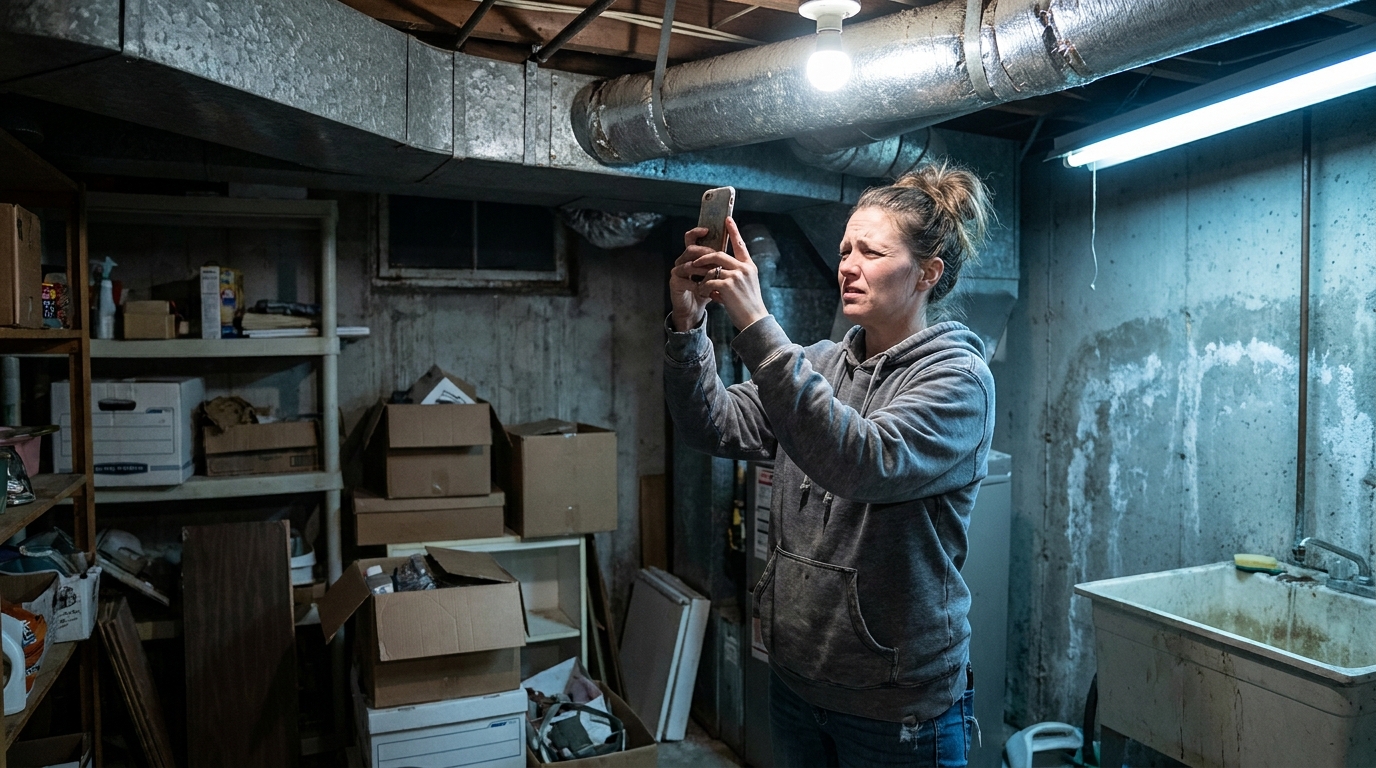
Can mold grow in air ducts? Absolutely. The dark, often damp interior of HVAC ductwork provides exactly the environment mold needs: moisture from condensation, organic debris like household dust, and temperatures that rarely drop below mold’s comfort zone. What makes duct mold uniquely concerning is the delivery system it hijacks. Every time the furnace or air conditioner kicks on, contaminated air gets pushed into every room of the house.
This guide breaks down the science behind why HVAC systems are so vulnerable to mold, how to spot the warning signs, and when a situation genuinely requires professional help versus when you might be getting upsold on unnecessary duct cleaning.
Can Mold Really Grow Inside Air Ducts?
Yes, mold readily colonizes the interior of air ducts when moisture, organic material, and moderate temperatures converge. The combination is more common than most homeowners realize.
Mold needs three things to establish a colony: a moisture source, something organic to feed on, and a temperature range roughly between 60°F and 80°F. Understanding what mold needs to grow helps explain why ductwork is so hospitable. Household dust, which accumulates on duct walls and inside air handlers, contains skin cells, pet dander, fabric fibers, and other organic particles. That dust becomes a food source the moment moisture enters the picture.
According to BELFOR Property Restoration, any indoor mold, regardless of species, degrades air quality and poses health risks when concentrated in an enclosed system like ductwork. The EPA recommends professional intervention when mold covers more than 10 square feet or involves inaccessible areas like the interior of HVAC ducts.
One common misconception deserves attention here. Visible discoloration around vent registers does not always mean mold is growing deep inside the duct system. According to HVAC inspection specialists, mold frequently grows on the exterior of vent boots where condensation collects on poorly sealed connections. Removing the vent cover and inspecting the first few inches of ductwork with a flashlight can help distinguish surface condensation issues from deeper contamination.
What Causes Mold to Grow in HVAC Ducts?
Condensation from temperature differentials, clogged filters, and poor drainage are the primary drivers of mold growth inside ductwork.
Several mechanical and environmental factors turn a clean HVAC system into a mold-friendly habitat. Here are the most common culprits:
Condensation from temperature differentials. According to Aristair, a temperature difference of roughly 20 degrees between cool supply air and warm room air causes moisture to condense on duct surfaces and around vents. In summer, cold air flowing through ducts in a hot attic creates the same effect. If that condensation does not dry quickly, mold takes hold.
Clogged or dirty air filters. Filters that go unchanged restrict airflow, causing moisture to linger in the system. According to American Home Shield, filters should be replaced every 1 to 3 months. A saturated filter can itself become a mold colony that seeds spores into the ductwork downstream.
Oversized AC units. An air conditioner that is too large for the space cools rooms quickly but shuts off before adequately dehumidifying the air. According to Trane, this short-cycling leaves excess moisture in both the living space and the duct system.
Leaking ducts and clogged drain pans. Gaps in duct joints allow warm, humid air to infiltrate and condense on cold duct walls. Clogged condensate drain pans create standing water near the air handler. According to Goodway Technologies, the EPA advises routine inspection of drain pans and condensate lines because clogged pans effectively become “mold factories.”
High relative humidity. When indoor humidity exceeds 60%, the air reaches its dew point faster, and condensation forms on any cool surface, including duct interiors. According to Four Seasons Heating & Cooling, maintaining humidity between 30% and 50% is the single most effective way to prevent duct mold.
| Cause | How It Creates Moisture | Prevention |
|---|---|---|
| Temperature differential (condensation) | Cool supply air meets warm duct walls or attic air | Insulate ducts in unconditioned spaces |
| Clogged air filters | Restricted airflow traps humidity in the system | Replace filters every 1-3 months |
| Oversized AC unit | Short-cycling prevents adequate dehumidification | Have a load calculation performed by an HVAC tech |
| Duct leaks | Warm humid air enters through gaps and condenses | Seal duct joints with mastic or metal tape |
| Clogged condensate drain | Standing water near air handler evaporates into ducts | Clean drain lines and pans seasonally |
| Indoor humidity above 60% | Excess moisture condenses on any cool surface | Use a dehumidifier; monitor with a hygrometer |
What Are the Signs of Mold in Air Ducts?
A musty smell that intensifies when the HVAC system runs is the most common and earliest warning sign of mold in ductwork.
Mold growing inside ducts is often hidden from view, which makes recognizing indirect signs critical. Knowing how to detect mold you cannot see is a skill every homeowner benefits from developing.
Musty odor tied to HVAC operation. According to GoPaschal, a persistent earthy or “wet leaves” smell that strengthens when the system runs and fades when it shuts off is the hallmark indicator. Mold releases microbial volatile organic compounds (mVOCs) as it metabolizes organic material, and these compounds produce that distinctive musty scent.
Visible discoloration around vents. Black, green, or brown spots on or near supply registers, return grilles, or inside the first few inches of visible ductwork suggest active growth. According to COIT, growth that returns after cleaning points to a deeper colony inside the system.
Unexplained health symptoms. Sneezing, itchy eyes, nasal congestion, and worsening asthma that occur primarily indoors and improve when you leave the house are red flags. According to JSE Labs, these symptoms often mimic seasonal allergies, which delays diagnosis.
Black dust or debris from vents. Dark particulate matter blowing from supply registers is sometimes mistaken for ordinary dust or soot. According to GoPaschal, this material can actually be dried mold fragments or mold spores.
Condensation or water stains near ductwork. Moisture evidence around air handlers, duct connections, or drip pans signals the conditions that make mold growth likely, even before visible colonies appear. According to Rome Environmental, water stains on or near ductwork warrant immediate inspection.
If you want to check for mold yourself, start by removing a few supply and return vent covers. Use a flashlight to examine the first 12 inches of ductwork. Look for discoloration, fuzzy growth, or moisture. A mold test kit placed near a supply vent while the system runs can also provide preliminary data, though professional air sampling offers more reliable results.
How Does Duct Mold Affect Your Health?
Mold in air ducts can trigger respiratory symptoms, worsen asthma, and cause chronic sinus problems, with effects ranging from mild irritation to serious illness.
The health impact of duct mold depends on the species present, the concentration of airborne spores, and the individual’s immune status. According to the CDC, the Institute of Medicine found sufficient evidence in 2004 linking indoor mold exposure to upper respiratory tract symptoms, coughing, and wheezing in otherwise healthy people, as well as worsened asthma symptoms in those with the condition.
The numbers paint a stark picture. According to RealTime Laboratories, approximately 4.6 million of the 21.8 million asthma cases in the United States are estimated to be attributable to dampness and mold exposure in the home. The same source reports that 93% of chronic sinus infections have been attributed to mold, citing Mayo Clinic research. Infants exposed to mold in their first year of life face nearly three times the risk of developing asthma compared to unexposed infants.
According to Affordable Air, symptoms of duct mold exposure often mimic a persistent cold: coughing, sneezing, sore throat, nasal congestion, watery eyes, and fatigue. The key diagnostic clue is that symptoms improve when the person leaves the home and return when they come back.
Certain populations face elevated risks. People with asthma, those with compromised immune systems, young children, and the elderly are more vulnerable to serious complications. Anyone experiencing persistent respiratory symptoms that correlate with time spent indoors should consult a physician for evaluation.
Why Is Mold in Air Ducts Especially Dangerous?
HVAC systems act as distribution networks, pushing mold spores into every connected room and multiplying exposure far beyond what localized mold growth would cause.
Mold on a bathroom wall affects the immediate area. Mold inside ductwork affects the entire house. Every time the blower engages, it forces air past contaminated surfaces and carries spores through supply registers into bedrooms, kitchens, and living spaces. This forced distribution is what sets duct mold apart from other indoor mold problems.
According to Angelo’s Carpet, indoor air can be 2 to 5 times more polluted than outdoor air, with poorly maintained ductwork being a significant contributor. The same source notes that mold contamination can reduce indoor air quality by up to 50%.
The danger extends beyond common allergens. Some mold species produce mycotoxins, toxic secondary metabolites that can cause neurological symptoms, chronic fatigue, and persistent headaches with prolonged exposure. Black mold (Stachybotrys chartarum) is the most widely discussed mycotoxin producer, though it is actually less common in ductwork than species like Cladosporium or Aspergillus. According to BELFOR, any mold species in an HVAC system warrants prompt attention because the distribution mechanism amplifies the risk regardless of species.
A real-world example underscores the scale of the problem. According to Mold Science, a recall of 1.7 million Midea air conditioning units was issued due to mold risks from clogged drain pans. That recall generated 152 reports of mold buildup, with 17 individuals reporting health issues including respiratory infections, allergic reactions, and sore throats.
How to Prevent Mold Growth in Your HVAC System
Controlling humidity, maintaining filters, and scheduling regular HVAC maintenance are the three pillars of duct mold prevention.
Mold spores are always present in the air. Eradication is not realistic. Prevention focuses on denying those spores the moisture they need to germinate and the organic material they need to feed on.
Control humidity aggressively. According to Trane, keeping indoor relative humidity between 30% and 50% is the single most effective preventive measure. A standalone dehumidifier or a whole-house dehumidifier integrated with the HVAC system can maintain these levels. Use a hygrometer to monitor conditions, especially during humid months.
Replace air filters on schedule. Dirty filters restrict airflow, trap moisture, and accumulate the organic debris mold feeds on. According to American Home Shield, filters should be changed every 1 to 3 months depending on the filter type, household size, and whether pets are present. Homes with prior mold issues may benefit from upgrading to higher-rated filters. According to Goodway Technologies, MERV 16 filters (near-HEPA equivalent) placed before the coils can capture mold spores and prevent recirculation.
Maintain the HVAC system twice yearly. Seasonal maintenance should include cleaning evaporator coils, flushing condensate drain lines, inspecting drain pans, and checking duct connections for leaks. According to Daikin, professional duct cleaning every 3 to 5 years removes accumulated dust and debris that would otherwise serve as mold food.
Insulate ducts in unconditioned spaces. Ductwork running through attics, crawl spaces, or garages is exposed to temperature extremes that promote condensation. Proper insulation reduces the temperature differential that causes moisture to form on duct surfaces.
Consider UV-C germicidal lights. UV-C lamps installed near the evaporator coil can inhibit mold growth on coil surfaces and in the air passing through the system. According to Trane, UV-C lights are a supplemental measure that works best alongside humidity control and regular maintenance, not as a standalone solution.
Ensure proper system sizing. An oversized AC unit short-cycles and fails to dehumidify. If your system runs for only a few minutes before shutting off, have an HVAC technician perform a Manual J load calculation to determine whether the unit is appropriately sized for your home.
When Should You Call a Professional?
Homeowners should call a professional when mold is visible inside ductwork, covers more than 10 square feet, causes health symptoms, or persists after surface cleaning.
There is a clear line between what homeowners can handle and what requires trained technicians with specialized equipment.
What you can do yourself: Remove vent covers and wash them with soap and water. Shine a flashlight into the first section of visible ductwork. Replace your air filter. Clean accessible drain pans. Monitor humidity levels. These steps help you assess the situation and maintain the system between professional visits.
What requires a professional: Anything beyond the first few inches of ductwork is inaccessible without specialized tools. According to BELFOR, the EPA recommends professional remediation when mold exceeds 10 square feet or involves HVAC components. Professionals use HEPA vacuums, negative air machines, and containment barriers to prevent spore dispersal during cleaning.
According to Horizon Air Solutions, professional cleaning is warranted when air sampling reveals more than 1,000 spores per cubic meter. A thorough HVAC mold inspection typically takes 2 to 4 hours, while the cleaning process itself requires 4 to 8 hours depending on system size.
Understanding mold remediation cost helps set expectations before hiring a contractor. Homeowners should also check whether their policy provides coverage by reviewing whether homeowners insurance covers mold.
How to avoid being upsold. Not every duct cleaning company operates with your best interest in mind. Be cautious of companies that diagnose mold without testing, claim every dark spot is dangerous, or push proprietary chemical treatments. A reputable mold inspector will take air or surface samples and send them to an independent lab before recommending remediation. Ask for IICRC S520 certification, which indicates training in mold remediation standards. Request before-and-after photos and lab results as part of any remediation contract.
Disclaimer: This article provides general information about mold in air ducts and should not replace advice from a qualified professional. Health concerns related to mold exposure should be discussed with a licensed physician. Mold remediation should be performed by certified professionals, especially in HVAC systems. MoldGuide may receive referral compensation from service providers listed on this site, but editorial content is independent of those relationships.
Ready to find a qualified mold professional in your area? Browse our directory of local mold contractors to connect with certified inspectors and remediation specialists who can evaluate your HVAC system.