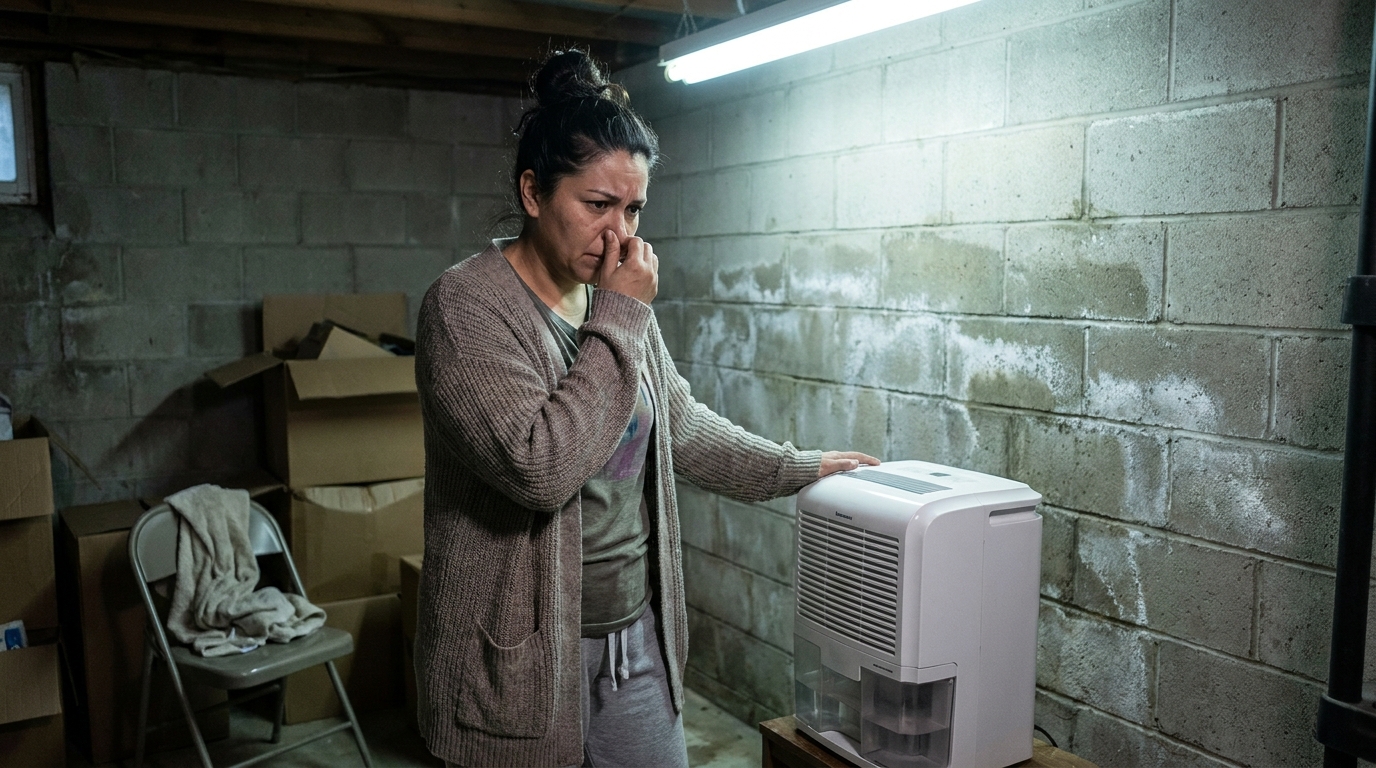
That damp, earthy smell lingering in your basement or bathroom raises an obvious question: does a dehumidifier help with smell, or do you need something else entirely? The answer depends on what is causing the odor. A dehumidifier can be a powerful tool for preventing the moisture conditions that produce musty smells, but it has real limitations when mold has already taken hold. This article breaks down exactly what a dehumidifier fixes, what it cannot fix, and how to tell the difference.
What Causes That Musty Smell in Your Home?
Musty smells almost always trace back to mold, mildew, or bacterial growth thriving in damp conditions. These microorganisms release microbial volatile organic compounds (mVOCs), the chemical byproducts responsible for that distinctive earthy, stale odor.
According to Panasonic IAQ, indoor humidity above 50% creates ideal conditions for mold and bacteria growth, which directly leads to musty odors. Mold needs three things to flourish: moisture, oxygen, and an organic food source. As EnviroVent explains, even small leaks behind walls or under cupboards can provide enough moisture for mold spores to colonize and spread.
The tricky part? You do not always see the source. Hidden mold often grows behind drywall, under sinks, or around window frames where condensation collects. These colonies release mVOCs continuously, meaning you can smell the problem long before you spot it. Understanding what mold needs to grow helps clarify why moisture control sits at the center of any odor-elimination strategy.
One common misconception is that musty smells are harmless nuisances you can mask with air fresheners. According to Aire Serv, these odors signal underlying moisture problems that, left unchecked, can promote mold growth and potentially cause respiratory irritation over time.
How Does a Dehumidifier Work, and What Does It Actually Fix?
A dehumidifier pulls warm, moist air across refrigerated coils, condensing the water vapor into liquid that drips into a collection reservoir, then releases drier air back into the room. The core function is simple: reduce relative humidity to a target range.
According to AchooAllergy.com, refrigerant-based dehumidifiers (the most common residential type) release air roughly 2°C warmer than the intake air. This slight warming effect actually helps draw in surrounding moist air, improving efficiency. These units perform best above 20°C (68°F) and 45% relative humidity, as noted by Wikipedia’s dehumidifier entry. In colder spaces like unheated basements, desiccant dehumidifiers using materials like silica gel or zeolite can reduce humidity below 35%, making them better suited for low-temperature environments.
What a dehumidifier actually fixes is the moisture environment. By holding relative humidity between 30% and 50%, it starves mold and mildew of the water they need to grow. According to Healthline, dust mites require at least 65% relative humidity to survive and reproduce, so dehumidification also reduces this common allergen.
What a dehumidifier does not do: kill existing mold, filter airborne particles, or neutralize odor molecules already present in your air. That distinction matters enormously when deciding whether humidity control alone will solve your smell problem.
Does a Dehumidifier Help With Musty Smell? The Honest Answer
Yes, a dehumidifier helps with musty smells by removing the excess moisture that allows odor-producing mold and bacteria to thrive. But it works indirectly, not by filtering or neutralizing odors.
Think of it this way: a dehumidifier addresses the cause, not the symptom. According to Preair, light musty odors can begin fading within 24 to 72 hours of running a properly sized dehumidifier, with significant improvement in 3 to 7 days for moderate cases. For severe odors embedded in porous materials like carpet, drywall, or upholstered furniture, the timeline stretches to one to three weeks or longer.
The key qualifier: this only works when the smell comes from active moisture conditions rather than established mold colonies. If mold has already colonized a surface, lowering humidity will slow its growth but will not eliminate the colony or the mVOCs it continues to release. According to Ideal Home, dehumidifiers do not filter odors, VOCs, or particles the way air purifiers do.
A dehumidifier is most effective as a preventive tool and as one part of a larger response. Pair it with source removal (cleaning visible mold, fixing leaks) for lasting results.
What Types of Odors Can a Dehumidifier Improve?
Dehumidifiers improve odors that originate from excess moisture, including musty smells from mold, mildew, damp carpets, and dust mite accumulation. They have little to no effect on odors from other sources.
Here is a practical breakdown:
| Odor Type | Dehumidifier Effective? | Why / Why Not |
|---|---|---|
| Musty/earthy (mold/mildew) | Yes, indirectly | Reduces moisture that feeds mold growth |
| Damp carpet smell | Yes, partially | Lowers humidity in carpet fibers, inhibiting bacteria |
| Dust mite odors | Yes | Mites struggle below 65% RH |
| Cooking odors | No | Not moisture-driven; needs ventilation or carbon filter |
| Pet odors | No | Caused by dander and organic compounds, not humidity |
| Smoke smell | No | Requires activated carbon filtration |
| Chemical/VOC odors | No | Needs air purification, not moisture removal |
According to Mac Carpet Care, maintaining humidity between 30% and 50% reduces moisture in carpet fibers enough to inhibit the bacterial growth responsible for damp carpet smells. For non-moisture odors, an air purifier with HEPA and activated carbon filters is the appropriate tool. According to Johns Hopkins Medicine, HEPA-equipped devices can achieve up to 99.9% efficiency in removing mold spores and bacteria from the air.
When a Dehumidifier Won’t Be Enough
A dehumidifier alone cannot solve a smell problem when the underlying cause goes beyond ambient humidity. Several scenarios demand additional action.
Active mold growth on surfaces. If mold has colonized drywall, wood, or other materials, the colony will continue producing mVOCs even in drier air. The mold itself must be physically removed. For small areas on hard surfaces, homeowners can often handle cleanup. For larger areas or porous materials like drywall mold, professional remediation may be necessary.
Ongoing water intrusion. A dehumidifier cannot outpace a leaking pipe, foundation crack, or roof leak. According to Saniac Service, persistent damp smells despite dehumidifier use almost always indicate an unresolved moisture source. Fix the leak first; then the dehumidifier can maintain dry conditions.
Undersized equipment. A unit rated for 400 square feet will struggle in a 2,000-square-foot basement. Proper sizing matters. If you are shopping for a reliable unit, our Frigidaire FAD704DWD dehumidifier review covers a popular mid-range option.
Contaminated dehumidifier. Ironically, the dehumidifier itself can become a smell source. According to Blind & Sons, mold growing on filters, in the water basin, or on fan blades can reintroduce musty odors into the room. Regular cleaning with diluted vinegar or soapy water prevents this.
Signs the Smell Is Coming From Hidden Mold
A persistent musty odor that does not improve with cleaning or dehumidification often points to mold growing in concealed locations. Learning to detect mold you cannot see is a critical homeowner skill.
Watch for these warning signs:
-
The smell intensifies in specific areas. If the odor gets stronger near certain walls, under sinks, or around HVAC vents, mold may be growing behind or inside those structures. According to Advanced DRI, six common hotspots include bathrooms, kitchens, basements, crawlspaces, HVAC ducts, and wall cavities.
-
The odor worsens during damp weather or when the HVAC runs. According to HomePro Mold, this pattern suggests mold in ventilation systems or moisture-trapped areas that release more mVOCs when humidity rises or air circulates.
-
Household members experience unexplained symptoms. Sneezing, headaches, or respiratory irritation that improves when away from home can signal airborne mold exposure. Consult a physician if symptoms persist, and consider having a certified industrial hygienist assess your indoor air quality.
-
You notice water stains, peeling paint, or warped materials. These visual clues often accompany hidden mold even when the colony itself remains out of sight.
If you suspect hidden mold, a mold test kit can provide initial data, though professional testing offers more reliable results. Our guide on how to check for mold walks through the full inspection process.
How to Use a Dehumidifier Effectively for Odor Control
Proper setup and maintenance make the difference between a dehumidifier that eliminates musty conditions and one that runs up your electric bill without results. Follow these steps for the best outcome.
Set the target humidity correctly. Aim for 30% to 50% relative humidity. According to Ionmax, this range inhibits fungal survival and reduces moisture in porous materials. Going below 30% can dry out wood, irritate airways, and create dust problems, so avoid over-drying.
Place the unit strategically. Position the dehumidifier in the dampest area of the room, away from walls and furniture that could block airflow. Basements, bathrooms, and laundry rooms are typical priority zones.
Improve air circulation. A dehumidifier works faster when paired with a fan or open interior doors that allow air to move through the space. Stagnant air pockets retain moisture and slow the drying process.
Run it continuously during initial treatment. According to Homes & Gardens, running a dehumidifier for at least 12 hours continuously can noticeably reduce dust mites and musty conditions. For initial odor treatment, continuous operation for the first several days yields the fastest results.
Clean the unit regularly. Empty the water reservoir daily (or connect a drain hose for continuous operation). Wipe down the basin, clean or replace filters monthly, and inspect coils for mold buildup. A dirty dehumidifier can become part of the problem.
Monitor with a hygrometer. Many modern units include built-in humidity meters, but a standalone hygrometer placed across the room gives you a more accurate reading of actual conditions at a distance from the unit.
Prevention Strategies: Keeping Smells From Coming Back
Eliminating a musty smell is only half the battle. Preventing its return requires consistent moisture management and a few proactive habits.
Fix all water intrusion sources. Repair leaking pipes, seal foundation cracks, and ensure gutters direct water away from your home’s foundation. No amount of dehumidification compensates for active water entry.
Ventilate high-moisture areas. Run exhaust fans during and after showers, while cooking, and when doing laundry. Proper ventilation prevents moisture from accumulating in bathrooms and kitchens where mold commonly starts.
Clean porous materials regularly. According to WebMD, vacuuming carpets at least three times per week with a HEPA-filter vacuum removes trapped mold spores, dust, and dander that contribute to musty smells. Annual deep cleaning with dry steam adds another layer of protection.
Maintain your dehumidifier year-round. In humid climates or below-grade spaces, seasonal use may not be enough. According to Preair, consistent operation at 45% to 50% relative humidity prevents mold regrowth and keeps odors from returning.
Address condensation points. Cold water pipes, single-pane windows, and uninsulated exterior walls attract condensation. Insulating pipes and upgrading windows reduces the moisture that feeds hidden mold growth.
When Should You Call a Professional?
Call a professional when the musty smell persists despite cleaning and dehumidification, when visible mold covers more than a few square feet, or when household members experience health symptoms that improve away from home.
According to Gasbye.com, mold areas exceeding a few square feet on porous materials like drywall or insulation typically require professional remediation. Homeowners can safely handle small patches on hard, non-porous surfaces, but larger infestations demand specialized containment and removal techniques.
Other situations that warrant professional help:
- A musty odor that permeates multiple rooms without an identifiable source
- Visible mold returning after repeated cleaning attempts
- Water damage from flooding, sewage backup, or major leaks
- HVAC systems that produce musty air (indicating internal contamination)
- Health concerns including persistent coughing, wheezing, or allergic reactions
The cost of mold remediation varies widely depending on the scope of the problem, but early intervention almost always costs less than allowing hidden mold to spread unchecked. A certified mold inspector can use moisture meters and thermal imaging to locate hidden growth that visual inspection alone would miss.
If you need help finding a qualified mold professional in your area, visit our contractor directory to connect with local specialists who can assess your situation and recommend the right course of action.
This article is for informational purposes only and does not constitute medical advice. If you are experiencing health symptoms you believe may be related to mold exposure, consult a physician. For mold assessment and remediation decisions, consider hiring a certified mold inspector or industrial hygienist.