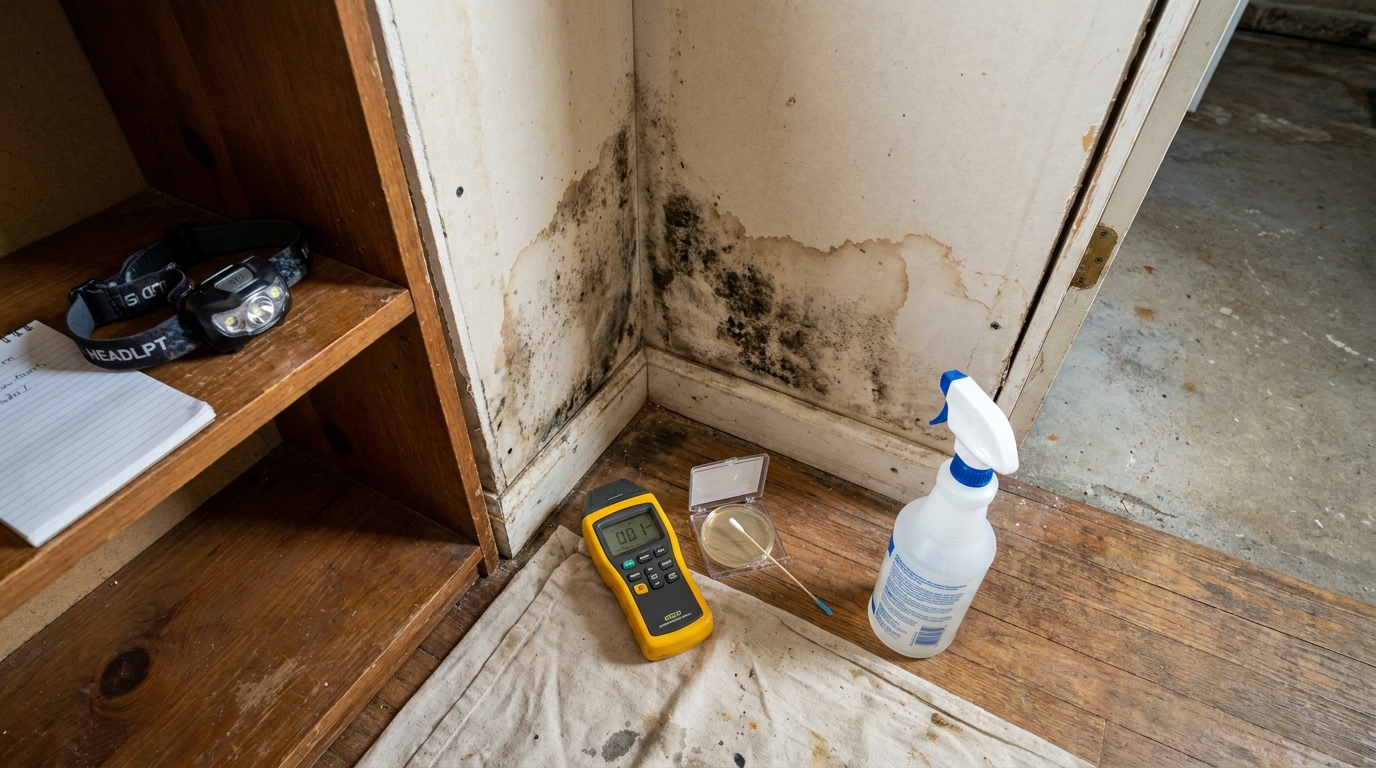
What Is a Mold Inspection Before Buying a House?
A mold inspection is a separate, specialized assessment where a certified inspector visually examines the property, tests air and surface samples, and identifies mold species, spore concentrations, and moisture sources.
A mold inspection before buying a house goes far beyond what most buyers expect from a standard home inspection. According to Working RE, 84% of homebuyers request a home inspection as part of their purchase contract, and 99% of Realtors recommend one. Yet mold testing is typically not included in that standard inspection. This gap catches many buyers off guard, sometimes after they’ve already closed.
How It Differs From a General Home Inspection
A general home inspection is a non-invasive visual examination. Inspectors may note water stains, musty smells, or visible mold-like growth, but they do not confirm hidden mold, identify species, or quantify contamination levels. According to MoldGuy, home inspectors generally only comment on mold if there are visible signs or obvious moisture problems. Detailed mold testing requires a separate specialist service.
Think of it this way: a general inspector tells you the roof leaks. A mold inspector tells you what grew because of that leak, how far it spread, and what it will cost to fix.
What Mold Inspectors Look For
A professional mold inspection covers several areas a general inspection skips entirely:
-
Moisture mapping using professional-grade moisture meters to detect damp materials behind walls, ceilings, and floors
-
Thermal and infrared imaging to reveal hidden moisture through temperature patterns
-
HVAC system examination for mold in ducts, coils, and air handlers, since HVAC contamination can spread spores throughout the home
-
Air and surface sampling sent to accredited labs for species identification and spore concentration analysis
According to Molekule, a mold inspection specifically “identifies the presence of mold and generally defines the size of the problem, usually in square footage.”
Visual Assessment vs. Laboratory Testing
A visual-only assessment can identify obvious mold growth and moisture issues, but it can’t tell you what species are present or whether airborne spore levels are elevated. Lab testing fills that gap. Air samples capture spores floating in the home’s environment, while surface samples (tape lifts or swabs) identify what’s growing on specific materials. The written report then details affected areas, likely moisture sources, health and structural implications, and recommended remediation scope.
Do You Need a Mold Inspection Before Buying?
A mold inspection is recommended if the home has visible mold, water damage history, musty odors, basement moisture, or is a foreclosure. Otherwise, a general inspection may suffice.
The statistics make the case clearly. The EPA estimates mold is present in roughly 50% of U.S. homes [Source: InspectorData]. Federal research compiled by Pearl, summarizing CDC and NIOSH data, reports dampness or visible mold in 47% of U.S. homes across all climates and price points [Source: PearlScore]. A study of 831 residential homes across 75 U.S. locations found 24% had moisture or mold problems significant enough to be documented [Source: Greenhorn Breckenridge].
Red Flags That Warrant Testing
Order a dedicated mold inspection if any of these conditions apply:
-
Visible mold or dark staining on walls, ceilings, or around windows
-
Musty or earthy odors, especially in basements, crawlspaces, or bathrooms
-
Documented water damage history (past flooding, roof leaks, plumbing failures)
-
The property is a foreclosure or has been vacant for extended periods
-
The general inspector flagged moisture concerns without testing
-
Anyone in your household has asthma, allergies, or immune sensitivities
When a General Inspection Is Enough
If the home is relatively new, has no history of water damage, shows no visible signs of moisture intrusion, and your general inspector reports dry conditions throughout, a separate mold inspection may not be necessary. Newer construction with proper ventilation and no deferred maintenance carries lower risk. That said, even newer homes can develop mold from construction moisture or HVAC issues, so buyers should weigh their comfort level.
Regional Considerations (High-Humidity Climates)
Buyers in the Southeast, Gulf Coast, Pacific Northwest, and other high-humidity regions face elevated risk. Warm, humid conditions accelerate mold growth, and homes in these areas are more likely to have chronic moisture issues in crawlspaces, attics, and behind exterior walls. If you’re purchasing in a high-humidity climate, a pre-purchase mold inspection is a stronger recommendation regardless of visible signs. For more on how moisture drives mold growth, see our guide on what causes mold in a house.
How Much Does a Pre-Purchase Mold Inspection Cost?
Pre-purchase mold inspections typically cost $300 to $700 for standard single-family homes, with pricing driven by square footage, number of samples, and whether thermal imaging is included.
| Inspection Scope | Typical Cost Range | What’s Included |
|---|---|---|
| Visual-only assessment | $150 – $300 | Visual inspection, moisture meter readings |
| Standard (visual + 2–3 samples) | $300 – $700 | Visual inspection, moisture mapping, 2–3 air/surface samples, lab analysis |
| Comprehensive (thermal imaging + 5+ samples) | $700 – $1,500+ | Full inspection, infrared imaging, 5+ samples, detailed lab report |
| Pre-purchase add-on to home inspection | $200 – $500 | Limited sampling added to general inspection visit |
[Source: O2 Mold Testing] [Source: Mold Inspectors Near Me]
Inspection Fee Breakdown
The national average for a mold inspection runs approximately $657, with most homeowners paying between $300 and $1,000 [Source: O2 Mold Testing]. For homes under 4,000 square feet, expect $300 to $400. Larger homes push costs to $700 to $1,000+ [Source: Molekule].
Lab Testing Costs (Air vs. Surface Samples)
Lab fees typically run $40 to $150 per sample, depending on the analysis type. Air samples analyzed via spore trap methodology tend to cost less per sample than PCR (DNA-based) testing. Most pre-purchase inspections include 2 to 3 samples in the base price. Additional samples add $40 to $75 each. Some providers, like Fast Mold Testing, include 3 to 5 air/surface samples, thermal imaging, and a detailed report in their $400 to $700 residential package.
What Affects the Price
Several factors drive cost variation: home square footage, number of samples collected, whether infrared imaging is used, geographic market, and the urgency of lab turnaround. Rush lab results (24-hour turnaround) typically cost more than standard 3 to 5 day processing. Providers in major metro areas like New York City quote $400 to $800 for pre-purchase inspections, while providers in smaller markets may charge less.
What Happens During a Mold Inspection?
Inspectors conduct a visual assessment, use moisture meters to detect hidden water, collect air or surface samples, and send them to a lab for species identification and spore concentration analysis.
Visual Assessment and Moisture Mapping
The inspector starts by examining all accessible areas: rooms, attic, crawlspace, basement, garage, closets, under sinks, and inside cabinets. Professional-grade moisture meters measure dampness levels in walls, floors, and ceilings. Infrared cameras may be used to detect temperature anomalies that suggest hidden moisture behind surfaces. This phase typically takes 1 to 2 hours for a standard home.
Sample Collection Methods
If sampling is warranted, inspectors use one or more methods:
-
Air samples (spore traps): A calibrated pump draws air through a cassette that captures airborne spores. Inspectors typically collect at least one outdoor sample as a baseline and one or more indoor samples from suspect areas.
-
Surface samples (tape lifts or swabs): Applied directly to visible growth to identify the specific species present on a material.
-
Bulk samples: Small pieces of material (drywall, carpet, insulation) sent to the lab for analysis.
Lab Analysis and Reporting Timeline
Samples go to an accredited laboratory, typically AIHA-accredited. Standard turnaround is 3 to 5 business days. The final report includes spore counts, species identification, moisture readings, affected areas, and remediation recommendations. Given that inspection contingency periods are typically 7 to 10 days, buyers should schedule the mold inspection early in that window to allow time for lab results and any follow-up negotiations.
How Do You Read a Mold Inspection Report?
Reports identify mold species, spore concentrations compared to outdoor baselines, moisture readings, and affected areas. Elevated indoor levels or toxic species like Stachybotrys indicate remediation needs.
Understanding Spore Counts
There are no federal standards for acceptable indoor mold levels. Instead, inspectors compare indoor spore counts to the outdoor baseline sample. If indoor concentrations significantly exceed outdoor levels, or if species found indoors are absent outdoors, that indicates an indoor mold source. A report showing indoor Aspergillus/Penicillium at 5,000 spores per cubic meter when the outdoor sample reads 500 spores per cubic meter signals a clear problem.
Species Identification and Health Risk
Not all mold species carry the same risk. Common species like Cladosporium and Alternaria are widespread outdoors and typically less concerning at moderate levels. Species like Stachybotrys chartarum (often called “black mold”), Chaetomium, or certain Aspergillus species warrant more urgent attention. Health claims should always be discussed with a physician, as individual sensitivity varies widely. According to EPA guidance summarized in multiple mold inspection resources, indoor mold exposure is tied to allergic reactions, asthma attacks, and upper respiratory symptoms, especially in sensitive individuals [Source: Tampa Bay Mold Testing].
Moisture Readings and Source Location
Moisture data in the report pinpoints where water intrusion is occurring. Readings above 16% to 17% in wood materials or above 1% in concrete typically indicate conditions favorable for mold growth. The report should identify the likely source: roof leak, plumbing failure, foundation crack, condensation, or poor ventilation. This information is critical for estimating remediation costs and determining whether the problem is ongoing or historical.
Can You Use Mold Inspection Results to Negotiate?
Yes. Buyers can request seller-paid remediation, price reductions equal to estimated cleanup costs, or credits at closing, though sellers may refuse if mold is minor or cosmetic.
According to research compiled by the National Association of Realtors, environmental issues such as mold contribute to nearly 22% of delayed real estate closings [Source: Tampa Bay Mold Testing]. That statistic tells you mold findings are common enough that sellers and their agents encounter these negotiations regularly.
Requesting Remediation Before Closing
Buyers can ask the seller to hire a licensed remediation company to address the mold before closing. This approach works best when contamination is clearly defined and the remediation scope is straightforward. Insist that the seller use an independent remediation firm (not the inspector’s own company) and that post-remediation clearance testing be performed by a third party.
Negotiating Price Reductions
If the seller won’t remediate, buyers can request a price reduction or closing credit equal to the estimated remediation cost. Industry data compiled by Greenhorn Breckenridge indicates mold remediation ranges from about $500 for minor surface issues to $30,000 for whole-house contamination [Source: Greenhorn Breckenridge]. GreenWorks cites research indicating that even small amounts of mold can reduce a property’s value by 17% to 23% on average [Source: PearlScore]. These numbers give buyers concrete leverage.
When Sellers Refuse to Address Mold
In competitive markets, sellers may refuse to negotiate on mold findings, especially if they have multiple offers. Buyers then face a choice: accept the property as-is and budget for remediation, or exercise their inspection contingency and walk away. Neither option is wrong. It depends on the severity of the findings and the buyer’s risk tolerance.
Should You Walk Away From a House With Mold?
Walk away if remediation costs exceed 5% to 10% of the purchase price, structural damage is extensive, or the seller refuses to address toxic mold species. Minor surface mold is usually manageable.
Deal-Breaker Scenarios
Consider walking away when:
-
The inspection reveals widespread Stachybotrys or other toxigenic species behind walls or in HVAC systems
-
Structural elements (framing, joists, subfloor) show significant rot or deterioration from chronic moisture
-
The moisture source is unresolved and would require major repairs (foundation replacement, full roof replacement)
-
Remediation estimates approach or exceed 10% of the purchase price
-
The seller refuses to disclose known mold history or blocks further testing
Calculating Remediation Costs
Water damage and mold cost the insurance industry $2.5 billion per year, with the average home water-damage claim running nearly $7,000 [Source: Working RE]. For individual homes, remediation costs depend on the contaminated area’s size, the materials affected, and accessibility. Get at least two remediation estimates before making a walk-away decision. A small bathroom mold issue might cost $500 to $1,500. A contaminated crawlspace with structural damage could run $10,000 to $30,000.
When Mold Is Fixable
Surface mold on bathroom caulk, window frames, or small sections of drywall is common and typically inexpensive to remediate. If the moisture source is identifiable and repairable (a leaky faucet, poor bathroom ventilation), and the mold hasn’t spread into wall cavities or structural materials, the issue is usually manageable. Many homes have minor mold that doesn’t justify walking away from an otherwise good deal.
What If the Seller Already Had a Mold Inspection?
Seller-provided inspections may be outdated, incomplete, or biased. Buyers should order an independent inspection if the report is over 90 days old or doesn’t include lab testing.
Why Independent Inspections Matter
A seller-commissioned report serves the seller’s interests. The inspector may have been chosen for favorable pricing or lenient reporting. Mold conditions can also change rapidly. A report from three months ago may not reflect current conditions, especially if the home has been vacant or experienced weather events since the inspection.
Red Flags in Seller Reports
Be cautious if the seller’s report is visual-only with no lab testing, was performed by a company that also does remediation (conflict of interest), lacks outdoor baseline samples for comparison, or doesn’t include moisture readings. A credible report should identify specific species, provide spore counts relative to outdoor baselines, and document moisture levels throughout the property.
Verifying Inspector Credentials
Check whether the inspector who produced the seller’s report holds current certifications from recognized bodies like ACAC, IICRC, or applicable state licensing boards. Verify that the lab used is AIHA-accredited. If any of these credentials are missing or unverifiable, the report’s reliability is questionable.
How Do You Find a Qualified Mold Inspector?
Look for inspectors certified by ACAC, IICRC, or state licensing boards who use AIHA or ASTM protocols, provide lab-tested reports, and have no financial ties to remediation companies.
Certifications to Look For
-
ACAC (American Council for Accredited Certification): Offers the CMRS (Council-certified Microbial Remediation Supervisor) and CMI (Council-certified Microbial Investigator) designations
-
IICRC (Institute of Inspection, Cleaning and Restoration Certification): The AMRT (Applied Microbial Remediation Technician) certification is widely recognized
-
State licensing: Some states (Texas, Florida, Louisiana, and others) require mold inspectors to hold a state-issued license
Questions to Ask Before Hiring
Before booking, ask these questions:
-
What certifications do you hold, and are they current?
-
Which lab do you use, and is it AIHA-accredited?
-
How many samples are included in your base price?
-
Do you also perform remediation? (The answer should be no.)
-
What is your turnaround time for the full report?
-
Do you carry errors and omissions insurance?
Avoiding Conflicts of Interest
The inspector who identifies the problem should never be the same company that profits from fixing it. This conflict of interest can lead to inflated findings or unnecessary remediation recommendations. Choose an inspection-only firm, and separately obtain remediation bids from independent contractors. For guidance on evaluating remediation companies, see our resource on mold remediation costs.
Important note on state disclosure laws: Many states require sellers to disclose known mold problems. However, disclosure requirements vary significantly by state, and “known” is the operative word. Sellers aren’t always required to test for mold, only to disclose what they’re aware of. A buyer’s independent inspection fills the gap that disclosure laws leave open.
If you’ve already purchased a home and discovered mold, read our guide on what to do if you just bought a house and found mold, including your legal options and remediation next steps.
Frequently Asked Questions
Here are the most common questions buyers ask about mold inspections during the home-buying process.
Does a standard home inspection include mold testing?
No. A standard home inspection is a visual examination that may note signs of moisture or visible mold-like growth, but it does not include air sampling, surface sampling, or lab analysis to confirm mold species or spore concentrations. Mold testing requires a separate specialist.
How long does a mold inspection take?
The on-site inspection typically takes 1 to 3 hours depending on the home’s size and the number of samples collected. Lab results usually arrive within 3 to 5 business days, so buyers should schedule the inspection early in their 7 to 10 day contingency period.
Who pays for a mold inspection when buying a house?
The buyer typically pays for the mold inspection as part of their due diligence costs. In some negotiations, buyers may request the seller to cover the cost, but this is uncommon. The $300 to $700 expense is generally considered a buyer’s responsibility.
Can I do a DIY mold test instead of hiring an inspector?
DIY mold test kits are available at hardware stores for $10 to $50, but most mold professionals and the EPA caution against relying on them. These kits lack controlled sampling conditions, don’t provide outdoor baseline comparisons, and often produce unreliable results. For a real estate transaction, a professional inspection with accredited lab analysis carries far more weight.
Will a mold inspection delay my closing?
It doesn’t have to. If scheduled within the first few days of the inspection contingency, results typically arrive well before the contingency deadline. The inspection itself takes only a few hours, and most labs return results within 3 to 5 business days.
Is mold always a deal-breaker when buying a house?
No. Minor surface mold on bathroom caulk or small drywall sections is common and inexpensive to remediate. Mold becomes a deal-breaker when it involves toxic species, extensive structural damage, or remediation costs that exceed 5% to 10% of the purchase price. The inspection report helps buyers distinguish between manageable issues and serious problems.
Do mortgage lenders require mold inspections?
Most conventional lenders do not require mold inspections. However, if visible mold or significant water damage is noted during the appraisal, some lenders (particularly FHA and VA loan programs) may require remediation before approving the loan. A proactive mold inspection helps buyers avoid last-minute surprises that could jeopardize financing.
What happens if mold is found after I’ve already closed?
Options depend on your state’s disclosure laws and whether the seller knew about the mold. Buyers may have legal recourse if the seller failed to disclose a known mold problem. Consulting a real estate attorney is advisable. In the meantime, address the moisture source immediately to prevent further growth and get professional remediation estimates.