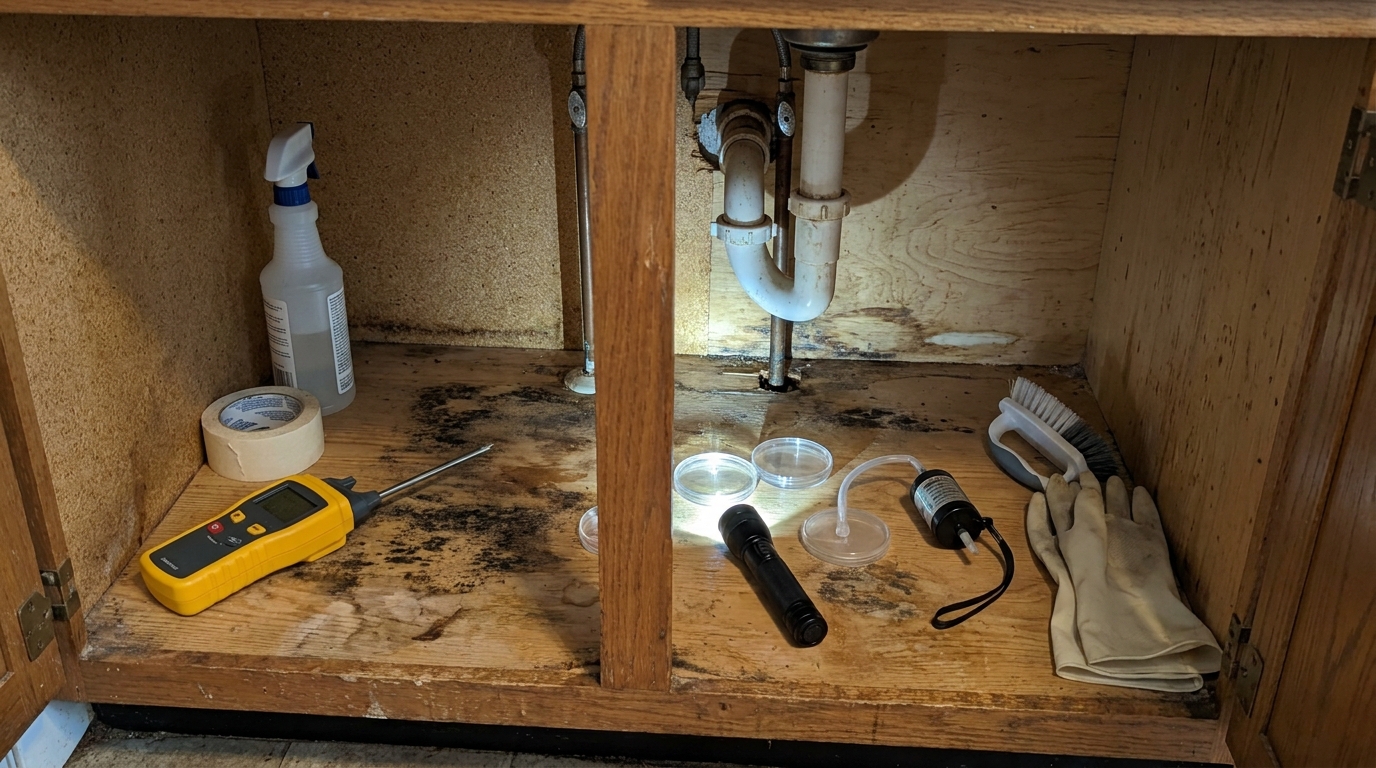
What causes mold to grow under kitchen sinks?
Mold grows under kitchen sinks due to moisture from plumbing leaks, condensation on cold pipes, poor ventilation in enclosed cabinets, and organic materials like wood or cardboard that provide food sources.
Discovering mold under kitchen sink cabinets is one of the most common household mold problems, and it almost always traces back to one root issue: persistent moisture. According to GAC Environmental, mold can begin developing within 24 to 48 hours of consistent moisture exposure, with visible colonies forming within a week or two if a slow leak goes unaddressed. Understanding the specific moisture source is the first step toward a permanent fix.
Plumbing leaks: the primary culprit
The space beneath a kitchen sink contains multiple potential failure points: supply line connections, drain joints, P-traps, garbage disposal seals, and dishwasher hose fittings. Even a slow drip that deposits a few tablespoons of water per day creates enough sustained moisture for mold colonies to establish themselves. Air-quality expert Michael Rubino recommends routinely checking underneath sinks because these areas are common mold hotspots, noting that a leaking P-trap under the kitchen sink is a frequent contributor. [Source: HuffPost]
Condensation on cold water pipes
When cold water runs through supply lines in a warm, humid kitchen, condensation forms on the pipe exterior. This “sweating” drips onto the cabinet floor below, creating a damp environment that many homeowners never notice because the cabinet doors stay closed. Uninsulated copper or metal pipes are especially prone to this problem during warmer months.
Poor cabinet ventilation traps moisture
Under-sink cabinets are enclosed on all sides, creating a stagnant air pocket where humidity accumulates. Without airflow, even minor moisture from condensation or a small splash takes far longer to evaporate. One prevention guide recommends keeping indoor humidity below 40% to reduce mold occurrence. [Source: Saniac Service]
Organic materials that feed mold growth
Mold needs organic material to feed on. The cabinet itself, whether made of particleboard, plywood, or MDF, provides that food source. Cardboard boxes, paper bags, sponges, and cleaning rags stored under the sink add more. When these materials get damp, they become an ideal growth medium.
How do you know if it’s actually mold under your sink?
Mold under sinks appears as black, green, white, or brown patches with fuzzy or slimy texture, often accompanied by a musty odor. Visual inspection combined with moisture detection confirms mold presence versus dirt or mineral deposits.
Visual identification: color and texture patterns
Mold colonies under kitchen sinks vary widely in appearance. According to HuffPost, Cladosporium can appear green, black, yellow, brown, or olive depending on conditions, while Penicillium typically shows as blue or green. Stachybotrys chartarum presents as dark green or black spotting. Dirt and mineral deposits tend to wipe away cleanly with a damp cloth, while mold growth has visible texture, either fuzzy, powdery, or slimy, and often leaves staining even after wiping.
The distinctive musty smell
A persistent musty or earthy odor when opening the cabinet door is one of the most reliable early indicators. This smell comes from microbial volatile organic compounds (MVOCs) that mold produces during growth. If the smell persists after cleaning visible surfaces, hidden mold may be present behind the cabinet backing or under the flooring.
When to use a mold test kit for confirmation
Home mold test kits can confirm the presence of mold spores, but they have limitations. They don’t reliably identify species or quantify risk. If there’s visible growth and a moisture source, testing is generally unnecessary before proceeding with cleanup. Testing becomes more useful when mold is suspected but not visible, or when a homeowner needs documentation for insurance or real estate purposes. A certified industrial hygienist can provide a more accurate assessment than consumer-grade kits.
Is mold under the kitchen sink dangerous?
Mold under kitchen sinks poses health risks through airborne spore exposure, potentially causing respiratory irritation, allergic reactions, and asthma exacerbation. Risk severity depends on mold type, exposure duration, and individual sensitivity.
Common health symptoms from kitchen mold exposure
According to HomeCleanse, mold under the sink can release spores, fragments, and chemicals into indoor air. AdvantaClean lists specific symptoms including stuffy nose, sore throat, itchy or watery eyes, wheezing, skin irritation, fever, and shortness of breath. [Source: AdvantaClean] Thousand Oaks Plumbing adds headaches and fatigue to the list of commonly reported effects. [Source: Thousand Oaks Plumbing]
Why kitchen mold is particularly concerning
The kitchen is a food preparation area, which means mold spores can settle on surfaces where food is handled. Opening and closing the cabinet door repeatedly disperses spores into the kitchen air. The enclosed cabinet space also concentrates spore levels, so each time someone reaches under the sink, they’re exposed to a higher concentration than ambient room levels would suggest.
Who faces the highest risk
According to HomeCleanse, risk is greater for people with asthma, autoimmune disorders, or chronic illnesses. Children, elderly household members, and anyone with a weakened immune system should avoid exposure during cleanup. Anyone experiencing persistent respiratory symptoms near the kitchen should consult a physician, as mold-related health effects can mimic other conditions.
What types of mold grow under kitchen sinks?
Common mold types under kitchen sinks include Cladosporium, Aspergillus, Penicillium, Alternaria, and Stachybotrys chartarum. The exact species matters less than addressing the moisture source that allows any of them to thrive.
There are more than 1 million types of mold overall, though five main types are commonly found in homes: Cladosporium, Aspergillus, Penicillium, Stachybotrys chartarum, and Alternaria. [Source: HuffPost]
| Mold Type | Appearance | Common Location | Key Concern |
|---|---|---|---|
| Cladosporium | Green, black, yellow, brown, or olive | Near faucets, under sinks, damp materials | One of the most prevalent indoor molds; triggers allergies |
| Aspergillus | Various colors; very small spores | Under-sink cabinets, damp indoor areas | Can affect immunocompromised individuals |
| Penicillium | Blue or green | Kitchens, moist indoor spaces | Common allergen; spreads quickly on damp surfaces |
| Alternaria | Dark brown to black | Showers, under sinks, around windows | Associated with allergy-like symptoms |
| Stachybotrys chartarum | Dark green or black | Water-damaged materials | Associated with mycotoxin production; requires professional assessment |
Black mold (Stachybotrys chartarum)
Not all dark-colored mold is Stachybotrys, and “black mold” is often used loosely. Multiple remediation sources caution that any mold under the sink should be addressed promptly rather than assuming it is harmless or uniquely deadly. [Source: HuffPost] Stachybotrys typically requires sustained water damage to establish, so its presence often signals a significant, ongoing leak.
Aspergillus species
Aspergillus spores are described as very small and sometimes hard to see with the naked eye. This mold is frequently reported in under-sink cabinets and other damp indoor areas. While most healthy adults tolerate low-level exposure, individuals with compromised immune systems should consult a physician if Aspergillus is suspected.
Penicillium and other common varieties
Penicillium and Cladosporium are among the most prevalent indoor mold types. They grow readily on damp wood, cardboard, and food residue, all of which are commonly found under kitchen sinks. These species spread quickly once established, making early detection and moisture control critical. For more on identifying different mold types, we cover species identification in detail.
Can you remove mold under the kitchen sink yourself?
DIY mold removal under kitchen sinks is appropriate for areas smaller than 10 square feet with no structural damage. Larger infestations, mold behind walls, or suspected toxic mold require professional remediation.
According to GAC Environmental, small mold problems under a sink can be handled with DIY methods if the cabinet is not damaged. The commonly cited threshold for DIY versus professional cleanup is less than 10 square feet of affected area.
When DIY removal is safe and effective
DIY cleanup is reasonable when mold is limited to the cabinet floor or walls, the wood or laminate is still structurally sound (not soft, swollen, or crumbling), and the moisture source can be identified and fixed. Surface mold on hard, non-porous materials responds well to household cleaning solutions when proper safety equipment is used.
When to call a professional
Professional remediation is warranted when the affected area exceeds 10 square feet, mold has penetrated into walls or flooring, the cabinet material is structurally compromised, or anyone in the home has asthma or mold sensitivity. Recurring mold after proper cleanup also signals a hidden moisture source that requires professional investigation.
Cost comparison: DIY versus professional remediation
DIY supplies, including an N95 respirator, gloves, cleaning solutions, and replacement caulk, typically cost $25 to $75. Professional kitchen mold remediation can run approximately $1,500 to $2,000 depending on the extent of damage, according to one restoration source. [Source: MoldGuy] The cost gap is significant, which is why accurate assessment of the problem’s scope matters before deciding on an approach. For guidance on understanding mold remediation costs, we break down pricing factors in more detail.
How do you remove mold under a kitchen sink safely?
Safe mold removal requires fixing the moisture source first, wearing an N95 respirator and gloves, containing the area, scrubbing with an appropriate cleaning solution, disposing of porous materials, and drying completely within 24 to 48 hours.
Step 1: Fix the water source before cleaning
Cleaning mold without stopping the moisture source is the single most common mistake homeowners make. Check all supply lines, drain connections, the P-trap, garbage disposal fittings, and dishwasher hoses. Tighten loose connections, replace cracked seals, and re-caulk around the sink edge if needed. According to multiple remediation guides, mold returns if the leak, condensation, or other moisture source is not repaired. [Source: GAC Environmental]
Step 2: Gather proper safety equipment
Wear an N95 respirator (not a basic dust mask), rubber or nitrile gloves, and eye protection before disturbing any mold growth. Disturbing mold releases concentrated spores into the air, and the enclosed cabinet space amplifies exposure. Old clothes that can be washed immediately after cleanup are also advisable.
Step 3: Contain the work area
Close kitchen windows and doors to prevent spore dispersal to other rooms. If the mold area is substantial, tape plastic sheeting over the cabinet opening while working inside it, leaving just enough space for access. A small fan pointed outward through a nearby window can create negative pressure that directs spores outside rather than into the kitchen.
Step 4: Remove and dispose of contaminated materials
Empty the cabinet completely. Discard any moldy cardboard, paper products, sponges, or other porous items in sealed plastic bags. According to New York State guidance, porous materials with extensive mold growth should be discarded rather than cleaned. [Source: EPA]
Step 5: Clean non-porous surfaces
For hard, non-porous surfaces that are still structurally sound, apply white vinegar or 3% hydrogen peroxide to the affected area. [Source: GAC Environmental] Let the solution sit for 10 to 20 minutes, then scrub with a stiff brush. Wipe away residue with clean, damp cloths. Use one cleaner at a time on a small test area and avoid mixing chemicals.
Step 6: Dry thoroughly and verify completion
Wipe clean, dry completely, and leave the cabinet open with airflow. Use fans or a dehumidifier to accelerate drying. The EPA recommends drying water-damaged areas within 24 to 48 hours to prevent mold regrowth. [Source: EPA] After drying, inspect the area daily for a week. If mold reappears, the moisture source may not be fully resolved, or hidden growth may exist behind the cabinet.
What cleaning solutions work best for kitchen sink mold?
Effective mold cleaning solutions include detergent and water for initial cleaning, diluted bleach for non-porous surfaces, hydrogen peroxide for porous materials, and vinegar for maintenance. Avoid mixing chemicals.
Detergent and water: the first line of defense
Simple soap and water removes surface mold from hard materials effectively. This approach is appropriate for light growth on sealed surfaces and serves as the initial cleaning step before applying a stronger antimicrobial solution. Scrub with a stiff brush, rinse, and dry completely.
When to use bleach (and when not to)
Diluted bleach, at a ratio of 1 cup bleach per gallon of water, works on hard, non-porous surfaces like sealed laminate or metal. [Source: Loriano] Bleach is less effective on porous materials like bare wood or particleboard because it doesn’t penetrate deeply enough to reach mold roots. Never mix bleach with vinegar or ammonia, as this produces toxic fumes. Ensure adequate ventilation when using bleach in an enclosed cabinet space.
Alternative solutions: hydrogen peroxide and vinegar
White vinegar, applied undiluted and left for about one hour before scrubbing, can address up to 80% of known mold species according to one cleaning guide. [Source: Loriano] 3% hydrogen peroxide is another effective option, typically applied for 10 to 20 minutes before scrubbing. A baking soda paste (1 teaspoon per cup of water) helps with scrubbing residue and neutralizing odors. These alternatives produce fewer fumes than bleach, making them more practical for enclosed cabinet spaces.
How do you prevent mold from returning under the sink?
Prevent mold recurrence by fixing all leaks immediately, insulating cold pipes, improving cabinet ventilation, removing stored items that trap moisture, and conducting monthly inspections for early detection.
Fix leaks and maintain plumbing
Even small drips or seepage under the sink can keep the cabinet damp enough for mold to regrow. [Source: Saniac Service] Check all connections, replace worn washers, and re-caulk the sink edge if water is seeping behind it. One guide recommends checking for plumbing damage once a week under the sink and near the dishwasher.
Improve ventilation in enclosed cabinets
Open cabinet doors periodically to allow air circulation. Use the kitchen exhaust fan during and after cooking to reduce ambient humidity. Some homeowners install small battery-operated fans or ventilation grilles in cabinet panels to promote continuous airflow. Keeping indoor humidity below 40% significantly reduces mold occurrence. [Source: Saniac Service]
Reduce moisture-trapping storage
Organize items under the sink so air can circulate freely. Remove cardboard boxes, paper bags, and damp sponges that trap moisture against cabinet surfaces. Use plastic bins or wire racks to keep items elevated off the cabinet floor. Silica gel packets or moisture absorbers placed inside the cabinet can help in persistently humid environments.
Establish a monthly inspection routine
Several remediation sources recommend monthly deep cleaning or inspection of the under-sink area. During each check, look for new water stains, condensation on pipes, musty odors, or early discoloration on cabinet surfaces. Catching moisture problems early, before visible mold appears, is far easier and cheaper than dealing with established growth. Insulating cold-water pipes with foam pipe insulation can eliminate condensation dripping entirely.
Does mold under the sink mean there’s mold in the walls?
Mold under kitchen sinks can indicate hidden wall mold if water has leaked behind cabinets or through flooring, but it does not automatically mean mold is in the walls.
According to AtmosAir, mold commonly grows in out-of-sight wall cavities after water damage or leaks, and kitchens are one of the most common locations because of plumbing and dampness. If mold is found only on the cabinet floor or around pipes, the problem may be confined to the sink base.
Warning signs of hidden mold spread
Wall discoloration, soft or damaged drywall, peeling paint, warped baseboards, and a persistent musty odor that doesn’t resolve after cabinet cleanup all raise the odds that moisture has reached the wall cavity behind the cabinet. Mold reappearing after thorough cleaning is another strong indicator of hidden growth.
How to check for mold behind cabinets
Start by inspecting the wall surface visible behind and beside the cabinet. Look for water stains, bubbling paint, or soft spots in drywall. A moisture meter (available at hardware stores for $20 to $40) can detect elevated moisture levels in walls without requiring demolition. If readings are high, further investigation is warranted.
When to open walls for inspection
If a moisture meter shows elevated readings, mold keeps returning after proper cleanup, or there are visible signs of water damage on adjacent walls, it may be necessary to remove a section of drywall for visual confirmation. This is typically a job for a certified mold inspector or remediation professional, as improper wall opening can release large quantities of spores into the living space.
What should you do if the cabinet itself is moldy?
Moldy cabinet materials require assessment of damage depth. Surface mold on sealed wood can be cleaned, but mold penetrating particleboard or MDF typically necessitates cabinet replacement.
Assessing cabinet material and damage severity
The cabinet material determines whether cleaning or replacement is appropriate. Solid wood and sealed plywood can often be salvaged if the mold is surface-level and the wood is still structurally sound. Particleboard and MDF absorb water readily and, once swollen or soft, cannot be effectively cleaned. According to New York State guidance, hard surfaces that are not decayed can be cleaned, while porous materials with extensive mold growth should be discarded. [Source: EPA]
Cleaning versus replacing cabinet components
For surface mold on intact wood or laminate, clean with vinegar or hydrogen peroxide, dry completely, and apply a mold-resistant primer or sealant to the cabinet interior. For swollen, soft, rotted, or repeatedly moldy cabinet material, replacement is the appropriate fix. The Cleveland Clinic recommends keeping indoor humidity below 50% to help reduce mold risk in repaired or replaced cabinets. [Source: EPA]
Cost considerations for cabinet replacement
Replacing a single under-sink base cabinet typically costs $200 to $600 for the cabinet itself, plus installation labor. This is often less expensive than repeated remediation attempts on damaged particleboard that keeps growing mold. When replacing, consider upgrading to marine-grade plywood or adding a waterproof liner to the cabinet floor for long-term protection.
If mold under your kitchen sink covers more than 10 square feet, has penetrated into walls or flooring, or returns repeatedly after cleaning, consult a certified mold remediation professional for assessment. For smaller areas, address the moisture source immediately and follow proper safety protocols during removal.
Frequently Asked Questions
Here are answers to the most common questions homeowners ask after discovering mold growth under their kitchen sink.
How quickly does mold grow under a kitchen sink?
Mold can begin developing within 24 to 48 hours of consistent moisture exposure. Visible colonies may form within one to two weeks if a slow leak goes unaddressed. [Source: GAC Environmental]
Is all black mold under the sink dangerous?
Not all dark-colored mold is Stachybotrys chartarum (“black mold”). Many common mold species, including Cladosporium, can appear black. Any mold under the sink should be addressed promptly, but dark color alone does not indicate a uniquely dangerous species. A certified industrial hygienist can identify species if needed.
Can I just paint over mold under the kitchen sink?
No. Painting over mold does not kill it or stop growth. The mold will continue growing beneath the paint and eventually break through. The mold must be physically removed and the moisture source fixed before any repainting or sealing.
How much does professional mold removal under a kitchen sink cost?
One restoration source estimates approximately $1,500 to $2,000 for kitchen mold remediation, though costs vary based on damage extent, geographic location, and whether wall or floor repair is needed. [Source: MoldGuy] DIY supplies typically cost $25 to $75.
Should I use bleach or vinegar to clean mold under the sink?
Vinegar works on both porous and non-porous surfaces and produces fewer fumes. Bleach (1 cup per gallon of water) is effective on non-porous surfaces like sealed laminate or metal but doesn’t penetrate porous materials well. Never mix bleach with vinegar, as this creates toxic fumes.
Will a dehumidifier prevent mold under the kitchen sink?
A dehumidifier helps reduce ambient kitchen humidity, but it won’t stop mold caused by an active plumbing leak. Fix the water source first, then use a dehumidifier or improved ventilation as a supplementary prevention measure. Keeping indoor humidity below 40% significantly reduces mold risk. [Source: Saniac Service]
Do I need to throw away food stored near under-sink mold?
Food should not be stored under the kitchen sink regardless of mold presence, as cleaning chemicals and potential contamination make it an unsuitable storage location. Any food items that were stored near active mold growth and are not in sealed, airtight containers should be discarded as a precaution.
How do I know if mold under the sink has spread to other areas?
Check adjacent walls for water stains, soft spots, or peeling paint. Inspect nearby flooring for warping or discoloration. A persistent musty odor that doesn’t resolve after cabinet cleanup suggests hidden growth. A moisture meter can detect elevated moisture levels in surrounding materials without requiring demolition.