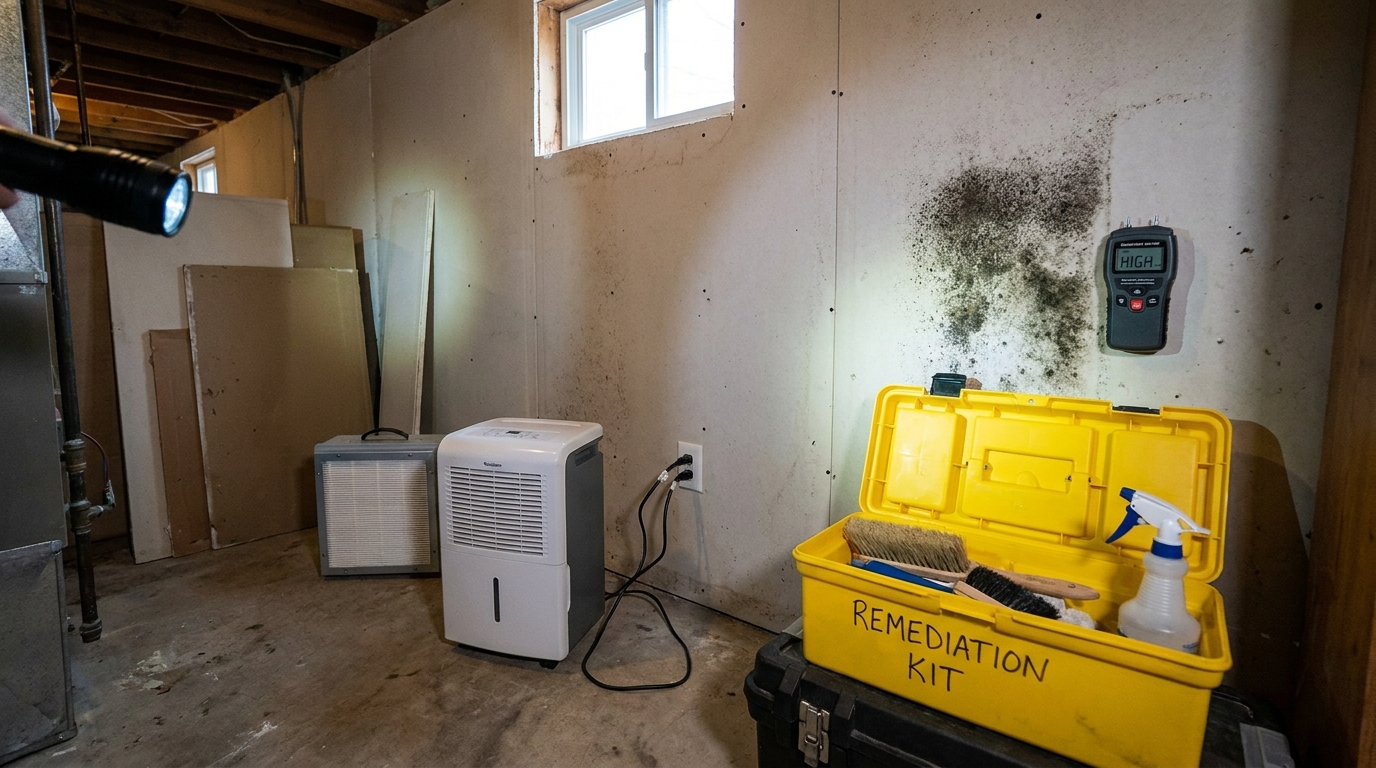
What Is Powdery Black Mold?
Powdery black mold is black-pigmented mold with a dry, dusty texture caused by mature spore production or low moisture conditions, not a specific species.
Many homeowners discover dark patches on walls, ceilings, or baseboards that look nothing like the slimy “toxic black mold” they’ve seen in news stories. Instead, the growth appears dry, dusty, almost sooty. This is powdery black mold, and it’s one of the most common mold appearances in residential settings. Before panicking, it helps to understand what that texture actually means.
The term “black mold” is a color descriptor, not a species name. According to Mold Warrior, “dozens of mold species can appear black or dark… Without lab testing, you cannot identify mold species from color alone.” That powdery patch on your bathroom wall could be any number of species, and color and texture alone are not diagnostic.
Why Some Black Mold Appears Powdery Instead of Slimy
Mold texture depends primarily on two factors: moisture availability and growth stage. When a mold colony has abundant water, it often appears slimy, shiny, or wet. When moisture drops or the colony matures and begins producing spores in large quantities, the surface dries out and takes on a powdery or dusty appearance. Think of it as the mold shifting from active growth mode to reproduction mode.
Common Species That Produce Powdery Black Growth
The most frequent culprits behind powdery black growth in homes aren’t Stachybotrys at all. According to Mold Warrior, Cladosporium is “the most common dark mold in homes,” described as powdery or velvety with olive-green to brown coloring. Some dark Aspergillus species also appear as powdery black or charcoal-gray on damp walls, insulation, and window sills. Both genera tolerate intermittent humidity and condensation, making them far more common than Stachybotrys in typical households.
How Powdery Texture Relates to Mold Maturity
A powdery surface typically signals that a mold colony has reached its spore-producing phase. The fine particles you see are often masses of conidia (spores) sitting on the colony surface. This doesn’t necessarily mean the mold is dead. It may be dormant, waiting for moisture to return, or it may be actively releasing spores into the air. Either way, the powdery stage deserves attention because those loose spores disperse easily when disturbed.
Is Powdery Black Mold the Same as Stachybotrys (Toxic Black Mold)?
Stachybotrys typically appears slimy when wet but can look powdery when dried out. Many non-toxic black molds also produce powdery textures, so appearance alone can’t confirm species.
This is the question that drives most of the anxiety. The short answer: probably not, but you can’t be certain without testing.
Visual Differences Between Stachybotrys and Other Black Molds
Experts offer a practical visual rule of thumb. According to Moldco, Stachybotrys on soaked drywall or paper after a leak typically appears slimy and wet-looking. Common “regular” dark molds like Cladosporium and Aspergillus tend to appear powdery or velvety and grow on a wider range of surfaces, including bathroom tile, painted walls, and fabrics. Homeowner guides note that these regular dark molds “are usually gray or brown, feel powdery, and cause milder symptoms” compared with active Stachybotrys growth.
Why Stachybotrys Usually Isn’t Powdery
Stachybotrys chartarum requires prolonged, sustained wetness, typically above 90% relative humidity or direct water contact, according to Moldco. It grows slowly on cellulose-rich, water-damaged materials like drywall paper, wood, and cardboard. Because it needs so much moisture to thrive, its active growth phase is characteristically slimy. A powdery black patch on a relatively dry surface is more likely another species, unless there was previous long-term water damage and a Stachybotrys colony has since dried out.
Species More Likely to Cause Powdery Black Growth
Cladosporium and certain Aspergillus species are the most common sources of powdery black growth in homes. They tolerate intermittent humidity and condensation rather than requiring chronic flooding. They’re classified as common allergens and are generally regarded as mild to moderate in health impact compared with Stachybotrys. Still, “mild to moderate” doesn’t mean harmless, especially for sensitive individuals.
What Causes Black Mold to Develop a Powdery Texture?
Powdery texture develops when mold colonies mature and produce abundant spores, or when moisture levels drop and the mold dries out.
The Role of Spore Production in Powdery Appearance
As mold colonies age, they shift energy from expanding across a surface to producing reproductive spores. These spores accumulate on the colony surface, creating the dusty, powdery look. The finer the spores, the more powder-like the texture appears.
How Drying Conditions Change Mold Texture
According to BustMold, when a mold colony’s water source dries up, black mold becomes “dry and powdery” in appearance. This is a critical point: the mold isn’t necessarily dead. It may simply be dormant. Once moisture returns, growth can resume. The powdery phase can actually be more problematic from an air quality standpoint because dry spores become airborne more easily.
Environmental Factors That Promote Powdery Growth
Most molds germinate at approximately 65% relative humidity, according to Harvard Preservation research cited by BustMold. Mold can begin growing on wet materials within 24 to 48 hours when conditions are favorable. Fluctuating humidity, where surfaces get wet then dry repeatedly, often produces colonies that cycle between slimy and powdery phases.
Does Powdery Black Mold Mean Spores Are Airborne?
Yes. Powdery texture often indicates mature spore production, and disturbing it can release spores into the air more easily than wet mold.
How Spore Release Differs Between Wet and Dry Mold
Wet, slimy mold holds its spores in a sticky matrix that resists becoming airborne. Dry, powdery mold has no such adhesion. Even a light touch, a breeze from an HVAC system, or walking past the affected area can dislodge spores. According to Moldpedia, mold spores are “always found in the air we breathe,” and molds reproduce by releasing spores that spread through air, water, or animals. The powdery stage simply makes that release much easier.
What Research Shows About Airborne Spore Concentrations
One health article from the University of Louisiana claims aerosolized black mold spores are present in as many as 13% of dwellings, though this figure comes from a non-peer-reviewed homeowner-facing source and should be interpreted cautiously. What’s well established is that indoor spore counts rise significantly in homes with visible mold growth, particularly when that growth is dry and easily disturbed.
Why Disturbing Powdery Mold Is Riskier
Scrubbing, sweeping, or even vacuuming powdery mold without a HEPA filter can create a burst of airborne spores that spreads contamination far beyond the original growth site. This is why containment and proper personal protective equipment (PPE) matter so much during cleanup, a topic we cover in the cleaning section below.
What Are the Health Risks of Powdery Black Mold?
Health risks depend on species and exposure level. Powdery mold can trigger allergies and respiratory irritation, with immunocompromised individuals facing higher risk.
According to the National Institute of Environmental Health Sciences (NIEHS), indoor dampness and mold are associated with approximately 30 to 50% increases in a variety of respiratory and asthma-related outcomes. A World Health Organization review found that living in damp, moldy homes is linked to up to a 50% increase in current asthma and 30 to 50% increases in coughing and wheezing symptoms.
Respiratory Symptoms Linked to Mold Spore Inhalation
According to Healthline, documented effects from mold exposure include cough, wheeze, nasal congestion, throat irritation, sneezing, runny nose, red eyes, and skin rash. Up to 10 to 20% of the general population has IgE sensitization to common molds, according to broader allergy research cited by the EPA. These reactions aren’t limited to Stachybotrys. Any mold species, including the Cladosporium and Aspergillus commonly behind powdery black growth, can trigger them.
Who Is Most Vulnerable to Mold Exposure
| Risk Group | Primary Concern | Recommended Action |
|---|---|---|
| Infants and young children | Developing respiratory systems more susceptible to irritation | Remove from exposure, consult pediatrician |
| Older adults | Weakened immune response, existing respiratory conditions | Consult physician, professional remediation |
| People with asthma | 30-50% increased risk of symptom exacerbation | Avoid affected areas, use HEPA filtration |
| Immunocompromised individuals | Risk of fungal infection, not just allergy | Immediate medical consultation, professional remediation |
| People with mold allergies | Severe allergic reactions including hypersensitivity pneumonitis | Avoid exposure, consult allergist |
When to Consult a Healthcare Provider
Anyone experiencing persistent respiratory symptoms, worsening asthma, or unexplained allergic reactions in a home with visible mold should consult a physician. The CDC cites the Institute of Medicine’s 2004 conclusion that indoor mold exposure has sufficient evidence for links to upper respiratory symptoms, cough, wheeze, and hypersensitivity pneumonitis in susceptible people. A healthcare provider can help determine whether symptoms are mold-related and recommend appropriate treatment.
Where Does Powdery Black Mold Typically Grow?
Powdery black mold commonly grows on drywall, wood, paper, and fabric in areas with past water damage or chronic humidity above 60%.
According to Cleveland Clinic, black mold grows on paper products, wood products, and drywall, and is most common in damp or water-damaged areas like basements, showers, windows, bathrooms, laundry rooms, and areas with water leaks.
Common Indoor Locations for Powdery Black Mold
-
Bathrooms: Ceilings, walls, grout lines, around tubs and showers, behind toilets, under sinks
-
Basements: Foundation walls, sill plates, joists, stored cardboard boxes, behind finished walls
-
Kitchens and laundry rooms: Under sinks, behind washing machines and refrigerators, inside cabinets with slow leaks
-
Around windows and doors: Frames, sills, and surrounding drywall where condensation repeatedly wets materials
-
Attics: Roof decking and rafters with poor ventilation causing condensation
Materials Most Susceptible to Powdery Growth
Cellulose-rich materials are the primary targets: drywall paper facing, wood framing, ceiling tiles (especially acoustic fiber tiles), cardboard, paper-based insulation, wallpaper backing, and carpet padding over damp subfloors. According to Pacific Flood, Stachybotrys specifically needs materials to stay wet for about 7 days or more to colonize, making it a marker of chronic moisture problems rather than brief spills.
Hidden Areas Homeowners Often Miss
Inside walls around slow plumbing leaks, crawl spaces with poor vapor barriers, HVAC ductwork around condensate lines, and behind bathroom fixtures are frequently overlooked. These hidden areas can harbor extensive mold growth that only becomes visible when renovations expose the affected materials. If you smell a persistent musty odor but can’t see mold, hidden growth is a strong possibility.
How Do You Identify Powdery Black Mold?
Powdery black mold appears as dark gray to black patches with a dusty surface that may release particles when touched or disturbed.
Visual Characteristics to Look For
According to Fast Mold Testing, black mold looks like “a dark green-to-black patch with a slimy texture when wet or a powdery, fuzzy texture when dry.” Patches grow in irregular clusters or blotches, often with a darker center and lighter, fuzzier edge where spreading is active. Growth can range from about one inch to several feet across. A musty, earthy odor frequently accompanies visible growth.
How to Distinguish It From Soot or Dirt
Soot wipes away cleanly with a damp cloth and doesn’t return. Dirt typically accumulates in predictable patterns (along baseboards, near vents). Mold, by contrast, grows in organic, irregular patterns, often following moisture paths. It returns after cleaning if the moisture source isn’t addressed. A simple test: dab the area with a drop of diluted bleach. If it lightens within a minute or two, it’s likely mold. Soot and dirt won’t change color.
When Professional Testing Is Necessary
Professional lab testing, typically in the $300 to $500 range for a residential workup according to Mold Warrior, is the only way to confirm species. However, the EPA emphasizes that species identification usually does not change remediation steps. Testing becomes most valuable when health symptoms are severe, insurance claims require documentation, or real estate transactions are involved. For homeowners who want preliminary species identification before calling a professional, professional-grade mold test kits can help identify species and determine whether mycotoxin-producing molds are present.
Can You Clean Powdery Black Mold Yourself?
Small areas under 10 square feet can be cleaned by homeowners using proper containment and PPE, but larger infestations require professional remediation.
EPA Guidelines for DIY Mold Removal
The EPA distinguishes between small and larger mold problems. Areas roughly under 10 square feet (about a 3-by-3-foot patch) are generally manageable for homeowners. Anything larger, or growth involving HVAC systems, warrants professional help. The EPA also stresses that controlling moisture is the most effective way to control indoor mold, meaning cleanup without fixing the water source is futile.
Safety Equipment Required for Powdery Mold Cleanup
-
N95 respirator (minimum), to filter airborne spores
-
Nitrile or rubber gloves extending to mid-forearm
-
Safety goggles without ventilation holes
-
Disposable coveralls or old clothing that can be washed immediately after
Step-by-Step Cleaning Process
-
Contain the area. Seal off the room with plastic sheeting over doorways and vents. Turn off HVAC to prevent spore spread.
-
Mist lightly. Dampen the powdery mold with water from a spray bottle to reduce spore dispersal during removal.
-
Remove porous materials. Drywall, carpet padding, and insulation with mold growth should be cut out and bagged in heavy plastic for disposal.
-
Scrub hard surfaces. Use detergent and water on non-porous surfaces like tile, concrete, or metal. The EPA does not recommend bleach as a primary mold cleaner for porous materials.
-
HEPA vacuum. After scrubbing, vacuum all surfaces with a HEPA-filtered vacuum to capture remaining spores.
-
Dry thoroughly. Use fans and dehumidifiers to dry the area completely before replacing any materials.
When to Call a Professional Remediator
Cleveland Clinic recommends professional remediation when growth exceeds 10 square feet, when mold is inside HVAC systems, when there’s been significant water damage, or when occupants have health conditions that make exposure risky. Professionals use containment barriers, negative air pressure, and HEPA filtration that most homeowners can’t replicate. For guidance on understanding remediation costs, knowing what to expect can help homeowners budget appropriately.
What Happens If You Don’t Remove Powdery Black Mold?
Untreated powdery black mold continues producing spores, spreads to new areas, degrades building materials, and increases health risks for occupants.
How Mold Spreads From Initial Growth Sites
According to Cleveland Clinic, mold spores spread to other areas of the home when disturbed, carried by air currents, HVAC systems, or even foot traffic. Powdery mold is especially prone to this because its dry spores detach with minimal disturbance. A small patch behind a bathroom vanity can seed growth in distant rooms through ductwork.
Structural Damage Caused by Prolonged Growth
Mold feeds on organic materials, gradually breaking down drywall, wood framing, and other structural components. A 2017 study cited by Healthline found mold in every public building studied, averaging about 14 mold instances per building. A 2012 review cited by the same source found mold in 1 in 6 homes across 31 European countries. These numbers suggest the problem is widespread, and delayed remediation compounds both structural damage and repair costs.
Long-Term Health Implications of Chronic Exposure
The CDC says mold exposure can cause stuffy nose, sore throat, coughing, wheezing, burning eyes, and skin rash, with people who have asthma or mold allergy potentially experiencing severe reactions. Indoor dampness and mold are associated with about a 30 to 50% increased risk of current asthma in exposed occupants, according to multiple meta-analyses referenced by the NIEHS. Chronic exposure doesn’t just maintain symptoms. It can worsen them over time.
How Do You Prevent Powdery Black Mold From Returning?
Prevention requires fixing moisture sources, maintaining indoor humidity below 50%, improving ventilation, and addressing water damage within 24 to 48 hours.
Moisture Control Strategies That Work
The EPA states that controlling moisture is the most effective way to control indoor mold. Health Canada specifically recommends maintaining indoor relative humidity between 30% and 50%, and running a dehumidifier in damp areas such as basements or when condensation appears on cold surfaces. Maintaining proper humidity levels is critical for long-term mold prevention. Key strategies include:
-
Fix roof, plumbing, and window leaks immediately
-
Use a dehumidifier in basements and crawl spaces
-
Maintain drainage away from the building with clean gutters and proper grading
-
Dry wet surfaces and materials within 24 to 48 hours
Ventilation Improvements for High-Risk Areas
Exhaust fans in kitchens and bathrooms are essential, venting to the outdoors rather than into attic spaces. Opening windows when weather permits improves general airflow. In tightly sealed modern homes, mechanical ventilation systems (HRVs or ERVs) can maintain fresh air exchange without introducing excess humidity.
Materials and Coatings That Resist Mold Growth
In areas prone to repeated moisture exposure, mold-resistant drywall (paperless or fiberglass-faced), mold-resistant paint, and moisture-resistant sealants can reduce the likelihood of regrowth. Porous materials that have stayed wet for more than 48 hours often need replacement rather than cleaning alone, since mold can grow inside the material where surface cleaning can’t reach.
If you’ve found powdery black mold in your home, start by documenting the affected area with photos and measuring its size. For growth larger than 10 square feet, contact a certified mold remediation professional. For smaller areas, follow EPA cleanup guidelines and address the underlying moisture source immediately.
Frequently Asked Questions
These are the most common questions homeowners ask after discovering powdery black mold in their homes.
Is powdery black mold always toxic?
No. “Black mold” is a color descriptor, not a species name. According to Mold Warrior, dozens of mold species can appear black, and most powdery black molds in homes are common species like Cladosporium or Aspergillus rather than the Stachybotrys often called “toxic black mold.” Only lab testing can confirm species.
Does powdery texture mean the mold is dead?
Not necessarily. Powdery texture can indicate a dormant colony that dried out when its moisture source was removed, or a mature colony actively producing spores. Dormant mold can reactivate when moisture returns, so it still needs to be removed and the moisture source addressed.
Can I vacuum up powdery black mold?
Only with a HEPA-filtered vacuum. A standard household vacuum will blow spores through its exhaust and spread contamination throughout the room. Even with a HEPA vacuum, mist the mold lightly with water first to reduce airborne dispersal, and wear an N95 respirator during the process.
How quickly does powdery black mold spread?
Mold can begin growing on wet materials within 24 to 48 hours when conditions are favorable. Stachybotrys specifically requires materials to stay wet for about 7 days or more to colonize, according to remediation sources cited by Pacific Flood. Spread rate depends heavily on available moisture and organic food sources.
Should I test powdery black mold before cleaning it?
The EPA notes that species identification usually does not change remediation steps. Testing is most useful when health symptoms are severe, insurance documentation is needed, or you want to confirm whether mycotoxin-producing species are present. For small areas under 10 square feet, many homeowners proceed directly with proper cleanup.
What humidity level prevents mold growth?
Health Canada recommends maintaining indoor relative humidity between 30% and 50%. Above 50%, a dehumidifier should be used in damp areas. Most molds germinate at approximately 65% relative humidity, so staying well below that threshold provides a meaningful safety margin.
Can powdery black mold grow behind paint?
Yes. Mold can grow on the drywall paper beneath paint, especially if moisture is migrating through the wall from a leak or condensation. Signs include bubbling, peeling, or discolored paint. Painting over mold without removing it does not solve the problem and can make future remediation more difficult.
Does bleach kill powdery black mold?
Bleach can kill surface mold on non-porous materials like tile or glass, but the EPA does not recommend it as a primary mold cleaner for porous materials like drywall or wood. Bleach doesn’t penetrate porous surfaces where mold roots (hyphae) grow, and the water content in bleach can actually feed remaining mold. Detergent and water, combined with removal of affected porous materials, is more effective.