Controlling moisture is the single most effective way to prevent mold from taking hold in a home. The Santa Fe Max Dry Dual XT is a high-capacity dehumidifier built specifically for the spaces where moisture problems are hardest to solve: basements and crawlspaces. But does a premium dehumidifier actually translate to real mold prevention, or is it overkill for most homeowners? This review breaks down the unit’s capabilities through a mold-prevention lens, explains what it can and cannot do, and identifies when professional help is the smarter investment.
What Is the Santa Fe Max Dry Dual XT?
The Santa Fe Max Dry Dual XT is a high-capacity residential dehumidifier engineered for large basements and crawlspaces. It is manufactured by Therma-Stor, a Wisconsin-based company that specializes in indoor air quality equipment.
According to the Santa Fe Max Dry Dual XT spec sheet, the unit removes 155 pints of water per day at standard AHAM testing conditions (80°F and 60% relative humidity) and covers areas up to 3,600 square feet. It features a 391 CFM blower, a horizontal configuration with dual air outlets, and an insulated cabinet designed for quieter operation. The unit also ships with MERV-11 filtration as standard, capturing airborne particles including mold spores down to 1 micron in size.
Unlike portable dehumidifiers found at big-box stores, this unit is designed for semi-permanent installation with continuous gravity drainage. Optional ducting kits and condensate pumps allow flexible placement in challenging spaces. Think of it less as an appliance you wheel around and more as a dedicated moisture-management system for a specific area of the home.
Why Does Humidity Control Matter for Mold Prevention?
Humidity is the primary environmental factor that determines whether mold can grow indoors. Without adequate moisture, mold spores remain dormant even when other conditions for mold growth are present.
According to the Santa Fe product spec sheet, the EPA, American Lung Association, and American Medical Association all recommend maintaining indoor relative humidity between 30% and 50% to prevent mold, mildew, and bacteria growth. Levels above 60% for extended periods create conditions where many mold species thrive, particularly on organic materials like wood framing, paper-faced drywall, and stored belongings.
Basements and crawlspaces are especially vulnerable. Ground temperatures in these spaces often hover between 50°F and 60°F year-round, according to the same spec sheet. When warmer, humid air contacts these cool surfaces, condensation forms. That condensation feeds mold colonies on joists, subfloor sheathing, and insulation. A standard air conditioning system cannot address this problem because AC efficiency drops significantly below 80°F, and most central systems do not condition crawlspaces at all.
What Causes High Indoor Humidity That Dehumidifiers Like This Are Designed to Fix?
Multiple sources contribute to excess moisture in homes, and the cause is rarely just one thing. Understanding the sources helps homeowners determine whether a dehumidifier alone will solve the problem.
According to the EPA’s guidance on moisture control, energy-efficient homes with tight building envelopes trap moisture more effectively than older, drafty structures. Cooking, showering, and even breathing add water vapor to indoor air. Without adequate ventilation, that moisture accumulates.
Oversized air conditioning units compound the issue. According to Sealed.com, an oversized AC cycles on and off too quickly, cooling air rapidly without running long enough to condense and remove moisture from the airstream. The result: cool air that still feels clammy.
Crawlspaces present a unique challenge. Exposed soil, foundation cracks, and poor vapor barriers allow ground moisture to migrate upward continuously. Even in homes without active leaks, this slow, persistent moisture source can keep humidity levels well above 60%. The Santa Fe installation manual specifically notes that areas must be free of water intrusion or excessive outside air infiltration before the dehumidifier can function effectively.
How Do You Know If Your Home Needs a Unit Like the Santa Fe Max Dry Dual XT?
Persistent humidity above 50% in a basement or crawlspace, especially during warmer months, is the clearest indicator that a high-capacity dehumidifier may be necessary.
Here are specific signs to watch for:
- A hygrometer consistently reads above 55% RH in the basement or crawlspace, even with windows closed
- Condensation on cold-water pipes, ductwork, or foundation walls during summer months
- A musty smell that suggests hidden mold may already be developing
- Visible mold on floor joists, sill plates, or stored items in below-grade spaces
- A standard dehumidifier runs constantly but cannot bring humidity below 60%
The last point matters most when evaluating whether to upgrade. Standard residential dehumidifiers typically remove 20 to 65 pints per day and lose significant capacity below 65°F. According to the Santa Fe spec sheet, the Max Dry Dual XT operates effectively down to 56°F, which is the temperature range where basement and crawlspace dehumidification matters most.
Key Features and Specs Explained
The following table compares the Santa Fe Max Dry Dual XT against typical store-bought dehumidifiers to illustrate where the differences lie:
| Feature | Santa Fe Max Dry Dual XT | Typical Residential Dehumidifier |
|---|---|---|
| Water removal (per day) | 155 pints | 20-65 pints |
| Coverage area | Up to 3,600 sq ft | 500-1,500 sq ft |
| Blower capacity | 391 CFM | 100-200 CFM |
| Minimum operating temp | 56°F | 65°F (many shut off below this) |
| Air filtration | MERV-11 (captures down to 1 micron) | Basic mesh filter |
| Energy factor | 3.5 L/kWh | 1.5-2.5 L/kWh |
| Drainage | Continuous gravity drain (8 ft hose) | Bucket or optional pump |
| Power draw | 920 watts / 8.0 amps | 400-700 watts |
According to the Forshaw product listing, the unit’s energy factor of 3.5 L/kWh makes it one of the most energy-efficient large-capacity residential dehumidifiers available. Santa Fe states that the unit exceeds current Department of Energy efficiency standards, though it no longer carries an Energy Star label due to updated certification criteria, as noted in the Santa Fe product demo.
The MERV-11 filter deserves special attention for mold prevention. Most mold spores range from 1 to 5 microns in diameter. According to the product spec sheet, the MERV-11 filter captures particles down to 1 micron, which means it actively removes airborne mold spores while dehumidifying. The filter requires replacement every 3 to 6 months per the installation manual. A dirty filter restricts airflow and forces the compressor to cycle unnecessarily, reducing both capacity and lifespan.
Where Should You Install the Santa Fe Max Dry Dual XT?
The unit belongs in a basement or crawlspace where it can address the moisture source directly. It is designed for indoor residential use only.
According to the installer’s manual, proper installation requires several specific conditions. Position the exhaust at least 1 foot from any wall or obstruction. Place the unit near a floor drain with the included 8-foot drain hose, mounting it 4 inches above the drain. A drain trap is required to prevent air backflow through the drainage line. The unit needs access to a 115 VAC, 15-amp grounded outlet, and it comes with a 10-foot power cord.
For crawlspaces where direct access is limited, optional 10-inch duct kits (part number 4028607) allow the unit to push dry air to remote areas. The dual-outlet design also enables pressurization in spaces with combustion appliances, preventing backdraft issues.
One critical installation requirement: address any active water intrusion before relying on the dehumidifier. A unit removing 155 pints per day cannot keep up with a leaking foundation or standing water. The dehumidifier manages ambient humidity, not bulk water.
Does the Santa Fe Max Dry Dual XT Actually Prevent Mold?
The unit prevents mold by maintaining humidity levels below the threshold where mold can actively grow. It does not kill existing mold.
This distinction matters. According to the Santa Fe spec sheet, mold growth accelerates at relative humidity levels above 60%, with some species thriving at even lower levels on organic materials in stagnant, humid areas. By pulling 155 pints of moisture from the air daily and circulating 391 CFM through MERV-11 filtration, the unit creates an environment hostile to new mold colonization.
According to HomeCleanse, user reports indicate the unit can dry visible condensation in crawlspaces within approximately 3 days of installation. Over time, the MERV-11 filter can remove significant quantities of dust, pollen, mold spores, and bacteria from circulating air.
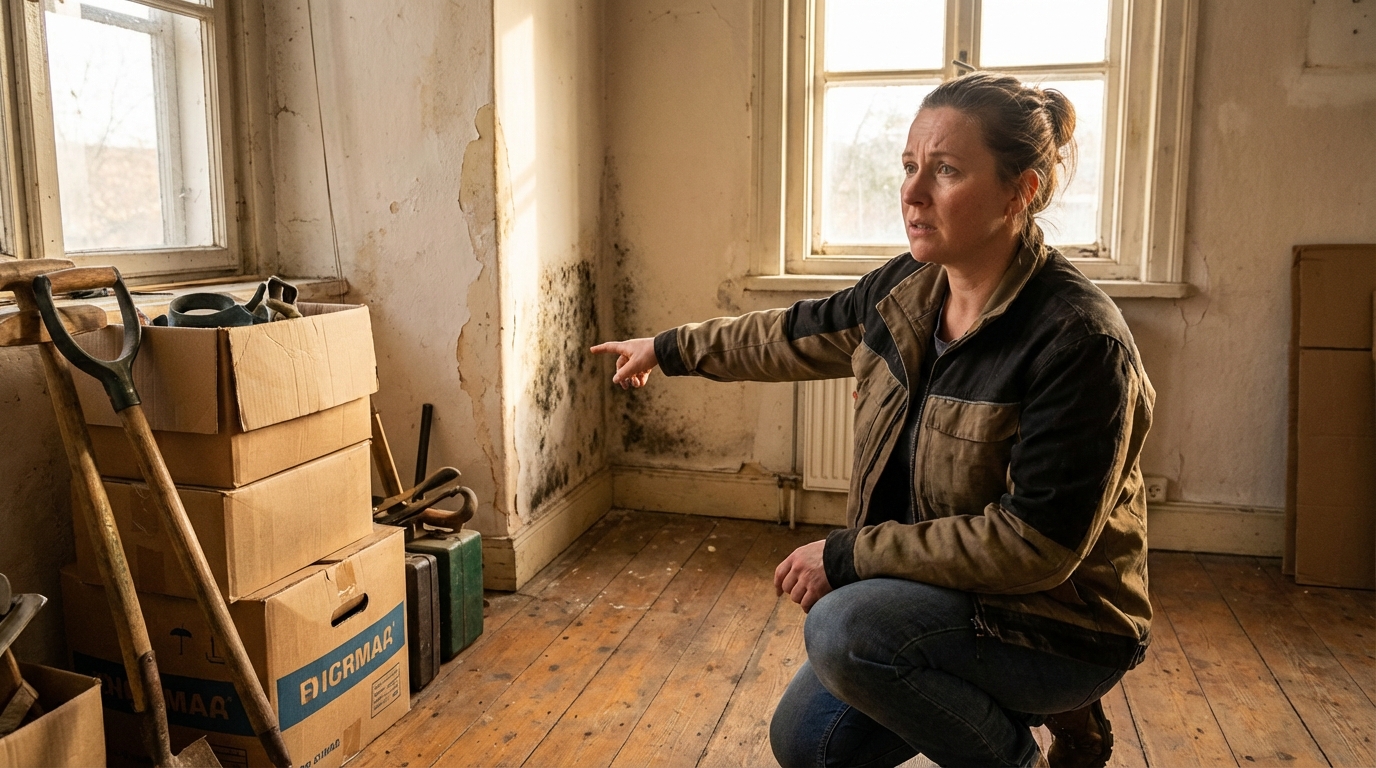
However, if mold is already established on surfaces, lowering humidity alone will not eliminate it. Dormant mold can reactivate when moisture returns. Existing colonies need physical removal. Homeowners who suspect active growth should check for mold before assuming a dehumidifier will resolve the problem.
Health Implications of High Humidity and Mold Exposure
Prolonged exposure to damp, moldy environments carries documented health risks that extend beyond simple discomfort.
According to a meta-analysis published by the National Institutes of Health, exposure to dampness and mold in homes raises the risk of developing asthma by 30% to 50%. The same study estimates that 21% of current asthma cases in the United States, approximately 4.6 million out of 21.8 million, are attributable to dampness and mold exposure, with annual costs estimated at $3.5 billion.
Research cited by Harvard Health found that among over 40,000 U.S. children, 11% of those exposed to household mold developed asthma, compared to 7% in mold-free homes. The same source notes that black mold (Stachybotrys chartarum) receives outsized attention but is not necessarily more dangerous than other indoor mold species. Prolonged exposure to any indoor mold can trigger respiratory inflammation and allergic reactions.
According to the EPA’s brief guide to mold, molds produce allergens and irritants that cause hay fever-like symptoms, including sneezing, runny nose, and red eyes. People with mold allergies may experience asthma attacks when exposed. The EPA recommends keeping indoor humidity below 60% and ideally between 30% and 50%.
Anyone experiencing persistent respiratory symptoms, unexplained allergic reactions, or worsening asthma in a damp home should consult a physician. A certified industrial hygienist can assess indoor air quality and identify whether mold exposure is a contributing factor.
When Is a Dehumidifier Not Enough? Signs You Need Professional Help
A dehumidifier is a preventive tool, not a remediation tool. Several situations call for professional intervention rather than equipment purchases.
Active water intrusion. If water enters the basement or crawlspace through foundation cracks, failed sump pumps, or plumbing leaks, no dehumidifier can compensate. The water source must be repaired first.
Visible mold covering more than 10 square feet. The EPA recommends professional remediation for mold growth exceeding this threshold. Understanding mold remediation costs can help homeowners budget appropriately.
Persistent humidity above 60% despite the dehumidifier running. According to the Santa Fe installation manual, if the unit cannot maintain target humidity, underlying issues like excessive outside air infiltration or unresolved water intrusion require professional evaluation.
Temperatures consistently below 56°F. The unit’s operating range bottoms out at 56°F per the owner’s manual. Crawlspaces in colder climates may drop below this threshold during winter, requiring insulation improvements or alternative moisture-management strategies.
Structural damage or widespread contamination. Warped subfloors, rotting joists, or mold growth behind finished walls indicate problems that equipment alone cannot fix. These situations require assessment by a qualified mold remediation professional.
The manual also specifies that all repairs should be performed by qualified HVAC technicians. Attempting DIY repairs on the unit can void the warranty.
Health Implications Recap: Who Should Be Most Concerned?
Certain populations face elevated risks from mold exposure. According to Johns Hopkins Medicine, vulnerable groups include:
- Children and infants
- Elderly adults
- People with existing respiratory conditions like asthma or COPD
- Individuals with compromised immune systems
- People with mold allergies
For households with vulnerable members living above a damp basement or crawlspace, humidity control becomes a health priority rather than a comfort preference. The combination of high-capacity dehumidification and MERV-11 filtration addresses both moisture and airborne spore counts simultaneously.
Anyone with health concerns related to indoor air quality should consult a physician for personalized medical advice.
The Bottom Line on the Santa Fe Max Dry Dual XT
This unit fills a specific niche: large, below-grade spaces where standard dehumidifiers cannot maintain safe humidity levels. Its 155-pint daily capacity, low-temperature operation down to 56°F, and MERV-11 filtration make it a strong choice for homeowners dealing with chronic basement or crawlspace moisture.
It is not a mold remediation device. It will not fix active leaks. And it carries a higher price tag than portable units found at hardware stores. But for the right application, specifically a sealed basement or encapsulated crawlspace up to 3,600 square feet, it provides the kind of sustained moisture control that makes mold growth far less likely.
Homeowners who suspect existing mold should address that problem first, then use a unit like this to prevent recurrence. For those unsure whether their situation calls for equipment or professional remediation, consulting a certified mold inspector is the safest first step.
Looking for a qualified mold professional in your area? Find a local mold remediation contractor through our directory to get an assessment before investing in equipment.