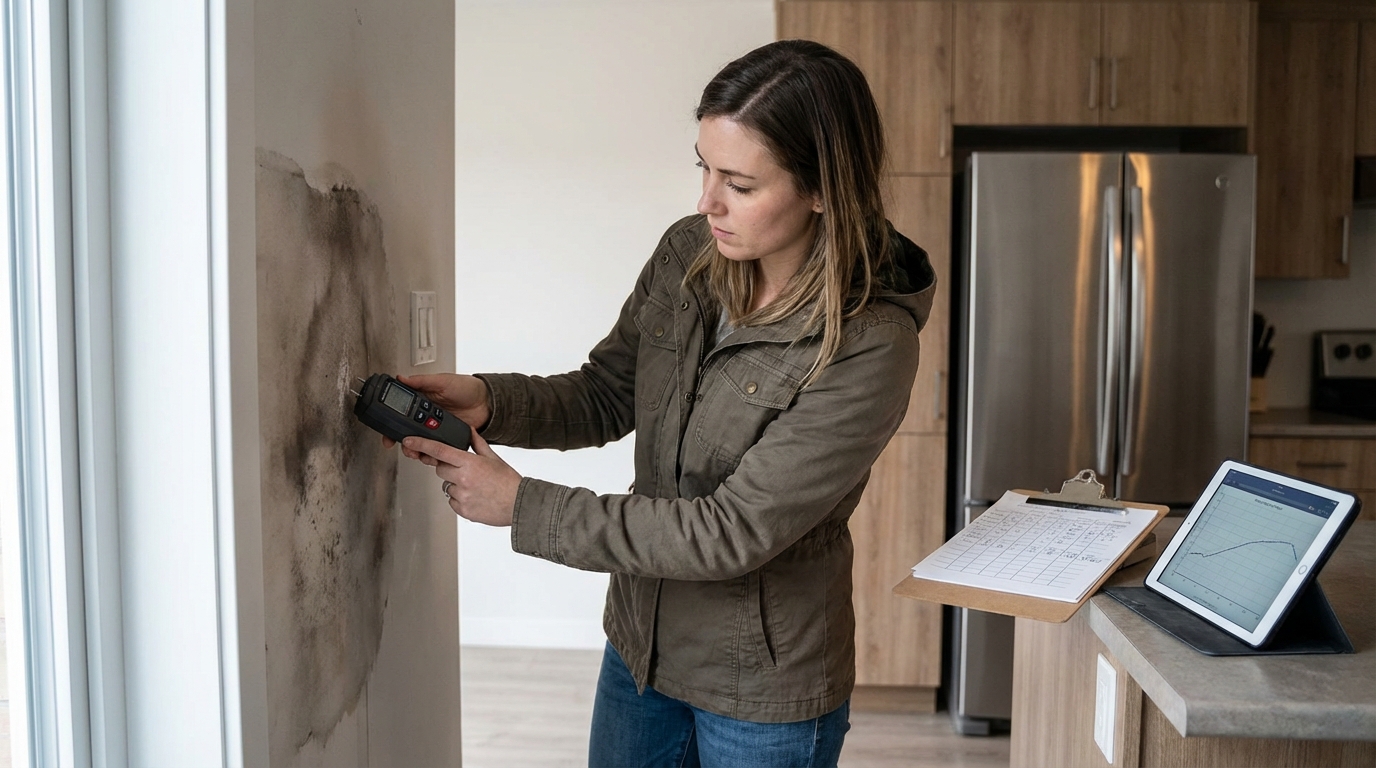
Understanding the water activity definition is one of the most practical things a homeowner can learn about mold prevention. While the term sounds like something from a chemistry textbook, water activity directly explains why mold colonizes some damp materials within days and leaves others alone. It also explains why a wall can look perfectly dry yet harbor active mold growth behind the surface. Grasping this single concept can save thousands in mold remediation costs and protect household health.
What Is Water Activity? (Definition and Why It Matters for Homeowners)
Water activity (abbreviated aw) is a measurement of the free, unbound water available to microorganisms in a given material, expressed on a scale from 0.0 (bone dry) to 1.0 (pure water). It tells you whether the moisture inside your drywall, wood framing, or carpet pad is actually accessible to mold spores waiting to germinate.
According to MoldLedger, professional mold remediation requires reducing water activity below 0.70 in affected materials before an area can be declared safe. That number matters because most mold species begin active growth at aw of 0.70 or higher. Some xerophilic species, particularly certain strains of Penicillium and Aspergillus, can grow at levels as low as 0.60 to 0.65, according to the UC ANR Master Food Preserver Program.
Think of it this way: total moisture content tells you how much water is in a material. Water activity tells you how much of that water mold can actually use. A concrete slab and a piece of drywall might both contain 20% moisture by weight, but the concrete binds water far more tightly. The drywall, with its porous gypsum core, leaves more water free for biological activity. Same moisture content, very different mold risk.
This distinction is exactly why understanding what mold needs to grow goes beyond simply checking whether something “feels wet.”
How Does Water Activity Differ from Relative Humidity?
Water activity measures moisture availability inside a material, while relative humidity measures moisture in the surrounding air. The two are related but describe fundamentally different things.
Relative humidity (RH) is expressed as a percentage of the maximum moisture air can hold at a given temperature. Water activity is expressed as a decimal from 0 to 1.0. The mathematical relationship is straightforward: water activity equals equilibrium relative humidity divided by 100. So a material with aw of 0.80 is in equilibrium with air at 80% RH, as explained by the FDA’s technical guide on water activity.
Here is where homeowners get tripped up. A hygrometer on the wall reads 55% RH, and everything seems fine. But the drywall behind a slow-leaking pipe fitting might have aw of 0.85 due to absorbed liquid water. The air in the room is comfortable. The material inside the wall is a mold incubator.
Temperature complicates things further. Both water activity and relative humidity shift with temperature changes. Warmer air holds more moisture, which means a room that reads 50% RH during the day might spike above 70% RH overnight as temperatures drop. According to Process Sensing, water activity in most materials actually increases with temperature, making warm, damp environments doubly risky.
What Causes High Water Activity in Building Materials?
Liquid water intrusion, capillary absorption, condensation, and prolonged high humidity all drive water activity upward in building materials.
The most obvious cause is direct water contact. A burst pipe, roof leak, or flooding event saturates porous materials like drywall, insulation, and wood framing. According to BuildingScience.com, porous materials like wood, mortar, gypsum, and concrete start with pores fully filled with water after saturation, effectively reaching aw near 1.0. Drying creates tension forces that can cause shrinkage cracks, adding structural damage to the mold risk.
Capillary action is a sneakier culprit. Water wicks upward through interconnected pores in brick, concrete, and wood, much like water traveling up a celery stalk. A foundation wall sitting in damp soil can maintain elevated water activity in its lower courses indefinitely without any visible leak.
Then there is condensation. When warm, humid air contacts a cold surface (think an uninsulated exterior wall in winter or a cold water pipe in summer), water vapor condenses into liquid. That liquid raises local water activity to 1.0 at the condensation point. According to BuildingGreen, every inch of rain falling on 1,000 square feet of roof produces approximately 625 gallons of water that drains toward the foundation, potentially elevating water activity in adjacent materials through splashing or poor drainage.
Construction-phase exposure also plays a role. CCACO notes that gypsum wallboard installed before a roof is completed can absorb enough rain to sustain permanent damage or mold if not dried below aw 0.8 promptly.
Which Mold Species Thrive at Different Water Activity Levels?
Different mold species have evolved to exploit different moisture environments, and water activity determines which ones can colonize a given material.
According to research published in the International Journal of Food Microbiology, water activity exerts a greater influence on mold growth than temperature does. The study found that beta-values (measuring aw sensitivity) were significantly higher than alpha-values (measuring temperature sensitivity) across species including Alternaria alternata, Cladosporium cladosporioides, Penicillium chrysogenum, and Rhizopus oryzae.
Here is how common household mold species break down by water activity requirements:
| Water Activity Range | Category | Common Species | Typical Household Location |
|---|---|---|---|
| 0.60 - 0.70 | Xerophilic (dry-loving) | Certain Aspergillus, Penicillium | Stored goods, dust, low-humidity areas |
| 0.70 - 0.80 | Moderately xerophilic | Aspergillus flavus, Aspergillus niger | Damp closets, poorly ventilated rooms |
| 0.80 - 0.90 | Mesophilic | Cladosporium, Alternaria | Bathroom tile grout, window frames, basements |
| 0.90 - 0.94 | Hydrophilic | Stachybotrys chartarum (black mold), Trichoderma | Chronically wet drywall, flooded areas |
| 0.95 - 1.00 | Highly hydrophilic | Mucor, Rhizopus, bacteria | Standing water, saturated insulation |
According to Accuserve, bacteria typically require aw above 0.95 for growth, while molds dominate in lower-moisture environments. This is why mold, not bacteria, is the primary biological concern in most water-damaged homes. The materials are damp enough for fungi but not wet enough for bacterial colonies.
A critical takeaway: Stachybotrys chartarum requires aw of approximately 0.94 to grow. That means this species only appears in areas with significant, sustained water intrusion. The Aspergillus and Penicillium species that grow at aw 0.65 to 0.80 are far more common in homes with moderate dampness problems.
What Are the Signs That Water Activity Is Too High in Your Home?
Visible condensation, musty odors, peeling paint, and warped materials all signal that moisture levels have crossed into dangerous territory.
You cannot measure water activity with your senses alone. But several warning signs suggest that building materials in your home have reached aw levels capable of supporting mold. According to Consumer Reports, wallpaper can bubble or wrinkle when humidity surpasses 70% for extended periods. Peeling or blistering paint on walls and ceilings often indicates moisture migrating through the substrate.
A musty smell is one of the most reliable early warnings. That odor comes from microbial volatile organic compounds (mVOCs) released by actively growing mold colonies. If a room smells earthy or stale despite regular cleaning, water activity in hidden materials is likely elevated.
Other signs to watch for:
- Condensation on windows or cold surfaces, especially in the morning
- Staining or discoloration on walls, ceilings, or baseboards
- Warped or buckled flooring, particularly near bathrooms, kitchens, or exterior walls
- A spike in water bills without explanation, which may indicate a hidden leak (a continuously running toilet alone can waste up to 200 gallons per day, according to the City of Oak Grove)
- Persistent allergy symptoms that worsen indoors
The University of Minnesota Extension recommends investigating any indoor humidity that consistently exceeds 50%, using ventilation or dehumidifiers when moisture sources cannot be eliminated.
Health Implications of Mold Triggered by High Water Activity
Mold growth from elevated water activity can cause respiratory irritation, allergic reactions, and more serious health effects in vulnerable individuals.
According to the EPA, mold exposure irritates the eyes, skin, nose, throat, and lungs in both allergic and non-allergic people. Symptoms range from mild (sneezing, congestion, itchy eyes) to severe (persistent coughing, wheezing, shortness of breath).
The Virginia Department of Health states that mold can begin growing within 24 hours after an area becomes wet. That narrow window underscores why rapid drying is so important.
The CDC notes that while most people inhale mold spores daily without illness, individuals with weakened immune systems face risk of invasive mold infections. These are rare but can be life-threatening.
A case study published in PMC (PubMed Central) documented a family of five living in a water-damaged home who developed 17 areas of central nervous system deficits, chronic fungal sinusitis, frequent headaches, fatigue, and other symptoms. Researchers detected mycotoxins in urine, nasal secretions, and even breast milk.
Hidden mold is particularly problematic. Colonies growing behind baseboards, under flooring, or inside wall cavities release airborne spores that cause persistent symptoms even when surfaces appear clean. Anyone experiencing unexplained respiratory issues, chronic fatigue, or recurring headaches that worsen indoors should consult a physician and consider having a certified industrial hygienist inspect the home for mold.
How to Reduce Water Activity and Prevent Mold Growth
Controlling water activity requires eliminating moisture sources, drying materials quickly, and maintaining low indoor humidity.
The single most important step is speed. According to the CDC, wet materials should be cleaned and dried within 24 to 48 hours to prevent mold colonization. After that window closes, spores that were dormant begin germinating.
Here are the most effective strategies, organized by priority:
1. Stop the water source. Fix leaks, repair flashing, seal foundation cracks, and address plumbing failures immediately. No amount of dehumidification overcomes an active water intrusion.
2. Remove saturated porous materials. According to BrickKicker, drywall should be cut and removed at least 12 inches above the water line after flooding. Porous materials like carpet padding, cellulose insulation, and particleboard often cannot be dried fast enough to prevent mold.
3. Dehumidify aggressively. The EPA recommends maintaining indoor relative humidity below 60%, with 30% to 50% being ideal. A quality dehumidifier paired with fans accelerates drying. Fans alone circulate air but do not remove moisture.
4. Ventilate high-moisture areas. Run exhaust fans during and after showers. Vent dryers to the outside. Open windows when outdoor humidity is lower than indoor levels.
5. Monitor conditions. Use a hygrometer to track indoor humidity. While consumer-grade tools cannot measure water activity directly, keeping ambient RH below 50% helps ensure that building materials stay below the 0.70 aw threshold where most mold species become active.
6. Disinfect non-porous surfaces. The CDC recommends a solution of 1 cup bleach per 1 gallon of water for non-porous surfaces. This kills surface mold spores but does not penetrate porous materials. Bleach on drywall or wood is ineffective for deep contamination.
When Should You Call a Professional?
Homeowners should contact a mold remediation professional when water damage affects more than 10 square feet, when mold is hidden inside walls or HVAC systems, or when health symptoms persist.
Small surface mold patches on non-porous materials (tile, glass, metal) can often be handled with household cleaning. But several situations demand professional expertise:
- Water damage covers a large area. The EPA’s general guidance suggests professional remediation for mold-affected areas exceeding 10 square feet.
- Materials appear dry but smell musty. As noted by MoldLedger, surfaces at aw 0.75 can sustain hidden mold growth despite appearing dry. Professionals use water activity meters that take 15 to 30 minutes per sample to measure equilibrium relative humidity in a sealed chamber, providing accurate readings that visual inspection cannot.
- Mold returns after cleaning. Recurring growth indicates an unresolved moisture source or incomplete remediation.
- HVAC contamination is suspected. Mold inside ductwork distributes spores throughout the entire home.
- Occupants have health symptoms. Persistent respiratory issues, allergic reactions, or other symptoms that improve when away from home warrant professional assessment. Consult a physician for health concerns and a certified industrial hygienist for environmental testing.
- The home has experienced flooding. Post-flood conditions often push water activity in building materials above 0.90, creating conditions favorable for toxin-producing species like Stachybotrys and Aspergillus.
According to Accuserve, xerophilic molds can grow at aw as low as 0.66 to 0.70, meaning even “slightly damp” conditions that a homeowner might dismiss can support active colonies. A professional with proper instrumentation can distinguish between materials that are safe and those that need removal.
Disclaimer: This article is for informational purposes only and does not constitute medical advice. Consult a physician regarding any health symptoms potentially related to mold exposure. For property assessments, consult a certified mold remediation professional or industrial hygienist.
Ready to connect with a qualified mold professional in your area? Find a local mold remediation contractor through our directory to get expert help with moisture assessment and mold prevention.