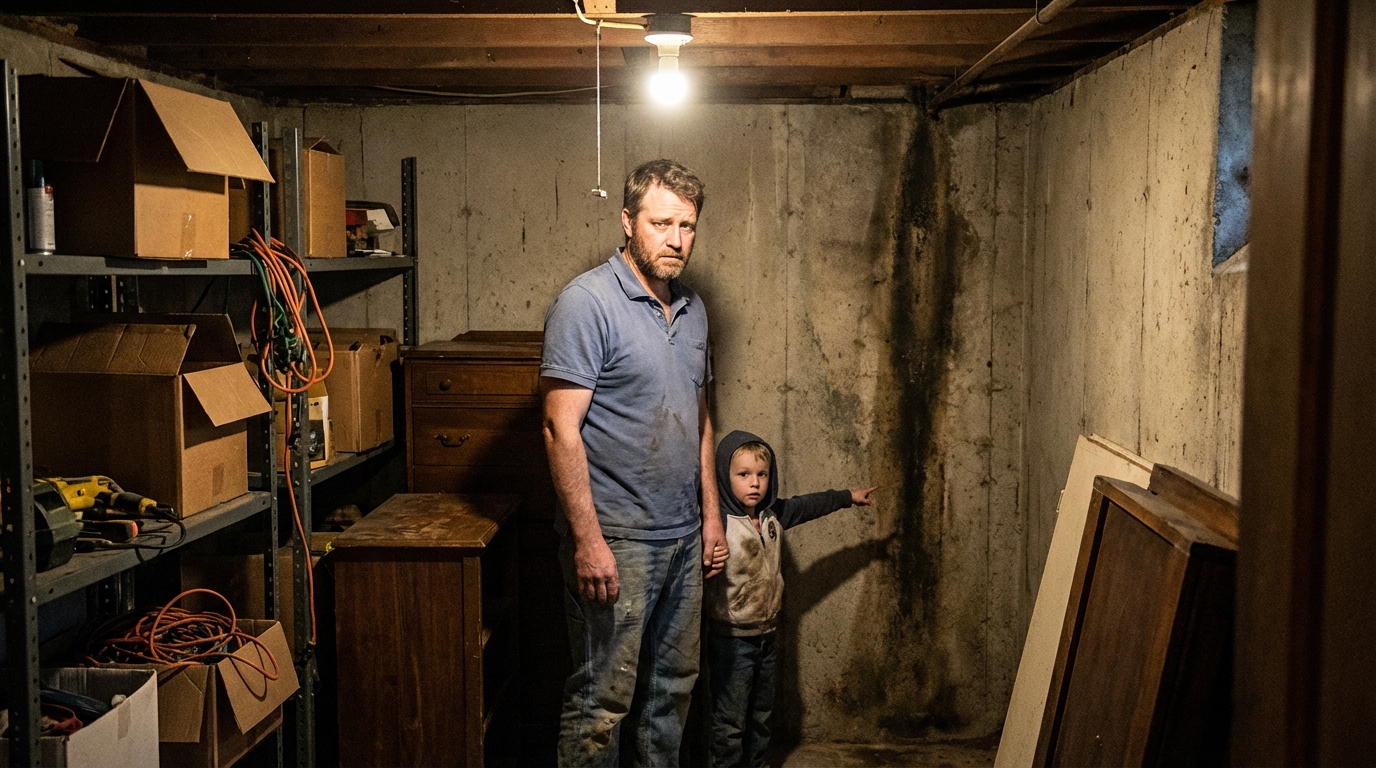
Basement water damage repair cost is one of the most unpredictable expenses a homeowner can face. A minor seepage issue might cost a few hundred dollars to fix. A full basement flood with contaminated water and mold growth? That can climb past $30,000. The difference comes down to timing, water type, and how deep the damage runs before anyone notices.
According to Angi, the national average for water damage restoration sits around $3,864, with a typical range of $1,383 to $6,384. But those numbers only cover mitigation. Reconstruction costs for drywall, flooring, and structural elements can double or triple the final bill. Understanding what drives these costs helps homeowners avoid sticker shock and make smarter decisions about when to act.
What Is Basement Water Damage — and Why Does Repair Cost Vary So Much?
Basement water damage describes any moisture intrusion that compromises building materials, structural integrity, or indoor air quality below grade. The cost to repair it varies dramatically because no two incidents share the same combination of severity, contamination, and timing.
Five primary factors drive the variation. First, the extent and depth of damage matters enormously. According to Sarkinen Restoration, a small area with severe water penetration may cost more than a larger area with surface-level moisture. Second, water type plays a critical role. Clean water from a supply line is far cheaper to manage than gray water from appliances or black water from sewage backups, which require specialized safety measures and disposal protocols.
Third, the waterproofing method selected affects the total. According to A Better Choice Inc., interior drain systems run $2,000 to $7,000, while exterior waterproofing ranges from $5,000 to $15,000 or more. Crack injections are cheaper at $500 to $1,500 per crack. Fourth, geographic location directly impacts labor rates. And fifth, standing water requires immediate extraction with pumps, fans, and dehumidifiers, adding to costs.
The biggest cost multiplier? Delay. According to OP Dry Space, the longer water sits untreated, the more expensive restoration becomes. What starts as a $2,000 extraction job can spiral into a $15,000 rebuild with mold remediation costs layered on top.
What Causes Basement Water Damage?
Basement water damage stems from three primary moisture sources: liquid water from rain or groundwater, interior plumbing failures, and exterior humid air that condenses on cooler surfaces.
The numbers are striking. According to the University of Minnesota Extension, a 1-inch rain event drops approximately 1,250 gallons of water on the roof of a 2,000-square-foot house. Without proper drainage, much of that water flows toward the foundation.
State Farm recommends that downspouts extend at least 10 feet from the home to discharge runoff away from the foundation. When gutters overflow, water erodes soil under footings and can create foundation cracks. Hydrostatic pressure from rising groundwater pushes moisture through hairline cracks in concrete, sometimes even through the basement floor itself.
Sump pump failure is another leading cause. According to Paul Davis Restoration, it ranks as the most common culprit for basement flooding, often striking during power outages when storms are at their worst. Sewer backups round out the list, typically caused by tree roots, grease buildup, or broken pipes according to SERVPRO.
How Much Does Basement Water Damage Repair Cost? (2026 Price Breakdown)
Most homeowners pay between $1,500 and $12,000 for basement water damage repair, though severe cases with contamination or structural involvement can exceed $30,000.
Here is a tiered breakdown based on damage severity, compiled from EcoClean Restoration and HomeGuide:
| Damage Level | Description | Typical Cost Range | What’s Included |
|---|---|---|---|
| Minor | Small area, clean water, caught within hours | $1,500 - $4,000 | Extraction, drying, minor repairs |
| Moderate | Significant area, some material damage, 24-48 hr exposure | $4,000 - $12,000 | Drying, material removal, antimicrobial treatment, partial reconstruction |
| Severe | Entire basement, contamination, extended exposure | $12,000 - $30,000+ | Full material replacement, structural repair, mold remediation |
| Catastrophic (sewage) | Black water flooding, 2+ feet | $15,000 - $80,000 | Hazmat cleanup, full gut and rebuild |
Per-square-foot costs also vary by water category. According to Angi, clean water runs about $3 to $4 per square foot, gray water $4 to $6.50, and black water $7 to $7.50. For a 1,000-square-foot basement, that translates to $3,000 to $7,500 just for mitigation before any reconstruction begins.
Keep in mind that the national average of $3,864 reported by HomeAdvisor covers extraction, drying, and cleaning only. Rebuilding drywall, replacing flooring, and restoring finishes adds $2,000 to $20,000 or more depending on the scope.
What Are the Warning Signs of Basement Water Damage?
The earliest warning signs are often subtle: musty odors, white mineral deposits on walls, and small cracks that slowly widen over time.
A persistent musty smell is not a “normal basement smell.” It signals active mold or mildew growth from excess moisture. According to Consumer Reports, these odors come from microbial volatile organic compounds produced by mold colonies. If you notice this, it is worth learning how to detect mold that may be hidden behind walls or under flooring.
White, chalky deposits on basement walls (called efflorescence) form when water evaporates from concrete and leaves mineral residue behind. According to Basement Systems, this confirms moisture is migrating through the wall, even if no active leak is visible.
Cracks deserve close attention. Hairline cracks in walls or floors can widen over time as water seeps in. Horizontal cracks are especially concerning because they signal external soil pressure that risks structural failure, according to Value Dry Waterproofing. Other red flags include soft or discolored drywall, peeling paint, condensation on pipes and windows, and warped or buckled flooring.
The EPA recommends keeping indoor relative humidity below 60%, and ideally between 30% and 50%, to prevent mold growth. A basement consistently above that threshold is a basement headed for trouble.
Does Basement Water Damage Lead to Mold — and What Does That Add to the Cost?
Yes, basement water damage frequently leads to mold growth, often within 24 to 48 hours of water exposure, and it can increase total repair costs by 50% or more.
Basements are particularly vulnerable because they combine the three things mold needs to grow: moisture, organic material (drywall, wood framing, carpet), and limited airflow. According to SANI-TRED, approximately 38% of basements with moisture problems develop mold and fungus.
The financial impact is significant. According to Basement Waterproofing Scientists, mold remediation after basement water damage averages $2,225, with a typical range of $500 to $6,000. For larger infestations or cases involving black mold (Stachybotrys chartarum), costs can reach $15,000.
What makes mold especially costly is that it often hides. Mold on drywall may not be visible from the front side while colonies thrive on the back. By the time homeowners notice, the affected area has expanded well beyond the original water damage zone. According to EcoClean Restoration, untreated water damage that leads to hidden mold can multiply total repair costs by 2 to 3 times.
The EPA recommends discarding porous materials like drywall and insulation that have been wet for more than 48 hours, as these materials cannot be reliably dried and cleaned once mold has established itself.
Are the Health Risks Serious Enough to Warrant Professional Help?
Mold exposure from basement water damage can cause respiratory problems, allergic reactions, and asthma attacks, making professional assessment a worthwhile investment for occupied homes.
The CDC states that indoor mold exposure can cause nasal stuffiness, throat irritation, coughing, wheezing, and eye or skin irritation. People with asthma or mold allergies may experience more severe reactions. Immunocompromised individuals face additional risks from certain mold species.
According to Michaelis Corp, DIY drying techniques frequently fail to address hidden moisture in structural cavities. Water seeps into wall assemblies, subfloor layers, and insulation in ways that are not visible from the surface. Professional restoration companies use thermal imaging cameras and calibrated moisture meters to locate these concealed wet zones.
Health costs compound the financial picture. Medical bills, missed work, and ongoing respiratory treatment can add thousands of dollars to the true cost of inadequate water damage repair. For anyone experiencing symptoms like persistent coughing, headaches, or sinus congestion after basement water damage, consulting a physician is the appropriate first step. A certified industrial hygienist can assess indoor air quality and determine whether mold levels pose a health concern.
If you suspect hidden mold, learning how to check for mold can help you gather preliminary information before calling in a professional.
Will Homeowners Insurance Cover Basement Water Damage Repair?
Standard homeowners insurance covers sudden and accidental water damage from internal sources like burst pipes, but excludes flooding, gradual leaks, and maintenance-related issues.
According to Progressive, a burst pipe or water heater rupture that floods the basement would typically be covered. The policy pays for resulting damage to walls, flooring, and personal property up to policy limits. However, the cost to repair or replace the pipe itself is usually excluded.
Here is where homeowners get blindsided. Standard policies exclude:
- External flooding from storms, rising groundwater, or heavy rain. This requires separate NFIP flood insurance.
- Sewer and sump pump backups unless the homeowner has purchased an optional endorsement.
- Gradual damage from slow leaks, condensation, or deferred maintenance.
- Mold in many cases, or with strict sublimits (often $5,000 to $10,000).
According to Allstate, the distinction between “sudden” and “gradual” is the key coverage trigger. A pipe that bursts overnight is sudden. A pipe that has been dripping behind a wall for six months is gradual, and the resulting damage is typically denied.
For detailed guidance on mold-specific coverage, see our guide on whether homeowners insurance covers mold. Homeowners in flood-prone areas should seriously consider NFIP coverage, as a single basement flood can cost more than years of premium payments.
How Can You Prevent Basement Water Damage?
Proper drainage, regular maintenance, and humidity control prevent the vast majority of basement water intrusion before it starts.
According to Ark Basement Services, over 60% of U.S. homes with basements experience some form of water penetration. That statistic rises to 98% over a basement’s full lifespan. Even 30% of new homes experience water intrusion within the first year.
Prevention strategies that deliver the highest return:
- Extend downspouts at least 10 feet from the foundation and keep gutters clean.
- Grade the yard so soil slopes away from the house on all sides.
- Install or maintain a sump pump with a battery backup system. Test it annually.
- Seal visible cracks in foundation walls and floors with hydraulic cement or epoxy injection.
- Run a dehumidifier to keep basement humidity below 50%.
- Inspect regularly for new cracks, damp spots, efflorescence, or musty odors.
According to SANI-TRED, most basements develop leaks within 10 to 15 years regardless of construction quality. Proactive waterproofing at $2,000 to $10,000 is a fraction of the $7,500 to $15,000 average cost per reactive repair event, according to Prime Restorers.
When Should You Call a Professional Instead of DIYing It?
Call a professional whenever water has been standing for more than 24 hours, involves gray or black water, affects structural elements, or covers an area larger than a small room.
DIY repairs make sense for truly minor situations: a small puddle of clean water on a concrete floor, caught within hours, with no contact with drywall or insulation. A wet-dry vacuum, fans, and a dehumidifier can handle that.
Everything else carries risk. According to Michaelis Corp, homeowners who spend $1,000 on DIY cleanup often face $5,000 in professional restoration later due to missed moisture, improper drying, and mold growth. That is a 5x cost escalation from incomplete work.
Specific situations that demand professional intervention:
- Any sewage or black water involvement. Health hazards require proper protective equipment and disposal.
- Water contact with drywall, insulation, or carpet padding. These porous materials trap moisture that consumer-grade equipment cannot fully extract.
- Foundation cracks, bowing walls, or structural movement. According to US Structural, store-bought sealants only mask symptoms without addressing root causes like hydrostatic pressure.
- Musty odors or visible mold spores after drying. This indicates colonization that requires professional remediation.
- Insurance claims. Professional documentation of damage scope and restoration steps strengthens claim outcomes.
Professional restoration companies use industrial dehumidifiers, air movers, and moisture monitoring equipment that far exceeds what is available at hardware stores. They also follow IICRC S500 water damage restoration standards, which specify extraction, drying, antimicrobial treatment, and moisture verification protocols designed to prevent secondary damage.
Disclaimer: This article is for informational purposes only and does not constitute professional, medical, or legal advice. Costs cited reflect national averages and may vary significantly by location, contractor, and project specifics. Health concerns related to mold exposure should be discussed with a qualified physician. For structural or water damage assessments, consult a licensed contractor or certified restoration professional.
Need help finding a qualified water damage or mold remediation professional in your area? Visit our contractor directory to connect with vetted local specialists who can assess your basement and provide accurate repair estimates.