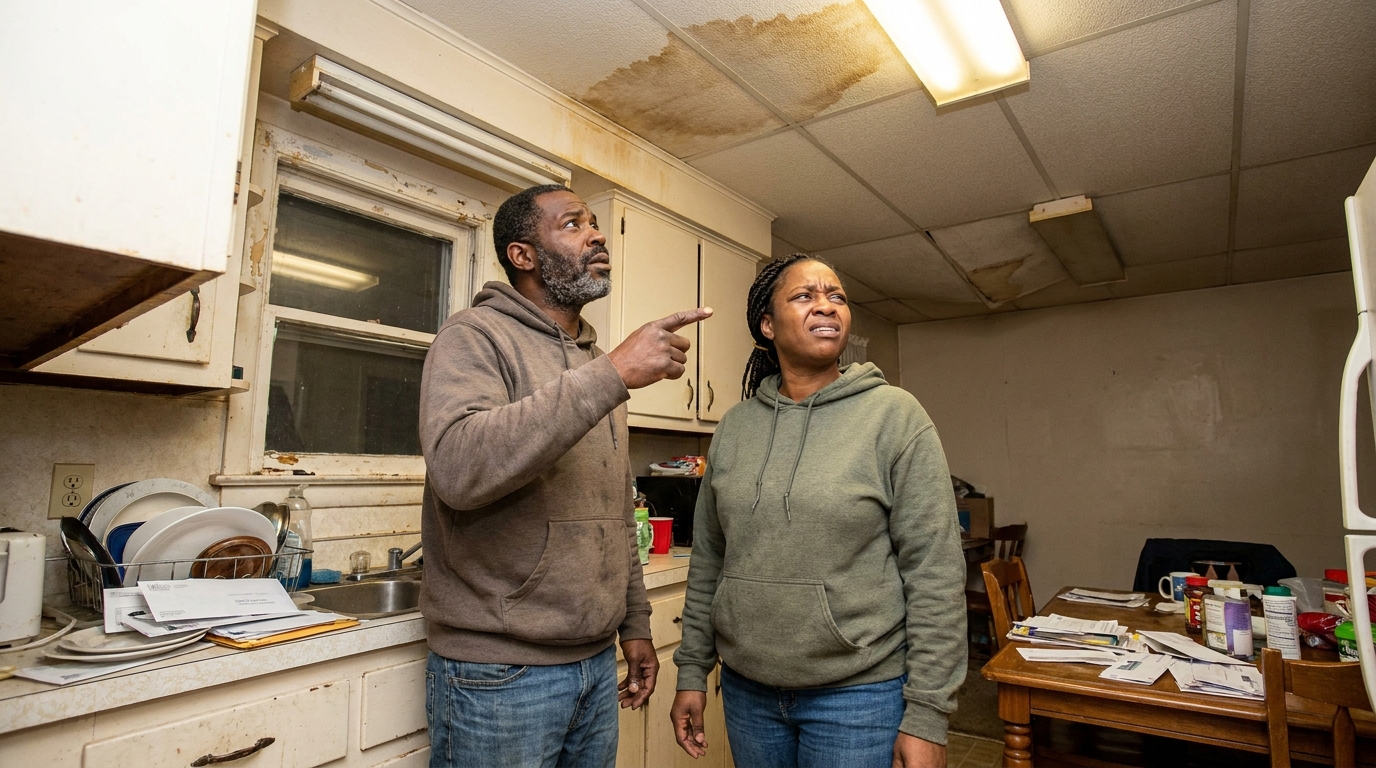
Brown mold spots on ceiling surfaces are one of the most common signs of a moisture problem hiding in plain sight. These discolored patches, ranging from light tan to deep chocolate brown, often appear gradually near bathrooms, kitchens, or top-floor rooms. Homeowners frequently mistake them for harmless water stains or dirt. But that assumption can be costly. According to Realtime Labs, at least 45 million buildings in the United States have unhealthy mold levels, and many of those problems start with exactly this kind of overlooked ceiling discoloration.
This guide walks through how to identify brown mold, distinguish it from simple staining, understand the health risks, and decide when professional help is necessary.
What Are Brown Mold Spots on Ceilings?
Brown mold spots are fungal colonies growing on ceiling materials like drywall, plaster, or ceiling tiles where moisture has accumulated. They are not a single mold species. Rather, “brown mold” describes a color range produced by several different fungi, including Ulocladium, Cladosporium, Aureobasidium, and sometimes early-stage Stachybotrys. According to Bust Mold, Ulocladium in particular requires extremely high moisture levels and often appears after flooding or severe water damage.
These spots typically resist simple wiping. Unlike dust or surface grime, mold growth penetrates porous building materials. A brown patch on a ceiling may look flat from a distance, but up close it often reveals a fuzzy, powdery, or slightly raised texture. The growth pattern tends to radiate outward from a central moisture source, such as a leaky pipe joint or a roof penetration directly above.
One critical detail: mold spores are microscopic and invisible to the naked eye. The brown spots homeowners see represent mature colonies that have been growing for days or weeks. By the time discoloration is visible, the underlying moisture problem has likely been active for some time.
What Causes Brown Mold Spots on Ceilings?
Persistent moisture from leaks, condensation, or elevated humidity is the root cause of nearly all ceiling mold growth. The specific moisture source determines where spots appear and how quickly they spread.
According to Angi, brown spots on ceilings are most commonly caused by leaking roofs, particularly in top-floor rooms. Clogged gutters, cracked flashing, and deteriorated roof membranes allow water to seep into attic spaces and saturate ceiling materials from above. Plumbing leaks from upstairs bathrooms or HVAC condensate lines create similar problems on lower floors.
Condensation is another frequent culprit. When warm, humid indoor air rises into a poorly insulated attic during colder months, moisture condenses on cold surfaces and drips back down onto the ceiling below. According to Emergency Restoration Sciences, indoor relative humidity exceeding 60% creates ideal conditions for mold growth on ceilings, especially in bathrooms and kitchens.
Understanding what mold needs to grow helps clarify why ceilings are so vulnerable. Drywall paper facing provides organic nutrients. Ceiling cavities trap moisture with limited airflow. And gravity works against drying, keeping water pooled against ceiling materials longer than it would on vertical surfaces.
Here are the most common moisture sources behind brown ceiling spots:
- Roof leaks from damaged shingles, flashing, or ice dams
- Plumbing leaks from pipes, fittings, or fixtures above the ceiling
- HVAC condensation from poorly insulated ductwork or clogged drain lines
- Attic condensation from inadequate insulation or ventilation
- Bathroom steam from showers without proper exhaust ventilation
How Do You Tell the Difference Between Mold and a Water Stain?
Water stains are flat, smooth discolorations, while mold produces raised, textured growth with a musty odor. Distinguishing between the two requires checking three characteristics: texture, smell, and behavior over time.
According to Precision Environmental, water stains appear as flat, yellow, brown, or tan marks that often form ring-like or streak patterns following gravity. They feel smooth to the touch and have no detectable odor in early stages. Mold, by contrast, develops a fuzzy, powdery, or slimy surface and emits microbial volatile organic compounds that produce a distinct musty smell.
The behavior of the spot over time provides another diagnostic clue. A water stain from a one-time leak stays the same size and gradually lightens as it dries. Mold spots expand outward, darken, and may change texture as the colony matures. According to AirPF, mold growth can begin within 24 to 48 hours on water-damaged surfaces, turning initial stains into darker, irregular patches.
| Feature | Water Stain | Mold Growth |
|---|---|---|
| Texture | Flat, smooth | Fuzzy, powdery, or raised |
| Color | Yellow-brown, often with rings | Dark brown, green-black, or spotted |
| Odor | None | Musty, earthy smell |
| Shape | Ring-like or streak patterns | Irregular, expanding edges |
| Response to wiping | May lighten with damp cloth | Resists wiping; smears or returns |
| Change over time | Stable or fading | Grows larger and darker |
A word of caution: touching or scrubbing a suspected mold spot can release spores into the air. If the spot looks textured or smells musty, avoid disturbing it. A mold test kit or professional tape-lift sample can confirm whether mold is present without spreading contamination.
Which Types of Mold Appear Brown on Ceilings?
Several mold species produce brown, tan, or dark chestnut-colored colonies on ceiling surfaces, and visual identification alone cannot reliably distinguish between them. According to Mold Inspect, brown mold refers to a range of species rather than a single organism, and each behaves differently depending on moisture levels and surface material.
Here are the most common species found on ceilings:
Cladosporium is one of the most prevalent indoor molds worldwide. It often appears as olive-brown to dark brown spots and thrives on both damp drywall and painted surfaces. According to Mouldmen, Cladosporium can cause asthma, respiratory issues, and severe infections if left untreated over time.
Ulocladium requires very high moisture levels and typically appears after flooding or prolonged water damage. It forms dark brown to black colonies and is commonly found alongside other water-damage molds. Its presence on a ceiling strongly suggests a significant, ongoing leak rather than minor condensation.
Aureobasidium starts as a light pink or brown colony and darkens with age. It frequently grows on painted surfaces, caulking, and window frames, making bathroom ceilings a common habitat.
Stachybotrys chartarum, commonly called black mold, can appear dark brown or greenish-black in its early growth stages before turning fully black. It requires sustained saturation of cellulose-rich materials like drywall paper. Finding dark brown mold on a chronically wet ceiling warrants extra caution, as Stachybotrys produces mycotoxins that pose additional health concerns.
Pithomyces and Stemonitis (a slime mold sometimes confused with true mold) can also produce brown growths on ceilings, though they are less common indoors.
Because multiple species look similar, the CDC does not recommend routine species testing for most homeowners. The priority is addressing the moisture source and removing the growth, regardless of species. However, if health symptoms are present or the affected area is large, a certified industrial hygienist can collect samples for laboratory identification.
Are Brown Mold Spots on Ceilings Dangerous?
Brown mold spots indicate both a health risk from airborne spores and a structural moisture problem that will worsen without intervention. The danger depends on the species, the extent of growth, and the health of the people living in the home.
All mold releases spores into indoor air. When inhaled, these spores can trigger allergic reactions, respiratory irritation, coughing, nasal congestion, and skin rashes. People with asthma, allergies, or compromised immune systems face elevated risks. According to Realtime Labs, approximately 4.6 million of the 21.8 million asthma cases in the United States are attributable to dampness and mold exposure in the home. That same source reports that infants exposed to mold in their living environments have nearly three times the risk of developing asthma compared to those without early mold exposure.
The Mayo Clinic has attributed 93% of chronic sinus infections to mold, according to statistics compiled by Realtime Labs. While brown mold species like Cladosporium and Ulocladium are generally considered less dangerous than Stachybotrys, prolonged exposure to any mold at high concentrations can cause health problems. Mucor, a less common brown mold, can cause mucormycosis, a life-threatening infection in immunocompromised individuals, according to JSE Labs.
Beyond health, brown ceiling mold signals moisture that may be damaging structural framing, insulation, and electrical components hidden above the ceiling. Painting over the spots traps moisture and accelerates deterioration. Anyone experiencing persistent respiratory symptoms, unexplained allergies, or worsening asthma in a home with visible ceiling mold should consult a physician and arrange for professional mold assessment.
How Do You Stop Brown Mold From Coming Back?
Eliminating the moisture source is the single most effective prevention strategy, and it must happen before any cleaning or cosmetic repair. Without moisture control, mold will regrow on treated surfaces within days.
According to the EPA’s Brief Guide to Mold, Moisture and Your Home, if wet or damp materials are dried within 24 to 48 hours after a leak or spill, mold will not grow in most cases. The EPA also recommends maintaining indoor relative humidity between 30% and 50%, using dehumidifiers or air conditioners as needed.
Here are specific prevention steps for ceiling mold:
Fix leaks immediately. Roof leaks, plumbing drips, and HVAC condensate problems must be repaired before any mold treatment. Even small, slow leaks provide enough moisture for colonization.
Improve ventilation. According to Full Circle Home Inspectors, running bathroom exhaust fans for at least 20 minutes after showers helps vent moisture that would otherwise condense on ceiling surfaces. Kitchen range hoods should vent to the exterior, not into the attic.
Insulate attic spaces. Proper attic insulation prevents warm indoor air from condensing on cold roof sheathing and dripping onto ceilings below. This is especially important in climates with cold winters.
Use mold-resistant materials. When replacing damaged drywall, consider mold-resistant drywall and paint with antimicrobial additives for bathrooms, kitchens, and laundry rooms.
Monitor humidity. Inexpensive hygrometers ($10 to $50) allow homeowners to track indoor humidity levels. If readings consistently exceed 60%, a dehumidifier or improved HVAC system may be necessary.
Clean gutters and manage exterior drainage. According to Angi, clogged gutters are a leading cause of ceiling water stains near exterior walls, with cleaning costs ranging from $75 to $395.
When Should You Call a Professional?
Homeowners should hire a certified mold remediation professional when the affected area exceeds 10 square feet, mold returns after cleaning, or the contamination involves sewage or floodwater.
The EPA’s general guidance suggests that mold patches smaller than about 10 square feet (roughly a 3-by-3-foot area) can be handled by homeowners using detergent and water. Anything larger requires professional containment, air filtration, and removal techniques to prevent spore spread throughout the home. According to TRT Restoration, professionals use negative air chambers and advanced filtration to capture microscopic spores during cleanup, which is especially important for ceiling work where gravity pulls disturbed spores downward into living spaces.
Recurring mold is another clear signal. If brown spots reappear within days or weeks of cleaning, the moisture source has not been fully resolved. A professional can use moisture meters and infrared cameras to detect hidden mold and trace leaks that are not visible from below.
Professional mold remediation costs typically range from $10 to $25 per square foot, or $500 to $6,000 per incident, according to Realtime Labs. Severe cases involving structural damage or large areas can cost significantly more. Homeowners should also check whether their homeowners insurance covers mold damage, as coverage varies based on the cause of the moisture intrusion.
Disclaimer: This article is for informational purposes only and does not replace professional mold assessment or medical advice. If you suspect mold is affecting your health, consult a physician. For mold identification and remediation, hire a certified mold professional or industrial hygienist.
Dealing with brown mold spots on your ceiling? Don’t wait for the problem to spread. Find a qualified mold professional in your area to get an assessment and protect your home.