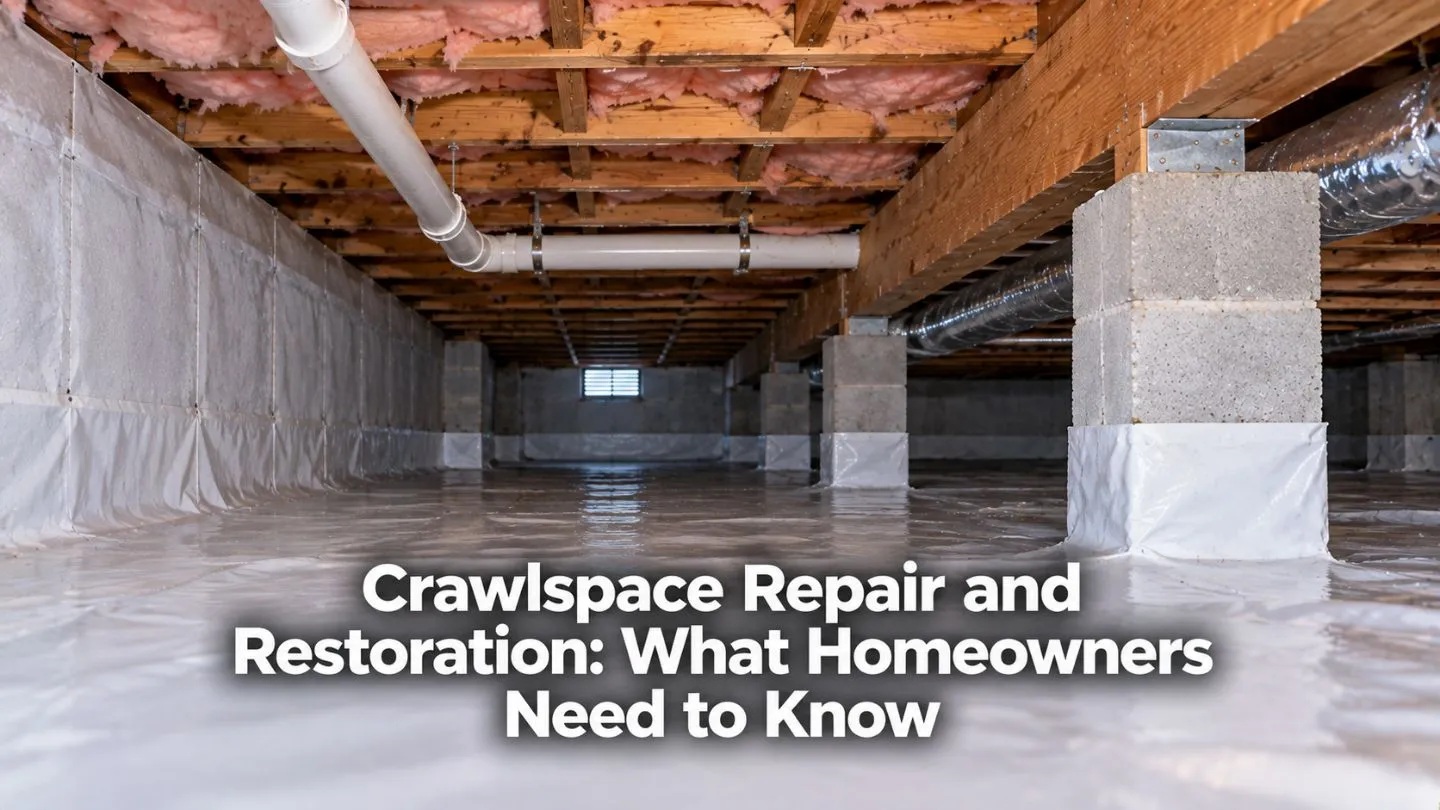
Crawl spaces are out of sight, so they get ignored until something upstairs goes wrong: a musty smell that won’t leave, floors that feel soft or cupped, a home inspection that comes back with “fungal growth on joists.” By then the problem has usually been building for years.
This guide covers what crawl space repair and restoration actually involve, why they fail so often, and what to ask a contractor before you hire one. The practical parts come from Mark S. Pennington, who owns two Richmond, Virginia restoration companies (Pennington Construction Inc. and ServiceMaster South of the James) and has spent 40 years crawling under houses.
What a crawl space does, and why it goes wrong
A crawl space is the shallow void between the ground and the floor of an elevated house. It exists to give access to plumbing, HVAC ductwork, and electrical runs. That’s the useful part.
The problem is that it’s also the part of the house closest to the ground, with the least airflow and the least attention. When moisture gets in and isn’t controlled, the crawl space turns into a damp, dark, still environment, which is exactly what mold needs. Over time that same moisture feeds wood rot in the floor joists and support beams, and it draws pests. What started as a humidity problem becomes a structural one.
If you want the short version of how mold picks a spot, read what mold needs to grow. A neglected crawl space checks every box.
Why Virginia crawl spaces stay wet
Mark’s territory is central Virginia, and the climate there works against crawl spaces in three ways. Much of the Southeast and Mid-Atlantic has the same pattern.
Humid summers. Virginia’s humid subtropical climate pushes warm, moisture-heavy air into the crawl space through foundation vents and gaps. When that air hits cooler surfaces underneath the house (ductwork, pipes, the underside of the floor), it condenses. A vented crawl space in July is often wetter than a closed one, which surprises people who were told vents keep things dry.
Red clay soil. The region’s clay holds water and drains poorly. That means groundwater seepage and soil vapor are constant moisture sources, not just storm-related ones. The ground under the house breathes moisture up into the space year-round.
Heavy rain. Big rain events saturate the soil and push water against foundation walls. Poor grading or clogged gutters make it worse. Foundation cracks, plumbing leaks, and bad drainage all add to the load.
And none of that moisture stays put. Warm air rises through a house, pulling air from the crawl space up through gaps in flooring, around pipe penetrations, and through damp insulation. This is the stack effect, and Mark puts it bluntly: by his estimate, about half the air in a typical home’s first floor originates in the crawl space. If the crawl space is moldy, so is the air you’re breathing upstairs, and it carries the musty odor and allergens with it.
Signs you have a crawl space problem
You don’t need to crawl under the house to spot most of these.
- A musty smell that moves with the HVAC. Strongest when the system kicks on, worst in humid months. If you’ve searched the house and found nothing, our guide to a musty smell with no visible mold explains why the crawl space is the usual suspect.
- Cupped, buckled, or soft hardwood floors. Moisture from below swells the wood. Floors that feel spongy near exterior walls are a red flag.
- White or gray fuzzy growth on joists. This is the classic crawl space finding during a home inspection. See the dangers of white mold for what you’re looking at.
- Sagging or fallen insulation. Fiberglass batts soak up moisture, get heavy, and drop. Wet insulation is also a mold reservoir.
- Standing water or a damp, cracked vapor barrier. If there’s a barrier at all.
- Pests. Termites, camel crickets, and rodents all favor a damp crawl space.
- High indoor humidity you can’t explain. A hygrometer reading above 60% on the first floor in a house with no obvious leak often traces back to the crawl space.
What crawl space restoration actually involves
“Restoration” is contractor language. From a homeowner’s side, the job breaks into a few steps, and skipping any of them is how you end up paying twice.
1. Find the water. Before anything else, the contractor needs to know where the moisture is coming from: surface water from grading and gutters, groundwater from below, a plumbing leak, condensation from vents, or some combination. Fixing mold without fixing the source is a short-term job.
2. Clear it out. Wet insulation, debris, old torn plastic, and anything else holding moisture comes out. This is also when the framing gets inspected for rot.
3. Treat the mold. Mold on joists, subfloor, and beams gets cleaned and treated. For heavy growth this is a containment-and-removal job, not a spray-and-leave job. Rotted members get sistered or replaced.
4. Control the moisture. This is the part that decides whether the fix lasts. At minimum that means a proper vapor barrier over the soil. For most problem crawl spaces in humid climates it means encapsulation: a heavy liner sealed to the walls and piers, sealed vents, and a dehumidifier or conditioned air to hold humidity down. Sometimes it also means drainage and a sump.
5. Verify and hand off. The space should be dry, the humidity should be holding, and the homeowner should leave with a maintenance plan (more on that below).
Here’s what the difference looks like on two of Mark’s jobs. Both are Richmond-area houses with the same underlying problem: moisture, failed insulation, and mold on the framing.
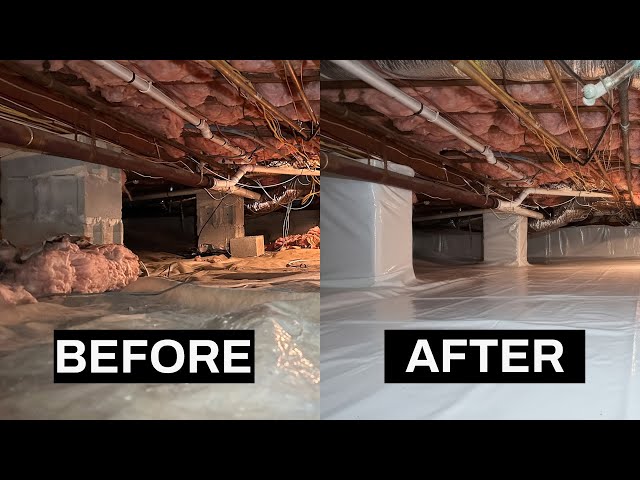
Before: fallen insulation, torn plastic, debris, and bare soil. After: sealed encapsulation over the floor and piers. Photos courtesy of Pennington Construction Inc.
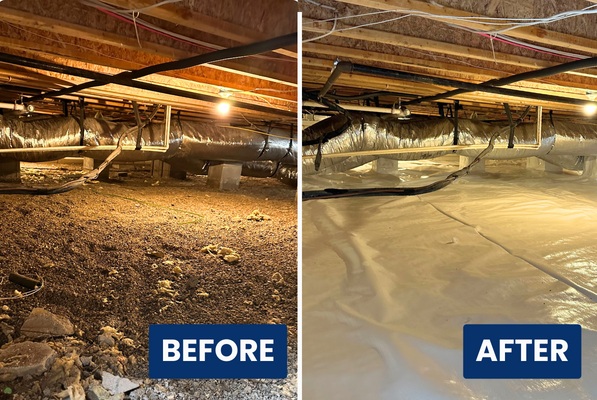
A second job: bare dirt and debris, then a sealed liner across the floor and up the foundation walls. Photos courtesy of Pennington Construction Inc.
The two mistakes contractors make
Mark has seen a lot of other companies’ crawl space work, usually when he’s called in after it failed. Two mistakes come up over and over.
Mistake one: treating every crawl space the same.
“The biggest mistake other companies make in a crawl space is thinking that one solution fits all crawl spaces,” he says. “When you’re restoring or renovating a crawl space, you have to take the type of construction into account.”
A 1920s house on brick piers with a dirt floor, a 1970s ranch on block walls with vents every eight feet, and a newer house with a partial slab and ductwork running through the space are three different problems. The vent strategy, the liner, the drainage, where the dehumidifier goes, and whether the space should be conditioned all depend on how the house was built. A company that sells the same package to everyone will get some of them wrong.
Mistake two: not telling the homeowner the system needs maintenance.
“The second thing they do wrong is not inform the homeowner that you’ve installed a system that will need maintenance from time to time,” Mark says. “It’s not a lifetime fix with no maintenance after the work is complete.”
An encapsulated crawl space is a system, not a one-time repair. The dehumidifier has a filter and a drain. A sump pump can fail. The liner can be torn by a plumber or a rodent. Humidity needs to be checked. None of this is hard, but a homeowner who was told “you’ll never think about it again” won’t do any of it, and five years later the space is wet again and the contractor is to blame.
Ask any contractor what the maintenance schedule looks like. If the answer is “there isn’t one,” keep looking.
What it costs
You won’t find a price list on a serious crawl space contractor’s website, and Mark is direct about why: every crawl space is different, and a number posted online that doesn’t match the quote creates a problem before the job starts.
What moves the price:
- Square footage and how much headroom there is to work in
- Whether there’s standing water, and how much debris and insulation has to come out
- The extent of mold on the framing, and whether any joists or sills are rotted
- Construction type (piers vs. block walls, vented vs. sealed, ducts in the space)
- Vapor barrier only vs. full encapsulation vs. encapsulation plus drainage, sump, and dehumidifier
- Access: a 36-inch door is a different job than an 18-inch hatch
For general ranges on the mold portion, see our mold remediation cost guide. For the crawl space as a whole, get two or three site visits and compare what each contractor is proposing to do, not just the bottom line. The cheapest quote is usually the one that skipped moisture control.
If the damage traces to a sudden event like a burst pipe, it may be worth checking whether homeowners insurance covers mold before you pay out of pocket. Gradual moisture and groundwater usually aren’t covered.
Questions to ask before you hire
- Are you licensed? In Virginia, that means an active DPOR contractor license. Most states have an equivalent. Verify the number yourself.
- What certifications do your technicians hold? For mold, IICRC Applied Microbial Remediation Technician (AMRT). For drying, WRT or ASD. An IICRC Certified Firm designation means the company, not just one employee, is registered.
- Where is the water coming from, and how will you stop it? If the answer skips straight to the liner, that’s a problem.
- How does my house’s construction change your approach? A good contractor will have an opinion about your specific foundation, vents, and ductwork.
- What maintenance will this system need, and how often? Get it in writing.
- Will you work with my insurance carrier? If a covered event caused the damage, a contractor who handles carrier communication saves you weeks.
Where to find a crawl space contractor
MoldGuide’s directory lists mold remediation and restoration contractors by city, with license and certification details where owners have verified them. Start with your city:
Not sure whether what you’re seeing in your crawl space needs a professional? Take the free mold assessment and we’ll point you to the right next step.