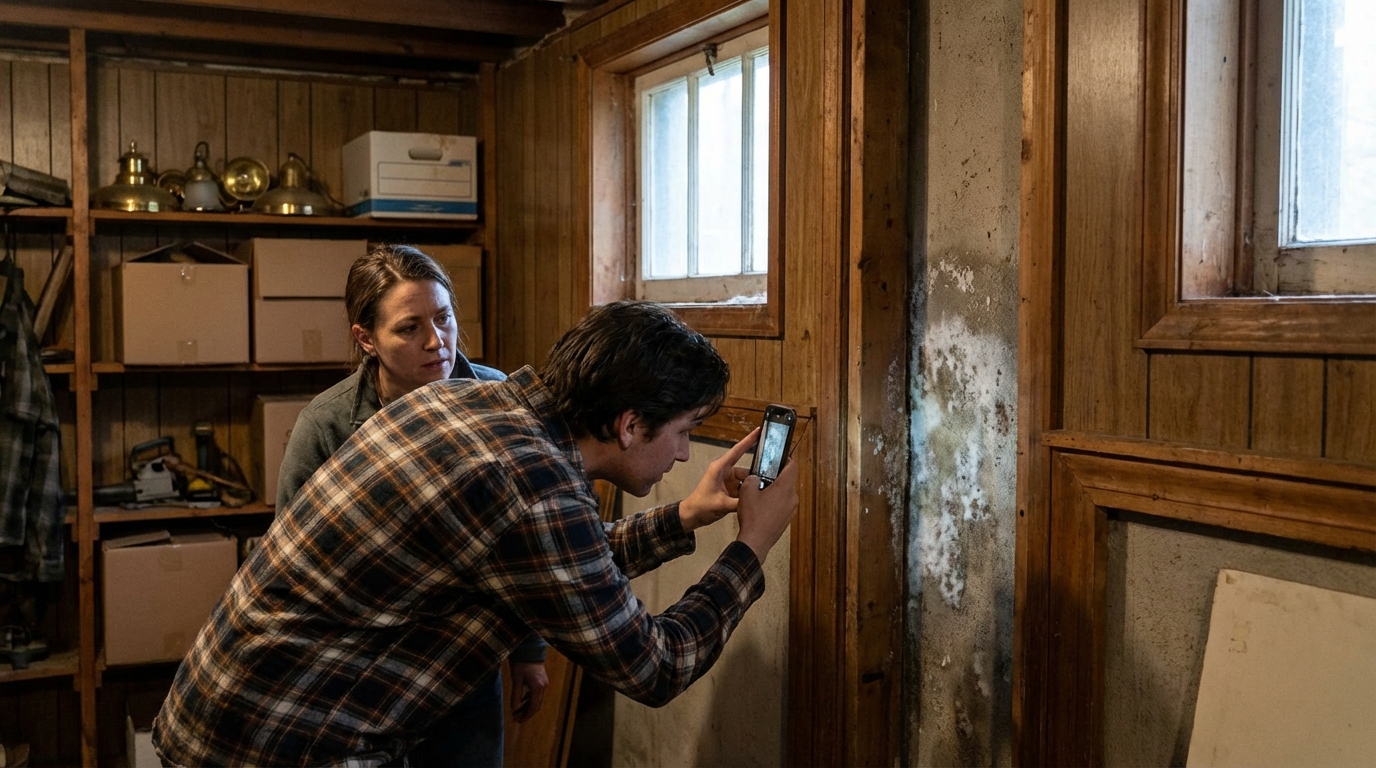
White mold blends into walls, hides on basement joists, and dusts across attic sheathing without raising alarms. Because it lacks the menacing appearance of black mold, many homeowners dismiss it as dust, mineral deposits, or harmless mildew. That assumption is wrong. The dangers of white mold are real: the same species responsible for allergic reactions, respiratory illness, and structural decay can appear white, gray, or cream-colored depending on their growth stage. Understanding what white mold actually is, how to spot it, and when to act can protect both a home’s occupants and its structure.
What Is White Mold? (And Why It’s Easy to Underestimate)
“White mold” is not a single species but an umbrella term for several fungal genera that appear white or powdery during part of their life cycle. According to EnviroVantage, common species that present as white include Aspergillus, Penicillium, Cladosporium (in early stages), Fusarium, and Sclerotinia. Some of these same organisms turn green, gray, or brown as they mature, which means a colony that looks white today may look entirely different next month.
The core problem is perception. Homeowners often associate danger with color, assuming that dark mold equals toxic mold. According to Greenworks Inspections, toxicity depends on the species and the mycotoxins it produces, not the pigment of its surface growth. Aspergillus, for instance, can appear white and still release compounds that irritate lungs and suppress immune function.
White mold also camouflages easily. On white drywall, painted trim, or light-colored wood, it can grow for weeks before anyone notices. That delay gives the colony time to spread spores, penetrate porous materials, and establish itself in areas that are difficult to reach without professional equipment.
What Causes White Mold to Grow in Your Home?
White mold grows when moisture, an organic food source, and suitable temperatures converge in the same space. According to the EPA’s Brief Guide to Mold, Moisture, and Your Home, “none of them will grow without water or moisture.” Remove the moisture, and mold cannot colonize a surface.
Here are the primary triggers:
- Elevated humidity. Indoor relative humidity above 60% creates favorable conditions. According to Environix, basements and attics frequently exceed this threshold due to poor air circulation and temperature differentials.
- Water intrusion. Leaks from roofs, pipes, or foundations saturate drywall, insulation, and framing. According to EcoFMR, mold can begin growing on damp materials within 24 to 48 hours of water exposure.
- Poor ventilation. Bathrooms without exhaust fans, sealed crawl spaces, and attics with inadequate soffit vents trap warm, moist air. According to Florida Mold Course, species like Chaetomium favor these low-airflow, consistently wet environments.
- Organic materials. Wood framing, paper-faced drywall, carpet backing, and stored cardboard all serve as food sources. White mold does not grow on concrete itself, but it will feed on dust, adhesive residue, or paint on concrete surfaces.
Understanding what mold needs to grow helps homeowners target prevention at the source rather than chasing symptoms.
How Do You Identify White Mold vs. Other White Substances?
White mold is frequently confused with efflorescence, mineral deposits, or ordinary dust, and visual inspection alone is unreliable. A few simple tests can narrow the possibilities before professional lab analysis confirms the species.
According to Puroclean, four methods help distinguish white mold from look-alikes:
| Test | White Mold | Efflorescence |
|---|---|---|
| Texture | Slightly damp or slimy; smears when touched | Dry, chalky, crumbles into fine powder |
| Smell | Musty, earthy odor from VOCs | No odor |
| Water test | Remains intact; does not dissolve | Dissolves and rinses away completely |
| Surface type | Grows on organic materials (wood, drywall, fabric) | Appears on masonry, concrete, brick along moisture paths |
If the substance passes the water test and has no smell, efflorescence is the likely culprit. If it smears, smells musty, and sits on wood or drywall, treat it as mold until proven otherwise.
For a definitive answer, a mold test kit or a certified inspector can identify the genus and species through laboratory analysis. According to BioRestore, color alone fails as an identification method because white mold can shift to gray or green as it matures. Learning how to check for mold throughout a home helps catch colonies before they spread.
What Are the Health Risks of White Mold Exposure?
White mold exposure poses the same categories of health risk as any indoor mold, including allergic reactions, respiratory illness, and immune system effects. The specific danger depends on the species, the duration of exposure, and the individual’s health.
According to the EPA, molds produce allergens, irritants, and in some cases mycotoxins. Exposure can irritate the eyes, skin, nose, throat, and lungs in both allergic and non-allergic individuals. Allergic responses include sneezing, runny nose, red eyes, and skin rash, and these reactions can be either immediate or delayed.
The CDC, citing a 2004 Institute of Medicine report, found sufficient evidence linking indoor mold exposure to upper respiratory symptoms, cough, and wheeze in otherwise healthy people, as well as asthma worsening and hypersensitivity pneumonitis in susceptible individuals.
The numbers paint a stark picture:
- According to Realtime Labs (citing EPA and Berkeley National Laboratory data), of the 21.8 million asthma cases in the United States, approximately 4.6 million (21%) are attributable to home dampness and mold exposure.
- The same source, citing researcher Michael Pinto (2018), reports that infants exposed to mold in their first year face nearly three times the risk of developing asthma compared to unexposed infants.
- According to the National Institute of Environmental Health Sciences (NIEHS), prolonged mold exposure has been associated with short-term memory loss, depression, anxiety, and stress in both children and adults.
The Mayo Clinic notes that people with both asthma and a mold allergy are at risk for severe asthma attacks when they inhale spores, and they should have an emergency action plan in place.
A critical point: healthy adults are not immune. Non-allergic individuals can still experience throat irritation, coughing, and nasal congestion from mold exposure. Children, elderly adults, and anyone with a compromised immune system face the highest risks. Anyone experiencing persistent respiratory symptoms in a home with suspected mold should consult a physician.
Where Is White Mold Most Commonly Found?
White mold appears wherever moisture accumulates on or near organic materials, with basements, bathrooms, attics, and crawl spaces topping the list. Geography matters too, but indoor conditions often override outdoor climate.
Inside the home, the most frequent locations include:
- Basements and crawl spaces. Cool temperatures, foundation seepage, and limited airflow make these areas prime territory. White mold on floor joists and sill plates is a common finding during home inspections. If that’s what you’re seeing, read our guide to crawl space repair and restoration.
- Bathrooms. Shower steam without adequate exhaust ventilation creates persistent humidity. Bathroom mold often starts in grout lines and spreads to ceilings and walls.
- Attics. Warm, humid air rises from living spaces and condenses on cold roof sheathing. According to Environix, attics see a significant share of white mold cases from humidity alone.
- Behind walls and under flooring. Slow plumbing leaks can feed hidden mold growth for months before visible signs appear. Drywall mold is especially common because paper-faced gypsum board is an ideal food source.
Geographically, states with high humidity and rainfall carry greater risk. According to American Home Shield, Louisiana scores 79 out of 100 for home mold risk, followed by Florida, Mississippi, and Alabama at 71 out of 100. However, northeastern states like Rhode Island (70/100) also rank high due to damp winters. Even arid states are not exempt: indoor leaks and poor ventilation can create localized mold conditions anywhere.
How Can You Prevent White Mold From Growing?
Preventing white mold comes down to controlling moisture, improving airflow, and responding quickly to water events. These steps apply regardless of climate or home age.
Keep indoor humidity at or below 50%. The CDC recommends maintaining humidity no higher than 50% throughout the day. A hygrometer (available for under $15 at most hardware stores) can monitor levels in problem areas. Dehumidifiers are essential in basements and crawl spaces where ambient humidity routinely exceeds safe thresholds.
Fix leaks within 24 to 48 hours. According to the EPA, mold can begin colonizing damp surfaces within this window. Roof leaks, pipe drips, and condensation on cold-water pipes all qualify as moisture sources that demand immediate attention.
Ventilate high-moisture areas. Run exhaust fans during and for at least 30 minutes after showers. Ensure dryer vents terminate outdoors, not into attics or crawl spaces. Attic ventilation should include both intake (soffit vents) and exhaust (ridge or gable vents) to prevent moisture buildup.
Insulate to reduce condensation. Cold surfaces attract moisture from warm air. Insulating cold-water pipes, exterior walls, and attic floors reduces the condensation that feeds mold colonies.
Remove organic debris from vulnerable areas. Cardboard boxes in basements, stored clothing in damp closets, and stacked firewood against foundation walls all provide food for mold. Swap cardboard for plastic bins and keep stored items off concrete floors.
According to Restopros (citing a 2022 NIOSH report), 47% of U.S. homes have dampness or mold conditions. That statistic suggests nearly half of all homeowners could benefit from a proactive moisture audit.
When Should You Call a Professional for White Mold?
Homeowners should call a professional when the affected area exceeds 10 square feet, when mold returns after cleaning, or when occupants report health symptoms. Small patches on non-porous surfaces can sometimes be handled with proper protective gear, but several situations demand expert intervention.
The 10-square-foot rule. According to the EPA, areas larger than roughly 3 feet by 3 feet generally warrant professional remediation. Larger colonies release more spores during disturbance, increasing health risk and the chance of cross-contamination to clean areas.
Contaminated water involvement. If the moisture source is sewage, floodwater, or another contaminated source, the EPA specifically recommends hiring professionals experienced in handling hazardous water damage.
HVAC contamination. Mold inside ductwork or air handling units can distribute spores to every room in the house. According to Puroclean, running a contaminated HVAC system amplifies the problem rather than containing it.
Recurring growth. Mold that returns after cleaning signals an unresolved moisture source. A certified mold inspector or industrial hygienist can identify hidden leaks, inadequate ventilation, or structural issues that DIY efforts miss.
Health symptoms. Persistent coughing, wheezing, sinus congestion, or skin irritation that improves when away from home may indicate mold exposure. Consult a physician for symptom evaluation and a certified professional for the home assessment.
The mold remediation cost varies based on the size of the affected area, the materials involved, and whether structural repairs are needed. Homeowners should also check whether their policy provides coverage, as homeowners insurance sometimes covers mold resulting from sudden, accidental water damage but rarely covers mold from long-term neglect.
Disclaimer: This article is for informational purposes only and does not constitute medical advice. Consult a physician for health concerns related to mold exposure. Mold assessment and remediation should be performed by qualified professionals. MoldGuide may receive referral compensation from service providers listed on this site.
White mold may look harmless, but waiting to act gives it time to spread, damage materials, and affect indoor air quality. If you suspect white mold in your home and need qualified help, find a local mold professional through our contractor directory.