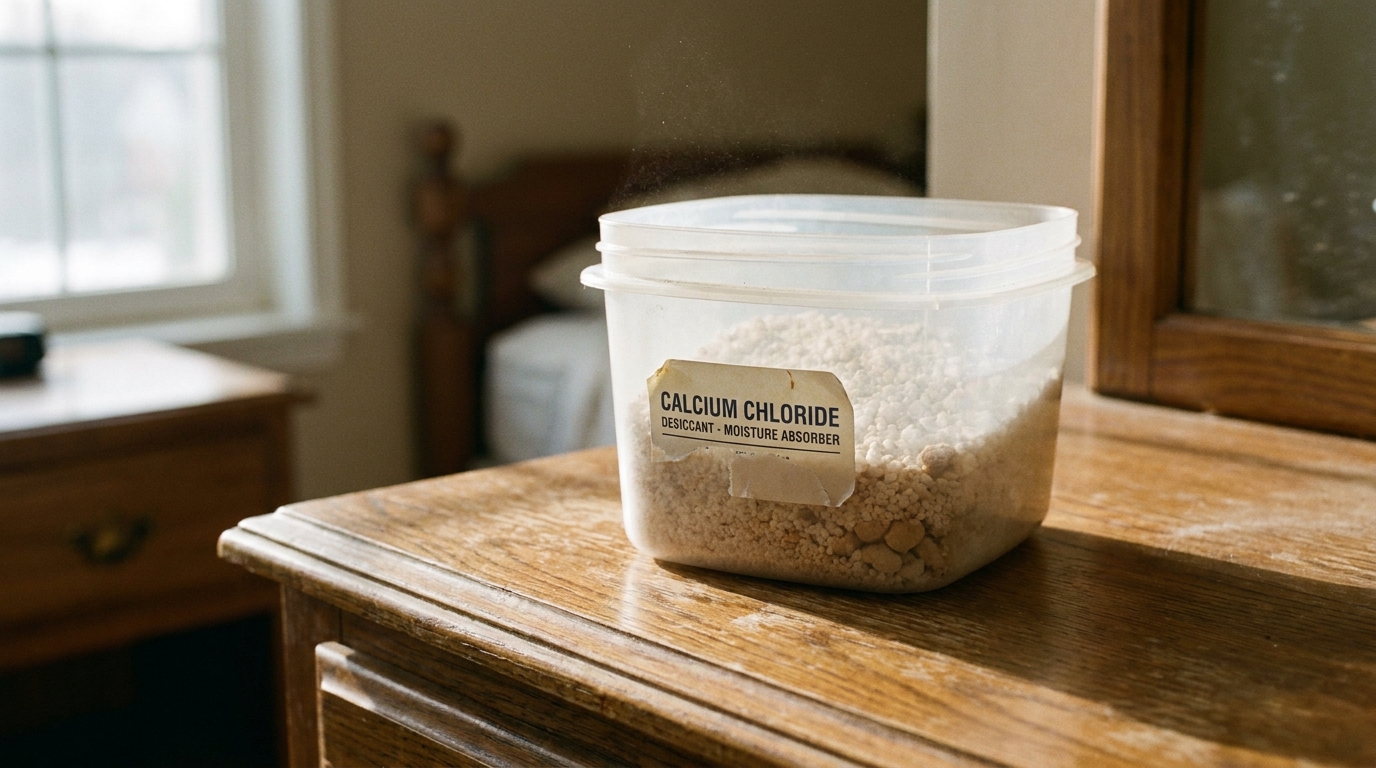
Is DampRid Toxic to Humans?
DampRid’s active ingredient, calcium chloride, carries a GHS classification of Acute Toxicity: Oral, Category 4, meaning it is harmful rather than highly toxic, but it can irritate skin, eyes, and the respiratory tract on contact.
The question “is DampRid toxic” comes up constantly in homeowner forums, and the answer is more nuanced than the product’s marketing suggests. DampRid’s manufacturer describes the product as “nontoxic” and “all-natural” on its product information page. According to DampRid’s Safety Data Sheet, however, the product can cause irritation by inhalation, skin contact, or eye contact, and ingestion is classified as harmful. Those two messages, “nontoxic” in marketing and “harmful if swallowed” on the SDS, create real confusion for families trying to make informed decisions.
What “Non-Toxic” Actually Means on Product Labels
The term “non-toxic” on consumer product labels does not mean a substance is completely harmless. It generally indicates that a product is not expected to cause serious injury or death under normal use conditions. DampRid’s SDS assigns it the hazard statement H302: Harmful if swallowed, which directly contradicts the casual impression that “non-toxic” creates. According to DampRid’s SDS documentation, the product also carries a Serious Eye Irritation, Category 2 classification in some formulations. For homeowners with children, pets, or respiratory sensitivities, the gap between marketing language and safety data is worth understanding before placing containers around the house.
Calcium Chloride Safety Data: What the Research Shows
Calcium chloride, the active ingredient in DampRid, has well-documented toxicological data. One DampRid SDS reports an oral LD50 in rats of 2,301 mg/kg and a dermal LD50 of 2,630 mg/kg. According to DampRid’s SDS, another technical compilation classifies calcium chloride as “moderately toxic by ingestion” with an oral rat LD50 of 1,000 mg/kg. The variation in published LD50 values reflects differences in the material form (anhydrous vs. hydrated) and testing conditions. For context, these values place calcium chloride in a similar toxicity range to common table salt, though calcium chloride is considerably more irritating to tissues.
Skin and Eye Contact Risks
Direct contact with DampRid crystals or the liquid brine they produce can cause irritation. According to DampRid’s SDS, a rabbit eye test reported moderate eye irritation at 100 mg over 24 hours. The manufacturer recommends flushing eyes with water for 15 minutes and seeking medical attention if contact occurs. Skin irritation is also possible, especially with prolonged exposure. The collected liquid in DampRid trays is a concentrated calcium chloride solution, which is more hazardous than the dry crystals if it splashes onto skin or into eyes.
What Happens If You Breathe DampRid Dust or Fumes?
Inhaling calcium chloride dust can irritate the nose, throat, and lungs, but the liquid collected in DampRid containers does not produce toxic fumes under normal household use.
Respiratory Irritation from Dust Exposure
The primary inhalation risk comes from handling the dry crystals. According to consumer safety analyses referenced in DampRid’s SDS documentation, the main inhalation hazard is mechanical irritation from particulates rather than a systemic poison effect. [Source: DampRid SDS] When pouring crystals into a refillable container, fine dust can become airborne. Working in a ventilated area and avoiding direct inhalation of dust reduces this risk significantly.
Does DampRid Release Harmful Fumes?
Under normal conditions, DampRid does not release harmful fumes. The product works by absorbing moisture from the air into a brine solution. This process is passive and chemical off-gassing is not a documented concern in the SDS. Scented versions of DampRid do release fragrance compounds, which some individuals may find irritating, but these are separate from the calcium chloride itself.
Risk Levels for People with Asthma or Allergies
Homeowners with asthma, allergies, or other respiratory sensitivities should exercise extra caution. While the product does not actively emit fumes during use, dust exposure during refilling can trigger coughing and throat discomfort. Understanding humidity levels in your home can help determine whether a passive moisture absorber is even the right tool, or whether a dehumidifier would address the root problem more effectively.
Is DampRid Safe Around Pets?
DampRid poses a moderate risk to pets if ingested, potentially causing drooling, vomiting, and oral irritation, with the collected liquid brine being more dangerous than the solid crystals.
What Happens If a Dog or Cat Ingests DampRid
Pets that chew on or lick DampRid crystals may experience mouth and throat irritation, excessive drooling, nausea, and vomiting. The concentrated calcium chloride brine that collects in the bottom tray is the greater concern. Because pets, especially dogs, may be attracted to the salty taste, containers placed at floor level present a real hazard. The manufacturer explicitly warns that DampRid should be kept out of reach of pets. According to DampRid’s SDS, ingestion can cause gastrointestinal distress including nausea, vomiting, and increased thirst.
Toxicity Data from Veterinary Poison Control
Veterinary poison control resources generally classify calcium chloride ingestion as a moderate concern for household pets. The oral LD50 values reported in DampRid’s SDS (ranging from 1,000 mg/kg to 2,301 mg/kg in rats) suggest that a small pet consuming even a modest amount of concentrated brine could experience significant symptoms. Any pet owner who suspects ingestion should contact their veterinarian or the ASPCA Animal Poison Control Center immediately.
How to Pet-Proof DampRid Containers
Place DampRid containers on high shelves, inside closed cabinets, or in rooms pets cannot access. Hanging bag versions can be placed on closet rods above pet reach. Never leave open tray-style containers on the floor. Check containers regularly for leaks, as spilled brine on flooring can be licked up by curious animals.
What Should You Do If Someone Ingests DampRid?
If DampRid is ingested, rinse the mouth with water, do not induce vomiting, and contact Poison Control at 1-800-222-1222 or seek emergency medical attention immediately.
First Aid Steps for Accidental Ingestion
According to DampRid’s SDS, the correct response includes:
-
Rinse the mouth thoroughly with water
-
If the person is conscious and able to swallow, give small sips of water
-
Stop giving water if the person feels nauseous, as vomiting may cause additional harm
-
Do not induce vomiting unless directed by a medical professional
-
Never give anything by mouth to an unconscious person
-
Call Poison Control (1-800-222-1222) or emergency services immediately
When to Call Poison Control vs. Going to the ER
Call Poison Control for any ingestion, even if the amount seems small. Seek emergency room care immediately if the person shows symptoms such as vomiting, abdominal pain, confusion, or difficulty breathing. Children, older adults, and individuals with pre-existing medical conditions should receive urgent evaluation regardless of the amount ingested. According to DampRid’s SDS, the manufacturer’s guidance is clear: avoid ingesting DampRid, and if it is ingested, get immediate medical attention.
What Not to Do After Exposure
Do not induce vomiting. Calcium chloride can cause burns or ulceration to the mouth and throat, and vomiting forces the substance back through those tissues a second time. Do not give milk or other home remedies unless specifically instructed by Poison Control. For eye or skin contact, flush with plenty of water and remove contaminated clothing.
How Does DampRid Compare to Other Moisture Control Methods?
DampRid absorbs far less moisture than electric dehumidifiers but poses different safety trade-offs, making the right choice dependent on space size, household members, and the severity of the moisture problem.
| Method | Best Use | Moisture Removal Rate | Toxicity / Safety Risk | Main Limitation |
|---|---|---|---|---|
| DampRid (calcium chloride) | Closets, storage bins, small enclosed spaces | ~2 mL/hour in testing | Harmful if ingested; skin/eye irritant | Far too slow for rooms or basements |
| Electric dehumidifier | Rooms, basements, large spaces | 113 to 388 mL/hour (varies by model) | No chemical exposure; electrical hazard only | Requires electricity, higher upfront cost |
| Silica gel | Small sealed containers, electronics storage | Absorbs 10-40% of its own weight | Generally low toxicity; mild GI upset if ingested | Less effective than calcium chloride in very damp spaces |
| Activated charcoal | Odor control | Minimal moisture absorption | Very low toxicity | Not a true moisture removal solution |
| Baking soda | Odor absorption in small spaces | Minimal moisture absorption | Very low toxicity | Negligible dehumidification effect |
DampRid vs. Silica Gel: Toxicity Comparison
Calcium chloride can absorb 100 to 200% of its own weight in moisture, while silica gel typically absorbs 10 to 40%. According to consumer testing data, this makes DampRid more aggressive at pulling moisture from the air. However, silica gel is generally considered less irritating and less harmful if accidentally ingested. For households where DampRid safety around children or pets is a concern, silica gel packets in sealed containers may be a lower-risk option for small-scale moisture control.
DampRid vs. Dehumidifiers: Safety and Effectiveness
The performance gap is dramatic. According to CHOICE testing, DampRid removed approximately 2 mL per hour in a 65% humidity test, while the weakest dehumidifier tested removed 113 mL per hour and the best removed 388 mL per hour. A Consumer NZ trial found DampRid reduced the humidity difference between a room and wardrobe by only 2 percentage points, with wardrobes still remaining in a zone where mold could grow. For anyone dealing with moisture conditions that support mold growth, an electric dehumidifier is the more effective tool. Dehumidifiers also eliminate chemical ingestion risk entirely.
Natural Alternatives: Activated Charcoal and Baking Soda
Activated charcoal absorbs odor rather than moisture. According to product comparison data, charcoal is not a true moisture-removal solution. Baking soda has similarly negligible dehumidification effects. Homeowners wondering whether dehumidifiers help with musty odors will find that addressing moisture directly, rather than masking it with absorbents, produces better long-term results.
What Does the Manufacturer Say About DampRid Safety?
DampRid’s manufacturer states the product is safe when used as directed but warns against ingestion and recommends keeping it away from children and pets.
Official Safety Warnings from DampRid
The manufacturer describes DampRid as “nontoxic” and “all-natural” on its product information page. According to DampRid’s SDS, the product simultaneously carries hazard classifications including H302 (Harmful if swallowed) and Serious Eye Irritation, Category 2. The manufacturer advises keeping the product out of reach of children and pets, avoiding contact with eyes and skin, and seeking medical attention if ingestion occurs.
What the SDS (Safety Data Sheet) Reveals
The SDS provides considerably more detail than the product label. Key data points include an oral LD50 in rats of 2,301 mg/kg, a dermal LD50 of 2,630 mg/kg, and documented moderate eye irritation in rabbit testing at 100 mg over 24 hours. According to DampRid’s SDS, ingestion can cause gastrointestinal distress, nausea, vomiting, and increased thirst. These are not extreme toxicity levels, but they are clearly beyond what most people associate with the word “nontoxic.”
Gaps Between Marketing Claims and Safety Data
The most significant gap is the disconnect between “nontoxic” marketing and the H302 hazard classification. A product classified as Acute Toxicity: Oral, Category 4 under the Globally Harmonized System is, by definition, harmful if swallowed. The “nontoxic” label reflects that the product is unlikely to cause serious harm through normal, intended use. It does not reflect the risk profile for accidental ingestion, prolonged skin contact, or exposure to the concentrated brine. Homeowners should read the SDS, not just the product label, before deciding where and how to use DampRid.
When Should You Avoid Using DampRid?
Avoid DampRid in homes with unsupervised young children, curious pets, or individuals with severe respiratory conditions, and in any space where the moisture problem exceeds what a passive absorber can handle.
According to CHOICE’s analysis, DampRid is recommended for occasional, low-level damp problems in enclosed spaces, not for major dampness, standing water, or whole-room humidity control. Specific situations where DampRid is the wrong tool include:
-
Standing water or flooding: Moisture absorbers pull water vapor from the air. They do not remove pooled water.
-
Large or persistent humidity problems: Basements, bathrooms, and full rooms require electric dehumidifiers.
-
Homes with unsupervised children or pets: The ingestion risk from both crystals and brine is real.
-
Individuals with dust sensitivities: Handling and refilling can release irritating particulates.
-
Poorly ventilated spaces where prolonged exposure occurs: Consumer guidance notes that off-label or constant exposure may increase hazard.
How to Use DampRid Safely
Place DampRid containers on stable, elevated surfaces out of reach of children and pets, avoid direct skin contact when handling, and dispose of collected liquid according to local regulations.
Safe Placement and Handling Practices
Position containers on high shelves inside closets, cabinets, or storage areas. Use hanging bag versions in wardrobes where floor-level placement is unavoidable. When refilling containers, work in a ventilated area and avoid breathing in dust from the crystals. Wear gloves if you have sensitive skin, and wash hands after handling.
How to Dispose of DampRid Liquid Safely
The liquid collected in DampRid trays is a concentrated calcium chloride solution. It should not be poured onto plants, soil, or into storm drains. The manufacturer generally recommends flushing the liquid down the toilet or drain with running water. Check local regulations, as some municipalities have specific guidelines for disposing of calcium chloride solutions. Never allow children or pets to access the liquid tray.
Protective Measures When Refilling Containers
Open refill bags carefully to minimize dust. Pour crystals slowly rather than dumping them. If dust contacts your eyes, flush with water for 15 minutes as recommended in the SDS. Store unused refill bags in a sealed, dry location away from children and pets. Consider wearing a simple dust mask if you are refilling multiple containers at once or have respiratory sensitivities.
If you’re dealing with persistent moisture issues that require more than a moisture absorber, learn how to identify hidden mold growth or explore professional-grade dehumidification solutions.
Frequently Asked Questions
These are the most common questions homeowners ask about DampRid toxicity, safety around families and pets, and proper handling.
Is DampRid toxic to breathe?
Under normal use, DampRid does not release toxic fumes. The main inhalation risk comes from dust when handling or pouring the dry crystals, which can cause mechanical irritation to the nose, throat, and lungs. According to DampRid’s SDS, this is classified as irritation rather than systemic toxicity.
Can DampRid kill a dog or cat?
Fatality from DampRid ingestion in pets is unlikely from small amounts but not impossible, especially for small animals consuming the concentrated brine. Symptoms include drooling, vomiting, and gastrointestinal distress. Contact your veterinarian or the ASPCA Animal Poison Control Center immediately if you suspect your pet has ingested any amount.
What should I do if my child eats DampRid?
Rinse the child’s mouth with water, give small sips of water if they are conscious and able to swallow, do not induce vomiting, and call Poison Control at 1-800-222-1222 immediately. According to DampRid’s SDS, ingestion is classified as harmful and requires immediate medical attention.
Is the liquid in DampRid more dangerous than the crystals?
Yes. The liquid that collects in DampRid trays is a concentrated calcium chloride solution. It is more hazardous than the dry crystals if ingested or splashed into the eyes. Handle it carefully and dispose of it promptly.
Does DampRid actually prevent mold?
DampRid can lower humidity in small, enclosed spaces, but its moisture removal rate is dramatically lower than electric dehumidifiers. According to CHOICE testing, DampRid removed approximately 2 mL per hour compared to 113 to 388 mL per hour for dehumidifiers. In a Consumer NZ trial, wardrobes with DampRid still remained in a humidity range where mold could grow.
Is DampRid safer than silica gel?
Silica gel is generally considered less irritating and less harmful if accidentally ingested. However, DampRid absorbs significantly more moisture (100 to 200% of its weight versus 10 to 40% for silica gel). The trade-off is higher effectiveness with higher irritation and ingestion risk.
Can I use DampRid in a bedroom?
DampRid can be used in a bedroom if placed on a stable, elevated surface where it cannot be knocked over or accessed by children or pets. It does not release harmful fumes during normal operation. However, for ongoing bedroom humidity issues, an electric dehumidifier is both safer and more effective.
How often should I check DampRid containers for safety?
Check containers at least weekly. Look for cracks, leaks, or overfilled liquid trays. A full tray that overflows creates a spill hazard, and the concentrated brine can damage surfaces and pose ingestion risks to pets. Empty and replace containers before the liquid reaches the fill line.