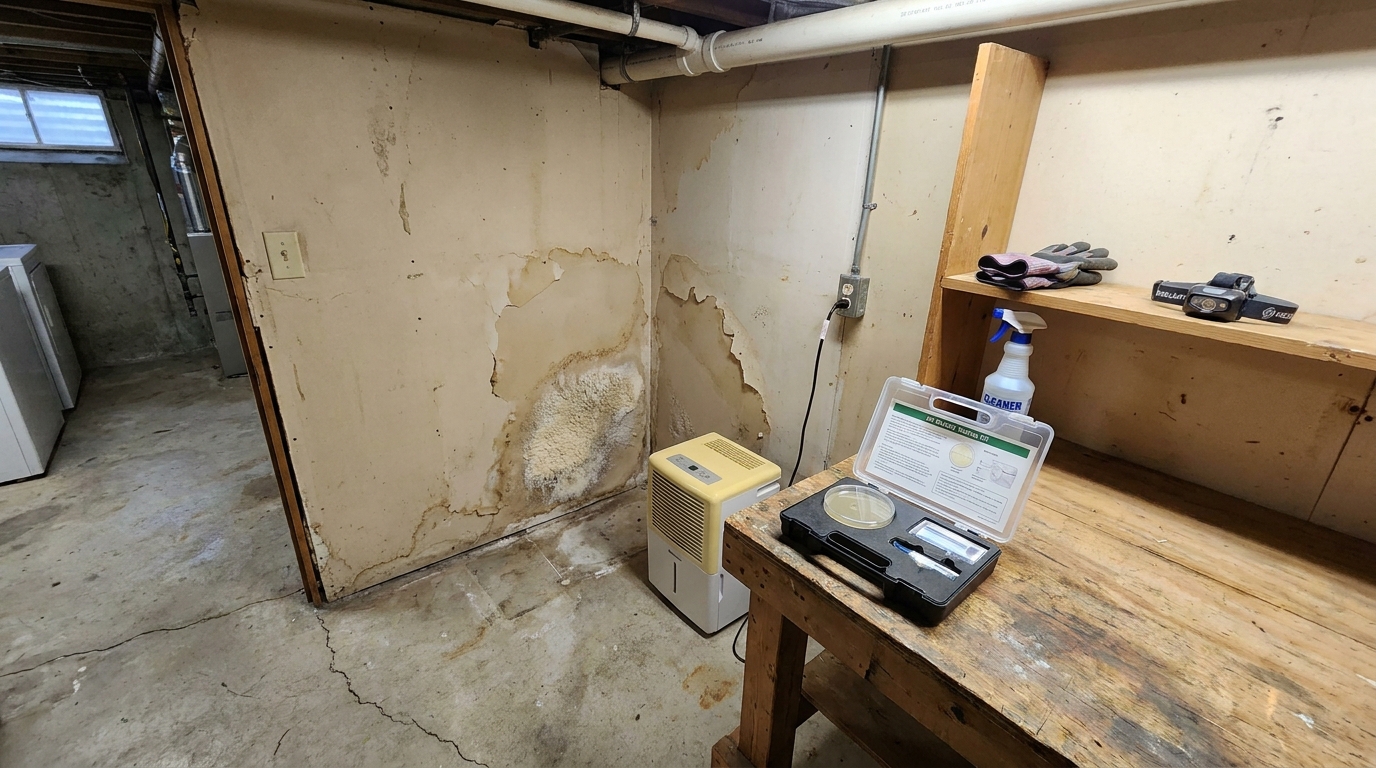
Is White Mold Deadly to Humans?
White mold is rarely fatal for healthy individuals, but it can cause severe respiratory complications in immunocompromised people, infants, and those with chronic lung conditions.
If you’ve just discovered white mold in your home and you’re searching “is white mold deadly,” here’s the direct answer: for the vast majority of people, no. The CDC states that serious mold infections are “relatively rare and occur mainly in people with severely suppressed immune systems.” [Source: CDC] Allergy and irritation are the most common symptoms of mold exposure, not life-threatening illness.
That said, the word “rarely” does real work in that sentence. A 2024 population-based study of invasive mold infections across three Atlanta hospitals (2020-2022) found that 109 of 236 patients, or 46.2%, died during the study period. [Source: NIH] Those patients were overwhelmingly immunocompromised, hospitalized, or critically ill. Factors significantly associated with death included lymphopenia, neutropenia, need for ventilatory support, and concurrent COVID-19 illness.
The distinction matters: white mold can cause death in very specific, vulnerable populations. It is unlikely to cause death in healthy adults living in typical residential settings. Mold color does not determine toxicity. The danger depends on the species behind the growth, the concentration of spores, and the health of the person exposed.
What Makes White Mold Potentially Dangerous?
White mold produces mycotoxins and allergenic spores that trigger immune responses, with danger level depending on species, concentration, exposure duration, and individual health status.
The EPA states that molds “can produce allergens, irritants, and in some cases, potentially toxic substances (mycotoxins).” [Source: EPA] These three categories of biological output explain why white mold affects different people in different ways.
Mycotoxin Production in White Mold Species
Not all white molds produce mycotoxins, but several species that appear white are capable of generating these toxic metabolites. The National Institute of Environmental Health Sciences notes that some molds produce mycotoxins that can cause severe illness if ingested or inhaled in significant quantities. [Source: Wikipedia/Mold and Human Health] Mycotoxin production varies by species, growth conditions, and the material the mold is colonizing. A white mold growing on damp drywall may or may not produce mycotoxins, and visual inspection alone cannot determine this.
Spore Concentration and Exposure Pathways
Mold spores enter the body primarily through inhalation, though skin contact and ingestion are secondary pathways. The New York State Department of Health acknowledges that “extensive mold contamination may cause health problems” but notes it is “hard to say how much mold will cause health problems as some people are more sensitive than others.” [Source: CDC] Disturbing mold growth, whether by scrubbing, vacuuming without HEPA filtration, or demolishing contaminated materials, dramatically increases airborne spore counts.
Individual Vulnerability Factors
The same mold exposure that causes mild sneezing in one person can trigger a severe asthma attack or lung infection in another. The CDC reports that the 2004 Institute of Medicine review found sufficient evidence linking indoor mold to upper respiratory symptoms in otherwise healthy people, worsening asthma in people with asthma, and hypersensitivity pneumonitis in susceptible individuals. [Source: CDC] Your personal health profile is the single biggest variable in how dangerous white mold is to you.
Which White Mold Species Are Most Toxic?
Aspergillus, Penicillium, and Mucor species represent the most health-concerning white molds, with Aspergillus causing invasive infections in immunocompromised individuals.
“White mold” is not a single organism. It’s a visual description that applies to dozens of fungal species. The health risk varies enormously depending on which species is actually growing in your home.
Aspergillus Species and Aspergillosis Risk
Several Aspergillus species, particularly Aspergillus fumigatus, can appear white or light-colored in early growth stages. Invasive aspergillosis carries hospital mortality rates often in the 30-60% range in high-risk patients, such as those with hematologic malignancies or organ transplants. [Source: Wikipedia/Mold and Human Health] For healthy adults, Aspergillus exposure typically causes only mild allergic symptoms or no symptoms at all. The fungus becomes dangerous when the immune system cannot contain it.
Penicillium and Respiratory Sensitization
Penicillium chrysogenum and related species commonly appear as white or blue-green colonies on food and building materials. While less likely to cause invasive infections than Aspergillus, Penicillium species are potent allergens. Prolonged exposure can sensitize the respiratory system, meaning the body develops increasingly severe allergic reactions over time. A person who initially experiences only mild congestion may eventually develop chronic sinusitis or asthma-like symptoms with continued exposure.
Mucor and Mucormycosis in Diabetic Patients
Mucor species produce fluffy white growth and are the primary cause of mucormycosis, a rapidly progressing infection. This condition disproportionately affects people with uncontrolled diabetes, those on immunosuppressive medications, and patients recovering from major surgery. Mucormycosis requires aggressive antifungal treatment and often surgical debridement. In the general population, Mucor exposure from household mold is extremely unlikely to cause infection.
| Species | Appearance | Primary Risk | Most Vulnerable Population | Mortality in High-Risk Patients |
|---|---|---|---|---|
| Aspergillus fumigatus | White to gray-green | Invasive aspergillosis | Immunocompromised, transplant recipients | 30-60% |
| Penicillium chrysogenum | White to blue-green | Respiratory sensitization, allergies | Asthmatics, allergy sufferers | Rarely fatal |
| Mucor species | Fluffy white | Mucormycosis | Uncontrolled diabetics, immunosuppressed | Variable, often high without treatment |
| Cladosporium (white phase) | White early, darkens | Allergic reactions | Allergy and asthma sufferers | Extremely rare |
| Trichoderma | White to green | Allergic reactions, rare infection | Immunocompromised individuals | Rare |
How Do You Know If White Mold Is Making You Sick?
Persistent respiratory symptoms, worsening allergies, chronic fatigue, and headaches that improve when away from home suggest mold-related illness requiring medical evaluation.
The CDC identifies the following as common mold exposure symptoms: stuffy nose, sore throat, coughing, wheezing, burning eyes, and skin rash. People with asthma or mold allergy may have severe reactions. [Source: CDC]
Acute Versus Chronic Exposure Symptoms
Acute exposure, such as disturbing a large mold colony during cleaning, can cause immediate sneezing, eye irritation, and coughing. Chronic exposure from living in a mold-affected home produces subtler symptoms: persistent congestion, recurring headaches, fatigue, and difficulty concentrating. Some individuals report lightheadedness, dizziness, blurred vision, and ringing in the ears during extended exposure periods. [Source: CDC]
Symptom Patterns That Indicate Mold Sensitivity
The strongest indicator of mold-related illness is a location-dependent symptom pattern. If coughing, congestion, or headaches consistently improve when you leave home for several days and return when you come back, mold exposure is a plausible cause. Keep a symptom diary noting dates, severity, and your location. This documentation helps physicians distinguish mold sensitivity from seasonal allergies or other conditions. A physician, ideally an allergist or pulmonologist, can perform specific IgE testing to confirm mold sensitization.
When Symptoms Require Immediate Medical Attention
Seek emergency medical care if anyone in the household experiences severe shortness of breath, chest tightness that doesn’t resolve, high fever combined with respiratory distress, or coughing blood. These symptoms may indicate hypersensitivity pneumonitis or, in immunocompromised individuals, the early stages of invasive fungal infection. For more guidance on recognizing exposure symptoms, see our guide on mold exposure symptoms and what they mean.
Can White Mold Cause Death in Healthy Adults?
Death from white mold in healthy adults is extremely rare and typically requires massive exposure or invasive infection in a person with severely compromised immunity.
Opportunistic infection by molds such as Aspergillus fumigatus is described as “a common cause of illness and death among immunocompromised people, including people with AIDS or asthma,” but this framing specifically highlights compromised populations. [Source: Wikipedia/Mold and Human Health] The 2004 Institute of Medicine report, cited by the CDC, found associations between damp indoor environments and respiratory symptoms but not clear evidence of increased mortality in the general population. [Source: EPA]
Extreme occupational or disaster settings with very heavy mold contamination can pose elevated risk, but even there, evidence for direct mortality from mold itself is limited and often confounded by other hazards. [Source: EPA] A healthy adult living in a home with a small patch of white mold on a basement wall is not in immediate mortal danger. That same adult should still address the problem, because chronic exposure can lead to respiratory sensitization over time.
Who Is Most at Risk from White Mold Exposure?
Immunocompromised individuals, infants, elderly adults, asthma sufferers, and people with chronic lung disease face significantly elevated risk from white mold exposure.
For these groups, mold exposure can trigger severe asthma attacks, lung infections, and, in the case of invasive mold infections, mortality rates approaching 50% in the sickest patients. [Source: CDC]
Immunocompromised Populations and Invasive Infections
People undergoing chemotherapy, organ transplant recipients on anti-rejection drugs, HIV/AIDS patients, and those on long-term corticosteroid therapy face the highest risk. Their immune systems cannot mount an effective defense against fungal spores that a healthy body would easily neutralize. The 2024 Atlanta study found that lymphopenia and neutropenia were significantly associated with death from invasive mold infections. [Source: NIH] If anyone in your household falls into these categories, white mold is not something to “wait and see” about.
Children and Developing Respiratory Systems
Children breathe faster than adults relative to their body weight, inhaling proportionally more spores per pound. Their respiratory and immune systems are still developing, making them more susceptible to sensitization. A 2011 WHO review found consistent associations between damp or moldy homes and a 30-50% increase in respiratory and asthma-related symptoms in affected populations. [Source: EPA] Early mold exposure in children may contribute to the development of asthma rather than simply worsening existing conditions.
Pre-existing Respiratory Conditions
Adults with asthma, chronic obstructive pulmonary disease (COPD), cystic fibrosis, or other chronic lung conditions experience amplified effects from mold exposure. The CDC specifically notes that people with asthma or mold allergy “may have severe reactions” and that those with chronic lung disease “can develop lung infections from mold.” [Source: CDC] For these individuals, even moderate white mold growth warrants prompt action.
What Is the Difference Between White Mold and Efflorescence?
Efflorescence is crystalline salt deposits that dissolve in water and crumble when crushed, while white mold is fibrous, smells musty, and grows on organic materials.
This distinction matters because efflorescence is cosmetically unappealing but poses no health risk. Many homeowners discover white deposits on basement walls or concrete and assume the worst. Before panicking, perform these simple tests:
-
Water test: Place a small amount in water. Efflorescence dissolves. Mold does not.
-
Texture test: Crush it between your fingers. Efflorescence crumbles into powder. Mold feels soft or fibrous.
-
Surface test: Efflorescence appears on concrete, brick, and stone (inorganic surfaces). White mold prefers wood, drywall, fabric, and other organic materials.
-
Smell test: Efflorescence is odorless. White mold typically produces a musty or earthy smell.
If you’re still unsure, a certified mold inspector can identify the substance definitively. For a deeper comparison, check our article on white mold versus efflorescence.
When Should You Evacuate Due to White Mold?
Evacuate immediately if immunocompromised individuals show worsening symptoms, if mold covers more than 10 square feet, or if structural damage indicates hidden extensive growth.
The EPA recommends professional remediation when mold growth exceeds approximately 10 square feet (roughly a 3-by-3-foot patch). [Source: EPA] This threshold appears throughout federal mold guidance as a practical decision point. Below that size, a healthy adult can typically handle cleanup with proper protective equipment. Above it, the risk of inadequate containment and spore dispersal increases significantly.
Evacuation is warranted when:
-
An immunocompromised household member develops worsening respiratory symptoms
-
Visible mold growth exceeds 10 square feet or appears in multiple rooms
-
Mold is growing inside HVAC systems, distributing spores throughout the home
-
Structural materials (joists, subfloor, wall framing) show extensive colonization
-
A strong musty odor persists even when no mold is visible, suggesting hidden growth
-
Any household member develops fever combined with respiratory distress
How Much White Mold Exposure Is Dangerous?
No safe exposure threshold exists for mold-sensitive individuals, but EPA guidelines suggest professional remediation when mold exceeds 10 square feet or causes persistent symptoms.
The EPA advises that all indoor mold growth should be removed and that the amount of mold causing health problems “cannot be precisely defined” because individual susceptibility varies. [Source: CDC] This is frustrating for homeowners who want a clear number, but biology doesn’t work that way. A person with severe mold allergy may react to spore counts that wouldn’t bother their neighbor at all.
What we do know: the 10-square-foot EPA threshold serves as a practical guideline for when professional help becomes important. Mold growth below that size on non-porous surfaces can often be addressed with DIY methods. Growth above that size, or any growth on porous materials like drywall and carpet, typically requires professional assessment to ensure complete removal and prevent recurrence.
What Should You Do If You Find White Mold in Your Home?
Document the location and size, avoid disturbing it to prevent spore dispersal, identify and fix moisture sources, and consult a certified mold inspector for areas exceeding 10 square feet.
The EPA states that if mold is a problem, you should “clean it up promptly and fix the water problem.” [Source: EPA] Both steps are essential. Cleaning mold without addressing moisture guarantees it will return.
Immediate Containment Steps
-
Stop the moisture source: Fix leaks, dry wet materials, improve ventilation, and address condensation.
-
Isolate the area: Close doors to the affected room and limit air movement to prevent spore migration.
-
Do not disturb the mold: Avoid sweeping, vacuuming (without HEPA filtration), or scrubbing until you have proper protection.
-
Turn off HVAC: If mold is near air returns or supply vents, shut down the system to prevent distribution throughout the home.
-
Document everything: Photograph the growth with a ruler for scale. Note the date, location, and any symptoms household members are experiencing.
When DIY Removal Is Appropriate
DIY cleanup is reasonable when mold growth is under 10 square feet, located on non-porous surfaces (tile, glass, metal, sealed wood), and no household members are immunocompromised. Wear an N95 respirator, goggles, and gloves. Clean with detergent and water, then dry the surface completely. Discard porous materials like carpet, cardboard, or unsealed drywall that show mold growth, as these cannot be fully decontaminated.
Professional Assessment Criteria
Call a certified mold inspector or remediation professional when:
-
Mold growth exceeds 10 square feet
-
Mold is inside walls, under flooring, or in HVAC ductwork
-
The moisture source is unclear or unresolved
-
Mold returns after cleaning
-
Anyone in the household is immunocompromised, has asthma, or is experiencing persistent symptoms
-
You want species identification to assess specific health risks
If you’ve found white mold in your home and are experiencing persistent symptoms, document the affected areas and consult a certified mold inspector. For mold covering more than 10 square feet or if anyone in your household is immunocompromised, professional assessment is not optional. It’s a health necessity.
Frequently Asked Questions
Below are answers to the most common questions homeowners ask after discovering white mold in their living spaces.
Can white mold kill you?
White mold is extremely unlikely to kill a healthy adult. Fatalities from mold infections occur almost exclusively in severely immunocompromised individuals. The New York State Department of Health confirms that serious mold infections are “relatively rare” and mainly affect people with severely suppressed immune systems. [Source: CDC]
Is white mold more dangerous than black mold?
Mold color does not determine toxicity. Both white and black molds can include harmless and potentially dangerous species. The EPA notes that all indoor mold growth should be removed regardless of color, because health risk depends on species, spore concentration, and individual vulnerability, not pigmentation. [Source: EPA]
Should I leave my house if I find white mold?
Most small patches of white mold do not require evacuation. Consider leaving temporarily if the growth exceeds 10 square feet, if it’s in the HVAC system, or if immunocompromised household members are experiencing worsening respiratory symptoms. For small, contained growth, proper cleanup with protective equipment is typically sufficient.
Can white mold cause permanent lung damage?
Prolonged exposure to mold can contribute to chronic respiratory sensitization, and invasive fungal infections can cause lasting lung damage. However, most healthy individuals who address mold problems promptly recover fully. A physician, ideally a pulmonologist, can evaluate whether any respiratory changes have occurred after extended exposure.
How quickly can white mold make you sick?
Allergic reactions to mold spores can occur within hours of exposure, producing sneezing, congestion, and eye irritation. Chronic symptoms like persistent coughing, fatigue, and headaches typically develop over weeks or months of ongoing exposure. The timeline varies significantly based on individual sensitivity and spore concentration.
Does white mold always produce mycotoxins?
No. Many white mold species do not produce mycotoxins at all. Even species capable of mycotoxin production don’t always generate them. Mycotoxin output depends on the specific species, growth conditions, moisture levels, and the material being colonized. Laboratory testing is the only way to confirm mycotoxin presence.
Can I test for white mold myself?
Home mold test kits are available, but their reliability varies. Industry practitioners typically recommend professional testing by a certified industrial hygienist for accurate species identification and spore count measurement. DIY kits can confirm the presence of mold but rarely provide the species-level detail needed to assess specific health risks.
Will white mold go away on its own?
White mold will not disappear without intervention. It may become dormant if moisture is eliminated, but dormant mold can reactivate when conditions become favorable again. The EPA recommends both removing the mold and fixing the underlying water problem to prevent recurrence. [Source: EPA]