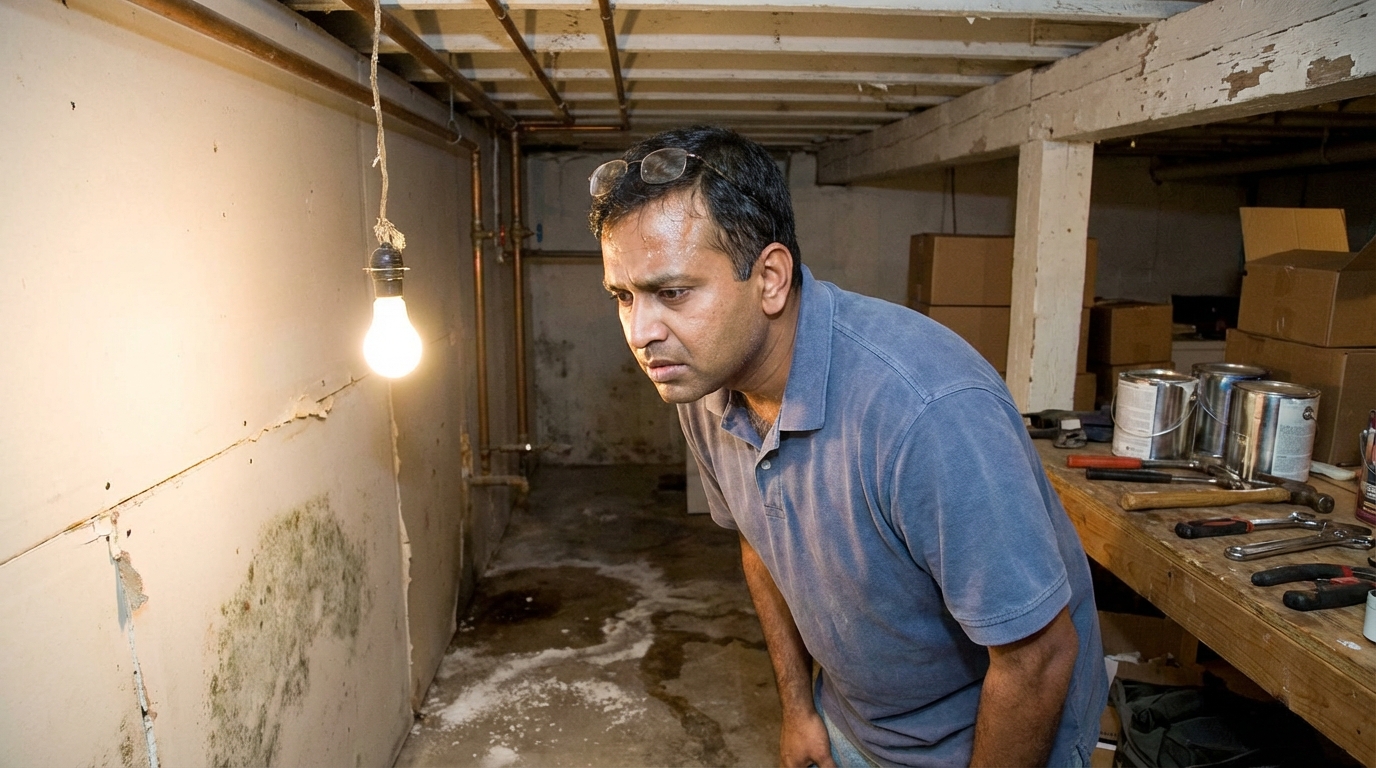
Is Penicillium mold dangerous? The answer depends on the species, the concentration, and who is breathing it in. Penicillium is one of the most common mold genera found indoors, and while healthy adults often tolerate low-level exposure without obvious symptoms, certain species produce mycotoxins that can harm the kidneys, lungs, and nervous system. For people with asthma, allergies, or weakened immune systems, even moderate exposure poses real health risks. This article breaks down what homeowners actually need to know: the verified dangers, the overhyped fears, and the practical steps to protect your household.
This article is for informational purposes only. It does not constitute medical advice. Consult a physician for health concerns related to mold exposure, and hire a certified professional for assessment and remediation of significant mold problems.
What Is Penicillium Mold? (And Why It Matters in Your Home)
Penicillium is a large genus of fungi with over 300 recognized species, many of which thrive in indoor environments. You have almost certainly encountered it on stale bread, forgotten fruit, or the blue veins of Roquefort cheese. But Penicillium also colonizes building materials, and that is where it becomes a concern for homeowners.
According to the Institut national de santé publique du Québec (INSPQ), Penicillium chrysogenum is one of the primary fungal colonizers of walls in water-damaged buildings. It produces enormous quantities of airborne mold spores that spread easily through HVAC systems and open doorways.
The genus gets its name from the Latin penicillus (paintbrush), describing the brush-like spore-bearing structures visible under a microscope. Some species gave us the antibiotic penicillin. Others are far less helpful. According to Mold Busters, more than 30 different toxic compounds (mycotoxins) have been isolated from Penicillium species, including ochratoxin A (linked to kidney damage and classified as a possible carcinogen) and penitrem A (a neurotoxin). Seven Penicillium species appear on lists of hazardous molds associated with respiratory irritation, allergies, and opportunistic lung infections.
So the common assumption that “Penicillium equals penicillin equals safe” is dangerously oversimplified.
What Causes Penicillium Mold to Grow Indoors?
Penicillium grows indoors when moisture, organic nutrients, and moderate temperatures converge on a surface. Remove any one of those three factors, and growth stalls.
According to the U.S. EPA, no mold grows without water or moisture. Penicillium is no exception. It thrives in the temperature range of 60 to 80°F (15 to 27°C), which is the comfort zone of most homes, according to Mold Science. That means temperature alone rarely prevents growth. Moisture is the controllable variable.
Here is what feeds Penicillium indoors:
- Leaking pipes and roofs. Even slow drips behind walls create enough sustained moisture for colonization.
- High relative humidity. A study cited by Indoor Doctor found that Penicillium grew on ceiling tiles when indoor relative humidity reached 85% and tile moisture content exceeded 2.2%.
- Condensation. Cold surfaces like window frames and exterior walls collect moisture from warm indoor air.
- Organic materials. Wood, paper, drywall backing, carpet, insulation, and dust all serve as food sources.
The INSPQ reports that Penicillium species were found in up to 53% of contaminated homes before remediation, often on absorbent materials like wallboard, insulation, and fiberglass duct liners. Even more striking: P. chrysogenum growing on water-damaged building insulation can produce up to 2 million spores per gram of bulk material. Understanding what mold needs to grow is the first step toward stopping it.
How Do You Identify Penicillium Mold?
Penicillium typically appears as blue, green, or yellow fuzzy or powdery patches, but visual identification alone is unreliable. Over 300 species exist, and many look similar to Aspergillus and other common indoor molds.
According to Mold Bacteria Facts, Penicillium colonies produce enormous quantities of spores that give them their characteristic colors, ranging from blue-green to white, yellow, and even orange. The texture can be powdery, velvety, or cottony depending on the species and growth stage.
Definitive identification requires laboratory analysis. According to a peer-reviewed study published in PMC/NIH, microscopic identification relies on the “penicillus” (brush-like) structure of the conidiophore, with flask-shaped phialides arranged in whorls of three or more. Colonies are typically measured after 7 days of growth on standardized media at 25°C. For species-level identification, molecular methods like ITS and β-tubulin gene sequencing are often necessary because morphological traits alone cannot distinguish among the 300+ species.
What does this mean for homeowners? A few practical takeaways:
- Color is a clue, not a diagnosis. Blue-green fuzzy growth could be Penicillium, Aspergillus, or something else entirely.
- Musty odor suggests mold but not a specific type. If you notice a persistent earthy smell, consider learning how to detect mold you cannot see.
- Lab testing is the only reliable method. A mold test kit can collect samples for laboratory analysis, where trained mycologists examine spore structures under magnification.
| Feature | Penicillium | Aspergillus | Stachybotrys (Black Mold) |
|---|---|---|---|
| Typical Color | Blue, green, yellow | Green, yellow, brown, black | Dark greenish-black |
| Texture | Powdery to velvety | Powdery to granular | Slimy when wet |
| Moisture Needs | Moderate to high | Moderate to high | Very high (chronically wet) |
| Common Locations | Walls, food, carpet, insulation | Soil, HVAC, walls | Water-saturated drywall, ceiling tiles |
| Mycotoxin Risk | Some species (ochratoxin A, patulin) | Some species (aflatoxin, gliotoxin) | Satratoxins (macrocyclic trichothecenes) |
| Spore Shape (Microscopic) | Chains from brush-like phialides | Chains from flask-shaped vesicle | Elliptical, in slimy clusters |
For a deeper comparison with Stachybotrys, see our guide on black mold.
Is Penicillium Mold Dangerous to Your Health?
Penicillium poses real but variable health risks depending on the species, exposure level, and individual vulnerability. It is neither harmless nor uniformly toxic.
According to the CDC, mold exposure can cause stuffy nose, sore throat, coughing, wheezing, burning eyes, or skin rash. In 2004, the Institute of Medicine (IOM) found sufficient evidence linking indoor mold exposure to upper respiratory symptoms, cough, and wheeze in otherwise healthy people, as well as asthma exacerbation and hypersensitivity pneumonitis in susceptible individuals.
The allergenic risk is the most common concern. Humans inhale thousands of fungal spores daily, and healthy immune systems typically neutralize them. But when indoor Penicillium concentrations climb, the body’s defenses can be overwhelmed. According to Miami Mold Specialists, indoor levels of Penicillium/Aspergillus above 1,000 colony-forming units (CFU) per cubic meter of air are considered dangerous and linked to respiratory issues.
Then there is the mycotoxin question. Not every Penicillium species produces mycotoxins, but those that do can cause serious harm with prolonged exposure. According to Mold Busters, of 36 mold species listed as hazardous, 7 belong to the Penicillium genus. Species like P. verrucosum produce ochratoxin A, which is nephrotoxic and potentially carcinogenic. P. crustosum produces penitrem A, a tremorgenic neurotoxin.
The key distinction: allergenic effects (sneezing, coughing, asthma flares) can occur at relatively low concentrations, while mycotoxin-related organ damage typically requires higher or more prolonged exposure. Neither scenario should be dismissed. Anyone experiencing persistent respiratory symptoms in a home with visible mold or water damage should consult a physician.
Who Is Most at Risk from Penicillium Exposure?
Immunocompromised individuals, young children, the elderly, and people with pre-existing respiratory conditions face the greatest danger from indoor Penicillium exposure.
According to Rite Aid Health, mold allergies (including to Penicillium) affect about 10% of people in the United States, with higher risk for those who have asthma, other allergies, or a family history of allergic disease. Children living in moldy environments face elevated sensitivity.
The INSPQ reports that Penicillium exposure significantly increases the risk for wheeze and persistent cough at high airborne levels and is linked to sensitization and asthma specifically in children. Research also shows that approximately 25% of symptomatic subjects exposed to Penicillium notatum in humidifier water systems develop specific IgG antibodies, a condition known as “humidifier lung.”
For severely immunocompromised individuals, the risks escalate further. According to a study published in PMC/NIH, Penicillium marneffei is the third most common opportunistic pathogen in AIDS patients in endemic areas like Southeast Asia. While this particular species is rare in North American homes, it illustrates how dangerous Penicillium can become when the immune system is compromised.
High-risk groups include:
- People with asthma or chronic obstructive pulmonary disease (COPD)
- Individuals with mold allergies or atopic dermatitis
- Organ transplant recipients and those on immunosuppressive medications
- People undergoing chemotherapy
- Infants and children under 5
- Adults over 65
- Workers in agriculture, food processing, or construction with occupational exposure
The CDC specifically notes that people with asthma, mold allergies, weakened immune systems, or chronic lung diseases may suffer severe reactions to any indoor mold, including Penicillium.
How to Prevent Penicillium Mold Growth
Controlling moisture is the single most effective way to prevent Penicillium from establishing itself in your home. Without sustained dampness, spores that land on surfaces cannot germinate.
According to the CDC, homeowners should keep indoor humidity no higher than 50% throughout the day, fix leaks in roofs, walls, or plumbing promptly, and dry any water-damaged areas within 24 to 48 hours.
Here is a practical prevention framework:
Moisture Control
- Use dehumidifiers to maintain relative humidity between 30% and 50%, especially in basements, crawl spaces, and bathrooms. According to Mold Detection SoCal, this humidity range denies Penicillium the moisture it requires.
- Repair plumbing leaks immediately. Even minor drips behind walls create ideal colonization sites.
- Waterproof basements by sealing foundation cracks and ensuring proper exterior drainage.
Ventilation
- Install and use exhaust fans in bathrooms and kitchens, vented to the outdoors rather than into the attic.
- Clean or replace HVAC filters regularly. HEPA filters can trap airborne spores and reduce circulation throughout the home.
- Avoid blocking air returns with furniture or storage.
Material Choices
- Use mold-resistant drywall and paint in moisture-prone areas like bathrooms and laundry rooms.
- Add mold inhibitors to interior paints.
- Remove wet carpet promptly after flooding. Carpet padding is nearly impossible to dry thoroughly.
Routine Maintenance
- Clean gutters and direct downspouts away from the foundation.
- Inspect under sinks, around water heaters, and behind appliances monthly.
- Address condensation on windows by improving insulation or air circulation.
Homes built before 1980 tend to show more Penicillium problems, according to Mold Detection SoCal, due to poorer moisture control and ventilation compared to modern building codes.
When Should You Call a Professional?
Homeowners should call a professional when the mold-affected area exceeds 10 square feet, when growth is hidden inside walls or HVAC systems, or when household members experience persistent health symptoms.
The EPA recommends professional intervention for mold growth larger than approximately 10 square feet, as referenced by Mold Detection SoCal. This threshold exists because larger infestations require containment barriers, negative air pressure, and HEPA filtration to prevent spore dispersal during removal.
According to OSHA, anyone with health concerns should consult a health professional before attempting mold remediation, as cleanup itself can release concentrated spore clouds.
Call a professional if:
- Visible mold covers more than 10 square feet
- Mold is growing inside HVAC ducts, behind walls, or under flooring
- Anyone in the home has asthma, allergies, or a compromised immune system
- Mold returns after DIY cleaning attempts
- You smell persistent mustiness but cannot locate the source
- Water damage has affected structural materials like drywall or subfloor
A certified mold inspector can use moisture meters, borescopes, and air sampling equipment to assess the full scope of an infestation. Professional remediation typically costs between a few hundred dollars for small jobs and several thousand for extensive work. For detailed pricing, see our guide on mold remediation cost.
Small patches of Penicillium on non-porous surfaces (tile, glass, metal) can often be cleaned by homeowners wearing an N95 respirator, gloves, and goggles. Porous materials like carpet, insulation, and ceiling tiles that show mold growth usually need to be removed and replaced rather than cleaned.
The California Department of Public Health advises that all visible or odorous mold should be addressed regardless of type. Homeowners do not need to identify whether mold is “toxic” before taking action. The presence of any significant indoor mold growth signals a moisture problem that will only worsen without intervention.
Need help with Penicillium mold in your home? Finding a qualified local professional is the fastest path to safe remediation. Visit our contractor directory to connect with certified mold remediation specialists in your area.