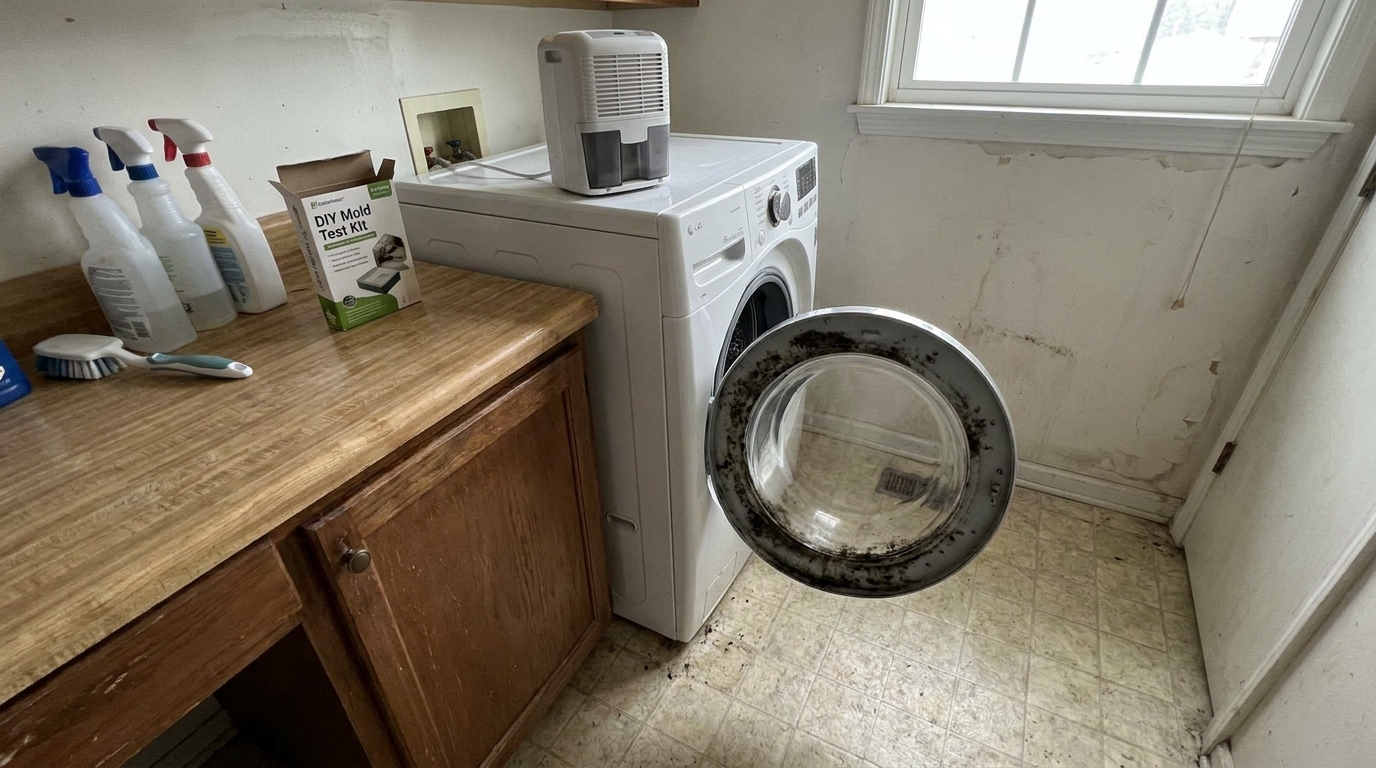
What Causes Mold to Grow in Washing Machines?
Mold grows in washing machines due to trapped moisture, detergent residue, and warm temperatures in sealed environments, particularly in front-load models with rubber gaskets.
A large Japanese public health investigation of 153 household washing machines found mold contamination in 152 of them, with the highest count reaching 4,566 mold spores per milliliter of washing water [Source: Rinse]. That near-universal contamination rate tells us something important: the conditions inside a washing machine are almost ideal for fungal growth. Warmth, darkness, moisture, and organic material (skin cells, detergent residue, fabric softener) create a microenvironment where mold thrives.
Why Front-Load Washers Are More Susceptible
Front-load washers use a horizontal drum sealed by a thick rubber gasket around the door. That gasket creates folds and crevices where water pools after every cycle. Unlike top-load machines, which allow gravity to drain water downward and away from the opening, front-loaders trap moisture at the lowest point of the door seal. The airtight design that makes them energy-efficient also prevents airflow when the door is closed, keeping the interior damp for hours or even days between uses.
According to Consumer Reports, mold in front-loaders is usually caused by moisture plus residue, and the rubber door gasket is the primary collection point. Manufacturers have improved drainage in newer models, but the fundamental design still favors moisture retention compared to top-load alternatives.
The Role of High-Efficiency Detergents and Residue Buildup
High-efficiency (HE) washers use less water per cycle, which means there’s less water available to rinse away detergent and fabric softener. When homeowners use non-HE detergent or pour in more than the recommended amount, the excess creates a film on drum surfaces, gaskets, and dispensers. That film is organic material, and mold feeds on it.
Fabric softener is particularly problematic. Its waxy residue coats internal surfaces and builds up over time, creating a nutrient-rich layer that supports both mold and bacterial colonies. One consumer appliance analysis found that 84% of washing machine odors are caused by bacteria rather than mold specifically [Source: Wecasa]. That statistic underscores why persistent odor may require deeper diagnosis, not just surface-level mold removal.
What Does Mold in a Washing Machine Look Like?
Washing machine mold typically appears as black, gray, or pink slimy patches on rubber gaskets, detergent dispensers, and drum interiors, often accompanied by a persistent musty odor.
Common Locations: Door Gasket, Detergent Drawer, and Drum
The rubber door gasket on front-load washers is the most common location. Pulling back the folds of the gasket often reveals dark patches, slimy residue, or standing water. The detergent dispenser drawer is the second most frequent site, especially in compartments for fabric softener. Inside the drum itself, mold may appear as dark spots near the bottom or around drainage holes.
Pink Mold vs. Black Mold: What’s the Difference?
Pink residue in washing machines is typically not mold at all. It’s usually Serratia marcescens, a bacterium that thrives in moist environments and produces a pinkish-orange pigment. While it can cause irritation and infection in people with compromised immune systems, it responds to different cleaning approaches than fungal mold.
Dark mold in washers is often loosely called “black mold,” but the species most commonly found in washing machines are Aspergillus and Cladosporium, not the Stachybotrys chartarum that the term usually implies. A 2023 NIH/PMC study confirmed these were the most frequently identified fungal genera in building washing machines, and both are known to cause health problems especially in immunocompromised individuals [Source: Edu]. The presence of dark mold does not by itself prove high toxin exposure [Source: Bob Vila].
When Odor Appears Without Visible Growth
A musty smell without visible mold often indicates growth in hidden areas: behind the drum, inside drain hoses, or within the pump filter. Microbial volatile organic compounds (MVOCs) produced by mold and bacteria create that characteristic mildew smell even when the colony isn’t visible to the naked eye.
Is Mold in Washing Machines Dangerous to Your Health?
Mold in washing machines can be harmful, but the risk is highest for people with asthma, allergies, or weakened immune systems and generally low-to-moderate for healthy adults unless contamination is heavy or prolonged.
Respiratory Symptoms and Allergic Reactions
The main health concern is not that washing machine mold is automatically “toxic,” but that mold can release spores, allergens, irritants, and microbial volatile organic compounds (MVOCs) that may trigger sneezing, runny nose, itchy or red eyes, skin rash, coughing, wheezing, and asthma flare-ups. The CDC reports that all molds can cause symptoms in some people, especially those with asthma, allergies, or immune suppression, with common symptoms including nasal stuffiness, wheezing, red or itchy eyes, skin rash, and throat irritation [Source: Bob Vila].
The EPA notes that mold exposure can cause allergic reactions and irritation, and in rare cases molds can produce mycotoxins, though the EPA emphasizes that health effects depend on the type and amount of mold and the person exposed. The 2023 NIH/PMC study found that fungal spores and microbial compounds from contaminated machines can lead to irritation, respiratory illnesses, fatigue, allergic reactions, asthma, and infections [Source: Edu].
Risks for Immunocompromised Individuals and Children
The risk profile changes significantly for vulnerable populations. Aspergillus species, commonly found in washers, can cause serious respiratory infections in immunocompromised individuals. Children, elderly household members, and anyone undergoing chemotherapy or taking immunosuppressive medications face elevated risk from ongoing mold exposure. Anyone experiencing persistent respiratory symptoms should consult a physician rather than assuming the issue will resolve with cleaning alone.
Can Mold Transfer from Washer to Clothes?
Yes. Mold spores can transfer from contaminated washing machine surfaces to clothing during the wash cycle. This can cause musty odor, dark spots, and fabric discoloration on freshly washed items [Source: Rinse]. Clothes that sit in a closed washer after the cycle ends are especially susceptible, as the damp, warm environment accelerates spore transfer and growth.
Practical Risk Estimate
Small, promptly cleaned mold buildup is unlikely to cause major health problems for most healthy people. However, persistent mold in a poorly ventilated machine can meaningfully increase symptoms in sensitive individuals. The better-supported health concern is standard mold exposure causing irritation or allergy symptoms, not a universal “poisoning” effect [Source: Bob Vila].
How Do You Remove Mold from a Washing Machine?
Remove washing machine mold by running hot water cycles with bleach or vinegar, manually scrubbing gaskets and dispensers, and ensuring thorough drying between uses.
Step-by-Step Cleaning Process for Front-Load Washers
-
Remove and soak the detergent dispenser. Pull out the drawer and soak it in a solution of hot water and either bleach (1/2 cup per gallon) or white vinegar. Scrub with an old toothbrush.
-
Clean the door gasket. Pull back the rubber folds and wipe away visible mold with a cloth soaked in a bleach-water solution (3/4 cup bleach per gallon of warm water). Let the solution sit for 10 minutes before wiping clean.
-
Run an empty hot cycle. Add 1 cup of bleach to the bleach dispenser (or 2 cups of white vinegar to the drum) and run the hottest, longest cycle available. Many newer machines have a dedicated “Tub Clean” or “Self Clean” cycle for this purpose.
-
Wipe and dry. After the cycle, wipe the gasket, door glass, and drum interior with a dry cloth. Leave the door and dispenser drawer open.
-
Clean the drain pump filter. Locate the small access panel at the bottom front of the machine. Place a towel underneath, open the filter, drain residual water, and remove any debris.
Bleach vs. Vinegar: Which Works Better?
| Factor | Bleach (Sodium Hypochlorite) | White Vinegar (Acetic Acid) |
|---|---|---|
| Mold-killing effectiveness | Kills mold on non-porous surfaces effectively | Kills some mold species; less effective on porous surfaces |
| Residue removal | Moderate. Does not dissolve mineral deposits well | Good. Dissolves mineral and soap buildup |
| Odor | Strong chemical smell; requires ventilation | Mild acidic smell; dissipates quickly |
| Safety | Can damage rubber gaskets with frequent use | Gentler on rubber and plastic components |
| Important warning | Never mix bleach and vinegar. The combination produces toxic chlorine gas. |
For heavy visible mold, bleach is generally more effective at killing active growth on the non-porous metal and plastic surfaces inside a washer. Vinegar works better for ongoing maintenance and residue prevention. Alternating between the two on separate cleaning cycles (never in the same cycle) addresses both concerns.
How Do You Prevent Mold from Returning?
Prevent washing machine mold by leaving the door open between loads, wiping gaskets dry, using proper detergent amounts, and running monthly cleaning cycles.
The Door-Open Rule and Why It Matters
Leaving the washer door ajar after every cycle is the single most effective prevention step. It allows air circulation that dries the drum interior, gasket folds, and door glass. For households with small children or pets, propping the door open just a few inches with a magnetic door holder achieves airflow while reducing the risk of a child climbing inside.
Proper Detergent Usage and HE Formulas
HE machines require HE-labeled detergent. Using conventional detergent creates excess suds that don’t rinse away in low-water cycles. Even with HE detergent, most people use too much. The recommended amount for a standard load is typically 1 to 2 tablespoons, far less than the “fill line” on most detergent caps suggests. Reducing fabric softener use, or eliminating it entirely in favor of dryer balls, also cuts residue buildup significantly.
Monthly Maintenance Routines
A monthly cleaning cycle with bleach or vinegar, combined with wiping the gasket and dispenser, prevents mold from establishing colonies. Cleaning the drain pump filter every one to three months removes trapped debris that contributes to odor and bacterial growth.
When Should You Call a Professional?
Call a professional when mold returns quickly after repeated cleaning, appears in hard-to-reach internal parts, or when household members experience persistent allergic or respiratory symptoms.
Signs That Justify Professional Help
The strongest practical triggers for calling a professional include:
-
Mold returns quickly after cleaning or the smell comes back within a cycle or two, which suggests a deeper problem in hoses, seals, drain systems, or internal components.
-
Visible mold in hidden areas such as gasket folds, behind the drum, or inside internal components that DIY cleaning cannot reach.
-
Water leaks, standing water, slow draining, or gurgling sounds, which can indicate drainage or seal problems that may be driving mold growth.
-
Unusual mechanical or electrical problems such as grinding, banging, error codes, sparking, or smoke, which require repair rather than cleaning.
-
Health symptoms like persistent allergic reactions or respiratory issues in household members that may be linked to mold exposure [Source: Wecasa].
A useful numeric threshold appears in broader mold-remediation guidance: professionals are commonly recommended when mold covers more than 10 square feet, because that suggests contamination beyond a small, isolated cleanup area. For a washing machine, even a smaller visible patch can still justify service if it is inside internal parts or keeps returning after cleaning.
Appliance Repair vs. Mold Remediation Specialists
For mold isolated to the washing machine, an appliance repair technician is the appropriate call. They can disassemble the machine, clean internal components, replace gaskets and hoses, and address drainage issues. A certified mold remediation specialist becomes relevant when mold has spread to the laundry room walls, flooring, or cabinetry, or when household members experience persistent health symptoms.
Cost Considerations for Professional Cleaning vs. Replacement
Professional appliance cleaning typically runs $100 to $250. Gasket replacement adds $150 to $300. When repair costs approach 50% of the machine’s replacement value, or when the washer is more than 8 to 10 years old, replacement often makes more financial sense.
Does Washing Machine Mold Mean You Have a Mold Problem Elsewhere?
Not necessarily. Washing machine mold often reflects a localized moisture problem in the appliance rather than proof of mold elsewhere, though persistent issues can signal broader moisture conditions in the home.
The Japanese study finding mold in 152 of 153 household washers demonstrates that washing machine mold is extremely common and often exists independently of broader home contamination [Source: Rinse]. Average mold counts in that study were 61 spores per milliliter in single-tub automatic machines and 24 spores per milliliter in two-tub machines, confirming that some level of fungal presence is nearly universal in household washers. Notably, a Japan Electrical Manufacturers’ Association representative stated that while mold can proliferate in washing machines depending on placement and use, “there is no data that can link mold in washing machines and atopic dermatitis.”
However, a musty smell that persists despite cleaning may indicate a larger contamination issue in the machine or surrounding laundry area [Source: Rinse]. If mold keeps returning, the laundry room smells musty, there are visible damp areas on walls or flooring, or symptoms occur beyond laundry day, the problem may extend beyond the appliance.
How to Tell Washer-Only Mold from a Broader Problem
-
Single appliance problem (most common): Mold responds to cleaning, no musty odor in the laundry room itself, no visible dampness on walls or floors, and no health symptoms beyond laundry day. This is especially likely in humid climates or with front-load washers.
-
Possible broader mold problem: Mold keeps returning after thorough cleaning, the laundry room smells musty even when the washer is clean, there are visible damp areas on walls or ceiling, or household members experience coughing, sneezing, itchy eyes, skin irritation, or asthma flares that persist beyond laundry day.
-
Mold visible on laundry room walls, ceiling, or flooring: Contact a mold remediation specialist for assessment.
If mold persists after cleaning or household members are experiencing health symptoms, consider testing your home’s overall moisture levels. A professional mold inspection can identify whether the washing machine issue is isolated or part of a larger problem.