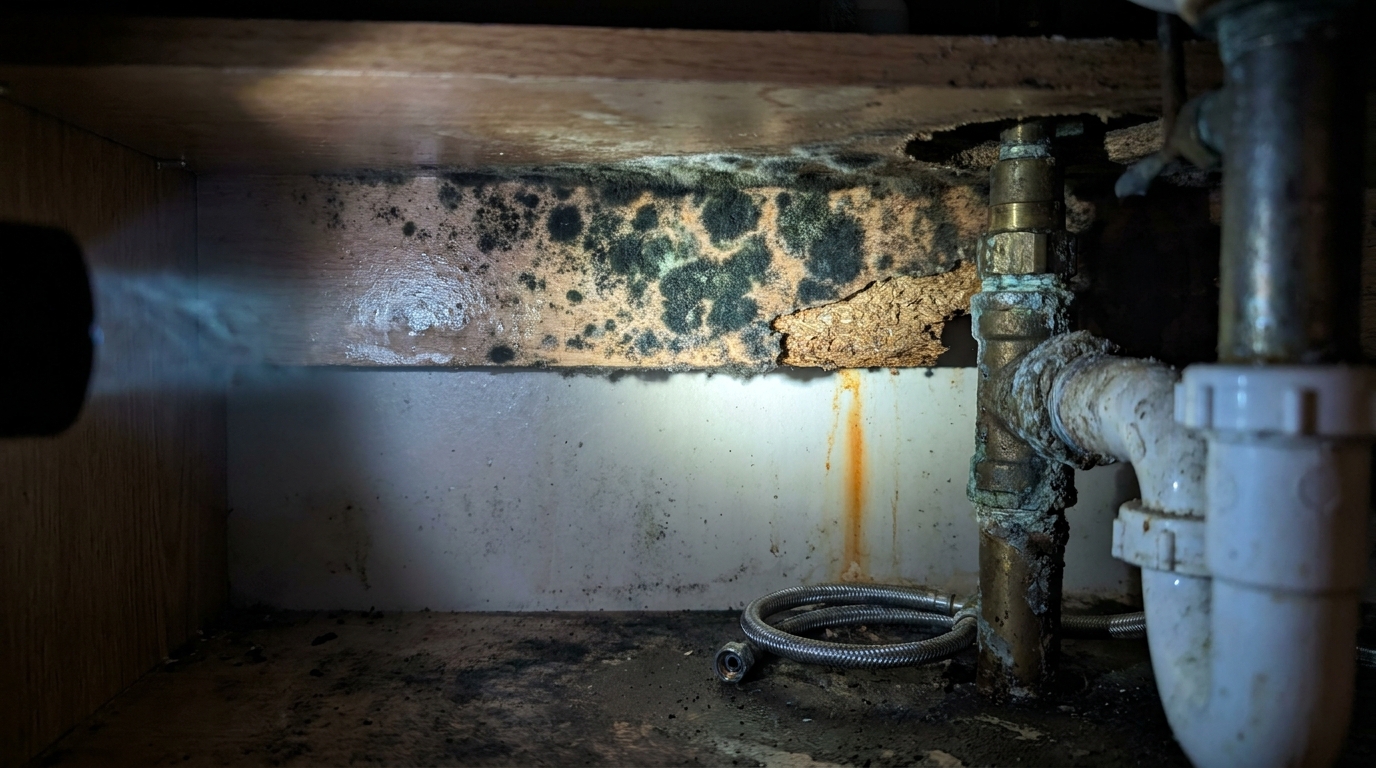
That sour, musty smell wafting from the laundry room is more than unpleasant. Mold in a washing machine is a surprisingly common household problem, and it can affect the freshness of every load of laundry, the air quality in your home, and potentially your family’s health. A peer-reviewed study published in the National Library of Medicine found that 82% of building washing machines tested were contaminated with fungi, spanning 17 different genera. This article explains why washers become mold hotspots, how to recognize the problem, how to clean it safely, and when the situation calls for professional help.
Disclaimer: This article is for informational purposes only. It does not replace advice from a qualified mold remediation professional or a licensed physician. If you suspect a significant mold problem or are experiencing health symptoms, consult the appropriate professional.
What Is Mold in a Washing Machine (and Why Does It Matter)?
Mold in a washing machine is a fungal biofilm that colonizes damp interior surfaces, especially the rubber door gasket, detergent drawer, and drum crevices. It often appears as black, dark green, or brown spots and produces a distinctive musty odor.
This matters for three reasons. First, it is extremely widespread. The NIH-linked study mentioned above isolated 122 fungal strains from 50 machines, with the inner rubber door seal being the most heavily colonized area (37.5% of samples positive). Second, fungal agents can transfer from contaminated machines to laundered textiles, creating an exposure route when people wear or handle those items. Third, the genera most frequently identified, including Aspergillus and Cladosporium, are associated with allergic disease and respiratory problems.
Unlike mold in a shower, which is usually visible and easy to reach, washing machine mold often hides in gasket folds, drain lines, and the space between the inner and outer drum. That hidden growth is what makes it tricky to address.
What Causes Mold to Grow in a Washing Machine?
Mold grows when persistent moisture, organic residue, warmth, and darkness converge inside the machine’s enclosed spaces. Front-loading and high-efficiency (HE) models are especially vulnerable because of their airtight door seals and low-water wash cycles.
Understanding what mold needs to grow helps explain why washers are such reliable mold incubators. Here are the core causes:
Trapped moisture. According to CNET, mold can begin to proliferate within just 48 hours in warm, humid conditions. A washer that stays closed after a cycle creates exactly those conditions. The EPA recommends drying wet materials within 24 to 48 hours to prevent mold, a timeline that a sealed, damp washer easily exceeds.
Machine design. According to IndoorDoctor, front-loading washers are particularly susceptible because their airtight door seals and horizontal drums retain moisture, creating what the source calls a “perfect breeding ground” for mold and biofilm. Top-loaders allow more natural airflow, though they are not immune.
Detergent and softener residue. Liquid detergents and fabric softeners leave behind a film that serves as a food source for mold. HE machines use less water per cycle, so these residues are not always fully rinsed away. According to Consumer Reports, using non-HE detergent or too much detergent leaves soap scum that feeds mold and mildew.
Laundry room humidity. The EPA recommends keeping indoor relative humidity between 30% and 50% to discourage mold. Laundry rooms with poor ventilation often exceed 60% RH, according to MoldInspectionAndTest, which compounds the moisture already present inside the machine.
| Cause | Why It Promotes Mold | Front-Loader Risk | Top-Loader Risk |
|---|---|---|---|
| Trapped moisture after cycles | Damp surfaces stay wet beyond the 24-48 hour mold growth window | High (airtight gasket seals moisture in) | Moderate (lid allows some airflow) |
| Detergent/softener residue | Organic film provides nutrients for mold | High (low-water HE cycles leave more residue) | Moderate |
| Rubber door gasket folds | Crevices collect water, lint, and debris | High (large folded gasket) | Low (no front gasket) |
| Closed door between loads | Creates a dark, humid chamber | High | Moderate |
| Laundry room humidity above 60% | Slows drying of all interior surfaces | High | High |
What Are the Signs of Mold in Your Washing Machine?
The most common early sign is a persistent musty or “dirty sock” smell coming from the drum, especially when you first open the door. Visible mold and health symptoms are also reliable indicators.
According to Consumer Reports, front-loading washers have generated thousands of complaints about mold and odor, making it one of the top dissatisfaction issues unique to that design. Here is what to watch for:
Musty odor. A sour, earthy, or mildew-like smell from the drum or detergent drawer is often the first clue. The EPA treats a musty odor as an indicator that mold is present, even when growth is not yet visible. If you are trying to detect mold elsewhere in your home, the same principle applies: smell often precedes sight.
Visible discoloration or slime. Black, dark green, or brown spots on or under the rubber door gasket are a strong sign. Slimy film on the drum, detergent drawer, or door glass also points to biofilm and mold colonization.
Clothes that smell after washing. According to ServiceMaster Restore, laundry that smells musty right out of the washer is a clear indication of a mold or moisture problem in or around the machine.
Allergy or respiratory symptoms during laundry tasks. Sneezing, nasal congestion, watery eyes, or headaches when opening the washer or handling “clean” laundry can signal mold exposure. According to IndoorDoctor, opening a front-loader puts a person’s face close to the drum, creating direct inhalation exposure to airborne mold spores and microbial volatile organic compounds.
One common misconception: “If I don’t see mold, it’s not there.” Microscopic growth can exist behind gaskets, in drain lines, and within biofilm layers long before it becomes visible to the naked eye.
Is Mold in a Washing Machine a Health Risk?
Yes, mold in a washing machine can pose a health risk, though the severity depends on who is exposed and how much mold is present. Allergic and respiratory symptoms are the primary concern.
According to the CDC, mold exposure can cause nasal stuffiness, eye irritation, wheezing, and skin rash. People with asthma or mold allergies may experience more severe reactions, and immunocompromised individuals may develop serious lung infections. The CDC does not define a single “safe” mold threshold; any visible mold growth should be removed.
The National Institute for Occupational Safety and Health (NIOSH) estimates that approximately 25% of people with asthma may have their condition worsened by mold exposure. That statistic is worth considering when a mold-contaminated washer is running multiple loads per week in a poorly ventilated room.
The fungi most commonly found in washers, including Aspergillus and Cladosporium, are well-documented allergens. For context, Aspergillus species can also produce mycotoxins under certain conditions, though the presence of the mold does not automatically mean dangerous mycotoxin levels are present. If anyone in the household experiences persistent respiratory symptoms, they should consult a physician rather than assume the washer is or is not the cause.
A common myth worth addressing: “Any mold in a washer is automatically toxic mold.” The main, well-established risk is allergy and asthma symptoms from damp mold exposure, not the dramatic toxicity scenarios often portrayed online.
How to Clean Mold Out of a Washing Machine (Step-by-Step)
Cleaning mold from a washing machine requires manual scrubbing of gaskets and dispensers followed by a hot cleaning cycle with bleach or vinegar. Surface cleaning alone is rarely enough because mold hides in crevices and biofilm.
Safety first. Never mix bleach with vinegar, ammonia, or other household cleaners. According to 1-800 Water Damage, combining these products can produce dangerous chlorine gas. Wear rubber gloves and ensure adequate ventilation.
What you will need:
- Chlorine bleach or white distilled vinegar (choose one, not both)
- Spray bottle
- Microfiber cloths
- Old toothbrush
- Rubber gloves
Step 1: Clean the door gasket. Pull back the rubber gasket folds and remove any trapped debris, lint, or small items. According to Affresh, wiping the gasket with a cloth dipped in a 10% bleach solution effectively removes mold from this area. Scrub stubborn spots with the toothbrush. Rinse with a damp cloth and dry thoroughly.
Step 2: Clean the detergent dispenser. Remove the drawer and soak it in hot water for 10 to 15 minutes, per Affresh’s recommendation. Scrub away buildup, rinse, and dry completely before reinserting.
Step 3: Run a hot cleaning cycle. Add 2 cups of chlorine bleach to the detergent compartment (or 2 cups of white vinegar if you prefer a non-bleach approach). Run an empty cycle on the hottest water setting. According to 1-800 Water Damage, pausing the cycle for 30 minutes mid-wash allows the cleaning solution to soak and break down biofilm more effectively.
Step 4: Run a rinse cycle. Follow up with a second empty hot-water cycle, no additives, to flush out residue and any remaining cleaning solution.
Step 5: Dry everything. Wipe down the drum, door glass, and gasket with a dry cloth. Leave the door and detergent drawer open for at least six hours. Proper drying is the single most important step for preventing regrowth.
For top-loaders: The process is similar, but focus on the rim of the tub, the agitator base, and the lid hinges where moisture collects. Some top-loaders without a detergent drawer may need up to 4 cups of bleach added directly to the tub, according to 1-800 Water Damage.
How Do You Prevent Mold From Coming Back?
Consistent moisture control, correct detergent use, and monthly cleaning cycles are the three pillars of long-term washing machine mold prevention. Skipping any one of them invites regrowth.
The EPA’s general mold guidance is clear: if the moisture source is not fixed, mold will return. For a washing machine, “fixing the moisture source” means changing daily habits.
After every load:
- Remove wet clothes immediately. According to the Association of Home Appliance Manufacturers (AHAM), “wet fabric left in a closed space is particularly conducive to the development of odor, mold and mildew.”
- Wipe the door gasket and glass dry with a cloth, paying attention to the bottom fold where water pools.
- Leave the door and detergent drawer open so air can circulate.
Monthly maintenance:
- Run an empty hot cycle with about 1 cup of chlorine bleach or a commercial washer cleaner. AHAM recommends this monthly routine to maintain a clean machine.
- Remove and scrub the detergent drawer.
- Check the drain filter or lint trap for trapped debris.
Ongoing habits:
- Use only HE-rated detergent in HE machines, and use less than you think you need. According to Consumer Reports, excess detergent leaves residue that feeds mold. One experienced user cited by Pretty Handy Girl kept an HE washer mold-free for over 10 years by using roughly 1 tablespoon of detergent per load.
- Skip liquid fabric softener. It leaves a waxy film that builds up inside the machine and provides nutrients for mold growth.
- Control laundry room humidity. A dehumidifier or exhaust fan that keeps the room below 50% RH makes a meaningful difference, especially in basements or interior laundry closets.
When Should You Call a Professional?
Homeowners should call a professional when mold covers more than about 10 square feet, keeps returning after thorough cleaning, has spread to surrounding walls or flooring, or is causing health symptoms in the household.
The EPA recommends that homeowners handle mold cleanup themselves only when the affected area is smaller than roughly 10 square feet. Beyond that threshold, or when there is significant water damage, professional remediation is the safer path.
Here are specific triggers that signal it is time to pick up the phone:
Mold has spread beyond the machine. If you see discoloration, soft spots, or musty odors on drywall, baseboards, or flooring near the washer, the problem has likely moved past the appliance. Removing mold-damaged drywall and treating structural framing is a job for trained remediation professionals.
Mold returns within weeks of a thorough cleaning. Persistent recurrence after you have cleaned the gasket, run hot cycles, and left the door open suggests hidden moisture or contamination in sealed components. A professional can inspect drain lines, the outer drum, and surrounding construction.
Health symptoms persist. People with asthma, allergies, or compromised immune systems should not attempt DIY mold cleanup, according to guidance consistent with EPA recommendations. If respiratory symptoms, skin irritation, or headaches coincide with washer use and do not resolve after cleaning, consult a physician and consider a professional mold inspection. A mold test kit can provide preliminary data, but a certified mold inspector offers a more reliable assessment.
There are active leaks or water damage. A leaking supply hose, drain line, or condensation problem can feed mold growth continuously. According to ServiceMaster Restore, persistent moldy-smelling clothes or visible mold after cleaning should prompt an inspection for leaks and hidden moisture.
What does professional help cost? According to Angi, professional mold removal typically costs between $375 and $7,000, depending on the extent of contamination. Mold limited to a small appliance area falls at the lower end. For a detailed breakdown, see our guide to mold remediation cost.
| Scenario | DIY Appropriate? | Professional Recommended? |
|---|---|---|
| Small mold patch on gasket, no odor on clothes | Yes | No |
| Musty smell persists after two thorough cleanings | Maybe (try once more) | Yes, if it returns again |
| Mold visible on wall or floor near washer | No | Yes |
| Household member has asthma or immune condition | No | Yes |
| Active leak behind or under the machine | No | Yes |
| Mold area exceeds 10 square feet total | No | Yes |
Mold in a washing machine is a fixable problem when caught early. For most homeowners, a combination of manual gasket cleaning, monthly hot cycles, and consistent drying habits will keep the machine mold-free. But when the signs point to something bigger, such as recurring growth, spreading contamination, or health symptoms, professional assessment is the responsible next step.
Need help finding a qualified mold remediation professional in your area? Visit our contractor directory to connect with local specialists who can assess your situation and provide a quote.