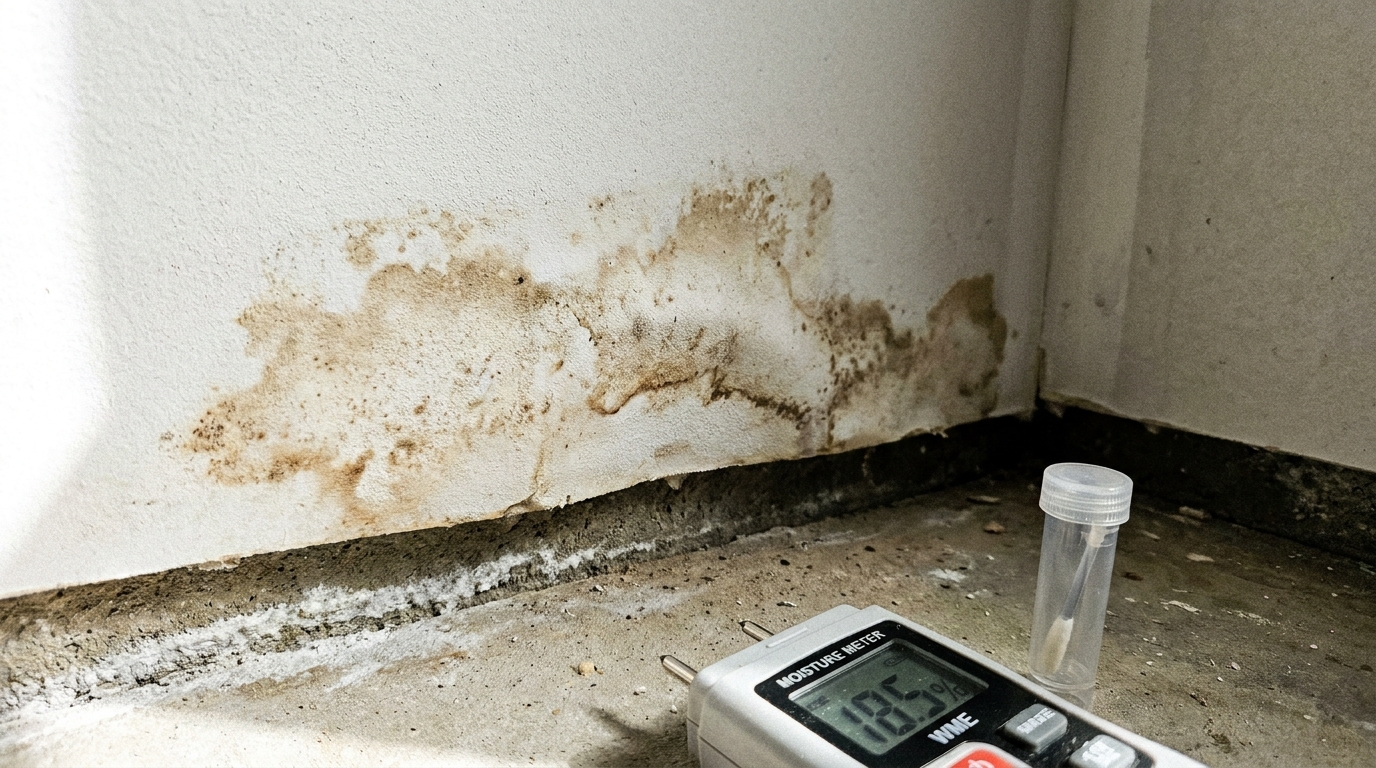
What Does Mold Removal Cost in San Diego?
San Diego mold removal costs $1,500 to $6,000 for most residential jobs, with small bathroom projects starting around $500 and whole-home remediation exceeding $10,000.
Homeowners searching for mold removal san diego pricing often encounter wildly different quotes, and that spread isn’t random. A 2026 pricing analysis reports typical San Diego mold remediation costs of $650 to $13,000, with most residential jobs falling between $1,900 and $4,200. [Source: Water Damage Restoration Pricing] The national average sits around $2,300 to $2,400, but San Diego’s per-square-foot costs run higher due to local labor rates and California regulations. [Source: MoldRemovalSource]
Average Cost by Project Size
| Project Type / Location | Typical Cost Range |
|---|---|
| Small isolated area (<10 sq ft, e.g., bathroom corner) | $500 – $1,500 |
| Crawl space | $500 – $2,000 |
| Single room (bedroom, living room) | $1,500 – $4,000 |
| Basement or attic | $1,000 – $4,000 |
| Multiple rooms / hidden mold behind walls | $3,000 – $8,000 |
| HVAC system | $2,000 – $8,000 |
| Whole house (severe contamination) | $10,000 – $30,000+ |
| Post-remediation clearance testing | $300 – $1,000 |
What Drives Price Variation in San Diego
The dominant cost driver is how much material, including drywall, insulation, and flooring, must be physically removed. [Source: Water Damage Restoration Pricing] Other factors that push quotes higher include:
-
Location within the home. Crawl spaces, attics, and areas behind finished walls require more labor for access and containment.
-
HVAC involvement. Mold inside ductwork demands specialized cleaning that can add $2,000 to $8,000 to the total.
-
Structural drying. If the moisture source hasn’t been resolved, extended drying with commercial dehumidifiers adds days and cost.
-
Reconstruction. Replacing removed drywall, flooring, or cabinetry is often billed separately and can double the final invoice.
How San Diego Costs Compare to National Averages
San Diego labor rates run an estimated 4 to 8% above the U.S. average, partly due to California prevailing-wage rules and hazardous-waste disposal regulations. [Source: Water Damage Restoration Pricing] Per-square-foot remediation costs in San Diego range from $10 to $25 for most jobs, compared to national estimates that often start lower. [Source: MoldRemovalSource] Homeowners should expect to pay a premium for licensed, insured work in this market.
Why Does Mold Grow in San Diego Homes?
San Diego mold growth is driven by coastal moisture, poor ventilation in older homes, plumbing leaks, and microclimates where marine layer fog creates sustained humidity above 60%.
Many homeowners assume San Diego’s dry reputation means mold isn’t a real concern. The city averages only about 11.5 inches of rain per year. [Source: MoldCompass] But rainfall isn’t the primary risk driver here. Humidity is.
Coastal Humidity and Marine Layer Effects
San Diego’s coastal marine layers routinely push relative humidity above 70% for extended stretches in May and June. [Source: MoldCompass] When that humid air enters homes through open windows or poor sealing, it raises moisture levels on interior surfaces. Once indoor relative humidity exceeds 60%, mold begins to grow on organic materials like drywall, wood framing, and carpet backing. [Source: Rare Air Environmental] Most indoor molds grow best between 77°F and 86°F, a range many San Diego homes reach in summer without air conditioning. [Source: Rare Air Environmental]
Common Problem Areas in San Diego Homes
Local restoration professionals consistently flag the same trouble spots:
-
Crawl spaces with inadequate vapor barriers and soil moisture that keeps framing chronically damp
-
Bathrooms and closets with poor exhaust ventilation
-
Behind finished walls where slow plumbing leaks go undetected for months
-
Attics where roof flashing failures or HVAC condensation drip onto insulation
-
Garages attached to living spaces, where temperature differentials create condensation
For a deeper look at how moisture leads to mold problems, see our guide on what causes mold in a house.
Seasonal Patterns: Winter Leaks and Summer Condensation
San Diego’s mold season isn’t limited to one time of year. Winter storms, though infrequent, can overwhelm aging roofs and cause crawl space flooding. A local inspector reported an uptick in mold concerns after recent Southern California rainstorms, noting that indoor humidity around 70% or higher can cause mold growth on clothing and furniture. [Source: MoldCompass] In summer, homeowners who seal up their homes to stay cool trap moisture and heat, creating ideal conditions for mold colonies. Mold can begin growing within 24 to 48 hours after a surface stays damp. [Source: Rare Air Environmental]
How Do You Choose a Mold Removal Company in San Diego?
Choose a San Diego mold removal company with a California contractor license (C-61/D-64 or ASB), IICRC certification, proof of insurance, and a detailed written scope of work before payment.
Required Licenses and Certifications in California
California requires mold remediation contractors to hold a valid license from the Contractors State License Board (CSLB). The relevant classifications are C-61/D-64 (Mold Remediation) or ASB (Asbestos Abatement, which some firms also carry). Homeowners can verify any contractor’s license status at cslb.ca.gov. Beyond state licensing, look for IICRC (Institute of Inspection Cleaning and Restoration Certification) credentials, which indicate the company follows industry-standard protocols for mold remediation.
Red Flags: What to Avoid When Vetting Contractors
The biggest mistake San Diego homeowners make is hiring one company to do both testing and removal, according to MoldRemovalSource, because the remediation company has a financial incentive to find as much mold as possible. [Source: MoldRemovalSource] Other warning signs include:
-
“Free mold inspections” offered by companies that also sell remediation. Legitimate mold inspectors charge $200 to $600. [Source: MoldRemovalSource]
-
Pressure tactics like “sign now” or “today only” pricing
-
No written scope of work detailing containment, materials to be removed, equipment, and timeline
-
No proof of liability insurance or workers’ compensation coverage
-
Verbal-only estimates without itemized line items
Questions to Ask Before Signing a Contract
-
Can you provide your CSLB license number and IICRC certification?
-
Will a separate, independent company perform pre- and post-remediation testing?
-
What specific materials will be removed, and what will be cleaned in place?
-
Is the estimate itemized by containment, labor, materials, equipment, and disposal?
-
What is the projected timeline, and what triggers additional charges?
-
Do you carry general liability and workers’ compensation insurance?
Get at least three written estimates before committing. [Source: MoldRemovalSource]
What Does the Mold Removal Process Look Like?
Professional mold removal involves containment, HEPA air filtration, removal of contaminated materials, antimicrobial treatment, drying, and post-remediation verification testing, typically taking 3 to 7 days for residential projects.
Step 1: Inspection and Moisture Mapping
A certified inspector uses moisture meters, thermal imaging, and visual assessment to map the extent of contamination and identify the water source. This step typically takes 2 to 3 hours. [Source: ContractorPlus] Without finding and fixing the moisture source first, any remediation work is temporary.
Step 2: Containment and Air Filtration
Workers seal the affected area with polyethylene sheeting and establish negative air pressure using HEPA-filtered air scrubbers. This prevents mold spores from spreading to unaffected rooms during removal. The containment zone stays in place throughout the project.
Step 3: Material Removal and Treatment
Contaminated porous materials, such as drywall, insulation, carpet, and damaged wood, are cut out, bagged in sealed plastic, and disposed of. Hard surfaces that can be saved are scrubbed and treated with antimicrobial solutions. This phase takes 5 to 6 hours on smaller jobs and expands to multiple days on larger projects. [Source: ContractorPlus]
Step 4: Drying and Verification
Commercial dehumidifiers and fans run until wood moisture readings drop below 20%. [Source: San Diego County] Mold can return in just 2 to 3 days if materials stay wet. [Source: San Diego County] After drying, an independent inspector performs air sampling and surface testing to verify “normal fungal ecology” and issues a clearance report. [Source: Green Planet Mold Inspection]
Does Homeowners Insurance Cover Mold Removal in San Diego?
San Diego homeowners insurance covers mold removal if caused by a sudden, accidental event like a burst pipe, but excludes long-term neglect, flooding, or maintenance issues.
What California Policies Typically Cover
Coverage follows a clear pattern across most California carriers. Mold resulting from a sudden, accidental water loss that is itself a covered peril, such as a burst pipe, appliance leak, or water used to extinguish a fire, is generally covered. [Source: Progressive] Mold from gradual leaks, high humidity, poor ventilation, flooding, or pre-existing conditions is almost always excluded. [Source: Progressive]
Documentation Required for Claims
If you believe your mold damage stems from a covered event, document everything before remediation begins:
-
Photographs and video of all visible mold and water damage
-
Written report from an independent mold inspector identifying the moisture source
-
Plumber’s or roofer’s report confirming the sudden nature of the water event
-
Itemized remediation estimates from licensed contractors
-
Copies of all communication with your insurance adjuster
When You’ll Pay Out of Pocket
Most standard HO-3 policies in California cap mold coverage between $1,000 and $5,000 per incident. Enhanced policies with a mold rider may cover $5,000 to $10,000. [Source: Prov Contracting] Since typical San Diego remediation costs run $1,900 to $4,200 for mid-range projects, many homeowners find their coverage falls short. Review your specific policy language and ask your agent about mold endorsement options before a problem arises.
Do You Need a Mold Inspection Before Removal?
A mold inspection is not legally required in California but is recommended for hidden mold, health concerns, or insurance claims. San Diego inspections typically cost $200 to $600.
When an Inspection Adds Value
An independent inspection is worth the cost when mold is suspected but not visible, when occupants are experiencing unexplained respiratory symptoms, or when an insurance claim requires documentation of the contamination source. It can also prevent over-remediation by defining the actual scope of the problem before a contractor provides a quote.
What a Certified Inspector Tests For
A proper comprehensive mold investigation by an ACAC-accredited inspector includes air sampling to quantify airborne spore levels, direct surface sampling to identify mold species, and moisture mapping to locate hidden water sources. [Source: Green Planet Mold Inspection] Air sampling is necessary for clearance at the conclusion of all mold remediation procedures. [Source: Green Planet Mold Inspection]
How to Interpret Lab Results
Lab reports compare indoor spore counts to outdoor baseline samples. Elevated indoor levels of certain species, particularly Stachybotrys (commonly called black mold), Aspergillus, or Chaetomium, suggest active growth that warrants remediation. A certified industrial hygienist or qualified inspector can explain what the numbers mean for your specific situation. For more on understanding mold types, see our resource on types of mold found in homes.
Can You Remove Mold Yourself in San Diego?
DIY mold removal is safe for small areas under 10 square feet with no health risks, but professional help is recommended for larger projects, HVAC involvement, or suspected black mold.
California Legal Limits on DIY Remediation
California does not have a specific statute prohibiting homeowners from cleaning mold in their own homes. However, industry guidelines and local experts consistently use 10 square feet as the practical threshold. Beyond that size, containment, HEPA filtration, and proper disposal become necessary, which effectively requires professional equipment and training. [Source: Bill Howe]
When to Call a Professional
Contact a licensed mold remediation contractor when:
-
Mold covers more than 10 square feet
-
Growth is inside HVAC ducts or behind walls
-
Black mold (Stachybotrys) is suspected
-
Occupants are experiencing health symptoms like persistent coughing, wheezing, or skin irritation
-
The moisture source is unknown or unresolved
-
Mold has returned after a previous cleanup attempt
Safety Precautions for Small Projects
For small areas on hard surfaces, San Diego County guidelines recommend wearing an N-95 respirator, gloves, and eye protection. Use water and mild detergent rather than bleach. Cover moldy material with plastic before removing it to prevent spore dispersal. Dry the area thoroughly with fans or a dehumidifier. [Source: San Diego County] A small DIY cleanup typically costs $100 to $500 for cleaning supplies and personal protective equipment. [Source: Bill Howe]
How Long Does Mold Removal Take in San Diego?
Most San Diego mold removal projects take 3 to 7 days, including drying time, with small bathroom jobs completed in 1 to 2 days and whole-home remediation requiring 2 to 3 weeks.
A typical same-day to multi-day process breaks down roughly as follows: assessment and safety preparation take about 2 to 3 hours, water extraction and initial drying run 4 to 5 hours (with full drying continuing for several additional days), mold removal and cleaning require 5 to 6 hours on smaller jobs, and final inspection and prevention measures add about 2 hours. [Source: ContractorPlus] Even a seemingly small project typically occupies at least 1 to 2 full working days once all steps are combined. Larger jobs with structural drying, HVAC cleaning, and reconstruction can stretch to several weeks.
What Happens If You Don’t Remove Mold?
Untreated mold spreads to new areas, degrades building materials, worsens indoor air quality, and can trigger respiratory symptoms, even in San Diego’s mild climate.
Mold doesn’t stay put. It produces spores that travel through air currents to colonize new surfaces. Over time, structural materials like wood framing, drywall, and subfloor sheathing weaken as mold digests the organic components. Indoor air quality deteriorates as spore counts rise. The longer mold goes unaddressed, the more material must be removed during eventual remediation, which directly increases cost. A project that might have been a $1,500 bathroom fix can escalate into a $5,000 to $10,000 multi-room job if left for months. Anyone experiencing persistent respiratory symptoms in a home with suspected mold should consult a physician.
Frequently Asked Questions
These are the questions San Diego homeowners ask most often about mold remediation costs, timelines, and local regulations.
Is black mold common in San Diego homes?
Stachybotrys chartarum, commonly called black mold, can grow in San Diego homes wherever there’s persistent moisture on cellulose-rich materials like drywall or wood. It’s less common than other species like Aspergillus or Cladosporium, but it does occur, particularly in homes with chronic plumbing leaks or crawl space moisture problems. A certified inspector can identify the species through lab testing. Anyone concerned about health effects should consult a physician.
Do I need to leave my home during mold removal?
For small, contained projects in a single room, most homeowners can stay in the home as long as the containment barriers are properly maintained. For larger projects involving multiple rooms, HVAC systems, or significant demolition, remediation companies typically recommend temporary relocation. Households with members who have asthma, allergies, or compromised immune systems should discuss occupancy with both their contractor and their doctor.
How do I prevent mold from coming back after remediation?
Keep indoor humidity below 60% using dehumidifiers or air conditioning. Fix all plumbing leaks promptly. Ensure bathrooms and kitchens have functioning exhaust fans that vent to the outside, not into the attic. In crawl spaces, install or repair vapor barriers. During marine layer season, avoid leaving windows open for extended periods in coastal neighborhoods. Regular visual inspections of known problem areas catch new growth early.
What’s the difference between mold removal and mold remediation?
“Mold removal” and “mold remediation” are often used interchangeably by homeowners, but professionals draw a distinction. Removal refers to physically taking out contaminated materials. Remediation is the broader process: identifying the moisture source, containing the area, removing mold, treating surfaces, drying the structure, and verifying that spore levels have returned to normal. Effective remediation addresses the cause, not just the symptom.
Are there mold disclosure laws for San Diego home sales?
California Civil Code requires sellers to disclose known material facts that affect the value or desirability of a property, which includes known mold problems. The Transfer Disclosure Statement (TDS) and Seller Property Questionnaire both ask about water damage and environmental hazards. Sellers who are aware of mold contamination and fail to disclose it face potential legal liability. Buyers purchasing in San Diego should consider requesting a mold inspection as part of their due diligence, especially for older homes near the coast.
Next steps: If you’re dealing with mold in your San Diego home, start by documenting the affected areas with photos and checking your homeowners insurance policy for coverage details. For projects larger than 10 square feet or involving health concerns, request quotes from at least three licensed contractors. Verify credentials at cslb.ca.gov and ask for a detailed scope of work before signing anything. If you’re unsure about the extent of contamination, consider a professional inspection first. It may save money by preventing over-remediation or identifying hidden moisture sources that need repair.