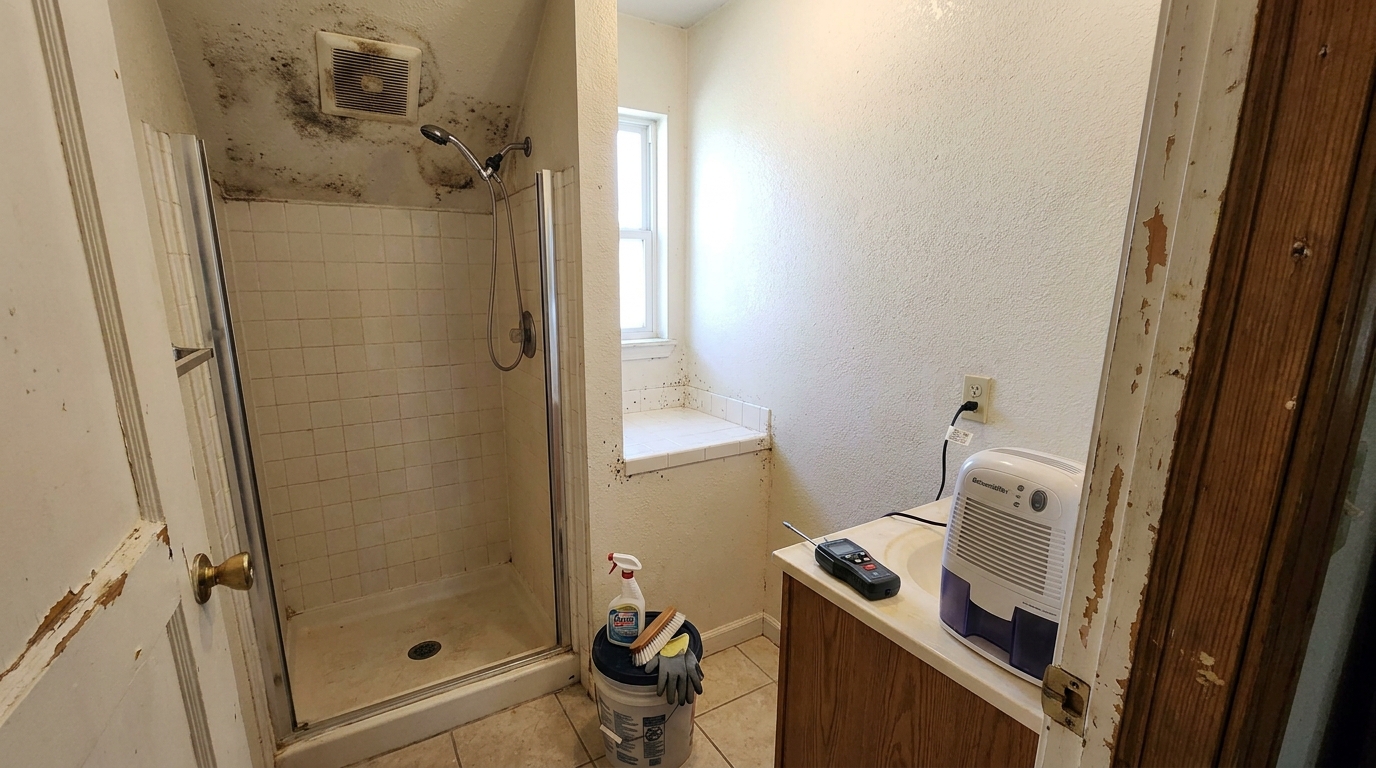
Why Does Mold Keep Coming Back in Bathrooms?
Bathroom mold returns because cleaning removes visible growth but doesn’t address the moisture conditions that feed it. Humidity above 60%, inadequate ventilation, and water intrusion create environments where spores regrow within days.
If you’ve scrubbed mold from your shower grout, ceiling, or caulk line only to see it reappear weeks later, you’re not doing anything wrong. The problem is that surface cleaning treats a symptom while the underlying cause persists. Understanding why does mold keep coming back in bathroom spaces requires looking at the system of conditions that allow spores to thrive, not just the cleaning product you’re using.
According to Moldinspection, the most common recurring causes identified by bathroom mold inspectors are an undersized or poorly vented exhaust fan, unsealed cement grout, and a slow plumbing leak behind a tub or vanity. These are structural and environmental problems that no amount of scrubbing will fix.
The Moisture-Temperature-Nutrient Triangle
Mold needs three things to grow: moisture, a food source, and warmth. Bathrooms supply all three in abundance. According to Moldinspection, mold grows when it has water, a food source, and stagnant air above 60% humidity. Soap scum, skin cells, body oils, and dust provide the organic nutrients. Warm shower steam provides both heat and moisture. Remove any one leg of this triangle, and mold can’t establish itself. In practice, moisture is the only leg homeowners can realistically control.
Why Surface Cleaning Alone Fails
Wiping mold off tile or spraying bleach on grout removes what’s visible. It does nothing about the humidity that will spike again during the next shower, the slow leak behind the wall, or the mold roots (hyphae) that have penetrated into porous materials. According to HouseLogic, recurring mold often means “a colony somewhere you haven’t found,” and the underlying moisture problem must be fixed, not just the visible mold.
The 48-Hour Regrowth Window
According to Moldinspection, if surfaces stay damp for 24 to 48 hours, mold spores can germinate. In a poorly ventilated bathroom, that timeline resets with every shower. This is why recurring bathroom mold causes so much frustration. The clock starts ticking the moment steam fills the room.
What Humidity Level Allows Bathroom Mold to Regrow?
Mold regrows when bathroom humidity exceeds 60% for extended periods. Most bathrooms spike to 80-100% during showers and need ventilation to drop below 50% within a reasonable timeframe to prevent spore germination.
Post-Shower Humidity Patterns
A hot shower can push bathroom humidity to 90% or higher. According to Moldinspection, showering can spike bathroom humidity to 90-100%. Without active ventilation, that moisture settles on every surface: walls, ceilings, grout lines, and fixtures. It can take hours for humidity to return to safe levels in a closed bathroom with no exhaust fan running.
The 60% Threshold Explained
According to the EPA, indoor relative humidity should be kept below 60%, ideally between 30% and 50%, because high humidity at 60% RH can support mold growth. Consumer Reports cites the CDC as recommending home humidity at no higher than 50% to inhibit mold growth.
| Humidity Range | Mold Risk Level | Recommended Action |
|---|---|---|
| 30%-50% RH | Low | Ideal target range per EPA guidelines |
| 50%-60% RH | Moderate | Increase ventilation, monitor closely |
| 60%-70% RH | High | Active mold growth likely if sustained |
| 70%+ RH | Very High | Optimal for spore germination and rapid colonization |
How Long Elevated Humidity Persists Without Ventilation
In bathrooms without functioning exhaust fans, humidity can remain above 60% for several hours after a shower. A $10 to $15 hygrometer placed on the bathroom counter can reveal exactly how long your bathroom stays in the danger zone. Many homeowners are surprised to find humidity still elevated 3 to 4 hours after bathing.
Is Your Exhaust Fan Actually Working?
Many bathroom exhaust fans move insufficient air or vent into attics instead of outdoors. Fans should exchange bathroom air at a minimum of 50 CFM for standard bathrooms and vent directly outside.
A fan that makes noise isn’t necessarily moving air. According to HVI (Home Ventilating Institute), one residential study found exhaust-only fans operated at 67% of rated capacity on average. A separate case study of 88 fans found they performed at 71% of rated flow on average, with a range from 35% to 113%, and 11 fans delivered less than half of rated airflow. Steven Winter Associates reports that fans rated at 50 or 80 CFM are often actually exhausting less than 20 CFM in real-world installations.
The Tissue Test for Fan Effectiveness
Hold a single sheet of toilet paper or tissue near the exhaust fan grille while it’s running. If the fan holds the tissue against the grille, it’s pulling air. If the tissue flutters weakly or falls, the fan isn’t generating enough suction. This is a rough screening test, not a precise measurement, but it quickly identifies fans that are barely functional.
CFM Requirements by Bathroom Size
Industry standards generally recommend 1 CFM per square foot of bathroom floor area, with a minimum of 50 CFM. A 100-square-foot bathroom needs a 100 CFM fan. Given that real-world performance often falls well below rated capacity, consider oversizing by 20% to 30% to compensate for duct losses and installation issues.
Common Ductwork Problems That Trap Moisture
The most damaging installation error is venting the exhaust duct into an attic, ceiling cavity, or wall space instead of outdoors. This dumps warm, humid air directly into a confined space where it condenses on cold surfaces and creates a hidden mold problem. Other common issues include kinked flex duct, excessively long duct runs, and failed or stuck dampers at the exterior termination point. For more on identifying ventilation-related mold problems, see our guide on bathroom mold removal.
What Hidden Water Sources Feed Bathroom Mold?
Hidden water sources include slow plumbing leaks behind walls, condensation on cold pipes, shower pan failures, and grout deterioration that allows water penetration into wall cavities where mold grows undetected.
According to the EPA, hidden mold can be found in multiple concealed locations including behind drywall, in walls around pipes, and in roof materials above ceiling tiles. The Minnesota Department of Health identifies high humidity in bathrooms and condensation on windows and exterior walls as direct mold-related moisture sources.
Identifying Slow Leaks Before They Cause Visible Damage
Check under the bathroom vanity with a flashlight for water stains, mineral deposits, or soft spots on the cabinet floor. Feel the base of the toilet for dampness. Look at the ceiling of the room directly below the bathroom for discoloration. A musty smell that persists even after cleaning often indicates moisture trapped in a wall or subfloor.
Grout and Caulk Failure Points
Grout and caulk are the first line of defense against water penetration in shower and tub surrounds. When they crack, shrink, or separate from surfaces, water wicks behind tile and into wall cavities. According to Moldinspection, unsealed cement grout is one of the most common causes of recurring bathroom mold. Inspect caulk lines where the tub meets the wall, around the shower base, and at all tile-to-fixture transitions.
Cold Pipe Condensation in Summer Months
Cold water supply pipes in warm, humid bathrooms can drip with condensation during summer. This steady moisture source often goes unnoticed because it occurs inside wall cavities or under vanities. Insulating cold water pipes with foam sleeves is an inexpensive fix that eliminates this hidden moisture contributor.
Why Does Mold Return to the Same Spots?
Mold returns to the same locations because spores colonize porous materials like grout, caulk, and drywall paper where roots penetrate below the surface. Surface cleaning kills visible growth but leaves subsurface hyphae intact.
According to Moldinspection, mold grows on common bathroom materials like grout, drywall, caulk, paper, and soap scum when ventilation is poor and surfaces stay damp. When mold returns to the exact same grout line or ceiling corner repeatedly, it’s a strong signal that the material itself is colonized or that a specific moisture condition exists at that location.
How Deep Mold Roots Penetrate Different Materials
Mold hyphae (root-like structures) can penetrate into porous materials well beyond what’s visible on the surface. On non-porous surfaces like glazed ceramic tile, mold sits on top and can be wiped away effectively. On porous materials like grout, caulk, and drywall paper, hyphae grow into the material itself. This is why the same grout line turns black again weeks after scrubbing.
Why Grout Lines Are Permanent Mold Reservoirs
Cement-based grout is inherently porous. It absorbs water and organic residue, creating a food and moisture source embedded in the material. According to NY Department of Health, porous or absorbent materials can be difficult or impossible to fully decontaminate once moldy. Sealing grout with a penetrating sealer after thorough cleaning can reduce porosity, but heavily colonized grout may need to be removed and replaced.
The Difference Between Staining and Active Growth
Dark discoloration in grout or on caulk doesn’t always mean active mold. Dead mold can leave permanent stains, especially on light-colored materials. To distinguish staining from active growth, look for a fuzzy or raised texture, spreading edges, or a musty odor. If the discoloration is flat, stable, and odorless after cleaning, it may be residual staining rather than live mold.
Can Bathroom Mold Grow Behind Walls?
Bathroom mold grows behind walls when water from shower leaks, plumbing failures, or exterior moisture penetrates wall cavities. Visible ceiling or baseboard mold often indicates hidden growth on the backside of drywall or insulation.
Warning Signs of Behind-Wall Growth
According to HouseLogic, Consumer Reports states that recurring mold after cleaning often signals moisture behind building materials rather than a simple surface problem. Warning signs include: bubbling or peeling paint, a persistent musty odor with no visible source, soft or spongy drywall when pressed, and baseboards that are warped or pulling away from the wall.
When to Open Walls for Inspection
If mold returns within 2 to 4 weeks despite improved ventilation and surface treatment, hidden moisture is the likely culprit. Before cutting into walls, consider having a moisture meter reading taken by a professional. These non-invasive tools can detect elevated moisture levels in wall cavities without causing damage. If readings confirm moisture, targeted exploratory openings can reveal the source.
The Shower Pan Failure Pattern
A failed shower pan allows water to seep beneath the shower base and into the subfloor and adjacent wall cavities. This type of failure often shows up as mold on the ceiling below a second-floor bathroom, or as baseboard mold on the wall adjacent to the shower. Industry practitioners typically find that shower pan failures are among the most expensive hidden moisture sources because they require partial demolition to repair.
What Materials in Bathrooms Are Most Vulnerable?
Drywall paper, wood trim, grout, caulk, and organic-based paints are most vulnerable because they provide cellulose nutrients mold requires. Non-porous surfaces like ceramic tile and glass resist colonization but harbor spores in microscopic surface irregularities.
According to the NY Department of Health, bathrooms are especially vulnerable because they combine persistent moisture, poor drying and ventilation, and materials that absorb or trap water.
Why Drywall Is a Mold Magnet
Standard drywall has a paper facing that provides cellulose, one of mold’s preferred food sources. When this paper gets wet from a leak or prolonged high humidity, mold can colonize it rapidly. Mold-resistant drywall (sometimes called “green board” or paperless drywall) uses fiberglass facing instead of paper, significantly reducing this vulnerability. For bathroom renovations, mold-resistant drywall or cement board is a worthwhile upgrade, especially in shower surrounds.
The Grout Porosity Problem
Unsealed cement grout has a porosity that allows it to absorb moisture like a sponge. Combined with soap residue and body oils that settle into grout lines, this creates an ideal mold habitat. Epoxy grout is significantly less porous than cement grout and resists mold colonization more effectively. For existing cement grout, applying a quality penetrating sealer every 6 to 12 months reduces moisture absorption.
Material Replacement vs. Treatment Decisions
The decision to replace versus treat depends on the material’s porosity and the depth of colonization. Non-porous materials like tile and glass can be cleaned effectively. Semi-porous materials like sealed grout may respond to treatment with fungicidal cleaners and resealing. Porous materials like standard drywall, wood trim with deep staining, and old caulk are generally better replaced than repeatedly treated. For guidance on evaluating mold severity, see our resource on mold inspection.
How Do You Permanently Stop Bathroom Mold?
Permanent mold prevention requires controlling humidity below 50%, ensuring exhaust fans vent outdoors and run 20+ minutes post-shower, fixing all water intrusion sources, and replacing colonized porous materials that cannot be fully decontaminated.
According to HouseLogic, fixing the source of moisture is the only way to prevent the growth and recurrence of mold. This means a systems approach, not a single product or technique.
The Four-Layer Prevention System
-
Ventilation: Ensure the exhaust fan vents outdoors, moves adequate CFM, and runs during and after every shower.
-
Water intrusion repair: Fix all leaks, reseal grout and caulk, and address condensation sources.
-
Material upgrades: Replace colonized porous materials with mold-resistant alternatives.
-
Humidity monitoring: Use a hygrometer to verify that bathroom humidity drops below 50% within a reasonable time after bathing.
Ventilation Timing and Duration Requirements
Several expert sources recommend running the exhaust fan during showers and for 15 to 20 minutes afterward. According to HouseLogic, experts recommend continuing fan operation for at least this duration after showering. A timer switch that automatically runs the fan for a set period after being turned on eliminates the need to remember. Some homeowners find that 30 minutes or longer is necessary in bathrooms with poor air circulation.
When to Replace vs. Clean Materials
If mold returns to the same caulk line within a month of cleaning, remove and replace the caulk entirely. Use a bathroom-rated silicone caulk with mildewcide. For grout, if cleaning and sealing don’t prevent recurrence, consider having the grout removed and replaced with epoxy grout. Drywall that has been wet for extended periods or shows mold on the backside should be cut out and replaced with mold-resistant board.
Humidity Monitoring and Target Levels
Place a digital hygrometer in the bathroom and check readings before and after showers. According to the EPA, the ideal range is 30% to 50% RH. If your bathroom consistently stays above 60% for more than an hour after bathing, your ventilation system needs improvement. Document these readings over a week to establish a pattern before investing in upgrades.
What Cleaning Methods Actually Work Long-Term?
Effective long-term cleaning uses EPA-registered fungicides or hydrogen peroxide solutions that penetrate porous surfaces, followed by complete drying and sealing with mold-resistant primers. Bleach provides temporary cosmetic results but doesn’t prevent regrowth on porous materials.
Why Bleach Fails on Porous Surfaces
Bleach is effective on non-porous surfaces like tile and glass because it kills mold on contact. On porous surfaces like grout and drywall, the water component of bleach soaks in while the chlorine (the active ingredient) stays mostly on the surface. This can actually add moisture to the material without fully killing subsurface hyphae. The result: mold appears to disappear, then returns within weeks.
Fungicide vs. Disinfectant: The Critical Difference
A disinfectant kills organisms on contact but provides no residual protection. A fungicide is formulated to inhibit future fungal growth on treated surfaces. For bathroom mold that keeps returning, look for EPA-registered fungicidal products specifically labeled for mold prevention, not just removal. Hydrogen peroxide (3% concentration) is a widely available option that penetrates porous surfaces more effectively than bleach.
Encapsulation and Sealing Strategies
After cleaning and fully drying a surface, applying a mold-resistant primer or encapsulant creates a barrier that inhibits future growth. This works best on semi-porous surfaces like painted drywall or sealed wood. It’s not a substitute for fixing the moisture source, but it adds a layer of protection for surfaces that can’t easily be replaced.
When Should You Call a Professional?
Professional assessment is warranted when mold returns within 2 to 4 weeks despite ventilation improvements, when growth appears on ceilings or baseboards indicating hidden sources, or when affected areas exceed 10 square feet per EPA guidelines.
The 10-Square-Foot EPA Threshold
The EPA’s guidance for homeowners suggests that mold areas larger than approximately 10 square feet (roughly a 3-foot by 3-foot patch) may require professional remediation. Below that threshold, most homeowners can handle cleanup themselves, provided they address the moisture source. Above it, the scope of contamination often involves structural materials that require specialized equipment and containment procedures.
Signs of Structural Water Intrusion
Mold on ceilings, baseboards, or exterior walls that returns quickly after cleaning typically indicates water entering the building envelope. This could be a roof leak, flashing failure, plumbing breach, or foundation moisture issue. These problems extend beyond bathroom maintenance and require professional diagnosis. A certified mold inspector or industrial hygienist can assess the scope of contamination and identify the water source.
What Professional Assessment Includes
A qualified professional will typically use moisture meters to map wet areas in walls and floors, inspect ductwork and exhaust fan termination points, evaluate plumbing connections, and may collect air or surface samples to identify mold species. This assessment helps distinguish between a ventilation problem (which a homeowner can fix) and a structural water intrusion issue (which requires contractor-level repair). Health concerns related to mold exposure, especially for children or family members with respiratory conditions, should be discussed with a physician.
If mold returns within weeks despite following these prevention steps, the problem likely involves hidden water intrusion or structural issues requiring professional assessment. Consider testing your bathroom’s humidity levels with a hygrometer and documenting patterns before consulting a certified mold inspector or industrial hygienist.
Frequently Asked Questions
These are the most common questions homeowners ask when bathroom mold keeps returning despite repeated cleaning attempts.
Why does bathroom mold come back after I clean it with bleach?
Bleach kills mold on non-porous surfaces but doesn’t penetrate porous materials like grout or drywall. The water in bleach can actually add moisture to these materials, and subsurface mold roots survive to regrow. Fixing the moisture source and using penetrating fungicides are more effective long-term strategies.
How long should I run my bathroom exhaust fan after a shower?
Run the exhaust fan for at least 15 to 20 minutes after showering to remove residual humidity. According to HouseLogic, this duration helps bring humidity back to safe levels. A timer switch makes this automatic and consistent.
What humidity level should my bathroom stay below?
According to the EPA, indoor humidity should stay between 30% and 50%, and should not exceed 60%. A digital hygrometer placed in the bathroom can help you monitor whether your ventilation is adequate.
Can I just paint over bathroom mold to stop it from coming back?
Painting over active mold doesn’t kill it. The mold will eventually grow through the paint. Clean and dry the surface thoroughly first, then apply a mold-resistant primer before painting. Without addressing the moisture source, even mold-resistant paint will eventually fail.
Does bathroom mold always mean there’s a hidden leak?
Not always. Many cases of recurring bathroom mold are caused by inadequate ventilation and high humidity rather than leaks. However, if mold returns to the same spot within a few weeks despite improved ventilation, a hidden leak or condensation issue is a likely cause worth investigating.
Is recurring bathroom mold dangerous to my family’s health?
Ongoing mold exposure can aggravate respiratory conditions, allergies, and asthma, particularly in children and immunocompromised individuals. Anyone experiencing persistent respiratory symptoms in a home with recurring mold should consult a physician. A certified industrial hygienist can assess indoor air quality if health concerns are significant.
Should I replace grout or just keep cleaning it?
If mold returns to the same grout lines within weeks of cleaning, the grout is likely colonized below the surface. Replacing it with epoxy grout, which is far less porous than cement grout, provides a longer-lasting solution than repeated scrubbing and resealing.
How do I know if my exhaust fan vents outdoors?
Go outside while the fan is running and check for airflow at the exterior vent cap. If you can’t find an exterior termination point, or if no air is exiting, the duct may terminate in the attic or wall cavity. This is a common installation defect that dumps humid air into enclosed spaces where it causes hidden mold growth.