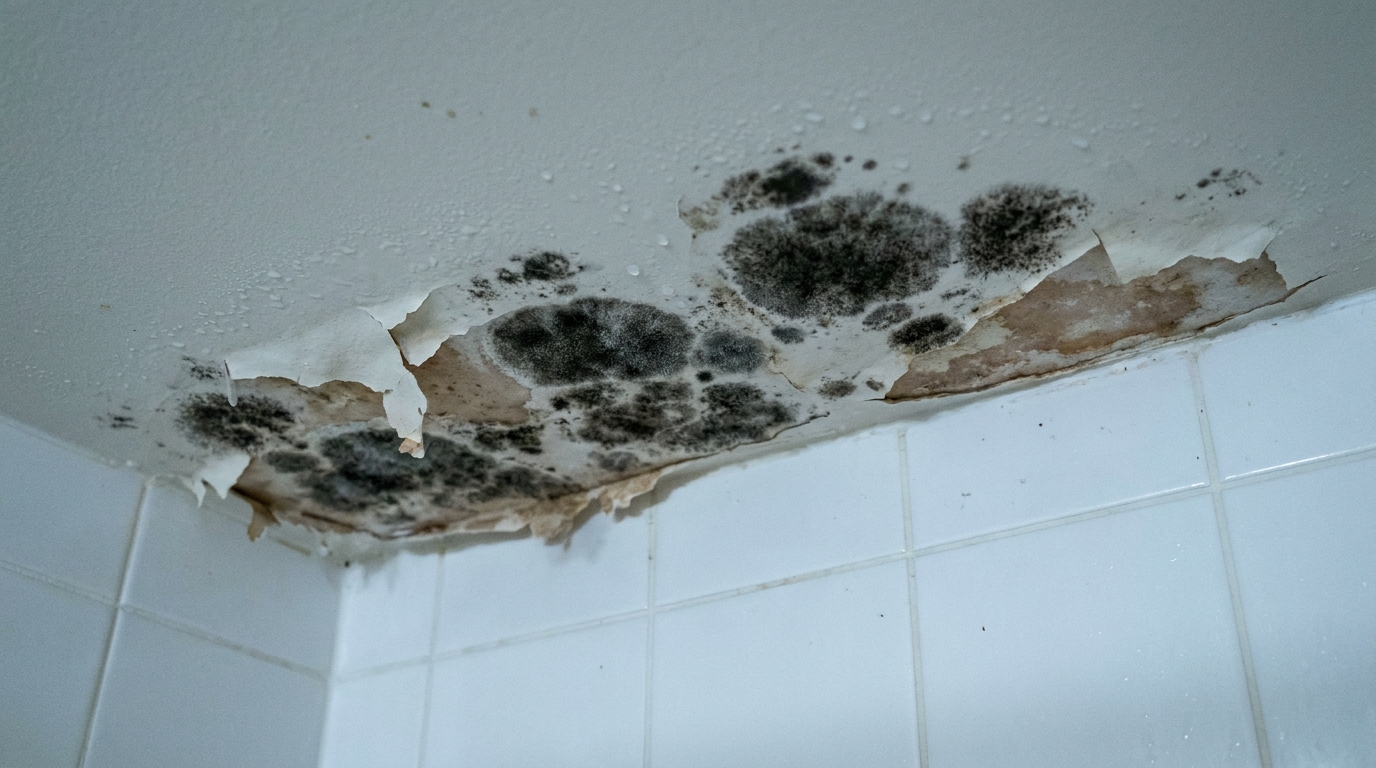
You scrubbed the grout. You sprayed the bleach. Two weeks later, the dark spots are back. If you keep asking why does mold keep coming back in the bathroom, the answer is almost certainly that the root cause of the moisture was never addressed. Surface cleaning treats the symptom. The real problem is the environment your bathroom creates every single day.
This article walks through a diagnostic framework to help homeowners figure out whether their recurring bathroom mold is a behavioral issue, a ventilation failure, or a structural moisture problem, and then lays out what actually works to stop the cycle.
Disclaimer: This article is for informational purposes only. For health concerns related to mold exposure, consult a physician. For mold problems affecting structural materials or areas larger than about 10 square feet, consult a certified mold remediation professional.
Why Bathroom Mold Keeps Coming Back (The Real Problem)
Recurring mold is a moisture problem, not a cleaning problem. According to the U.S. EPA, “the key to mold control is moisture control.” If mold keeps reappearing in the same spots, the moisture source feeding it was never eliminated.
Think of it this way: mold is the warning light on your dashboard. Wiping the dashboard does not fix the engine. Restoration professionals echo this point. According to Compleat Restorations, “surface cleaning does absolutely nothing to address why that spot stays damp.”
The moisture source typically falls into one of three categories:
- Behavioral: Not running the exhaust fan, leaving wet towels in a pile, or never squeegeeing shower walls.
- Ventilation-related: A fan that is undersized, clogged with dust, or vented into the attic instead of outdoors.
- Structural: A hidden plumbing leak, failed shower pan, condensation on uninsulated walls, or deteriorated caulk and grout letting water seep behind tile.
Until homeowners identify which category applies, every cleaning session is temporary.
What Conditions Make Bathrooms a Perfect Mold Environment?
Bathrooms combine warmth, moisture, organic food sources, and poor airflow in a small enclosed space. That combination makes them the single most mold-friendly room in most homes.
Here is what mold needs to grow and how bathrooms deliver each factor:
| Mold Requirement | Bathroom Reality | Key Threshold |
|---|---|---|
| Moisture / humidity | Steam from showers can spike RH above 80-90% | Mold risk rises above 60% RH; target 30-50% |
| Warm temperature | Hot showers warm surfaces to 77-86°F (25-30°C) | Most indoor molds thrive in this range |
| Organic food source | Grout, drywall paper, dust, soap scum, skin cells | Even “clean” bathrooms have enough organic matter |
| Time | Surfaces stay damp for hours without ventilation | Mold can begin growing within 24-48 hours |
| Still air | Small rooms with closed doors and weak fans | Stagnant air lets humidity linger on surfaces |
According to Paul Davis, “in suitable environments, typically warm, damp, and poorly ventilated areas, mold can start to develop within 24 to 48 hours.” A bathroom that stays above 60% relative humidity for hours after a shower is essentially resetting the mold clock every day.
Mansfield Plumbing notes that dust is “one of the primary food sources for mold in the home.” Combine that dust with soap residue on tile grout and the warm, humid air from a shower, and you have a mold incubator.
Are You Treating the Mold or Just the Stain?
Most household mold cleaners bleach the discoloration without killing the organism’s roots or addressing why the surface stays wet. That distinction matters enormously.
Sodium hypochlorite (bleach) works well on hard, non-porous surfaces like glass and glazed tile. But it does not penetrate deeply into porous materials like grout, caulk, or drywall. According to Howard Environmental, white vinegar can kill about 82% of mold species when applied properly and allowed to dwell before wiping. Hydrogen peroxide (3%) is another option for hard surfaces. Yet even effective cleaning agents only work if the area stays dry afterward.
The EPA advises that moldy porous materials, including drywall, ceiling tiles, and insulation, may need to be removed and discarded rather than cleaned, because mold grows into the material itself. According to Bathroom City, remediation guidance recommends stripping and replacing any grout or sealant that has mold growth, since the mold can survive within those materials and regrow after surface cleaning.
Here is a quick test: if the dark spots return within two to four weeks of a thorough cleaning, the problem is almost certainly moisture, not inadequate scrubbing.
Where to Look for Hidden Mold in Your Bathroom
Visible mold on grout lines or ceiling paint is often just the tip of a larger colony growing behind finishes. Knowing where to look can reveal the true scope of the problem.
According to FunGuy Inspections, peeling or bubbling paint, crumbling plaster, and loose or cracked tiles often indicate moisture damage and potential mold behind those finishes. A persistent musty or earthy odor, even after cleaning, strongly suggests hidden mold in wall cavities, under flooring, or behind fixtures.
Common hiding spots include:
- Behind shower and tub tiles. Water seeps through cracked grout or failed caulk and wets the backer board or drywall behind it. Hollow-sounding tiles when tapped are a red flag.
- Under and behind the sink cabinet. Dark, poorly ventilated cabinets with slow plumbing leaks are classic hidden mold sites.
- Around and beneath the toilet. Condensation on the tank, a failing wax ring, or a leaking supply line can send water into subflooring and wall materials.
- Inside the exhaust fan housing and duct. Dust plus humid air allows mold to colonize the very device meant to remove moisture.
- Behind wallpaper or vinyl wall coverings. Moisture trapped between the covering and the wall feeds mold on the paper backing or drywall surface. Look for bubbling, peeling, or darkened seams.
- Subflooring under tubs, showers, and toilets. Spongy or soft flooring, staining on the ceiling below the bathroom, or a musty smell near the floor all point to subfloor contamination.
The CDC states that if you can see or smell mold, you already know you have a problem and should focus on cleanup and moisture control rather than species identification. The CDC does not recommend routine mold testing in most residential cases.
Signs the Mold Problem Is Worse Than It Looks
Certain warning signs indicate the mold extends well beyond what is visible on the surface. Recognizing these early can save thousands in repair costs.
Mold that returns repeatedly in the same location is the clearest sign. If you have cleaned the same ceiling corner or grout line three or more times and it keeps coming back, moisture is almost certainly active behind that surface.
According to Harvard Health Publishing, mold areas larger than about 10 square feet (roughly a 3 ft x 3 ft patch) should be handled by professionals rather than DIY cleaning. That 10-square-foot threshold comes from CDC-aligned guidance and is widely used across the remediation industry.
Other warning signs:
- Persistent musty odor that does not go away after cleaning. This smell comes from microbial volatile organic compounds (MVOCs) released by active mold colonies behind surfaces.
- Paint bubbling or peeling on bathroom walls or ceilings, which indicates moisture trapped beneath the paint film.
- Warped or discolored baseboards near the tub, shower, or toilet.
- Health symptoms that improve when you leave home. Itchy eyes, runny nose, coughing, or wheezing that clears up during vacations or work trips may point to ongoing indoor mold exposure.
According to the New York State Department of Health, porous materials with extensive mold growth should be discarded, not just cleaned. The same guidance stresses that the first step is always to identify and correct the moisture source.
Health Risks of Recurring Bathroom Mold
Chronic exposure to bathroom mold can trigger respiratory symptoms, allergic reactions, and worsened asthma, particularly in children and immunocompromised individuals.
According to Harvard Health Publishing, a large U.S. study of more than 40,000 children found that almost 11% of children living in homes with visible mold had asthma, compared with 7% in mold-free homes. That represents roughly a 57% relative increase in asthma prevalence.
The EPA reports that occupants of damp or moldy buildings have roughly 30-50% higher odds of respiratory symptoms such as coughing and wheezing compared to those in dry buildings. The EPA also notes there are no established “safe” levels of indoor mold, meaning any visible growth warrants attention.
A common misconception is that only black mold is dangerous. According to Cleveland Clinic, Stachybotrys chartarum (commonly called “black mold”) is not proven to be more dangerous than other indoor molds. Many species cause similar symptoms: nasal congestion, coughing, wheezing, and eye or skin irritation. Color alone is not a reliable indicator of risk.
Harvard Health also cites a review of 19 studies published in Environmental Health Perspectives that linked long-term mold exposure to increased stress, depression, and anxiety in both adults and children.
People with asthma, COPD, chronic lung disease, or weakened immune systems face elevated risk. Certain molds like Aspergillus can cause serious lung infections (aspergillosis) in immunocompromised individuals. Anyone experiencing persistent respiratory symptoms in a home with recurring mold should consult a physician.
How to Break the Cycle: Prevention Strategies That Actually Work
Stopping recurring bathroom mold requires addressing moisture at its source, removing contaminated materials, and changing daily habits. Surface cleaning alone will never break the cycle.
Control moisture first
Ventilation is the single most important fix. Ensure the exhaust fan is properly sized at about 1 CFM per square foot of bathroom floor area and that it vents directly outdoors, not into an attic or crawlspace. According to Consumer Reports, the fan should run during every shower and for at least 30 minutes afterward to bring humidity back below safe levels. If the bathroom has no fan, open a window and the door during and after bathing.
Target 50% humidity or lower. The CDC recommends keeping indoor humidity no higher than 50%. A simple hygrometer (available for under $15) can tell you whether your bathroom is hitting that target after showers. If readings consistently exceed 60%, consider adding a portable dehumidifier or upgrading the exhaust fan.
Fix leaks immediately. Check showerheads, faucets, toilet supply lines, and the toilet base for drips. Even minor seepage keeps wall cavities and subflooring damp enough to support continuous mold growth.
Remove mold reservoirs
Replace contaminated caulk and grout. Do not just scrub it. Strip the old material, clean the joint, let it dry completely, and apply mold-resistant silicone caulk. Seal grout lines with a quality grout sealer to prevent water from penetrating behind tile.
Discard heavily contaminated porous materials. The CDC states that porous materials such as ceiling tiles and drywall that become moldy may need to be removed and thrown away because mold grows into the material and cleaning may not fully remove it. When replacing drywall in a bathroom, use mold-resistant (green or purple board) drywall and mold-resistant paint.
Change daily habits
- Squeegee or wipe shower walls, doors, and the tub after each use.
- Hang towels, loofahs, and bath mats so they dry fully between uses.
- Wash shower curtains and liners regularly. These are frequent mold spore reservoirs.
- Reduce clutter on shower ledges. Bottles and accessories trap moisture and create shaded micro-zones where mold thrives.
- Clean bathroom surfaces weekly with detergent and water, then dry them completely. The EPA notes that routine use of harsh biocides is not necessary when moisture is properly controlled.
When Should You Call a Professional Instead of DIYing It?
Homeowners should call a professional when the mold covers more than about 10 square feet, keeps returning after proper cleaning, or involves hidden structural areas. Several other situations also warrant expert help.
According to Angi, typical mold remediation costs range from $1,100 to $3,300 depending on the size and location of the problem. A mold inspection commonly runs $300 to $1,000. These costs are significant but often far less than the structural damage that results from years of unchecked moisture.
Call a professional if:
- The affected area exceeds 10 square feet (the EPA’s threshold for professional remediation).
- Mold keeps returning after you have cleaned it properly and addressed obvious moisture sources.
- You suspect mold behind walls, under flooring, or in HVAC ducts.
- Anyone in the household has asthma, COPD, allergies, or a compromised immune system.
- There has been significant water damage from a leak or flood.
- You detect a persistent musty odor but cannot locate the source.
According to Harvard Health, homeowners dealing with significant or recurring mold should hire professionals certified by organizations such as the IICRC (Institute of Inspection, Cleaning and Restoration Certification), AIHA, NEHA, or ACAC.
For smaller areas on hard, non-porous surfaces where the moisture source is obvious and fixable, DIY cleanup following CDC guidelines (soap and water or a bleach solution of 1 cup per gallon, with gloves and ventilation) is generally appropriate. But if you have already tried that and the mold came back, the problem is beyond what surface cleaning can solve.
If you are ready to find a qualified mold professional in your area, search our contractor directory to connect with certified remediation specialists who can diagnose and fix the root cause for good.