What Do Mold Inspectors in Houston Actually Do?
Certified mold inspectors conduct visual assessments, moisture mapping, air and surface sampling, and provide lab-analyzed reports identifying mold types and contamination levels.
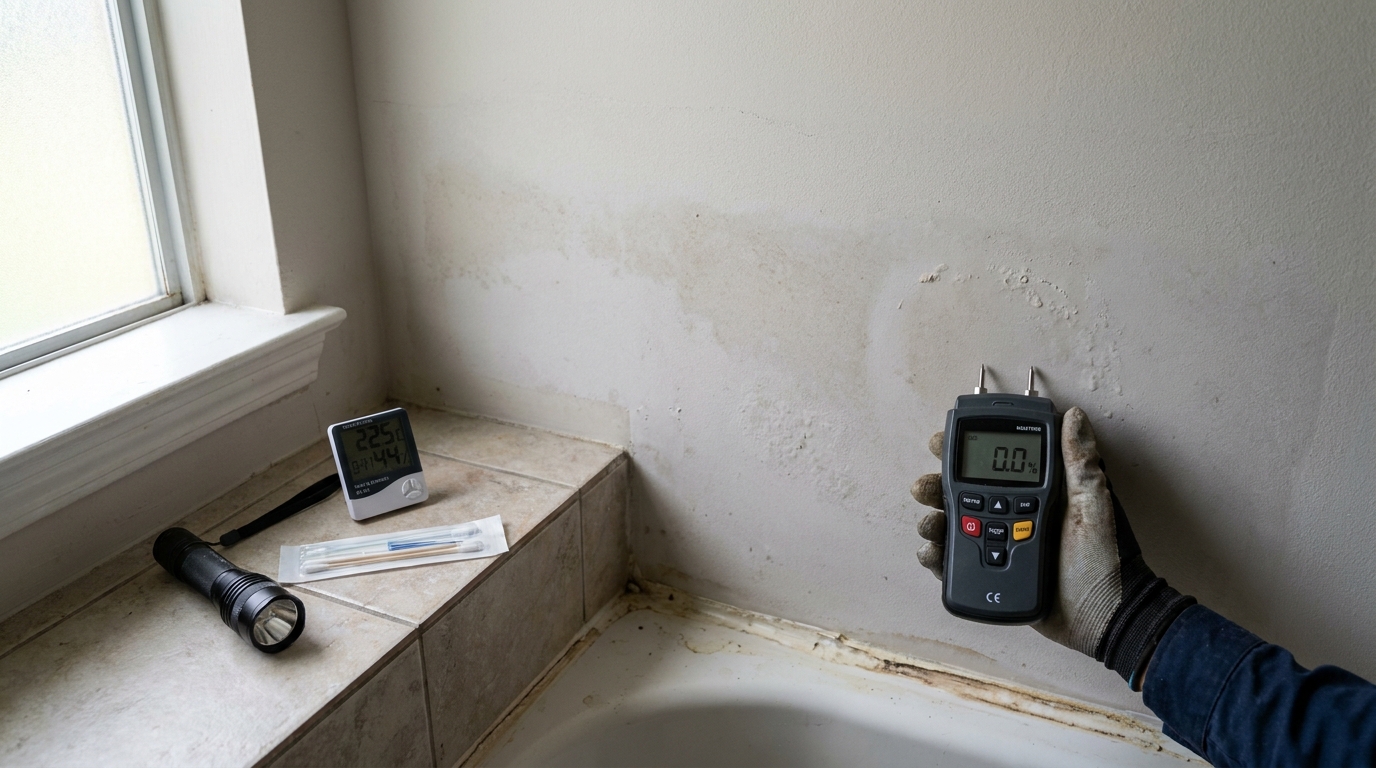
Finding mold inspectors houston homeowners can trust starts with understanding what these professionals actually do on-site. Licensed mold assessors in Houston focus exclusively on identifying and documenting mold problems. They do not perform remediation themselves. According to Mold Inspection & Testing (MI&T) Houston, inspectors look for moisture sources, visible mold, and hidden contamination, then collect air, surface, or cavity samples for independent lab analysis.
Visual Assessment and Moisture Detection
Every inspection begins with a walkthrough. The inspector reviews the property’s history, asking about leaks, flooding, odors, and health complaints. They check areas prone to mold growth: bathrooms, kitchens, ceilings, wall cavities, and HVAC systems. Inspectors use moisture meters and infrared (FLIR) thermal cameras to find hidden water intrusion behind walls or under finishes. Mold Inspection Sciences notes that this moisture detection step is critical because mold often grows in concealed spaces long before it becomes visible.
Air and Surface Sampling Methods
When conditions warrant, inspectors collect indoor air samples and compare them with outdoor baseline samples. They may also take surface tape lifts, swab samples, vacuum samples, or wall-cavity samples. According to Restore Me TX, this comparison between indoor and outdoor spore counts is essential for determining whether indoor mold levels are elevated beyond normal background levels.
Lab Analysis and Reporting
Samples go to an independent licensed laboratory for analysis, which is required under Texas mold assessment rules for any sampling used to determine the presence of mold. Most Houston providers return lab-based findings in roughly 2 to 5 business days after the inspection. Inspector Team (TX) reports issuing mold reports within 2 to 3 business days. The final report includes sampling methods, property conditions, moisture readings, photo documentation, and full laboratory analysis results.
Why Houston Homes Have Higher Mold Risk Than Most Cities
Houston’s subtropical climate maintains roughly 75% average relative humidity year-round, combined with frequent flooding and aging housing stock, creating ideal conditions for persistent mold growth.
A 2022 analysis by Porch, using American Housing Survey data, found that Houston ranked first among the 25 largest U.S. cities for home infestations, including mold. According to Houstonia Magazine, 14.9% of Houston homes reported infestation in the previous year, more than New Orleans at 12.7% and Atlanta at 12.4%, and far above Seattle at 2.9%.
Climate Data: Humidity and Temperature Patterns
According to MoldCo, Houston averages approximately 75% relative humidity year-round, well above the CDC’s recommended indoor range of 30 to 50%. Houston’s humidity exceeds mold growth thresholds on roughly 80% of days annually. The city’s humid subtropical (Cfa) classification means mold-favorable conditions persist most of the year without a true off-season. Annual rainfall reaches 51.84 inches, with June through October representing the highest risk period due to heavy rainfall, peak humidity, and flooding.
Flood Zones and Water Intrusion History
Hurricane Harvey in 2017 caused large-scale flooding across metropolitan Houston, creating conditions ideal for rapid mold colonization. A multi-hospital study published by the National Institutes of Health found that invasive mold infections increased from 2.50 to 3.69 cases per 10,000 healthcare encounters post-hurricane, a rate ratio of 1.48, representing a 48% increase. Mold-positive cultures increased by 17.5% after Harvey. These findings illustrate that extreme weather events in Houston translate directly into higher mold exposure and clinically significant infections.
Construction Factors in Houston-Area Homes
According to Mold Inspection Sciences, homes built after 1980 often use more porous, cellulose-based materials like OSB, drywall, and paper-faced products, which are ideal substrates for mold when wet. Older homes tend to have more fragile plumbing, increasing the likelihood of chronic water damage. Houston’s prevalence of slab foundations and pier-and-beam construction adds additional moisture pathways that inspectors must evaluate.
What Does a Mold Inspection Cost in Houston?
Houston mold inspections typically cost $300 to $600 for standard residential properties, with additional charges per sample for lab testing and higher fees for larger or more complex homes.
The mold inspection cost in Houston varies based on home size, number of samples, and the scope of the assessment. According to Angi’s Houston data, mold inspection costs range from $300 to $1,075, with inspector fees of $200 to $500 per visit.
Base Inspection Fees by Home Size
| Home Size / Type | Estimated Cost Range | What’s Typically Included |
|---|---|---|
| Small home or condo (<1,500 sq ft) | $300–$450 | Visual assessment, moisture readings, 1–2 samples |
| Average home (1,500–3,000 sq ft) | $450–$600 | Full visual inspection, moisture mapping, 2–3 samples with lab analysis |
| Large home (>4,000 sq ft) | $700–$1,000+ | Extended inspection, multiple sampling locations, detailed report |
| Detailed assessment plan (~4 samples) | ~$850 | Written assessment plan, expanded sampling, full lab report |
| Remediation protocol (formal document) | ~$1,200 | Step-by-step remediation work plan for contractors |
Lab Testing Costs (Air vs. Surface Samples)
Most inspection packages include two to three samples. Additional samples beyond the package typically cost $70 to $95 each, depending on the provider. Air samples, which capture airborne spore counts, are the most common type. Surface samples (tape lifts or swabs) are used when visible growth needs species identification. Some Houston providers charge $200 to $300 specifically for black mold testing as an add-on service.
What Affects the Final Price
Several factors push Houston mold inspection costs toward the higher end: the number of affected areas, accessibility of crawlspaces, attics, and wall cavities, whether HVAC systems need evaluation, and whether you need a formal remediation protocol rather than a basic inspection report. Homes with known flood history or active water damage often require more extensive sampling.
How Do You Verify a Mold Inspector’s Qualifications in Texas?
Texas requires mold inspectors to hold a state license through the Texas Department of Licensing and Regulation (TDLR), which mandates training and passing a state exam. Verify any license at tdlr.texas.gov.
Unlike many states, Texas actively regulates mold professionals. Houston’s health department does not conduct mold inspection or testing and does not regulate mold inspectors. That responsibility falls entirely under TDLR’s licensing rules.
Texas Department of Licensing and Regulation (TDLR) Requirements
TDLR issues licenses for mold assessment technicians and mold assessment consultants. A real estate inspector must hold one of these specific licenses to collect air or surface samples for determining mold presence. According to Texas Administrative Code §78.50, TDLR requires mold licensees to carry liability insurance. RocketCert confirms that mold remediation contractors must show general liability insurance of no less than $1 million. When evaluating a Houston mold inspector, ask for a certificate of insurance and confirm the policy is current and issued to the same company name on their license.
Third-Party Certifications That Matter (IICRC, ACAC, NORMI)
Beyond the state license, several industry certifications indicate additional training. The IICRC (Institute of Inspection, Cleaning and Restoration Certification) offers mold-specific credentials. ACAC (American Council for Accredited Certification) and NORMI (National Organization of Remediators and Mold Inspectors) provide third-party validation. These certifications are voluntary but signal that an inspector has invested in education beyond the state minimum. Always verify the TDLR license first, then treat third-party certifications as a bonus.
Red Flags: Unlicensed or Dual-Role Inspectors
Be cautious of companies offering “free mold inspections.” This tactic often leads to inflated remediation quotes because the company profits from finding problems. Any inspector who cannot provide a TDLR license number on request is operating illegally in Texas. Similarly, an inspector who offers to perform both the assessment and the remediation is violating Texas law, which we cover in the next section.
Should the Same Company Inspect and Remediate Your Mold?
No. Texas law prohibits mold inspectors from performing remediation on properties they inspect to prevent conflicts of interest and ensure unbiased assessments.
This is one of the most important protections for Houston homeowners. Under TDLR regulations, the company that assesses your mold problem cannot be the same company that profits from fixing it. This separation exists because an inspector who also remediates has a financial incentive to exaggerate findings. According to MI&T Houston, their role as an assessment-only firm means their testing results remain unbiased since they have no remediation revenue to protect. If a company offers to inspect your home for free and then quotes you for remediation, that’s a significant red flag. Legitimate mold remediation contractors will work from an independent inspector’s report.
What Should You Expect During a Houston Mold Inspection?
Inspections typically last 2 to 4 hours and include an exterior drainage review, interior visual assessment, moisture readings, air and surface sampling, and a written report within 2 to 5 business days.
According to Fast Mold Testing Houston, a full inspection with sampling costs about $500 to $900, with lab results returned in 1 to 5 business days.
Pre-Inspection Preparation (What Homeowners Should Do)
Before the inspector arrives, gather any documentation of past water events, roof leaks, plumbing repairs, or hurricane damage. Note areas where you’ve seen discoloration, peeling paint, or musty odors. Ensure the inspector can access attics, crawlspaces, closets, and areas behind furniture. Fast Mold Testing describes a 10-minute pre-inspection survey done by phone or in person before the site visit to capture this information.
On-Site Inspection Process Step-by-Step
-
Exterior review: The inspector checks drainage patterns, foundation condition, and exterior moisture sources.
-
Interior walkthrough: Room-by-room visual assessment of walls, ceilings, floors, bathrooms, kitchens, and HVAC components.
-
Moisture mapping: Using moisture meters and thermal imaging cameras to identify hidden water intrusion behind walls and under flooring.
-
Sampling: Collection of indoor air samples (typically one per area of concern) plus an outdoor baseline sample. Surface samples are taken from visible growth when species identification is needed.
-
Documentation: Photos, moisture readings, and notes on conditions observed throughout the property.
Understanding Your Inspection Report
The report compares indoor spore counts against outdoor baseline levels. Elevated indoor counts of specific species, particularly Stachybotrys (black mold), Aspergillus, or Chaetomium, indicate a problem requiring remediation. The report also identifies moisture sources and provides recommendations. According to Inspector Team, reports include sampling methods, property conditions, and full laboratory analysis, delivered within 2 to 3 business days.
When Do Houston Homeowners Need a Mold Inspection?
Inspections are warranted after water damage, before home purchases in flood zones, when occupants have unexplained respiratory symptoms, or when visible growth exceeds 10 square feet.
Post-Flood or Water Damage Scenarios
Any water event that saturates building materials for more than 24 to 48 hours creates conditions for mold growth. This includes roof leaks, burst pipes, AC condensate overflows, and flooding. Given Houston’s flood history, including Harvey and recurring storm events, post-water-damage inspections are especially common here. The NIH study on post-Harvey mold infections underscores why rapid assessment matters: mold-positive cultures increased 17.5% after the hurricane. [Source: NIH]
Pre-Purchase Inspections in High-Risk Areas
Buyers considering homes in Houston’s flood-prone neighborhoods should request a mold inspection as part of due diligence. Standard home inspections do not include mold testing. A separate assessment by a TDLR-licensed mold inspector can reveal hidden contamination that affects both health and property value. This is particularly important for homes near bayous, in FEMA-designated flood zones, or with histories of insurance claims for water damage.
Health Symptoms That Warrant Testing
Persistent respiratory symptoms, including coughing, wheezing, nasal congestion, and eye irritation that improve when occupants leave the home, may indicate mold exposure. A physician should evaluate these symptoms, and a certified industrial hygienist or licensed mold inspector can assess the indoor environment. The EPA generally recommends professional assessment when visible mold covers more than 10 square feet or when occupants report health concerns.
How Do You Choose Between Multiple Houston Mold Inspectors?
Compare TDLR license status, years of Houston-area experience, sampling methods, lab partnerships, report turnaround time, and whether they offer thermal imaging or moisture mapping.
According to Angi’s Houston mold testing guidance, homeowners should choose a contractor familiar with local clay soils and slab foundations because these affect moisture control and mold risk. Use this checklist when evaluating candidates:
-
TDLR license: Verify at tdlr.texas.gov. No license means no hire.
-
Insurance: Request a certificate of general liability insurance meeting TDLR requirements.
-
Houston experience: Ask how long they’ve worked specifically in the greater Houston area. HomeAdvisor lists firms like Mold Inspections of Texas, LLC with 16 years in business.
-
Equipment: Confirm they use thermal imaging cameras and professional-grade moisture meters, not just visual inspection.
-
Lab partnership: Ask which lab processes their samples and whether it’s accredited.
-
Report turnaround: Expect 2 to 5 business days. Faster isn’t always better if it means less thorough analysis.
-
No dual-role services: The company should perform assessment only, not remediation.
-
Transparent pricing: Get a written quote specifying what’s included (number of samples, report format, follow-up consultation).
Request quotes from at least three licensed inspectors before committing. Significant price outliers, either very high or suspiciously low, warrant further questions.
What Happens After the Inspection?
Inspectors provide a detailed report with lab results, contamination severity, moisture sources, and remediation recommendations, but cannot perform the cleanup themselves under Texas law.
Interpreting Lab Results and Spore Counts
According to MI&T Houston, indoor air samples are compared to outdoor levels to determine whether indoor concentrations are normal or elevated. The report identifies mold species and their concentrations. Aspergillus, Penicillium, and Cladosporium are common in Houston’s outdoor air. Finding these indoors at levels similar to or below outdoor counts is generally normal. Elevated indoor counts, or the presence of species like Stachybotrys that are rarely found outdoors, indicate a moisture problem and active mold growth requiring remediation.
Getting Remediation Quotes from Licensed Contractors
Your inspection report serves as the basis for remediation bids. Share the full report, including the remediation protocol if one was prepared, with at least two to three TDLR-licensed remediation contractors. According to Angi’s Houston data, average remediation costs run about $2,025, with a typical range of $888 to $3,298. Severe whole-home damage can exceed $20,000. [Source: Angi] Many contractors charge $10 to $25 per square foot for removal.
Post-Remediation Clearance Testing
After remediation is complete, a separate TDLR-licensed inspector (not the remediation company) should perform clearance testing. This follow-up assessment confirms that mold levels have returned to normal and that the moisture source has been addressed. Several Houston firms offer post-remediation verification as a distinct service. This step protects homeowners from incomplete remediation and provides documentation for insurance claims or real estate transactions.
Frequently Asked Questions
These are the most common questions Houston homeowners ask about mold inspections, costs, and the process of hiring a qualified inspector.
Does homeowners insurance cover mold inspections in Houston?
Most standard homeowners insurance policies in Texas do not cover mold inspections or remediation as standalone claims. However, if mold results from a covered peril, such as a burst pipe, some policies may cover related testing and cleanup. Review your policy’s mold exclusion clause and contact your insurer before scheduling an inspection to clarify coverage.
How long does a mold inspection take?
A typical Houston residential mold inspection takes 2 to 4 hours on-site, depending on home size and the number of samples collected. Lab results and the written report follow within 2 to 5 business days. According to Inspector Team, reports are typically issued within 2 to 3 business days after the inspection.
Can I do a mold test myself instead of hiring an inspector?
DIY mold test kits are available and can detect the presence of mold spores, but they have significant limitations. They cannot identify moisture sources, map hidden contamination, or provide the species-specific analysis that a lab-processed professional sample delivers. For small, visible patches of mold under 10 square feet, a DIY test may help you decide whether professional assessment is warranted. For larger concerns, water damage situations, or real estate transactions, a TDLR-licensed inspector is the appropriate choice.
What’s the difference between a mold inspection and a mold test?
A mold inspection is a full assessment that includes visual examination, moisture detection, and evaluation of building conditions. Mold testing refers specifically to the collection and lab analysis of air or surface samples. Most professional inspections include testing as part of the service, but some basic inspections are visual-only at a lower price point. In Houston’s high-humidity environment, sampling is generally recommended for a complete picture.
Do I need to leave my home during a mold inspection?
No. Homeowners can remain in the home during a mold inspection. In fact, being present allows you to point out problem areas, answer the inspector’s questions about water history, and observe the process. The inspector may ask you to avoid running HVAC systems or opening windows during air sampling to prevent contaminating the results.
How often should Houston homes be inspected for mold?
There’s no fixed schedule, but Houston homeowners should consider an inspection after any significant water event, when buying or selling a home, or when unexplained musty odors or health symptoms appear. Homes in flood-prone areas or with histories of water damage may benefit from periodic assessments every few years, especially following active hurricane seasons.
Are “free mold inspections” legitimate?
Be cautious. Companies offering free inspections often profit from remediation services, creating a conflict of interest. Texas law prohibits the same company from inspecting and remediating the same property. A “free inspection” from a remediation company may not meet TDLR assessment standards and could result in inflated repair estimates. Paying $300 to $600 for an independent, licensed assessment typically saves money and delivers unbiased results.
If you’re dealing with visible mold growth, persistent musty odors, or recent water damage, start by verifying inspector credentials at tdlr.texas.gov and requesting quotes from at least three licensed professionals. For smaller concerns, consider starting with a DIY test kit to determine whether professional assessment is warranted.