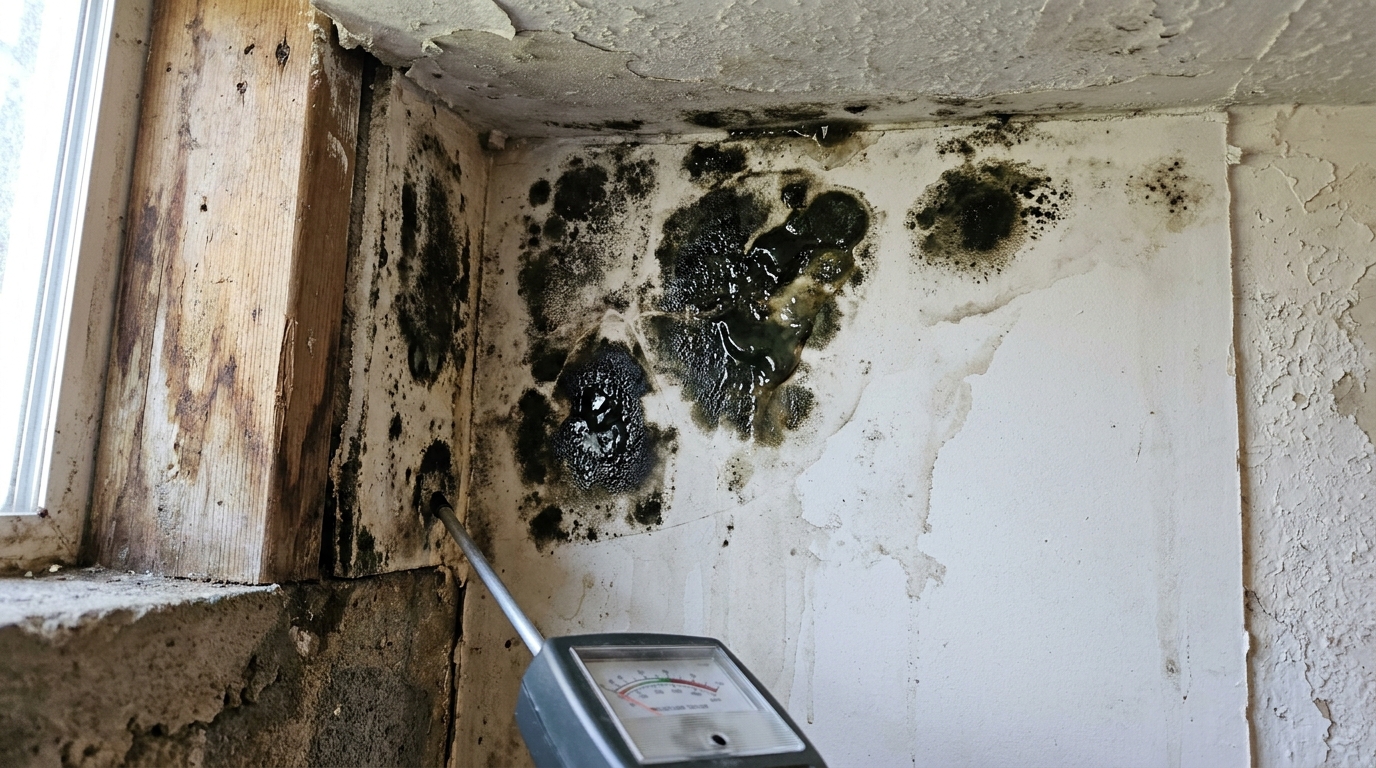
What Is Slimy Black Mold?
Slimy black mold is mold with a wet, gelatinous texture caused by active moisture exposure, not a specific species. Multiple fungi can appear slimy when saturated.
Homeowners who discover slimy black mold on a wall, ceiling, or bathroom surface often assume they’re dealing with a single, uniquely dangerous organism. The reality is more nuanced. “Slimy” describes a moisture state, not a species. When any dark-colored mold colony stays hydrated, it can develop a wet, gelatinous appearance. When that same colony dries out, it often looks fuzzy, chalky, or crusty instead. According to Harvard Health, the slimy texture is associated with mold colonies that are still hydrated, and the appearance can shift as moisture conditions change.
Why Mold Becomes Slimy (The Role of Moisture)
Mold colonies are living organisms that absorb water from their surroundings. When a surface stays wet for extended periods, fungal cells swell with moisture and many species produce extracellular polysaccharides, a type of gelatinous biofilm that helps them retain water and adhere to surfaces. This biofilm is what gives wet black mold its characteristic slippery, slimy feel. The black mold texture you’re seeing is essentially the colony in its most active, well-fed state.
According to the EPA, mold can begin growing when wet or damp materials are not dried within 24 to 48 hours after a leak or spill. If moisture persists beyond that window, colonies have time to establish the biofilm layer that creates a gelatinous mold appearance.
Common Species That Appear Slimy When Wet
Several mold species can produce dark, slimy colonies under the right conditions:
-
Stachybotrys chartarum, the species most commonly called “toxic black mold,” appears dark green-black and slimy when actively growing on wet cellulose materials. According to NIH research, it requires water activity above 0.9 and relative humidity above 90% to grow.
-
Cladosporium, one of the most common indoor molds, can appear dark and wet on damp surfaces like window frames and tile grout.
-
Aspergillus niger, which often looks black and can develop a moist, sticky surface in high-humidity environments.
-
Alternaria, frequently found in showers and under sinks, can appear dark and slimy when saturated.
Is Slimy Black Mold Always Stachybotrys?
No. While Stachybotrys chartarum often has a slimy texture when wet, other species like Cladosporium, Alternaria, and Aspergillus can also appear slimy under high moisture conditions.
This is one of the most persistent misconceptions homeowners encounter online. According to the CDC, “black mold” is not a single scientific diagnosis, and appearance alone cannot confirm the species. The CDC uses Stachybotrys chartarum as the main example of greenish-black mold, but many other fungi share a similar look.
What Stachybotrys Actually Looks Like
Stachybotrys chartarum is described as dark green-black with an olive tint, slimy when active, and powdery when dried. According to NIH research, it is the most frequently isolated species of the Stachybotrys genus (which contains 12 species total) and has been called “one of the world’s 10 most hazardous fungi.” It grows almost exclusively on cellulose-rich materials like drywall paper, ceiling tiles, and wood that have been wet for at least seven days. According to Thumbtack, Stachybotrys is linked to cellulose materials that have been wet for at least seven days.
Other Black Molds That Can Be Slimy
Black-looking mold on tile grout, windows, or dustier surfaces is more likely to be Cladosporium or Aspergillus than Stachybotrys. According to NIH research, black-looking mold on non-cellulose surfaces like tile and glass is typically another species. The key differentiator isn’t color or texture. It’s the substrate. If the mold is growing on a non-porous surface like ceramic tile or glass, Stachybotrys is unlikely because it needs cellulose to feed on.
Why Texture Alone Can’t Confirm Species
Lab analysis is required for species-level identification. The CDC states that no visual inspection can reliably distinguish Stachybotrys from other dark molds. A mold can look black and slimy when wet, then become dry or powdery later, so the wet black mold you see today may look completely different next week if the moisture source dries up.
What Causes Black Mold to Become Slimy?
Slimy texture develops when mold colonies are actively exposed to water or high humidity, causing fungal cells to absorb moisture and produce a gelatinous biofilm.
According to Harvard Health, the “number one cause of mold growth is water damage.” Understanding the moisture source behind slimy growth is more important than identifying the mold species.
Active Water Sources vs. Residual Humidity
There’s a meaningful difference between active water intrusion and residual humidity. Active sources include leaking pipes, roof damage, condensation on cold surfaces, and flooding. Residual humidity refers to elevated moisture levels in the air without a direct water source. Both can support mold, but slimy colonies almost always indicate an active or very recent water source, because the colony needs sustained saturation to maintain its gelatinous biofilm.
Materials That Promote Slimy Growth
Porous, cellulose-based materials are the primary food source for many mold species. According to the CDC, common growth substrates include fiberboard, gypsum board, and paper. When these materials get wet and stay wet, they provide both nutrition and moisture, the two ingredients mold needs to produce thick, slimy colonies. According to Harvard Health, materials that stay wet for 24 to 48 hours can allow black mold to colonize.
Temperature and Ventilation Factors
Industry practitioners typically note that mold grows best between 40°F and 100°F, which covers the temperature range inside most homes year-round. Poor ventilation traps moisture in enclosed spaces, creating the stagnant, humid conditions that promote slimy growth. According to the EPA, keeping indoor humidity below 60% is important, with an ideal range of 30% to 50% relative humidity.
Is Slimy Mold More Dangerous Than Dry Mold?
Slimy mold isn’t inherently more toxic, but the active moisture causing the texture often indicates ongoing water damage, which can worsen health risks and structural problems.
Spore Release: Wet vs. Dry Mold
Many homeowners worry that touching slimy mold will release a burst of spores. Counterintuitively, dry mold is generally more likely to release airborne particles than wet mold. When mold is saturated, spores tend to stay bound within the gelatinous biofilm. When colonies dry out, spores become lighter and more easily disturbed by air currents or physical contact. That said, disturbing any mold without proper protection is inadvisable.
Health Risks Associated with High-Moisture Environments
According to Harvard Health, a study of more than 40,000 children found that almost 11% of children exposed to mold at home had asthma, versus 7% of non-exposed children. The NIH reports that metabolites from Stachybotrys chartarum can irritate mucous membranes and skin, and in severe cases may contribute to necrotic changes. However, the CDC states that no test exists that proves an association between Stachybotrys chartarum and particular health symptoms. Anyone experiencing respiratory symptoms, persistent headaches, or skin irritation in a home with visible mold should consult a physician.
When Sliminess Signals a Bigger Problem
The real concern with slimy mold isn’t the texture itself. It’s what the texture tells you: water is actively reaching that surface. Dry mold may be a remnant of a past leak. Slimy mold almost certainly means moisture is still present, which means the problem is ongoing and likely getting worse.
Where Does Slimy Black Mold Typically Grow?
Slimy black mold most commonly appears in bathrooms, basements, crawl spaces, and areas with active leaks or condensation where surfaces remain wet for extended periods.
According to Wawanesa Insurance, slimy black mold typically grows in warm, dark, humid, and poorly ventilated places, especially on cellulose-rich materials. Stachybotrys chartarum specifically needs sustained surface relative humidity above 90% for at least 72 hours to establish.
High-Risk Locations in the Home
-
Bathrooms: around showers, tubs, under sinks, behind toilets, and ceiling corners where steam collects
-
Basements and crawl spaces: foundation walls, floor corners, wooden joists, and stored items
-
Behind walls: especially after plumbing leaks, roof leaks, or flooding where hidden moisture persists
-
HVAC systems: air handlers, ducts, coils, and areas around units where condensation accumulates
-
Under sinks and behind appliances: dishwashers, refrigerators, and washing machines with slow drips
-
Attics: roof sheathing, rafters, and insulation near leaks or poor ventilation
Materials Most Susceptible to Slimy Growth
Bathroom mold is common, but it’s often Cladosporium or Aspergillus on tile and grout rather than Stachybotrys, unless water has damaged cellulose materials behind tiles or drywall. The materials most likely to support slimy black mold include drywall paper backing, ceiling tiles, cardboard, wallpaper, untreated wood, and fabric stored in damp areas. For more on identifying problem areas, see our guide on black mold in bathrooms.
How Do You Identify Slimy Black Mold?
Slimy black mold appears as dark patches with a wet, gelatinous surface that may feel slippery or sticky. It often smells musty and leaves moisture on contact.
Visual Characteristics
Look for dark green-black or solid black patches with a shiny, wet appearance. According to Thumbtack, humidity above 50% can invite mold growth, making moisture control a useful screening clue. Slimy colonies may have irregular edges and can spread in streaks following water flow patterns on walls or ceilings.
Texture and Odor Indicators
Wet black mold feels slippery or gel-like when touched (always wear gloves). It often produces a strong, musty or earthy odor that intensifies in enclosed spaces. If you notice a persistent musty smell but can’t see mold, it may be growing behind walls or under flooring.
When to Use a Mold Test Kit
The CDC does not recommend routine mold testing for home decisions, and many state health departments agree that testing is not required. However, if you need species identification for insurance claims, real estate transactions, or medical documentation, a certified industrial hygienist can collect samples for laboratory analysis. Over-the-counter test kits can detect mold presence but are generally unreliable for species identification.
Can You Clean Slimy Black Mold Yourself?
Small areas under 10 square feet on non-porous surfaces can be cleaned with proper PPE and EPA-registered fungicides, but active water damage requires professional assessment first.
When DIY Cleaning Is Appropriate
The EPA’s general guideline is that homeowners can handle mold on areas smaller than roughly 10 square feet (about a 3-by-3-foot patch) on non-porous surfaces like tile, glass, or metal. DIY cleaning is not appropriate when mold is growing on porous materials like drywall, when the affected area exceeds 10 square feet, when there’s active water damage, or when occupants have respiratory conditions.
Required Safety Equipment
-
N-95 respirator mask (minimum)
-
Nitrile or rubber gloves extending to mid-forearm
-
Safety goggles without ventilation holes
-
Long sleeves and pants that can be laundered immediately after
Step-by-Step Cleaning Protocol
-
Stop the moisture source before cleaning. If you can’t identify or stop it, call a professional.
-
Ventilate the area by opening windows and running exhaust fans.
-
Contain the workspace by closing doors to adjacent rooms.
-
Apply an EPA-registered fungicide or a solution of detergent and water to the affected surface. Avoid mixing bleach with other cleaning products.
-
Scrub non-porous surfaces with a stiff brush, working from the edges inward.
-
Rinse and dry thoroughly. The surface must be completely dry to prevent regrowth.
-
Bag and dispose of all cleaning materials, rags, and PPE in sealed plastic bags.
When to Call a Professional
Contact a certified mold remediation professional when the affected area exceeds 10 square feet, mold is growing on porous materials, there’s visible water damage to structural components, or occupants are experiencing health symptoms. For guidance on finding qualified help, see our resource on mold remediation costs and what to expect.
What Happens If You Don’t Address the Moisture Source?
Cleaning slimy mold without fixing the moisture source results in regrowth within days to weeks, as the underlying water problem continues to support fungal colonization.
Why Surface Cleaning Isn’t Enough
According to the EPA, mold can begin growing on wet materials within 24 to 48 hours. If you scrub a slimy colony off a bathroom wall but don’t fix the leaking pipe behind it, new growth can appear within the same timeframe. The EPA emphasizes that prolonged moisture can eventually damage floors, walls, and other building materials.
Common Moisture Sources Homeowners Miss
-
Slow plumbing leaks behind walls or under cabinets
-
Condensation on cold water pipes in uninsulated spaces
-
Improperly vented dryer exhaust pushing humid air into wall cavities
-
Grading issues directing rainwater toward the foundation
-
Failed caulking around tubs, showers, and windows
Long-Term Structural Consequences
Unchecked moisture doesn’t just feed mold. It degrades building materials. Industry sources note that within 24 to 48 hours, saturated materials can start to soften, warp, and lose structural integrity, turning a limited repair into a larger restoration project. According to FilterKing, estimates suggest that 33% to 47% of U.S. homes and buildings show visible mold, mildew, dampness, or odor, depending on the dataset and definition used.
How Much Does Professional Slimy Mold Remediation Cost?
Professional remediation for slimy black mold typically costs $1,200 to $3,750 depending on affected area size, moisture source complexity, and whether structural materials require replacement.
Cost Breakdown by Project Size
| Project Scope | Typical Cost Range | Notes |
|---|---|---|
| Small, contained patch (under 50 sq ft) | $1,000 – $2,500 | Non-porous surfaces, accessible location |
| Moderate room-level job | $2,000 – $7,000 | Drywall removal, single room |
| Large or hidden infestation | $10,000 – $30,000+ | Multiple rooms, structural damage, HVAC involvement |
| Mold inspection/testing only | $300 – $700 | Certified inspector, lab analysis |
| Per-square-foot rate | $10 – $25/sq ft | Most common pricing model |
According to Angi, the national average for residential mold remediation is approximately $2,347 to $2,370.
Factors That Increase Remediation Costs
Location matters significantly. Basements, attics, crawl spaces, and wall cavities cost more because of access and demolition requirements. If drywall, subflooring, insulation, or ductwork must be removed, the price rises sharply. Suspected toxic mold jobs also trend toward the higher end of the range because they require more cautious containment protocols.
What Professional Remediation Includes
A qualified remediation typically includes initial assessment and moisture mapping, containment setup with negative air pressure, HEPA air filtration, removal of contaminated materials, antimicrobial treatment of remaining surfaces, drying and dehumidification, and post-remediation verification testing.
How to Prevent Slimy Black Mold from Returning
Prevention requires maintaining indoor humidity below 50%, fixing leaks immediately, improving ventilation in moisture-prone areas, and using dehumidifiers in basements and crawl spaces.
According to the CDC, indoor humidity should be kept at 50% or lower, and flooded or wet areas should be dried within 24 to 48 hours to reduce mold growth. According to FilterKing, approximately 47% of U.S. homes and buildings have visible mold or detectable mold odor, underscoring how common moisture problems are.
Humidity Control Strategies
-
Use a hygrometer to monitor indoor humidity and keep it between 30% and 50%
-
Run dehumidifiers in basements, crawl spaces, and laundry rooms
-
Use air conditioning during humid months to reduce indoor moisture
-
Avoid drying clothes indoors without adequate ventilation
Ventilation Improvements
-
Install or upgrade exhaust fans in bathrooms and kitchens that vent directly outdoors
-
Run bathroom fans for at least 20 to 30 minutes after showering
-
Ensure dryer vents are properly connected and exhausting outside
-
Open windows when weather permits to promote air circulation
Regular Inspection Points
-
Check under sinks and behind appliances monthly for drips or dampness
-
Inspect caulking around tubs, showers, and windows seasonally
-
Look for water stains on ceilings and walls after heavy rain
-
Monitor basement walls and floors for condensation or seepage
-
Service HVAC systems annually, including checking drain pans and coils
If you’ve discovered slimy black mold in your home, start by identifying and stopping the moisture source, whether it’s a leak, condensation, or poor ventilation. For areas larger than 10 square feet, active water damage, or growth on porous materials like drywall, consult a certified mold remediation professional. Small, contained areas on non-porous surfaces can be cleaned with proper safety equipment, but only after the water problem is resolved.
Frequently Asked Questions
Here are answers to the most common questions homeowners ask after discovering slimy black mold in their homes.
Does slimy texture mean the mold is toxic?
No. Slimy texture indicates the mold colony is actively hydrated, not that it belongs to a toxic species. According to the CDC, appearance alone cannot confirm the species. Multiple mold types become slimy when wet. Lab testing is the only reliable way to identify a specific mold species.
Is slimy black mold always Stachybotrys chartarum?
No. While Stachybotrys chartarum often appears slimy on wet cellulose materials, Cladosporium, Aspergillus, and Alternaria can all look dark and slimy under high-moisture conditions. The substrate matters more than the texture. Stachybotrys needs cellulose-based materials and sustained moisture above 90% relative humidity to grow.
Will disturbing slimy mold release more spores than dry mold?
Generally, no. Wet mold tends to hold spores within its gelatinous biofilm, while dry mold releases spores more easily into the air. However, any mold disturbance without proper protective equipment is inadvisable. Always wear an N-95 respirator and gloves when cleaning mold of any type.
Can I clean slimy black mold with bleach?
Bleach can kill surface mold on non-porous materials like tile and glass, but it doesn’t penetrate porous surfaces like drywall or wood. More importantly, cleaning without addressing the moisture source will lead to regrowth. The EPA recommends detergent and water for most non-porous surface cleaning.
How quickly does slimy mold grow back after cleaning?
If the moisture source isn’t fixed, mold can begin regrowing within 24 to 48 hours, according to the EPA. The slimy texture will return as soon as the colony rehydrates. Effective remediation always starts with eliminating the water source.
What humidity level prevents slimy mold growth?
The CDC recommends keeping indoor humidity at 50% or lower. Industry best practice targets a range of 30% to 50% relative humidity. A basic hygrometer, available for under $15 at most hardware stores, can help homeowners monitor levels in problem areas like basements and bathrooms.
How much does it cost to have slimy black mold professionally removed?
According to Angi, the national average is approximately $2,347 to $2,370 for residential mold remediation. Small jobs may cost $1,000 to $2,500, while large or hidden infestations can reach $10,000 to $30,000 or more. Per-square-foot pricing typically runs $10 to $25.
Should I get slimy black mold tested before cleaning it?
The CDC does not recommend routine mold testing for home decisions, because all mold should be removed regardless of species. Testing may be worthwhile for insurance claims, real estate transactions, or when a physician needs species data to guide treatment. A certified industrial hygienist can collect reliable samples if testing is needed.