What Actually Kills Mold on Drywall?
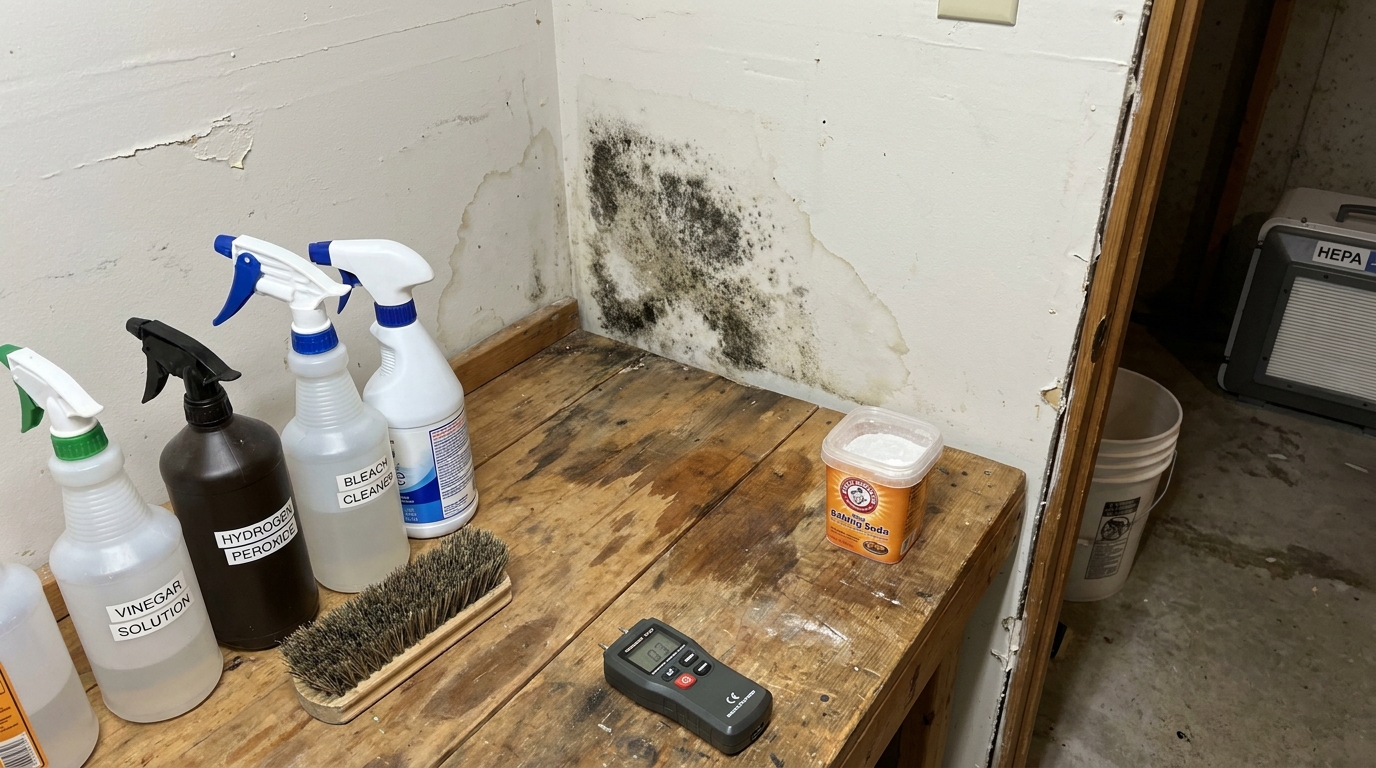
EPA-registered fungicides, hydrogen peroxide at 3% concentration, and simple detergent solutions can kill surface mold on drywall. But porous paper backing often requires removal, not just cleaning.
Figuring out what kills mold on drywall depends on one critical variable: how deep the mold has gone. Drywall isn’t like tile or glass. It has a paper facing and a gypsum core that absorb moisture, allowing mold roots (called hyphae) to grow deep into the material. According to Bust Mold, household bleach is roughly 90–95% water, and on porous surfaces like drywall, the water component soaks inward while the active chlorine stays on the surface and evaporates. That dynamic applies to most liquid treatments: they work on what they can reach, and drywall limits their reach.
Why Drywall Makes Mold Removal Complicated
Drywall’s paper facing is essentially food for mold. Cellulose in the paper, combined with moisture, creates ideal growth conditions. Once hyphae penetrate into the paper or gypsum core, surface treatments can’t reliably reach them. According to Major Restoration, consumer sprays “kill surface mold but do not penetrate porous materials,” and spores inside drywall survive and regrow. This is why the CDC’s mold guidance generally recommends removing mold-damaged drywall rather than trying to clean and keep it.
Surface vs. Penetrated Growth: The Critical Distinction
Surface mold sits on top of painted or sealed drywall and hasn’t rooted into the paper. It typically appears as a thin, wipeable film. Penetrated mold has grown into or through the drywall, often visible on the back side or accompanied by soft, crumbling material. This distinction determines everything: surface mold can often be cleaned, while penetrated mold means the drywall needs to come out. We’ll revisit this threshold throughout the article because it’s the single most important factor in choosing a treatment method.
Does Bleach Kill Mold on Drywall?
Bleach kills surface mold on non-porous materials but fails to penetrate drywall’s porous paper facing. The EPA does not recommend bleach as a primary mold remediation tool.
Why Bleach Appears to Work (But Doesn’t)
Bleach is a powerful oxidizer. When you spray it on moldy drywall, the visible stain fades or disappears, which looks like success. According to Major Restoration, “bleach kills surface mold on non-porous materials but does not penetrate into drywall.” The stain may vanish, but the colony living inside the paper remains alive. Remediation experts note that because household bleach is about 90% water, applying it to porous drywall actually introduces moisture deeper into the material, potentially feeding the mold roots you’re trying to kill.
What Research Shows About Bleach Effectiveness
On sealed, painted drywall, a solution of one cup bleach per gallon of water with a 10–15 minute contact time does kill surface mold, according to Buk Restoration. The problem is scope. Bleach works on what it touches on non-porous surfaces. For unpainted drywall, drywall with damaged paint, or any situation where mold has penetrated the paper, bleach creates a false sense of resolution. If you’ve cleaned mold with bleach and it returned within weeks, this is likely why.
Which Household Products Actually Work?
Hydrogen peroxide at 3% concentration, detergent with water, and borax solutions kill surface mold effectively. Vinegar kills roughly 82% of mold species. All require physical scrubbing.
| Product | Concentration | Contact Time | Effectiveness on Drywall | Key Limitation |
|---|---|---|---|---|
| Hydrogen Peroxide | 3% (pharmacy strength) | 10–15 minutes | Comparable to bleach on surface mold | Surface only on porous materials |
| White Vinegar | Undiluted (4–8% acetic acid) | 10–60 minutes | ~82% of mold species | Does not kill all species |
| Bleach | 1 cup per gallon water | 10–15 minutes | Kills surface mold on sealed surfaces | Cannot penetrate porous paper |
| Detergent + Water | Standard cleaning concentration | Scrub immediately | Physically removes surface mold | Does not kill spores chemically |
| Borax | 1 cup per gallon water | 10–15 minutes | Inhibits regrowth on surface | Limited penetration into porous materials |
Hydrogen Peroxide: Concentration and Application
Standard 3% hydrogen peroxide from any pharmacy works as an oxidizing biocide against mold. According to Go Prisma, “hydrogen peroxide is about as effective on mold as bleach” when applied at 3% concentration. Spray it directly on the affected area, let it sit for 10–15 minutes, then scrub with a soft brush. It produces no chlorine fumes, making it safer for indoor use. According to Buk Restoration, hydrogen peroxide “kills mold effectively while producing minimal smell,” positioning it between vinegar and bleach in strength.
Detergent Solutions: The Underrated Option
The EPA’s own mold cleanup guidance emphasizes that removing mold matters more than killing it. A simple detergent-and-water solution with physical scrubbing removes mold from surfaces without introducing chemicals that may leave residues. For small patches of surface mold on painted drywall, this approach is often sufficient. The goal is physical removal, not chemical sterilization.
Borax: When It Makes Sense
Borax (sodium borate) dissolved in water, typically one cup per gallon, creates an alkaline solution that inhibits mold growth. Industry practitioners often recommend it as a preventive treatment after initial cleaning because borax residue continues to discourage regrowth. It’s less effective as a primary killer for active colonies compared to hydrogen peroxide, but it adds a layer of ongoing protection on cleaned surfaces.
Vinegar: What the Data Shows
White vinegar kills approximately 82% of mold species, according to MoldGuys and Buk Restoration. That’s a meaningful number, but it also means roughly 18% of species may survive treatment. Apply undiluted white vinegar, let it sit for at least 10–15 minutes (some sources recommend up to one hour), then scrub gently and dry thoroughly. Vinegar penetrates porous surfaces better than bleach, which gives it an advantage on drywall. Its main drawback is that it simply doesn’t work against every mold species you might encounter.
When Can You Clean Mold on Drywall Yourself?
EPA guidelines allow DIY mold cleaning for areas under 10 square feet with no sewage contamination, no HVAC involvement, and no health-compromised occupants.
The 10-Square-Foot Rule (and Its Limitations)
The EPA sets 10 square feet (roughly a 3×3-foot patch) as the threshold for DIY mold cleanup. Below that size, a healthy homeowner with proper protective equipment can typically handle surface mold on intact drywall. Above that threshold, the area likely indicates a systemic moisture problem that requires professional assessment. Keep in mind: 10 square feet is a guideline, not a guarantee of safety. Multiple small patches in different rooms may collectively exceed this threshold and suggest a larger issue.
Situations That Require Professional Remediation
-
Mold covers more than 10 square feet total
-
Growth involves HVAC ducts or systems
-
Water damage involved sewage or contaminated water (Category 2 or 3)
-
Mold is behind walls, above ceilings, or in areas you can’t access
-
The mold has returned after a previous cleaning attempt
-
You can smell mold but can’t locate the source
Health Conditions That Change the Equation
Households with occupants who have asthma, compromised immune systems, chronic respiratory conditions, or mold allergies should consult a physician before attempting any DIY mold work. Even small disturbances can release spores into the air. A certified industrial hygienist can assess whether the situation is safe for self-remediation.
How Do You Know If Mold Has Penetrated the Drywall?
Visible growth on the back side, paper delamination, persistent musty odor after cleaning, or water damage lasting over 48 hours all indicate penetration requiring drywall replacement.
Visual Indicators of Penetration
Soft, crumbling, or warped drywall is the clearest sign that mold has gone beyond the surface. According to Apollo Construction, drywall should be replaced when it has “absorbed significant water, developed mold contamination, lost its shape, become soft or crumbly.” If you press on the drywall and it gives, or if the paint is bubbling and the paper is peeling, the material’s integrity is compromised. Surface cleaning won’t restore structural soundness.
The 48-Hour Water Exposure Threshold
FEMA guidance, cited by multiple restoration firms, states that materials remaining wet for more than 48 hours often become breeding grounds for mold. According to Bowerman Restoration, normal moisture content in drywall should be below about 1%, with readings above 2–3% indicating potential problems. If your drywall was exposed to water for more than 48 hours, whether from a slow leak, flooding, or high humidity, assume mold has penetrated and plan for replacement rather than cleaning. For more on water damage costs and timelines, see our guide to basement water damage restoration.
When Testing Makes Sense
Professional mold testing is worth considering when you smell mold but can’t see it, when you’re buying or selling a home with suspected water damage, or when health symptoms suggest mold exposure but you can’t confirm the source visually. A certified industrial hygienist can take air and surface samples to identify species and concentration levels.
Step-by-Step: Cleaning Surface Mold on Drywall
Contain the area, wear an N95 respirator and gloves, apply hydrogen peroxide or detergent, scrub with a soft brush, HEPA vacuum debris, and address the moisture source immediately.
Containment and Personal Protection
Before touching the mold, seal the area. Close doors, cover vents with plastic sheeting, and open a window for ventilation if possible. Wear an N95 respirator (not a dust mask), rubber gloves, and eye protection. Many homeowners worry about “making it worse” by disturbing mold. Proper containment prevents spore dispersal into the rest of the home. The key is controlling airflow so spores move out the window, not into adjacent rooms.
Application Method That Minimizes Spore Dispersal
-
Lightly mist the moldy area with water to dampen spores before applying treatment (dry mold releases more spores when disturbed).
-
Spray your chosen solution, whether hydrogen peroxide, detergent, or vinegar, directly onto the mold. Don’t scrub first.
-
Allow the recommended contact time: 10–15 minutes for hydrogen peroxide or bleach on sealed surfaces, up to one hour for vinegar.
-
Scrub gently with a soft-bristle brush. Avoid stiff brushes that can damage the drywall paper.
-
Wipe the area with clean, damp cloths. Dispose of cloths in a sealed bag.
-
HEPA vacuum the area and surrounding surfaces to capture residual spores.
-
Dry the area completely using fans and a dehumidifier.
Post-Cleaning Verification
After cleaning, monitor the area for two to four weeks. If mold returns, the treatment didn’t reach the root growth, or the moisture source remains active. Either scenario likely means the drywall needs replacement. For guidance on identifying hidden moisture sources, check our resource on mold remediation costs and processes.
What If the Mold Comes Back After Cleaning?
Recurring mold indicates unresolved moisture, inadequate initial cleaning, or growth within the drywall that requires removal. Surface treatment alone won’t solve moisture-driven growth.
Why Mold Returns: The Moisture Connection
According to El Paso Water Removal, approximately 50% of mold problems stem from water damage due to plumbing leaks or poor ventilation, and homes with inadequate ventilation are 70% more likely to have mold recur after remediation. Mold can return within 24–48 hours if the underlying moisture source remains active, according to Major Restoration. Killing mold without fixing the moisture is temporary at best.
Hidden Water Sources Behind Drywall
Common culprits include slow pipe leaks inside walls, condensation on cold water pipes, roof leaks that travel along framing before reaching interior walls, and poor bathroom ventilation directing moisture into wall cavities. About 30% of U.S. homes have experienced mold issues at some point, according to industry estimates cited in homeowner forums and remediation sources. Many of these trace back to hidden water intrusion that went undetected for months.
When Recurrence Means Replacement
Industry guidelines advise seeking professional help if mold returns in the same location more than twice. According to El Paso Water Removal, professional remediation that addresses both mold and its moisture source can reduce the chance of recurrence by up to 80%. One Sydney-based mold specialist estimates about 65% of mold washes performed by non-specialists fail because they don’t address the protective biofilm and moisture, as reported by Major Restoration.
When Does Drywall Need to Be Replaced Instead of Cleaned?
Replace drywall when mold covers over 10 square feet, has penetrated the paper backing, involves contaminated water, or appears behind walls with no access for cleaning.
Coverage Thresholds
According to Apollo Construction and other restoration firms, drywall should be replaced when the affected area exceeds approximately 10 square feet. If more than 40–50% of a single drywall sheet is damaged, replacing the full panel is typically more efficient than patching. When more than 10% of a room’s wall surface shows deep water saturation or recurring mold, complete removal is often the safer and more cost-effective path.
Material Integrity Indicators
Replace, don’t clean, when drywall is:
-
Soft, spongy, or crumbling to the touch
-
Warped, bowed, or sagging (especially ceiling panels)
-
Showing mold on the back side or within the wall cavity
-
Wet for more than 48 hours from any water source
-
Damaged by Category 2 (greywater) or Category 3 (blackwater/sewage) water
According to restoration firm Restopro, citing IICRC standards, if walls “were suspected of being wet for more than 24 hours,” the guidance is: “when in doubt, tear it out.”
Cost-Benefit of Replacement vs. Cleaning
Replacing a section of drywall typically costs $300–$800 for materials and labor on a small area, though prices vary by region and complexity. Repeated cleaning attempts that fail cost time, money on products, and potentially your health. When mold has penetrated the material, replacement is the only reliable solution. Cleaning penetrated drywall is spending money to delay an inevitable replacement.
Do Mold-Killing Primers and Paints Work?
Encapsulating primers contain mold but don’t kill it. They’re appropriate only after complete remediation and moisture control, not as a standalone treatment.
Mold-resistant primers and paints create a barrier that inhibits future mold growth on treated surfaces. They contain antimicrobial additives that discourage colonization. However, painting over active mold is a common and costly mistake. The mold continues growing beneath the paint, eventually breaking through or causing the paint to bubble and peel. These products work as a final step after the mold has been fully removed and the moisture source corrected. They’re a preventive measure, not a remedy.
What About Ozone Generators and Foggers?
The EPA warns that ozone generators are ineffective for mold remediation and pose health risks. Foggers don’t address mold inside porous materials or resolve moisture issues.
According to AM Response, the EPA has evaluated ozone generators and found that at concentrations safe for humans, ozone does not effectively remove mold or other biological pollutants. A controlled study by Karin Foarde et al. (1997), cited by The Disaster Team, exposed building materials to 9 parts per million of ozone for 23 hours and still found ozone ineffective for decontaminating fungi on materials like drywall. The American Conference of Governmental Industrial Hygienists (ACGIH) concludes that no gas-phase biocide, including ozone, can effectively and safely remediate a microbially contaminated building. Foggers face the same fundamental limitation: they treat air and exposed surfaces but cannot reach mold growing inside porous drywall.
If your mold covers more than 10 square feet, has returned after cleaning, or you’re unsure whether it’s penetrated the drywall, consult a certified mold remediation professional. For smaller areas, address the moisture source immediately after cleaning. Mold treatment without moisture control is temporary.
Frequently Asked Questions
These are the most common questions homeowners ask when dealing with mold on drywall, answered with evidence-based guidance.
Can I just paint over mold on drywall?
No. Painting over active mold doesn’t kill it. The mold continues growing beneath the paint and will eventually break through. Remove the mold completely and fix the moisture source before applying any mold-resistant primer or paint.
Is black mold on drywall more dangerous than other colors?
Mold color alone doesn’t indicate toxicity. Many mold species appear black, and not all produce mycotoxins. A certified industrial hygienist can identify the species through testing. Consult a physician if you’re experiencing health symptoms, regardless of the mold’s color.
How quickly does mold grow on wet drywall?
Mold can begin colonizing damp drywall within 24–48 hours under favorable conditions. According to Major Restoration, if moisture remains present, visible mold growth can appear within days to a few weeks depending on humidity levels and temperature.
Should I use a mold test kit before cleaning?
Over-the-counter mold test kits have significant accuracy limitations. If you can see mold, you already know it’s there, and the treatment approach depends on extent and penetration rather than species identification. Professional testing is more useful when mold is suspected but not visible.
Does hydrogen peroxide damage drywall?
At 3% concentration (standard pharmacy strength), hydrogen peroxide is generally safe for painted drywall. It may cause slight lightening on some paint colors. Test a small, inconspicuous area first. Avoid higher concentrations, which can damage paint and paper facing.
Can I mix bleach and vinegar for stronger mold killing?
Never mix bleach and vinegar. The combination produces chlorine gas, which is toxic and can cause serious respiratory harm. Use one product at a time, and ensure the area is well-ventilated regardless of which product you choose.
How much does professional mold remediation on drywall cost?
Costs vary widely based on the extent of damage, geographic location, and whether drywall replacement is needed. Industry practitioners typically report ranges from $500 to $3,000 for small to moderate jobs, with larger projects involving structural drywall replacement running significantly higher. Get multiple quotes from certified professionals.
Will a dehumidifier prevent mold on drywall?
A dehumidifier helps by keeping indoor relative humidity below 60%, which discourages mold growth. According to Bowerman Restoration, mold is more likely when indoor humidity exceeds 60%. However, a dehumidifier won’t fix active water intrusion from leaks or flooding. It’s a preventive tool, not a remedy for existing moisture problems.