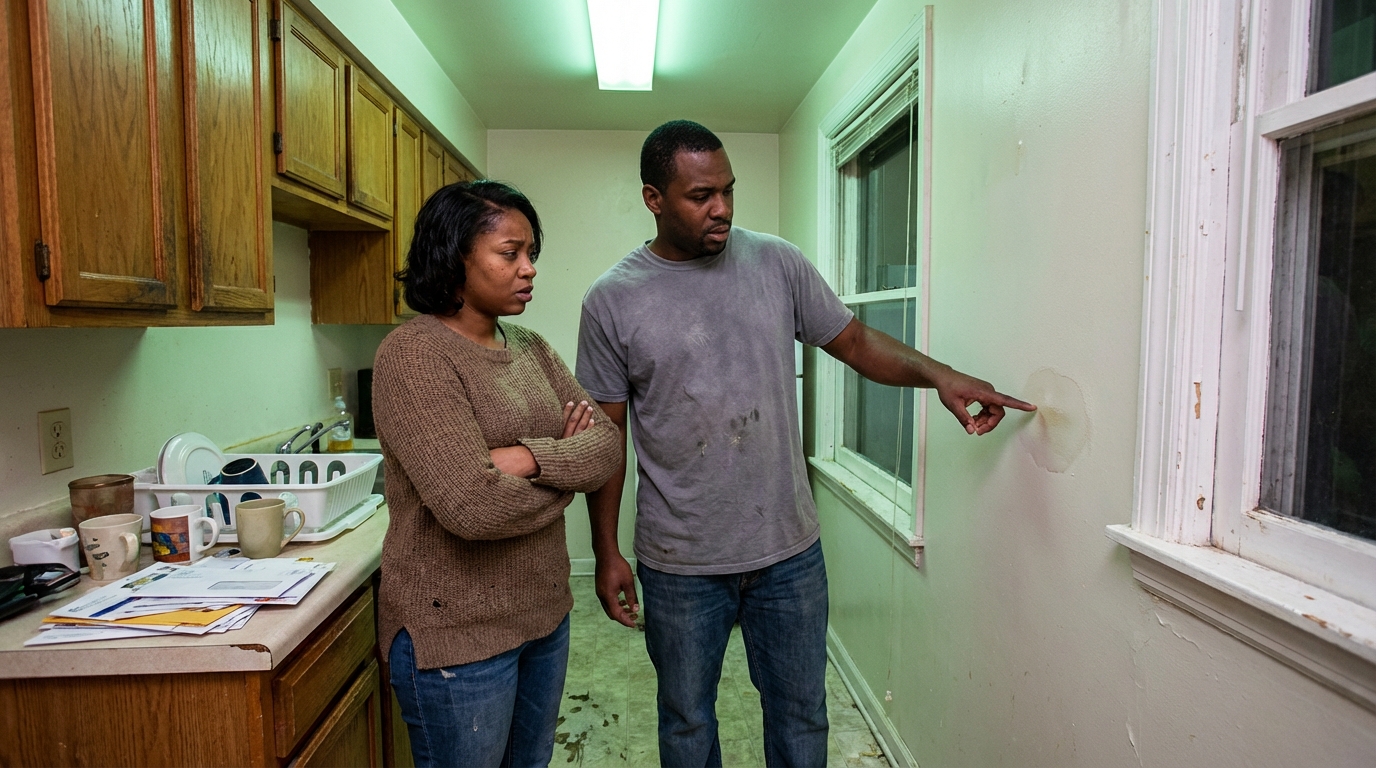
Mold is everywhere. Its spores float through outdoor air, drift indoors through open windows, and hitch rides on shoes and pet fur. That ubiquity is normal. The problem starts when those spores find moisture inside a home and begin to multiply. Understanding how does mold spread helps homeowners move from vague worry to targeted action, because the biology of mold follows predictable rules. Stop the conditions it needs, and you stop the spread.
According to RestoPros, roughly 47% of U.S. residential buildings show signs of dampness or mold growth. That statistic alone makes mold literacy a practical skill for anyone who owns or rents a home.
What Is Mold Spread — and Why Should Homeowners Care?
Mold spread is the process by which fungal colonies reproduce and colonize new surfaces through spore dispersal and hyphal growth. Every homeowner should understand this process because it happens fast, often invisibly, and carries real financial and health consequences.
Mold spores are tiny, typically 2 to 10 micrometers in diameter. According to the EPA, these spores are constantly present in both indoor and outdoor air. They become a problem only when they land on a damp surface that offers organic nutrients like wood, paper, or fabric.
Here is what makes the timeline alarming. According to RestoPros, spores begin settling on wet surfaces within 0 to 12 hours of water exposure, with active growth starting on porous materials in 24 to 48 hours. Visible colonies often appear within 3 to 7 days. Left unchecked, mold can spread to walls, ceilings, and HVAC systems within 1 to 2 weeks.
The financial stakes are significant. Structural damage to drywall, framing, and insulation can escalate mold remediation costs quickly. And according to Realtime Labs, up to 25% of the population carries a genetic predisposition that makes them more susceptible to mold-related illness, meaning the health costs can compound alongside the property damage.
How Does Mold Spread? The Four Main Pathways
Mold uses four primary routes to move from one location to another: airborne spores, water transport, physical contact, and hidden building pathways. Each route operates differently, and understanding them reveals why mold can appear in rooms far from the original moisture source.
Pathway 1: Airborne spore dispersal. This is the most common route. Mature mold colonies release clouds of microscopic spores into the air. Normal household activities like walking across a carpet, opening a door, or running a fan can launch spores into circulation. According to Rainbow Restoration, airborne spores can colonize new damp areas within 48 hours when traveling through air currents and HVAC systems.
Pathway 2: Water and moisture transport. Mold doesn’t just ride air currents. It also follows water. Leaking pipes carry spores along their path. Moisture wicks through porous materials like drywall via capillary action, pulling spores deeper into wall assemblies. According to Mold Science, water-mediated transport through plumbing networks and drainage systems is a significant but often overlooked dispersal mechanism.
Pathway 3: Physical contact and transport. Some mold species produce sticky spores designed to cling to surfaces rather than float. The CDC notes that mold enters homes on clothing, shoes, and pets. A dog walking through a damp basement can carry spores upstairs on its fur. Touching a moldy surface and then leaning against a wall in another room transfers spores directly.
Pathway 4: Hidden building pathways. This is the route that surprises most homeowners. According to RestoPros, mold travels through concealed spaces including wall cavities, spaces between floor joists, above ceiling tiles, and through crawl spaces. Colonies can establish themselves far from the original moisture source, growing silently inside walls for weeks before anyone notices.
| Pathway | How It Works | Speed of Spread | Common Example |
|---|---|---|---|
| Airborne spores | Spores released into air, carried by currents and HVAC | New growth in 48 hours | Bathroom mold spreading via ductwork |
| Water transport | Spores travel with leaks; moisture wicks through materials | Growth in 24-48 hours on wet surface | Pipe leak spreading mold inside a wall cavity |
| Physical contact | Spores cling to clothing, pets, shoes, hands | Variable; depends on destination moisture | Pet carrying basement spores to a bedroom |
| Hidden building pathways | Spores move through wall cavities, joists, crawl spaces | Colonies appear in 1-2 weeks | Roof leak seeding mold in attic and ceiling below |
What Conditions Allow Mold to Spread Fastest?
Mold spreads fastest when four conditions converge: high humidity, warm temperatures, organic food sources, and poor ventilation. Remove any one of these, and growth slows dramatically.
Moisture is the controlling factor. According to the North Carolina Division of Public Health, relative humidity above 60% allows mold to thrive indoors, while sustained humidity above 70% makes growth on damp materials almost certain. The EPA’s Brief Guide to Mold recommends keeping indoor humidity below 60%, ideally between 30% and 50%.
Temperature plays a supporting role. According to PuroClean, mold grows fastest between 77°F and 86°F. That range overlaps with typical indoor temperatures in warm climates, which is one reason mold in showers and kitchens is so common. Growth slows below 60°F but does not stop entirely. Spores go dormant in extreme cold and reactivate when conditions improve.
Organic materials fuel the spread. Mold feeds on cellulose-based materials: wood, drywall paper, carpet backing, wallpaper adhesive, and even dust. A clean surface can still grow mold if it contains organic compounds and gets wet.
Poor ventilation traps moisture. Bathrooms without exhaust fans, closets against exterior walls, and finished basements with inadequate air circulation all create pockets where humidity climbs. According to Eco FMR, poor ventilation traps humidity above 70-80% and promotes condensation on cooler surfaces, accelerating colonization.
Where Does Mold Spread First in a Home?
Mold typically colonizes bathrooms, kitchens, basements, and attics first because these areas combine persistent moisture with organic building materials. From there, it migrates outward.
Bathrooms top the list. Steam from showers raises humidity, grout lines trap moisture, and ventilation is often inadequate. Kitchens follow closely, with cooking steam, sink splashes, and dishwasher leaks providing steady moisture. Basements and crawl spaces sit below grade where groundwater seepage and condensation are common. Attics suffer from roof leaks and poor vapor barriers.
According to the EPA, mold grows on wet surfaces and cannot grow without water. That simple fact explains why the first colonies almost always appear near plumbing fixtures, roof penetrations, or foundation walls.
What catches homeowners off guard is how quickly mold moves from these initial sites. According to 1-800 Water Damage, visible mold colonies emerge 18 to 24 days after initial colonization, meaning the fungus has been spreading invisibly for weeks before anyone sees it. Hidden growth behind walls, under sinks, and inside wall cavities is the norm, not the exception.
Signs That Mold Is Already Spreading in Your Home
The earliest sign of spreading mold is usually a persistent musty odor, not a visible colony. If a room smells earthy or damp without an obvious source, mold may be growing behind surfaces.
According to the EPA, a musty smell is a key indicator of hidden mold growth in walls, pipes, ductwork, or roofing materials. Other signs include:
- Discoloration on walls or ceilings. Fuzzy, spotted, or slimy patches in shades of green, black, white, or gray signal active colonies. According to Healthline, applying a drop of household bleach to a suspicious spot can help distinguish mold from dirt: mold lightens within 1 to 2 minutes, while dirt does not.
- Warping, bubbling, or peeling paint. Moisture trapped behind painted walls causes visible surface distortion, often indicating mold growth underneath.
- Unexplained health symptoms. New or worsening allergic reactions, including a stuffy nose, wheezing, itchy eyes, or coughing, can signal increased airborne spore levels. More on this below.
- Condensation on windows or pipes. Persistent condensation points to elevated indoor humidity, which means conditions for mold growth are already present.
If you suspect hidden mold, a professional mold inspection using moisture meters and air sampling can confirm what your nose is telling you.
Health Implications of Spreading Mold
Spreading mold increases airborne spore concentrations, which raises the risk of allergic reactions, respiratory irritation, and asthma episodes for building occupants. Vulnerable groups face the greatest danger.
According to the EPA, molds produce allergens and irritants. Inhaling or touching mold can cause hay fever-like symptoms: sneezing, runny nose, red eyes, and skin rash. For people with asthma, mold exposure can trigger attacks.
The numbers are sobering. A peer-reviewed meta-analysis published in Indoor Air found that dampness and mold exposures increase respiratory problems like cough and wheeze by 30 to 50%. The same research estimated that dampness and mold may contribute to 21% of current U.S. asthma cases. According to Harvard Health, a study of over 40,000 U.S. children found that 11% of those in mold-exposed homes had asthma, compared to 7% in non-exposed homes.
A common fear involves black mold (Stachybotrys chartarum) and mycotoxins. According to the Wisconsin Department of Health Services, no confirmed cases of inhalational mycotoxin poisoning have been documented in residential or office settings. That does not mean black mold is harmless, but it is not uniquely deadlier than other indoor molds. The health response depends more on the individual’s sensitivity and the extent of exposure than on the specific mold species.
Anyone experiencing persistent respiratory symptoms, skin irritation, or worsening asthma in a home with known or suspected mold should consult a physician. A certified industrial hygienist can assess indoor air quality to determine whether spore levels pose a health concern.
How to Stop Mold from Spreading: Prevention Strategies
Stopping mold spread comes down to controlling moisture, because spores and organic food sources are essentially impossible to eliminate from indoor environments. Target the water, and you break the cycle.
Control humidity aggressively. The EPA recommends maintaining indoor relative humidity between 30% and 50%. Use dehumidifiers in basements and crawl spaces. Run exhaust fans in bathrooms during and after showers. Vent dryers to the outside. A simple hygrometer, available for under $15, lets you monitor conditions in real time.
Dry wet materials within 24 to 48 hours. This is the single most important timeline in mold prevention. According to Mister Water Heater, spores can begin growing in as little as 24 hours under moist conditions. After any leak, flood, or spill, extract standing water immediately, run fans and dehumidifiers, and remove saturated porous materials like carpet padding that cannot be dried quickly.
Fix leaks promptly. A slow drip under a sink or a minor roof leak may seem trivial, but these provide the sustained moisture mold needs. Check plumbing connections, roof flashing, and window seals at least annually.
Improve ventilation. According to the University of Georgia Cooperative Extension, using exhaust fans in high-moisture areas and ensuring proper attic ventilation are among the most effective prevention measures. Open interior doors to promote air circulation, and avoid blocking supply or return vents with furniture.
Maintain gutters and grading. Clean roof gutters regularly and ensure the ground slopes away from the foundation. Water pooling near a foundation wall is one of the most common sources of basement moisture.
Use mold-resistant materials where possible. In renovations, consider mold-resistant drywall, paint, and insulation for high-moisture areas. These products do not make a space mold-proof, but they slow colonization and buy time to address moisture problems.
When Should You Call a Professional?
Homeowners should call a mold remediation professional when the affected area exceeds 10 square feet, when mold involves HVAC systems, or when occupants are experiencing health symptoms.
According to Angi, the EPA’s 10-square-foot threshold (roughly a 3-by-3-foot patch) serves as the dividing line between manageable DIY cleanup and situations requiring professional equipment and containment protocols. That threshold exists for good reason: larger colonies release more spores when disturbed, and improper cleanup can spread contamination to previously unaffected areas.
Other situations that warrant professional help:
- Mold after sewage backup or contaminated water. These events introduce bacteria alongside mold, requiring specialized disinfection.
- Mold inside HVAC ductwork. According to Bactronix, running a contaminated HVAC system can spread spores throughout an entire building. Shut the system down and call a professional.
- Recurring mold despite cleanup. If mold keeps returning in the same spot, the underlying moisture source has not been resolved. A professional can use moisture meters and thermal imaging to detect hidden mold and pinpoint the water intrusion.
- Health concerns among occupants. If anyone in the household is immunocompromised, has chronic respiratory conditions, or is experiencing symptoms that worsen at home, professional assessment is the safer path.
For small patches on non-porous surfaces like tile or glass, DIY cleanup with detergent and water is generally safe. Wear an N95 mask, gloves, and eye protection. The CDC recommends opening windows for ventilation during cleanup and avoiding bare-hand contact with mold.
Wondering whether your homeowners insurance covers mold damage? Coverage varies widely by policy and cause. Review your policy or speak with your insurer before beginning remediation.
Mold spread follows a logical chain: spores land, moisture activates them, colonies grow, and new spores launch to repeat the cycle. Every link in that chain represents an opportunity to intervene. Fix the leak. Dry the surface. Lower the humidity. Ventilate the space. These are not arbitrary checklists. They are targeted disruptions of a biological process that has been operating the same way for millions of years.
If you suspect mold is spreading in your home and need professional help, find a qualified mold contractor in your area to get an assessment and a plan tailored to your situation.