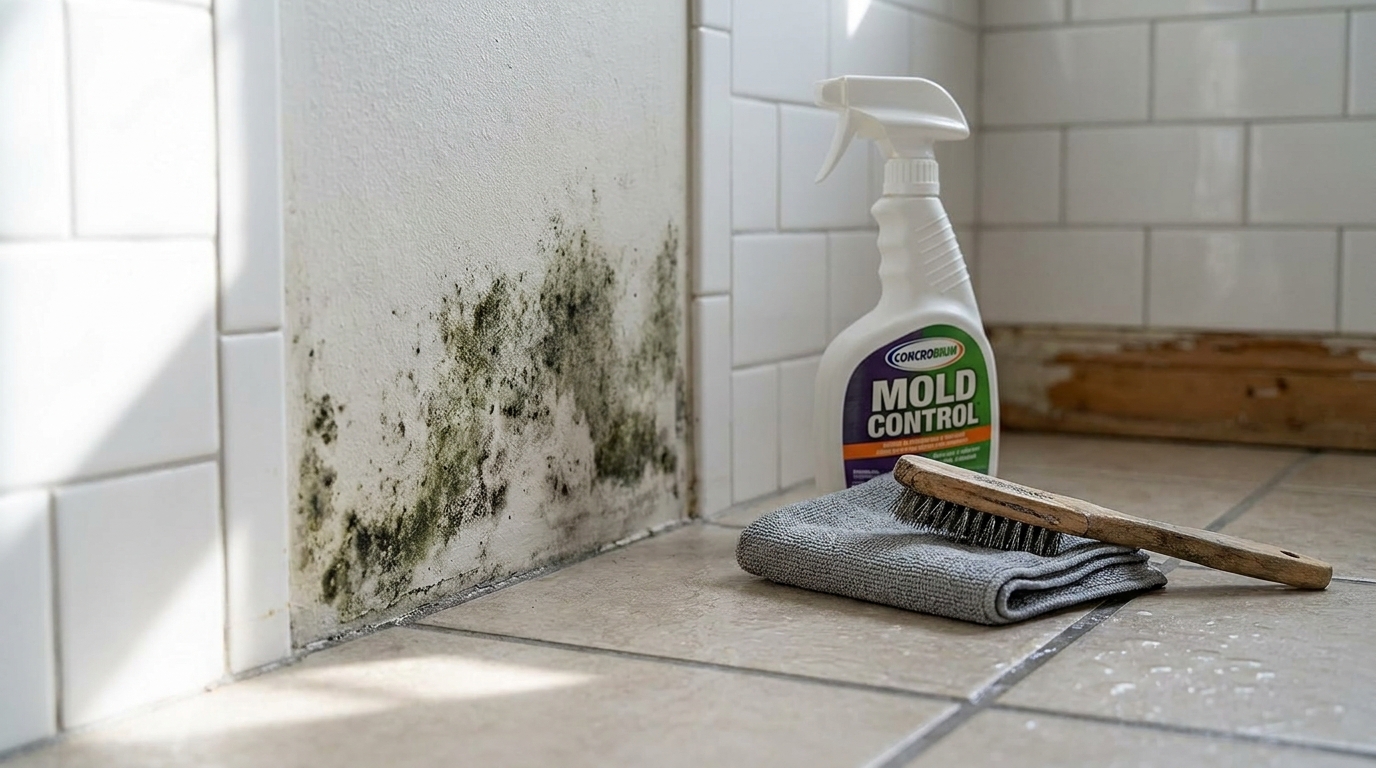
What Is the Most Effective Way to Apply Concrobium Mold Control?
The most effective method depends on the surface type and mold severity: spray application for hard surfaces, fogging for large areas or HVAC systems, and cloth application for porous materials.
Homeowners searching for what is the best way to mold control spray Concrobium often assume that simply spraying the product on a moldy surface is enough. That assumption misses a critical detail. Concrobium works through a physical crushing mechanism as it dries, forming a thin film that encapsulates and eliminates mold spores. This means application technique, drying conditions, and surface preparation all directly affect whether the product performs as intended.
According to the EPA label, Concrobium’s expected coverage ranges from 350 to 2,800 square feet per gallon depending on sprayer type, while fogging coverage sits around 1,400 to 1,500 square feet per half gallon. [Source: Media-amazon] Choosing the right method for the right situation is the difference between a lasting result and wasted product.
Why Application Method Matters for Effectiveness
Concrobium doesn’t work like bleach or hydrogen peroxide. Those products rely on chemical reactions to kill mold on contact. Concrobium instead depends on a dried film that physically crushes mold spores. If you wipe it off too soon, apply it too heavily, or use it on a soaking wet surface, that film never forms properly. Agricultural spray research confirms this general principle: spray performance depends on uniform coverage and droplet deposition, not just volume. [Source: Peanutscience]
What the Manufacturer Recommends
The EPA label states that Concrobium should be applied by hand-spray, automatic sprayer, compression sprayer, or high/low-pressure spray. [Source: EPA] The core instruction across all methods is the same: apply until the surface is evenly wet, then allow it to dry completely without rinsing. For a deeper look at how the product performs in testing, see our lab-tested effectiveness data for Concrobium.
| Application Method | Best For | Approximate Coverage (per gallon) |
|---|---|---|
| Trigger spray bottle | Small areas, visible mold on hard surfaces | 350–2,800 sq. ft. |
| Pump/compression sprayer | Medium areas, walls, ceilings | 350–2,800 sq. ft. |
| Cold fogger | Large spaces, attics, crawl spaces, HVAC | ~1,400–1,500 sq. ft. per half gallon |
| Cloth/wipe application | Porous materials, fabrics, unsealed wood | Varies by material absorbency |
How Do You Prepare Surfaces Before Applying Concrobium?
Remove loose debris, visible mold growth, and any finishes or sealants that block contact. The surface should be dry, with moisture content at or below 20% on porous materials.
Surface preparation is where many homeowners either skip steps or do the wrong thing entirely. According to the manufacturer’s instructions, you should clean contaminated areas and remove as much dirt and visible mold as possible using a cloth, cleaning pad, or brush appropriate for the surface. [Source: Homedepot]
What to Remove (and What to Leave)
Strip away any coatings, sealants, dirt, or debris so the product can reach the mold directly. The EPA label specifies removing visible mold growth before applying the product. [Source: EPA] However, you don’t need to sterilize the surface. The goal is direct contact between Concrobium and the mold, not a perfectly clean surface.
Why Pre-Cleaning with Bleach Reduces Effectiveness
Mixing Concrobium with other cleaning products is a common mistake. The manufacturer’s guidance says to avoid competing chemicals on the surface. Bleach leaves behind moisture and chemical residue that can interfere with Concrobium’s drying mechanism. If you’ve already used bleach, allow the surface to dry completely and off-gas before applying Concrobium. For more on how different treatments compare, see our guide to comparing mold treatment methods.
Moisture Level Requirements
The manufacturer’s FAQ states that surface moisture content should be at or below 20% before application. [Source: Homedepot] For outdoor use, do not apply if rain is expected within 3 hours. Treat on a dry surface and out of direct sunlight. [Source: Homedepot]
Spray Application: When and How to Use It?
Spray application works best for visible mold on non-porous surfaces like tile, painted walls, and wood. Apply until the surface is thoroughly wet, then allow it to dry completely without wiping.
Optimal Spray Distance and Coverage Rate
One EPA-cited label version specifies spraying hard, non-porous surfaces from 6 to 8 inches away until thoroughly wet. [Source: EPA] Holding the bottle too far away creates uneven coverage. Too close, and you risk pooling and dripping, which wastes product without improving results.
How Much Product to Use Per Square Foot
Coverage research in agricultural spraying confirms that uniform coverage matters more than heavy application. [Source: Peanutscience] The EPA label’s range of 350 to 2,800 square feet per gallon reflects this variability. A thin, even coat that fully wets the surface is the target. You should see a uniform sheen, not drips or puddles.
Drying Time Requirements
Do not wipe, rinse, or disturb the treated surface while it dries. The product needs to form its protective film undisturbed. In well-ventilated conditions, drying typically takes 2 to 4 hours. In humid or poorly ventilated spaces, expect 24 to 48 hours. [Source: Multiscreensite] After the surface is fully dry, you can scrub or wipe away remaining dead mold residue.
Cloth Application: Best Practices for Porous Materials
For porous materials like fabric or unsealed wood, saturate a clean cloth with Concrobium and apply by wiping or dabbing to prevent over-saturation while ensuring adequate coverage.
When Cloth Application Is Preferred Over Spraying
Spraying porous materials can lead to over-wetting, which slows drying and weakens performance. Cloth application gives you more control over how much product reaches the surface. This method works well for upholstery, unfinished wood shelving, and fabric items. According to the manufacturer, Concrobium’s protective barrier lasts up to 28 days on cotton fabrics when the moisture source is controlled. [Source: Multiscreensite]
How to Avoid Over-Wetting Porous Surfaces
Dampen the cloth enough that the surface becomes evenly moist but not saturated. If water beads or pools on the material, you’ve applied too much. Blot rather than scrub, and allow full drying before evaluating results. Materials that stayed wet past 48 hours, like soaked drywall or carpet padding, should be removed and replaced rather than treated. [Source: Moldguide]
Fogging Application: Coverage for Large Areas
Fogging disperses Concrobium as a fine mist for treating large spaces, attics, crawl spaces, or HVAC systems. It requires a cold fogger and proper containment of the treatment area.
Equipment Requirements for Fogging
Concrobium fogging requires a cold fogger, not a thermal fogger. The manufacturer sells a compatible unit, but any cold fogger that produces a fine mist should work. Handheld or portable fogging systems can cover up to 2,000 square feet per application, while cart-mounted units handle approximately 5,000 square feet. [Source: Smartfog] For homeowners dealing with treating mold in attics, fogging can reach areas that manual spraying cannot.
Coverage Rates and Product Dilution
Concrobium is applied undiluted through a fogger. Fogging coverage is approximately 1,400 square feet per half gallon, roughly equivalent to a 20-by-20-foot room with 8-foot ceilings when treating walls, floor, and ceiling. [Source: Media-amazon] Fogging protocol experts recommend calculating the room volume, setting an estimated treatment time based on delivery rate, and planning a route through the space to avoid over-application in one area and under-application in another. [Source: MGK]
Safety Precautions During Fogging
Fogging generates airborne mist that can irritate eyes and lungs. Wear an N-95 respirator, goggles, gloves, and disposable coveralls. Seal the treatment area and keep people and pets out until the fog settles and the surfaces dry. Because fogging involves specialized equipment and containment procedures, homeowners treating areas larger than a single room may want to consider professional application.
What Mistakes Reduce Concrobium’s Effectiveness?
Common mistakes include wiping the product off before it dries, applying too thin or too thick a coat, using it on wet surfaces, and mixing it with other cleaning products.
Why Wiping After Application Defeats the Purpose
Wiping or rinsing Concrobium before it fully dries is the most common error. The product needs to dry for at least 4 to 6 hours, and wiping it off early undermines the entire mechanism. [Source: Moldguide] The dried film is what crushes mold spores. No film, no result.
The Problem with Insufficient Coverage
Applying too thick a coat creates white residue buildup without improving performance. Applying too thin a coat leaves gaps where mold can survive. The target is a thin, even coat that fully wets the surface. If you can see dry patches between spray passes, you haven’t applied enough.
Timing Errors That Compromise Results
Using Concrobium in damp or humid conditions slows drying and weakens performance. Mold-treatment products work properly only when humidity is below 60%. Poor airflow in humid spaces can extend curing to 24 to 48 hours. [Source: Moldguide] Open windows, run fans, or use a dehumidifier to speed drying. Not fixing the underlying moisture source is another critical error. The EPA label states that Concrobium must be part of a broader mold remediation program and that water sources and moisture conditions must be corrected first. [Source: EPA]
How Long Does Concrobium Take to Work?
Concrobium begins working as it dries, typically within 2 to 4 hours in well-ventilated conditions. Full effectiveness requires complete drying, and a protective barrier forms that continues inhibiting mold growth.
What Happens During the Drying Process
As the liquid evaporates, the active ingredients concentrate and form a physical barrier on the surface. This barrier encapsulates and crushes mold spores through mechanical action. One field report cited by MoldGuide found that airborne mold spores fell from 70,000 spores per cubic meter to 2,000 spores per cubic meter after treatment, a 97% reduction. That is a single field report rather than a controlled study, so it serves as an example rather than a guarantee of average performance. [Source: Moldguide]
When You Can Expect to See Results
One FAQ sheet says the product generally dries in less than 2 hours, but also recommends waiting 24 hours before painting over treated surfaces. Other sources report 4 to 24 hours as typical, extending to 24 to 48 hours in humid conditions. [Source: Multiscreensite] The practical answer: wait until the surface is fully dry to the touch and no longer tacky. On hard non-porous surfaces and untreated wood, the protective barrier can help inhibit regrowth for 7 days. On cotton fabrics, that window extends to 28 days, but only if the moisture source is controlled.
Do You Need to Reapply Concrobium?
Reapplication is necessary if moisture returns to the treated area or if mold reappears. For ongoing prevention in high-humidity areas, reapply periodically based on conditions.
Signs That Reapplication Is Needed
Visible mold regrowth, musty odors returning, or any new water intrusion event all signal that reapplication is warranted. The EPA label language says to reapply weekly or when regrowth or odor returns. [Source: EPA] If mold returns repeatedly despite correct application, the underlying moisture problem likely hasn’t been resolved.
Maintenance Schedule for Different Environments
Bathrooms, basements, and crawl spaces with persistent humidity benefit from preventive reapplication. Industry practitioners typically recommend every few months in these environments, though the exact frequency depends on local humidity levels and ventilation. Dry, well-ventilated rooms may not need reapplication unless a new moisture event occurs. If you’re dealing with removing mold from drywall, address the moisture source before relying on any preventive spray schedule.
What Safety Precautions Should You Take?
While Concrobium contains no bleach or VOCs, ensure adequate ventilation during application, wear gloves and eye protection, and keep the area clear until the product dries completely.
Ventilation Requirements
Safety Data Sheet documents state that general ventilation is adequate for normal use, but local exhaust or dilution ventilation may be needed if mist or airborne particles are generated. [Source: EPA] This is especially relevant during fogging, which produces significant airborne mist. Open windows and run fans whenever possible during and after application.
Personal Protective Equipment Recommendations
The EPA label notes that Concrobium can cause moderate eye irritation and instructs users to wear goggles or safety glasses. Wear gloves and protective clothing, and wash hands thoroughly after handling. Do not eat, drink, or smoke while using the product. If it gets in your eyes, rinse for 15 to 20 minutes and seek medical advice. [Source: EPA] Anyone with respiratory sensitivity should consult a physician before undertaking DIY mold treatment of any kind.
If you’re dealing with mold growth that covers more than 10 square feet, or if mold returns after treatment, consult a certified mold remediation professional to assess whether moisture issues or hidden growth require professional intervention.
Frequently Asked Questions
These are the most common questions homeowners ask about applying Concrobium Mold Control correctly.
Can you spray Concrobium directly on mold without cleaning first?
The EPA label and manufacturer instructions both recommend removing visible mold growth and loose debris before applying Concrobium. [Source: EPA] Cleaning first allows the product to make direct contact with the affected surface, which improves results.
Does Concrobium work better if you scrub the mold first?
Light scrubbing to remove loose mold and debris helps. However, heavy scrubbing with chemical cleaners can leave residue that interferes with Concrobium’s drying mechanism. Use a dry brush or damp cloth to clear the surface, then apply Concrobium and let it dry undisturbed.
Can you use Concrobium in a regular spray bottle?
Yes. Concrobium comes ready to use and requires no dilution. A standard trigger spray bottle works for small areas. For larger jobs, a pump or compression sprayer provides more even coverage. The EPA label lists hand-spray, automatic sprayer, and compression sprayer as approved application methods. [Source: EPA]
How much Concrobium do you need for a 10x10 room?
A 10-by-10-foot room with 8-foot ceilings has roughly 420 square feet of wall and ceiling surface. Based on the EPA label’s coverage range of 350 to 2,800 square feet per gallon, one gallon should be sufficient for spray application on hard surfaces. [Source: Media-amazon] Porous surfaces absorb more product and reduce coverage.
Can you paint over Concrobium after it dries?
Yes. Allow the treated surface to dry for approximately 24 hours before painting. [Source: Multiscreensite] The dried Concrobium film acts as a primer-like barrier. Make sure the surface is completely dry to the touch and no longer tacky before applying paint.
Is Concrobium safe to use around pets and children?
Concrobium contains no bleach or volatile organic compounds. However, the EPA label warns of moderate eye irritation and recommends keeping people and pets away from treated surfaces until they are fully dry. [Source: EPA] Anyone with respiratory conditions should consult a physician before using any mold treatment product in an occupied space.
Does Concrobium kill mold permanently?
Concrobium eliminates existing mold and leaves a protective barrier, but that barrier does not last indefinitely. On hard non-porous surfaces, the barrier can inhibit regrowth for about 7 days. On cotton fabrics, it lasts approximately 28 days. [Source: Multiscreensite] If the underlying moisture problem isn’t fixed, mold will return regardless of what product you use.