Long Beach homeowners face a unique set of water damage risks. Coastal humidity, aging housing stock, El Niño storm patterns, and proximity to the port all contribute to a higher-than-average likelihood of water intrusion. Understanding Long Beach water damage restoration, from its causes to its connection with mold growth, helps residents protect their homes and health before a small leak becomes a five-figure repair bill.
This guide covers the specific risk factors Long Beach properties face, the warning signs that demand attention, and the critical timelines that separate a manageable cleanup from a major remediation project.
What Is Water Damage Restoration and Why Does It Matter in Long Beach?
Water damage restoration is the professional process of extracting water, drying structures, sanitizing affected surfaces, and rebuilding damaged areas to pre-loss condition. Long Beach’s coastal environment makes this process especially urgent.
According to the IICRC S500 standard, restoration follows a five-step process: emergency contact, water extraction, structural drying, cleaning and sanitizing, and final restoration. Professionals use psychrometric monitoring to maintain optimal drying conditions, typically targeting temperatures between 70 and 90°F and relative humidity between 30% and 50%.
Why does this matter locally? The EPA recommends responding to water damage within 24 to 48 hours and drying materials to below 15 to 20% moisture content to prevent mold. In Long Beach, where ambient humidity from the Pacific already elevates indoor moisture levels, that window shrinks. According to Mark It Clean USA, water saturation can expand 20% to 50% daily into porous materials like drywall and wood, increasing restoration costs by up to five times if ventilation and extraction are delayed.
Industrial truck-mounted extractors can remove 100 to 200 gallons of water per hour, while commercial dehumidifiers process 50 to 100 pints of moisture daily, according to Water Damage in Long Beach. Household fans simply cannot match that capacity.
What Causes Water Damage in Long Beach Homes?
Plumbing failures, coastal storms, and aging infrastructure are the primary causes, all amplified by Long Beach’s oceanfront geography and variable weather.
Here are the leading causes local homeowners should watch for:
- Plumbing bursts from high water pressure. According to Wawanesa Insurance, homes without a water pressure regulator risk pipe ruptures when pressure exceeds 80 psi. Many older Long Beach homes lack these regulators entirely.
- El Niño-driven rainfall. PuroClean Long Beach notes that El Niño patterns bring heavy rainfall and storms to Southern California, significantly boosting flooding likelihood.
- Coastal flooding and sea level rise. The same PuroClean source highlights that Long Beach’s coastal location increases vulnerability to storm surges and saltwater intrusion, with climate change intensifying these threats.
- Appliance hose failures. Dishwashers, washing machines, and water heaters develop leaks from degrading hoses over time. Annual inspections are recommended, with more frequent checks in homes with hard water and mineral deposits.
- Hard water pipe buildup. Calcium and magnesium scale accumulates inside pipes, raising internal pressure and burst risk over time.
A common misconception holds that only major storms cause water damage. In reality, slow leaks from corroded pipes, faulty faucets, or degrading caulk around showers cause gradual, hidden damage. These slow leaks are often excluded from insurance because they result from prolonged exposure rather than a sudden event.
What Are the Warning Signs of Water Damage?
Stained ceilings, warped flooring, musty odors, and unexplained spikes in water bills are the most reliable early indicators of water damage.
Catching these signs early can save thousands. According to Rainbow Restoration, citing EPA data, the average U.S. household wastes nearly 10,000 gallons of water annually due to leaks. A family of four using more than 12,000 gallons per month likely has a significant hidden leak.
The numbers get alarming quickly. According to Restoration 1, a 1/8-inch crack in a pipe can leak up to 250 gallons of water in a single day, saturating carpets and warping floors before any damage becomes visible. And according to This Old House, citing FEMA and the National Flood Insurance Program, just one inch of standing water in a typical home can cause up to $25,000 in damage.
Watch for these specific signs:
- Visual clues: Water stains on ceilings or walls, bubbling or peeling paint, warped or buckling flooring, and visible mold on drywall
- Sensory clues: Musty or earthy odors (a strong indicator of hidden mold), dampness in rooms that should be dry
- Utility clues: Sudden increases in water bills without changes in usage
- Structural clues: Soft spots in flooring, doors or windows that stick, and cracks in foundation walls
According to Krapf Legal, 98% of U.S. basements experience water damage over their lifetime. Many of these cases start with subtle signs that homeowners dismiss.
Does Water Damage Lead to Mold Growth?
Yes, water damage is the single most common trigger for indoor mold growth, with colonization beginning within 24 to 48 hours of moisture exposure.
Mold spores are present in virtually every indoor environment. They remain dormant until they encounter the right conditions for mold growth: moisture, an organic food source, and moderate temperatures. Water damage provides the moisture that activates those spores.
According to the California Department of Public Health, mold grows wherever moisture persists, and homeowners should inspect for water damage and address sources to prevent recurrence. The LA County Department of Public Health echoes this guidance, recommending immediate ventilation and dehumidification after any water event.
| Factor | Low Risk | Moderate Risk | High Risk |
|---|---|---|---|
| Time since water exposure | Under 24 hours | 24 to 48 hours | Over 48 hours |
| Indoor relative humidity | Below 50% | 50% to 60% | Above 60% |
| Material affected | Non-porous (tile, metal) | Semi-porous (wood) | Porous (drywall, carpet) |
| Water category | Category 1 (clean) | Category 2 (gray) | Category 3 (black/sewage) |
| Ventilation | Active air circulation | Partial airflow | Stagnant, enclosed space |
One persistent misconception is that bleach kills all mold on surfaces. Bleach can remove surface mold on non-porous materials, but it does not penetrate porous materials like drywall or wood. The EPA and CDPH both recommend removing and replacing porous materials that have been saturated, rather than relying on surface treatments alone.
For homeowners concerned about black mold specifically, the species Stachybotrys chartarum thrives on cellulose-rich materials that remain wet for extended periods. Drywall, ceiling tiles, and wood framing in water-damaged Long Beach homes provide ideal conditions.
What Are the Health Risks of Untreated Water Damage?
Untreated water damage creates conditions for mold, bacteria, and other pathogens that can cause respiratory illness, allergic reactions, and more serious health effects over time.
According to Michaelis Corporation, mold that develops after water damage releases spores that trigger allergic reactions including sneezing, coughing, itchy eyes, and difficulty breathing. People with asthma, compromised immune systems, children, and the elderly face elevated risks.
The dangers extend beyond mold. The CDC estimates that approximately 7.4 million Americans get sick each year from waterborne diseases, which can be exacerbated by untreated floodwater or stagnant water in damaged homes. Category 3 water (sewage backups, external floodwater) carries bacteria, viruses, and chemical contaminants that require professional handling with proper protective equipment.
A case study published in PubMed Central documented a family living in a water-damaged home where mycotoxins including ochratoxin A and trichothecenes were detected in urine, nasal secretions, and even breast milk. The family experienced chronic sinusitis, neurological deficits, and fatigue.
The American Lung Association warns that flood waters and water damage increase risks for people with existing lung disease and may promote new respiratory conditions. Anyone experiencing persistent respiratory symptoms after water damage should consult a physician.
How Can Long Beach Homeowners Prevent Water Damage?
Regular maintenance, proper drainage, and early leak detection prevent the vast majority of water damage incidents in residential properties.
According to Mark It Clean USA, 90% of water damage incidents can be prevented by homeowners who notice issues early or take proactive steps. The same source reports that 40% of homeowners experience water damage, often from preventable causes like damaged pipes, burst appliance hoses, or poor drainage.
Here are prevention strategies tailored to Long Beach properties:
Plumbing and appliance maintenance:
- Install a water pressure regulator and keep pressure below 80 psi
- Inspect washing machine hoses, dishwasher connections, and water heater fittings annually
- Consider a water softener if your home has hard water, which causes mineral buildup in pipes
Drainage and exterior protection:
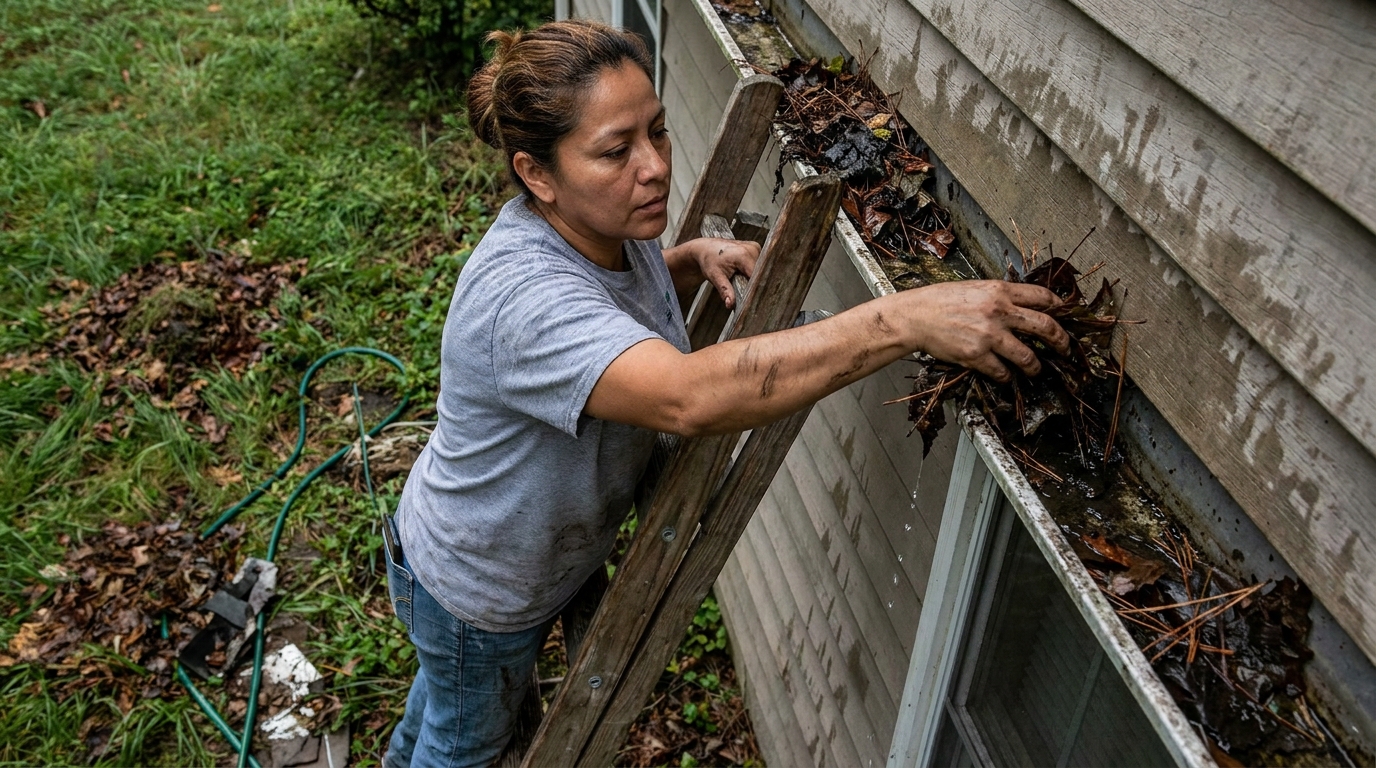
- Clean gutters and downspouts at least twice per year, directing water at least six feet from the foundation
- The City of Long Beach Low Impact Development (LID) standards recommend permeable surfaces and rain gardens to manage stormwater runoff around foundations
- Inspect roof flashing and seals before the rainy season, especially ahead of predicted El Niño years
Indoor moisture control:
- Maintain indoor relative humidity below 60% using dehumidifiers, particularly in bathrooms, kitchens, and basements
- Use exhaust fans during cooking and showering
- Check for mold in moisture-prone areas regularly, including under sinks, behind appliances, and around window frames
Insurance preparation:
- Standard homeowner policies exclude floods. Homeowners near the coast should carry separate flood insurance, often available through the National Flood Insurance Program (NFIP).
When Should You Call a Professional for Water Damage Restoration?
Call a professional immediately when standing water is present, when water has soaked into walls or flooring, or when the source involves gray or black water contamination.
According to Bowerman Restoration, the first 24 to 48 hours after water damage are known as the “Golden Hours.” Materials salvaged within this window can often be dried and preserved. Beyond this period, items frequently require full replacement, and mold colonization becomes likely.
Specific situations that demand professional intervention:
- Standing water of any depth in living spaces, crawl spaces, or basements
- Category 2 (gray) or Category 3 (black) water from sewage backups, appliance discharge, or external flooding
- Water affecting more than one room or soaking into structural materials
- Musty odors or visible mold appearing after a water event
- Electrical systems near water intrusion, which create shock and fire hazards
According to PuroClean, IICRC-certified technicians use industrial extractors, commercial dehumidifiers, moisture meters, and thermal imaging cameras to locate and eliminate hidden moisture that household tools cannot detect. A plumber can fix the source of a leak, but a restoration company handles the structural drying and rebuilding that follows.
Do not wait for insurance approval before calling a restoration company. Prompt action is often required by insurance policies, and delays can result in denied claims. Most reputable firms work directly with insurers on documentation and billing.
Does Homeowners Insurance Cover Water Damage Restoration in Long Beach?
Standard homeowners insurance typically covers sudden and accidental water damage from internal sources, but excludes flooding, sewer backups, and damage from gradual leaks or deferred maintenance.
According to Pacific Flood, covered scenarios include burst pipes, sudden appliance overflows, and accidental discharge from plumbing systems. The policy generally pays for structural repairs, personal property replacement, mold remediation resulting from a covered event, and additional living expenses if the home becomes uninhabitable.
According to the same source, water damage claims in California average $9,633 in cost, making them among the most frequent homeowner insurance claims.
Here is what Long Beach homeowners should know about coverage:
| Scenario | Typically Covered? | Notes |
|---|---|---|
| Burst pipe (sudden) | Yes | Must be sudden and accidental |
| Appliance overflow | Yes | Covers resulting damage, not the appliance itself |
| Roof leak from windstorm | Yes | Must result from a covered peril |
| Gradual leak (neglected pipe) | No | Considered maintenance failure |
| External flooding | No | Requires separate flood insurance (NFIP) |
| Sewer/drain backup | No | Requires separate endorsement |
| Mold from covered water event | Usually yes | Often with sub-limits; see does homeowners insurance cover mold |
| Roof leak from wear and tear | No | Considered deferred maintenance |
For Long Beach homeowners near the coast or in FEMA-designated flood zones, separate flood insurance through the NFIP is strongly recommended. According to Progressive Insurance, standard policies also exclude the cost of repairing the failed appliance or pipe itself; they cover only the resulting water damage.
Document everything immediately after a water event. Photograph damage, save damaged materials for the adjuster, and keep all receipts from emergency mitigation. Professional restoration companies typically provide the moisture readings, photographs, and detailed estimates that insurers require for claim approval.
Understanding mold remediation costs and basement water damage repair costs ahead of time helps homeowners evaluate whether their coverage is adequate and where gaps might exist.
Need help finding a qualified water damage restoration professional in Long Beach? Look for IICRC-certified companies with experience handling coastal moisture challenges and local insurance requirements. We maintain a directory of vetted mold and restoration professionals. Find a local contractor to get started with your restoration or mold remediation project.
This article is for informational purposes only and does not constitute professional, medical, or legal advice. Always consult a licensed contractor for water damage restoration, a physician for health concerns related to mold exposure, and your insurance provider for coverage questions. MoldGuide does not endorse or guarantee any specific service provider.