What Is Blue Mold on Walls?
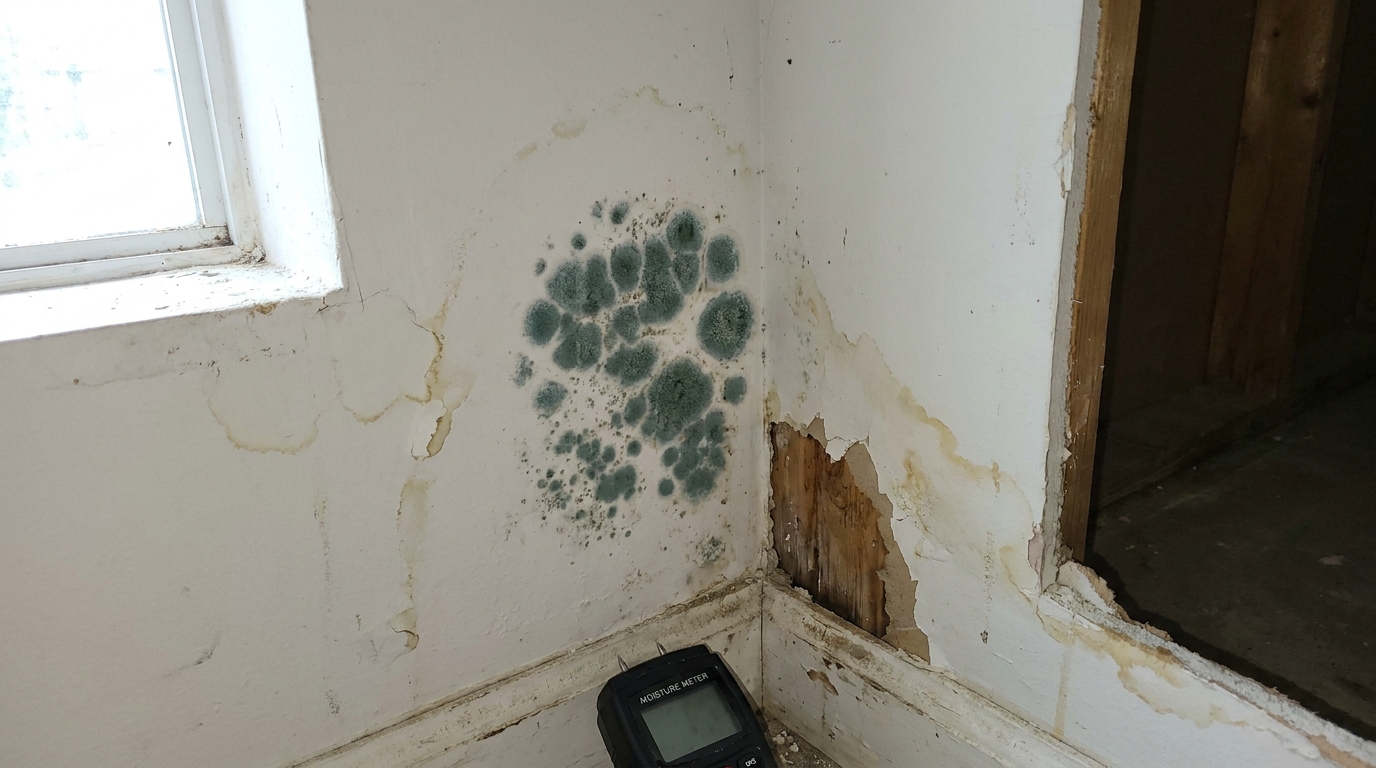
Blue mold on walls is typically a Penicillium or Aspergillus species that produces blue-green pigmented spores, often appearing fuzzy or powdery on drywall, paint, or wallpaper.
When homeowners spot a blue mold wall patch, the instinct is often to grab a rag and wipe it away. That approach misses the point. Blue mold is a living colony feeding on moisture and organic material, and its color signals specific fungal species that thrive indoors. Understanding what you’re dealing with is the first step toward actually solving the problem.
Common Blue Mold Species Found Indoors
Blue or blue-green wall growth is often associated with Penicillium, which is one of the most common household molds and a marker of excess indoor moisture. According to Inspectandtest, Penicillium can colonize water-damaged materials quickly, so blue patches often indicate an area that has stayed damp. However, Aspergillus and Cladosporium can also produce blue-green pigmentation, making visual identification alone unreliable. Without lab testing, homeowners cannot definitively confirm which species is growing on their wall.
What Blue Mold Actually Looks Like (Color, Texture, Growth Pattern)
Blue mold on walls typically presents as clustered dots or spreading patches ranging from pale blue to deep teal or blue-green. The texture is usually fuzzy or powdery, sometimes with a slightly velvety appearance. Growth tends to concentrate in damp corners, behind furniture against exterior walls, and around windows or plumbing fixtures. A musty or earthy smell often accompanies visible growth, even when the patch itself looks small.
What Causes Blue Mold to Grow on Walls?
Blue mold grows on walls when moisture levels exceed 60% relative humidity or water intrusion occurs, providing the damp conditions mold needs to colonize porous surfaces like drywall and paint.
Mold doesn’t appear randomly. It follows moisture. Every blue mold colony on a wall traces back to a water source, whether obvious or hidden. Understanding what mold needs to grow helps homeowners target the root cause instead of just scrubbing the surface.
Moisture Sources That Trigger Blue Mold Growth
The most common moisture sources behind blue mold include:
-
Roof, window, or plumbing leaks that wet drywall, paint, wallpaper, or insulation. According to the CDC, mold grows where there is moisture from roof, window, or pipe leaks or flooding.
-
Condensation on cold exterior walls, especially behind furniture or in corners where airflow is blocked. According to Inspectandtest, this is one of the leading triggers for wall mold.
-
High indoor humidity, particularly when it reaches about 60% relative humidity or more. According to Inspectandtest, the EPA lists 60% relative humidity as a common moisture problem in buildings.
-
Flooding or prior water damage that was not fully dried. A single flooding event not fully dried within 48 hours can be enough to trigger established growth.
-
Poor ventilation in bathrooms, basements, closets, and other damp spaces.
Why Walls Are Vulnerable to Blue Mold
Walls provide exactly what mold spores need: organic material and a surface that can hold moisture. Paint film, wallpaper, dust, paper backing on drywall, and wood components all serve as food sources. According to the EPA, mold can begin growing when spores land on surfaces that are wet. Visible mold growth can appear within 24 to 48 hours on damp surfaces, which means a slow leak behind a wall can produce a visible colony before a homeowner even notices the moisture.
Is Blue Mold on Walls Dangerous?
Blue mold can trigger allergic reactions and respiratory symptoms in sensitive individuals, but most species are not acutely toxic. Immunocompromised people face higher infection risk from Aspergillus species.
The health question is the one homeowners ask first, and the honest answer is nuanced. Blue mold is not the crisis that some alarmist websites suggest, but it’s also not harmless decoration.
Health Risks by Species (Penicillium vs. Aspergillus)
According to the EPA, molds produce allergens, irritants, and in some cases mycotoxins, and exposure may cause allergic reactions and asthma attacks in susceptible people. The CDC states that mold exposure can cause stuffy nose, sore throat, coughing or wheezing, burning eyes, or skin rash. According to CDC guidance, the species matters far less than the growth and moisture, so cleanup decisions are typically the same regardless of mold color.
That said, Aspergillus species carry additional concern because they can cause aspergillosis, a lung infection, in people with weakened immune systems. Penicillium is generally considered less dangerous to healthy adults but still produces allergens that affect sensitive individuals.
Who Is Most at Risk from Blue Mold Exposure?
A study of over 40,000 children found that about 11% of children in homes with mold exposure had asthma versus 7% of children without reported home mold exposure. According to Harvard Health, this gap highlights the real impact mold can have on respiratory health. People at elevated risk include:
-
Children and infants
-
Adults with asthma or chronic respiratory conditions
-
People with allergies to mold
-
Immunocompromised individuals (organ transplant recipients, HIV/AIDS patients, those on chemotherapy)
-
Elderly adults with reduced lung function
When to Consult a Physician
If anyone in the household develops persistent coughing, wheezing, nasal congestion, or skin irritation that coincides with visible mold growth, they should consult a physician. A certified industrial hygienist can assess indoor air quality if health symptoms persist after cleanup. We always recommend erring on the side of caution with health concerns.
How Do You Identify Blue Mold vs. Other Mold Colors?
Blue mold appears blue-green to teal with a fuzzy or powdery texture, distinct from black mold’s slimy dark patches or white mold’s cottony appearance. Lab testing confirms species identity.
Visual Identification: Blue vs. Green vs. Black Mold
| Characteristic | Blue Mold | Green Mold | Black Mold |
|---|---|---|---|
| Color | Blue, blue-green, teal | Bright green, olive | Dark brown to black |
| Texture | Fuzzy, powdery, velvety | Fuzzy or slightly slimy | Slimy or flat, dark patches |
| Common Species | Penicillium, Aspergillus, Cladosporium | Aspergillus, Cladosporium, Trichoderma | Stachybotrys chartarum |
| Typical Location | Damp walls, corners, behind furniture | Bathrooms, kitchens, window sills | Chronically wet drywall, ceiling tiles |
| Odor | Musty, earthy | Musty | Strong musty or damp smell |
When Lab Testing Is Necessary
The CDC notes that mold sampling usually does not determine who may get sick, and the more important issue is whether mold is present and what moisture is feeding it. According to Inspectandtest, cleanup decisions are typically the same regardless of mold color. However, lab testing through mold test kits becomes useful when health symptoms are present and a physician needs species identification, when insurance claims require documentation, or when a real estate transaction depends on mold assessment results.
Can You Remove Blue Mold from Walls Yourself?
You can remove blue mold yourself if the affected area is under 10 square feet, the wall structure is intact, and you use proper PPE and EPA-registered antimicrobials. Larger infestations require professional remediation.
According to the EPA, areas smaller than about 10 square feet are the typical upper limit for homeowner cleanup. This threshold appears consistently across public health and remediation guidance.
When DIY Removal Is Safe and Effective
DIY blue mold removal is appropriate when:
-
The visible growth covers less than 10 square feet (roughly a 3×3 foot area)
-
The mold is on a hard, non-porous, or painted surface
-
The drywall underneath is still firm and structurally sound
-
No one in the household is immunocompromised
-
The moisture source has been identified and can be fixed
When to Hire a Professional Remediator
Professional help is warranted when mold covers more than about 10 square feet, keeps returning after cleaning, involves porous materials like drywall or insulation, or follows a leak, flood, or chronic dampness behind the wall. If the drywall is soft, crumbling, or visibly damaged, surface cleaning won’t be enough. For more on professional options, see our guide to mold remediation costs.
How to Remove Blue Mold from Walls: Step-by-Step
Remove blue mold by isolating the area, wearing an N95 respirator and gloves, scrubbing with detergent solution, drying thoroughly, and fixing the moisture source to prevent recurrence.
Safety Equipment You Need
-
N95 respirator (minimum), because scrubbing releases spores into the air
-
Rubber or nitrile gloves that extend to mid-forearm
-
Safety goggles without ventilation holes
-
Old clothing that can be washed immediately or discarded
Cleaning Solutions That Work (and Those That Don’t)
According to the Minnesota Department of Health, the first-line approach for most small surface mold on walls is detergent and water. Some guides recommend undiluted white vinegar left on for about 1 hour or 3% hydrogen peroxide left for about 10 minutes, followed by gentle scrubbing and drying. Bleach is commonly recommended but is most effective on non-porous surfaces and is not a substitute for removing wet materials colonized through the wall. If using bleach, the CDC recommends no more than 1 cup bleach per 1 gallon of water. Never mix bleach with ammonia or acids, as this creates toxic gases.
Step-by-Step Removal Process
-
Fix the moisture source first. If the wall stays damp, mold will return.
-
Ventilate the area. Open windows or run an outward-facing fan.
-
Put on PPE. N95 respirator, gloves, and eye protection before disturbing any mold.
-
Scrub with detergent and water. Use a stiff brush, scrubbing gently rather than soaking the wall. For more detail, see our guide on how to remove mold from drywall.
-
Rinse and wipe. Use clean water and a clean towel.
-
Dry completely. Use fans, dehumidifiers, or natural airflow until the wall is fully dry.
-
HEPA vacuum. The Wisconsin DHS recommends HEPA vacuuming for at least one minute per square foot of affected area after the surface is dry.
-
Dispose of contaminated materials. Bag used towels, cloths, sponges, and debris before removing them from the house.
-
Monitor. Check the area over the following weeks. If staining, musty odor, or regrowth returns, the mold is likely deeper in the wall.
How to Prevent Blue Mold from Coming Back
According to Inspectandtest, indoor humidity should ideally be kept between 30% and 50%, and the EPA says to keep it below 60% if possible. Prevention strategies include:
-
Running exhaust fans in bathrooms and kitchens
-
Using a dehumidifier in basements and damp rooms
-
Ensuring furniture doesn’t block airflow against exterior walls
-
Fixing leaks immediately. If water damage occurs, clean and dry wet materials within 24 to 48 hours
-
Using mold-resistant paint on walls in high-humidity areas
What If the Blue Mold Is Inside the Wall?
Blue mold inside walls requires cutting out and replacing affected drywall after addressing the moisture source. Surface cleaning alone will not eliminate hidden growth behind wall cavities.
According to the EPA, hidden mold can be behind drywall, wallpaper, paneling, and inside walls around pipes or behind furniture where condensation forms. Warning signs include a musty odor with no visible source, mold that returns after surface cleaning, or drywall that feels soft or shows water stains.
A review cited by the CDC reported that building defects were the leading cause of mold proliferation, and among those defects, water infiltration through leaks in roofs or walls was the leading cause. The same review reported a global prevalence of buildings with dampness and molds at about 47%.
If you suspect mold inside the wall, use containment (plastic sheeting) before cutting into the wall, because opening a mold-affected cavity without protection can release spores throughout the home. The CDC/NIOSH guidance says wetted materials should be dried within 48 hours or removed. For areas larger than about 10 square feet, or if the drywall is soft and crumbling, professional remediation is the safer choice.
How Much Does Blue Mold Removal Cost?
DIY blue mold removal costs $50 to $150 in supplies. Professional remediation ranges from $1,000 for small areas to $20,000 for extensive wall cavity contamination, depending on square footage and structural damage.
DIY Cost Breakdown
For a small patch of blue mold on a painted wall, homeowners can expect to spend roughly:
-
N95 respirator: $3 to $15
-
Rubber gloves and safety goggles: $10 to $20
-
Detergent, vinegar, or hydrogen peroxide: $5 to $15
-
HEPA vacuum rental (if needed): $30 to $75 per day
-
Replacement drywall section (if needed): $10 to $30
Professional Remediation Cost Ranges
Professional costs vary significantly by region and scope of damage:
| Scope | Cost Range | Source |
|---|---|---|
| Wall mold remediation (general) | $1,000 to $20,000 | Angi |
| Per-square-foot pricing | $10 to $25 per sq. ft. | Angi |
| Specialist per-sq.-ft. estimate | About $2.50 per sq. ft. | Forbes Home |
| National average (whole-home) | $1,223 to $3,757 | HomeAdvisor |
| Wall mold, Philadelphia | $1,031 to $20,620 | Angi (Philadelphia) |
| Wall mold, Los Angeles | $1,088 to $21,760 | Angi |
As a practical rule of thumb, a 100-square-foot moldy wall section could cost roughly $1,000 to $2,500 using the $10 to $25 per-square-foot range. According to Angi, the typical national whole-home mold remediation averages around $2,368. Costs rise sharply when wall and backing materials must be removed rather than just cleaned.
Frequently Asked Questions
Here are answers to the most common homeowner questions about blue mold on walls, covering toxicity, spread, removal methods, and prevention.
Is blue mold more dangerous than black mold?
Not necessarily. According to the CDC, the species matters far less than the growth and moisture, and cleanup decisions are typically the same regardless of mold color. Both blue and black mold can trigger allergic reactions and respiratory symptoms. Aspergillus species (which can appear blue-green) pose a particular risk to immunocompromised individuals. The color alone doesn’t determine danger level.
Can blue mold spread to other rooms?
Yes. Mold reproduces by releasing microscopic spores into the air, which can travel through HVAC systems, doorways, and open spaces. Disturbing a mold colony through scrubbing or demolition without containment accelerates spore dispersal. This is why proper PPE and ventilation are important during any cleanup effort.
Does bleach kill blue mold on walls?
Bleach can kill mold on non-porous surfaces, but it is not effective on porous materials like unfinished drywall. According to the EPA, bleach is not a substitute for removing wet materials that are colonized through the wall. For removing mold from painted walls, detergent and water is the recommended first-line approach, with bleach as an optional secondary step on sealed surfaces.
How long does it take for blue mold to grow on walls?
Visible mold growth can appear within 24 to 48 hours on damp surfaces under the right conditions. According to Inspectandtest, Penicillium can colonize water-damaged materials quickly. This is why the EPA and CDC emphasize drying wet materials within 24 to 48 hours to prevent mold establishment.
Will painting over blue mold solve the problem?
No. Painting over mold traps moisture underneath and allows the colony to continue growing behind the paint film. The mold will eventually bleed through or cause the paint to bubble and peel. The correct approach is to remove the mold completely, dry the surface, fix the moisture source, and then repaint. Mold-resistant paint can help prevent future growth but is not a treatment for existing mold.
If blue mold covers more than 10 square feet, has penetrated wall cavities, or keeps returning after cleaning, consult a certified mold remediator for professional assessment and remediation.